Do Soundproof Curtains Really Work? A Practical Guide for Modern Homes


Soundproof curtains reduce noise, but they do not eliminate it, so the honest answer is “yes, partly.” A dense, properly hung panel softens the everyday sounds that wear you down at home, such as street traffic, neighbors’ voices, and television chatter, and it tames echo in a bare room. It will not turn a room near a highway into a recording booth. That is why TheHues describes these products as noise-reducing or sound-absorbing curtains rather than truly “soundproof.” This guide explains how much they actually cut, the acoustics behind that, how curtains compare with foam and other fixes, and how to buy a panel that performs.
How do soundproof curtains work?
Soundproof curtains work mainly by absorbing and dampening sound waves, not by sealing them out like a wall. When a sound wave hits a thick, dense fabric, some of its energy is converted to heat inside the fibers instead of bouncing back into the room or passing straight through. The denser, heavier, and more layered the panel, the more energy it can soak up.
Two effects matter here, and people often confuse them:
- Sound absorption reduces echo and reverberation inside the room. A bare room with hard floors and glass rings and amplifies sound; a heavy curtain shortens that ring, so the space feels calmer and voices on a call sound clearer.
- Sound reduction, or transmission loss, is about how much outside noise reaches your ears through the window. Curtains help here too, but less dramatically, because stopping transmitted noise depends on mass and a sealed perimeter, not fabric alone.
So the realistic promise is this: curtains make a meaningful dent in the noise you hear and a bigger difference in how a room feels, but they are one layer of a larger solution. For the difference between the two concepts in more depth, see soundproofing vs. sound absorption.

How much noise do soundproof curtains actually block?
There is no single guaranteed number, because results depend on the curtain, the window, and the room. TheHues four-layer curtain product pages state that noise reduction can reach up to about 15 dB under ideal conditions, and they are clear that real-world results vary with edge gaps, room construction, and the frequency of the noise. Treat that 15 dB as an attributed, best-case figure from the product pages, not a promise for every install and not an STC, or Sound Transmission Class, lab rating.
A few honest caveats around that number:
- It is a best case, achieved with a heavy panel, full coverage, and tight edges. A short panel with light gaps around it will do less.
- It applies best to mid- and high-frequency sound, such as talking, TV, and general street hum.
- It does not mean the room becomes 15 dB quieter everywhere; it describes what the treated window can contribute under good conditions.
Be skeptical of any soundproof curtain advertised with a precise, guaranteed decibel drop or an STC number, because fabric panels are not lab-sealed assemblies. If you want help spotting overstated claims, read how to detect fake soundproof curtains.

Why curtains are strong on chatter but weak on bass
The physics explains where curtains win and where they do not. Sound is energy at different frequencies, and dense fabric is good at absorbing the shorter wavelengths of mid and high frequencies, the range that carries conversation, TV dialogue, dishes, and most traffic hum. That is exactly the noise most homeowners want gone, which is why curtains feel so effective for everyday living.
Low-frequency bass is the hard case. Long, powerful waves, such as a subwoofer next door, a bus engine, or heavy machinery, carry a lot of energy and pass through soft materials with relatively little loss. No curtain stops deep bass well; that takes mass, structural decoupling, and sealing that only building materials provide. Setting this expectation up front is the most useful thing an honest guide can do: buy curtains to calm the mid-high noise of normal life, not to silence a thumping bass line through a shared wall.
Soundproof curtains vs. acoustic foam: which do you need?
They solve different problems, so the better question is what you are trying to fix. Use this comparison:
| Soundproof / noise-reducing curtains | Acoustic foam panels | |
|---|---|---|
| Main job | Absorb mid-high noise, reduce echo, cover the window | Absorb echo and reverb inside the room |
| Blocks outside noise? | Helps at the window, the usual weak point | No, foam does little for transmitted outside noise |
| Look | Finished, decorative, custom fabric | Studio look, often visible foam wedges |
| Renter-friendly | Yes, no permanent changes | Usually adhesive, can mark walls |
| Bonus functions | Blackout, thermal insulation, privacy | None |
The short version: if your goal is to quiet street and neighbor noise coming through a window while keeping the room looking like a home, curtains are the right tool. If your goal is purely to kill echo for recording or mixing, foam targets that. Many people combine soft furnishings, curtains, and a few absorption panels. For the full menu of options, including window inserts and weatherstripping, see soundproof curtains vs. other soundproofing options.
One note on “mass-loaded vinyl,” a material often mentioned in soundproofing articles: it is a dense barrier meant to go inside walls, not a curtain you hang on a rod. It is not interchangeable with a fabric panel, so do not expect a curtain to behave like a wall barrier.

What makes a soundproof curtain perform: mass, coverage, and sealing
Performance comes from how the curtain is built and how it is hung, not from the fabric name alone. Three factors do most of the work.
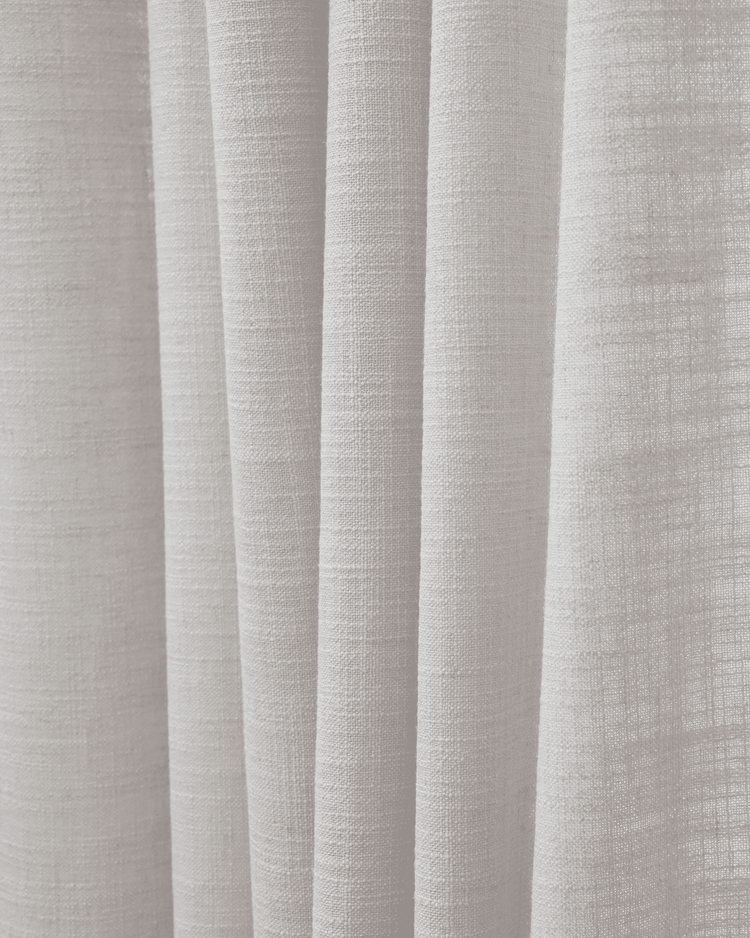
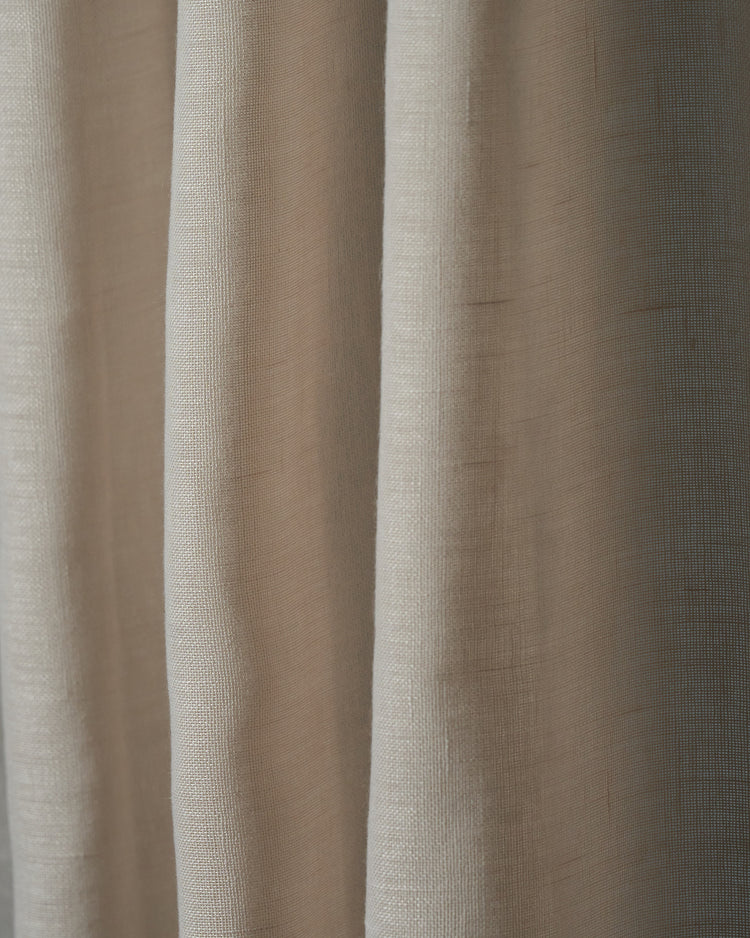
1. Mass and dense, multi-layer construction. Heavier, multi-layer panels absorb more energy. TheHues four-layer curtains are a dedicated construction class, not an ordinary curtain with a thin liner. They combine a decorative face fabric, a high-density sound-absorbing felt layer, an additional nonwoven layer, and a backing or liner. That stack is what gives them their noise-reducing, light-blocking, and thermal performance at once. Velvet and other heavy, tightly woven fabrics also add useful body.
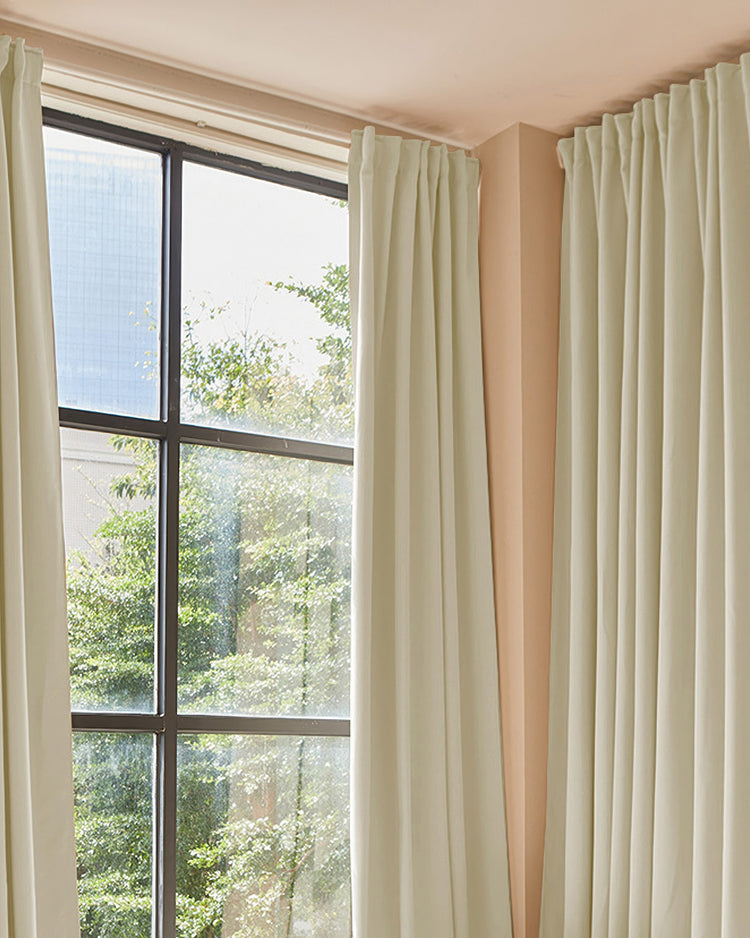
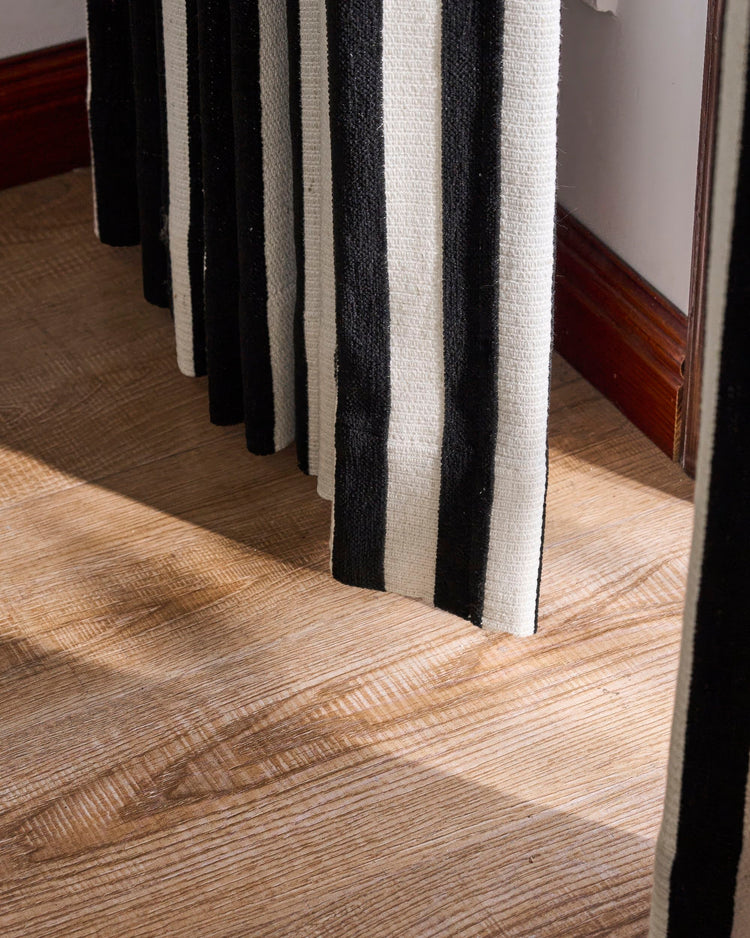
2. Full coverage. A curtain only treats the area it actually covers. Mount the rod high and wide, several inches above the frame and well past each side, and choose a length that reaches the floor. Hanging the panel against the whole wall, not just the glass, closes the gaps where sound leaks.
3. Sealed edges. Air gaps are where noise escapes, so the edges matter as much as the fabric. Returns that bring the panel back toward the wall, generous side overlap, and a snug center closure all reduce leakage. Pairing curtains with simple window weatherstripping helps further. Remember that the wall and window assembly itself sets the ceiling on results; the fabric improves on what the structure already does.
For a room-by-room install plan that puts these principles together, see how to soundproof a bedroom and our guide to reducing noise from neighbors in apartments.

Buying advice: how to choose noise-reducing curtains
Use this checklist when you shop:
- Pick a dense, multi-layer panel. A four-layer construction with a sound-absorbing felt layer outperforms a single decorative fabric. Heavier is better for acoustics.
- Oversize the coverage. Order panels that run floor-length and extend well beyond the window on every side. Coverage and sealing matter more than a few extra ounces of fabric.
- Mind the fullness for heavy fabric. Dense four-layer panels use lower fullness with soft headers because too much heavy fabric becomes hard to draw. Check the product’s size guide for the right ratio.
- Match the hardware to the weight. Heavy panels need a rod or track rated for the real finished weight; skip light-duty clip-ring setups for four-layer curtains.
- Decide if you also want blackout and thermal. Because the same dense build that absorbs sound also blocks light and insulates, a four-layer curtain can cover all three needs at once. See blackout vs. room darkening vs. light filtering and our thermal curtains buyer’s guide.
Honest trade-offs to expect: dense panels are heavy, they make a room noticeably darker, which is great for sleep but less ideal for a sunny work nook unless you add tiebacks, and their performance drops the moment they are pulled open. They are also product-specific to clean, so follow the care label rather than assuming machine-washable.

 100% Blackout
 Better sleep
 Noise Reducing
 Energy Saving
Are soundproof curtains worth it?
For most homes, yes, with realistic expectations. They are an affordable, renter-friendly, no-renovation upgrade that meaningfully reduces everyday mid-high noise and echo, and they do double duty as blackout and thermal layers. They are an excellent fit for bedrooms, nurseries, home offices, media rooms, and studios where you want a calmer, darker, more private space. They are the wrong tool if your only problem is deep bass through a shared wall, or if you expect total silence.
If noise is your main reason for buying, treat curtains as one layer in a plan that also seals the window and softens the room. Customizing the fabric, layers, and size lets you tune coverage and density to your exact window, which is where a made-to-measure panel earns its keep.
FAQ
Do soundproof curtains really work?
Yes, partly. They reduce mid- and high-frequency noise and cut echo, but they do not eliminate sound or block deep bass. They are noise-reducing and sound-absorbing, not literally soundproof.
How much noise do soundproof curtains block?
There is no guaranteed figure. TheHues four-layer panels state noise reduction can reach up to about 15 dB under ideal conditions, and results vary with edge gaps, room construction, and the noise frequency. Treat that as a best case, not an STC rating.
Are noise cancelling curtains and acoustic curtains the same thing?
They are marketing terms for the same category of dense, sound-absorbing curtains. No fabric panel actively “cancels” sound the way headphones do; they absorb and dampen it.
Do blackout curtains also block noise?
A dense blackout panel offers some sound damping because it has mass, but a dedicated multi-layer soundproof construction does more. For both darkness and quiet, choose a four-layer curtain that combines light-blocking and sound-absorbing layers.
Do soundproof curtains reduce echo on calls and recordings?
Yes. Absorbing reflections is what curtains do best, so they noticeably reduce reverb in rooms with hard floors and bare walls, improving the sound of calls, podcasts, and home theaters.
Can curtains alone soundproof a room?
No. Curtains are one layer. For the biggest drop, combine full-coverage panels with a sealed window and soft furnishings, and accept that low-frequency noise needs structural fixes.