How to Order Custom Curtains for 12-Foot Ceilings and Extra-Long Windows


In this article 11 sections
- What length curtains do you need for 12-foot ceilings?
- How to measure for extra-long custom curtains
- Best header styles for tall windows and 12-foot ceilings
- Choosing fabric and lining for extra-long curtains
- One panel or two for extra-long curtains?
- Hardware tips for heavy extra-long curtains
- How extra-long curtains look in a tall room
- How to order custom extra-long curtains online
- Common mistakes when ordering curtains for 12-foot ceilings
- FAQ about extra-long curtains for 12-foot ceilings
- Final takeaway
Extra-long curtains can make a room with 12-foot ceilings feel finished, balanced, and intentional. But if the panels are even a little too short, the gap at the floor becomes hard to ignore. On a tall wall, standard curtain lengths often look unfinished because the scale of the room is working against them.
For 12-foot ceilings, most homes need curtains longer than standard 84-, 96-, or 108-inch panels. Depending on rod height and floor clearance, you may need custom curtains in the 132- to 140-inch range, or even longer if you are using a ceiling track or want a soft puddle.
This guide walks through how to measure for extra-long curtains, choose the right header style, plan fabric and lining, and avoid the common mistakes that make tall windows look awkward instead of elegant.
What length curtains do you need for 12-foot ceilings?
The right curtain length depends on three things: ceiling height, rod placement, and how you want the fabric to meet the floor. A fixed “12-foot ceiling curtain length” does not work for every room because rods, tracks, trim, and floor conditions all vary.

A simple curtain length formula
Use this basic formula as your starting point:
Curtain length = distance from rod or track to floor, adjusted for your preferred floor finish.
For a 12-foot ceiling, that often means measuring from a rod mounted a few inches below the ceiling down to the floor. If the rod sits 4 to 6 inches below a 144-inch ceiling, many rooms land around 137 to 140 inches before final adjustments.
That is why custom curtains are usually a better fit for tall ceilings. Instead of forcing the room into a standard size, you can order the finished length your wall actually needs.
132 inches vs. 144 inches: which length works better?
Both lengths can work, but only in the right setup. A 132-inch curtain may be enough if the rod is mounted lower on the wall. A 144-inch curtain may be better for ceiling-mounted tracks, very high rod placement, or a slight puddle.
| Setup | What usually works | What to check first |
|---|---|---|
| Rod mounted 10–12 inches below ceiling | 132-inch curtains may work | Confirm the exact rod-to-floor measurement |
| Rod mounted close to ceiling | 136–140 inches is often closer | Check floor clearance and bracket height |
| Ceiling-mounted track | Custom length is usually best | Measure from the track position, not the ceiling alone |
| Formal puddled look | Add extra length intentionally | Decide how much fabric should rest on the floor |
Choose the right floor finish
The way the curtain meets the floor changes both the style and daily maintenance.
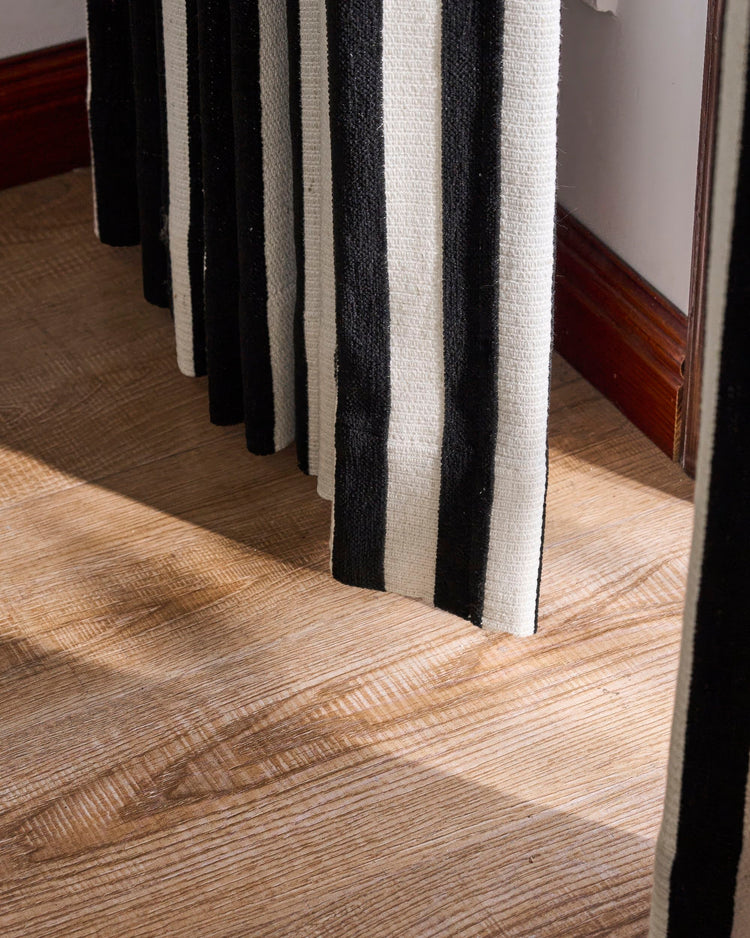
- Hover: The curtain stops slightly above the floor. This is clean, practical, and easy to maintain.
- Kiss: The curtain just touches the floor. This gives a tailored look but requires careful measuring.
- Break: The fabric touches and bends slightly at the floor. This works well in bedrooms and formal living rooms.
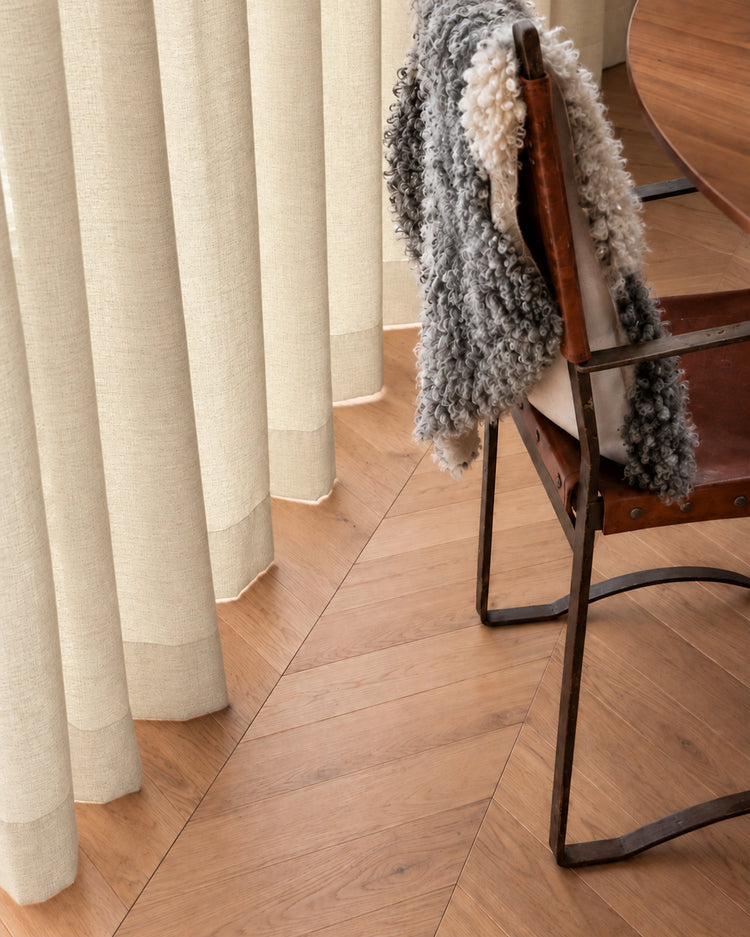
- Puddle: Extra fabric rests on the floor. This can look soft and dramatic, but it collects more dust and is less practical for pets, children, and high-traffic spaces.
For most American homes, a hover or light kiss is the safest choice for extra-long curtains. It looks polished without making daily use harder.
How to measure for extra-long custom curtains
Measuring tall windows follows the same basic logic as standard curtain measuring, but the margin for error is smaller. A one-inch mistake is more noticeable on a long vertical drop, especially when the curtain is meant to run close to the floor.

Step 1: Decide where the rod or track will go
Before measuring fabric length, decide whether you are using a wall-mounted rod, a ceiling-mounted track, or another hardware system. For tall ceilings, mounting higher often makes the room feel more balanced because it draws the eye upward and creates a longer vertical line.
If you are not sure where to mount, use the TheHues curtain measurement guide before placing your order.
Step 2: Measure from the hardware position to the floor
Use a steel tape measure and measure from the planned rod or track position straight down to the floor. Measure at the left side, center, and right side of the window area. Floors and ceilings are not always perfectly level, so multiple measurements help you avoid a visible gap.
If the measurements are slightly different, use the number that best matches your preferred floor finish. For a hover, you may choose a slightly shorter finished length. For a kiss or break, you may need a bit more length.
Step 3: Measure the full width you want to cover
Do not measure only the glass unless you plan to cover only the glass. Most curtains look better when they extend beyond the window frame, giving the panels room to stack at the sides and helping the window feel larger.
For a fuller drape, many rooms need about 2 times the coverage width in total fabric. Lightweight sheers may need more fullness, while heavier lined panels can often look full with less.
Step 4: Check the wall, trim, and nearby furniture
Tall curtains interact with the whole wall, not just the window. Before ordering, check for baseboards, vents, radiators, outlets, sofas, beds, and side tables. These details can affect both the curtain length and how easily the panels open and close.
Best header styles for tall windows and 12-foot ceilings
Header style matters more on extra-long curtains because the folds run farther down the panel. The right header can make the length feel graceful. The wrong one can make the curtain look heavy, uneven, or hard to operate.

Pinch pleat for a tailored floor-to-ceiling look
Pinch pleat curtains work especially well for tall rooms because the structured folds hold their shape over a long drop. They are a strong choice for living rooms, dining rooms, primary bedrooms, and two-story spaces where you want the curtains to feel intentional and polished.
Grommet top for smoother daily operation
Grommet curtains slide easily on a rod, which can be useful if you open and close extra-long panels every day. The look is clean and casual. Just make sure the rod diameter, bracket strength, and panel weight work together.
Back tab for a clean, modern line
Back tab curtains hide the rod and create a simple vertical line from top to bottom. This can look beautiful in modern rooms with tall windows. They may not glide as smoothly as grommets, so they are better for panels that stay mostly in place.
Rod pocket for decorative use
Rod pocket curtains can look soft and traditional, but they are not always the easiest option for extra-long panels. The gathered fabric can be harder to move, especially when the curtain is heavy or lined.
Before choosing, compare the options in the TheHues curtain header guide. The header should match both the room style and the way you plan to use the curtains.
Choosing fabric and lining for extra-long curtains
Large windows and tall curtains use more fabric, so the material choice has a bigger visual impact. A fabric that feels subtle on a small window can feel dramatic at 140 inches long.
Lightweight fabrics for airy tall rooms
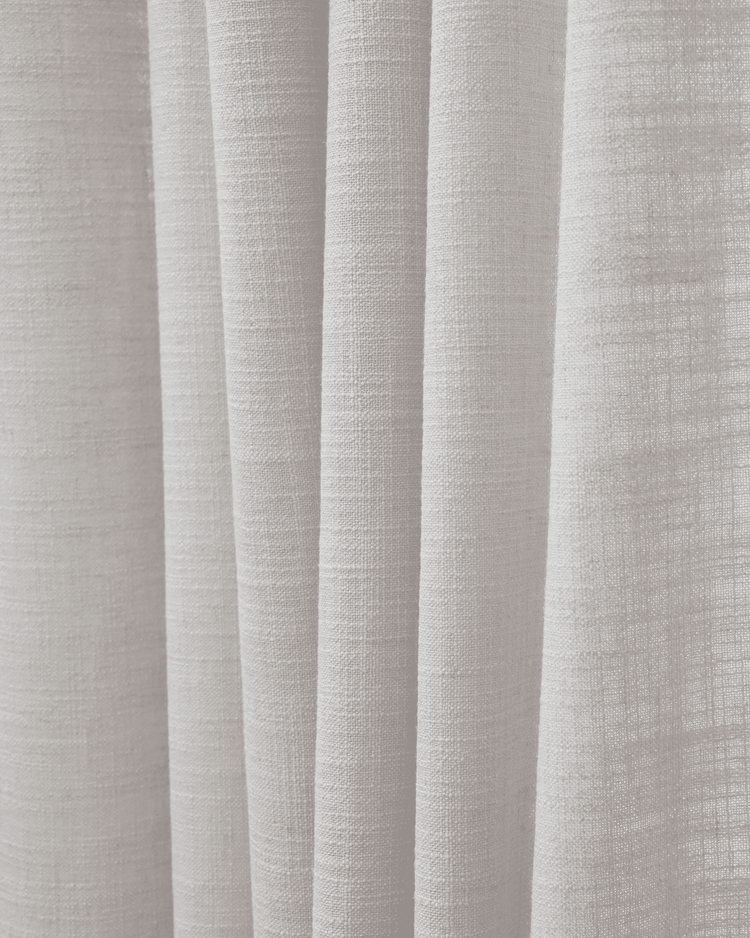
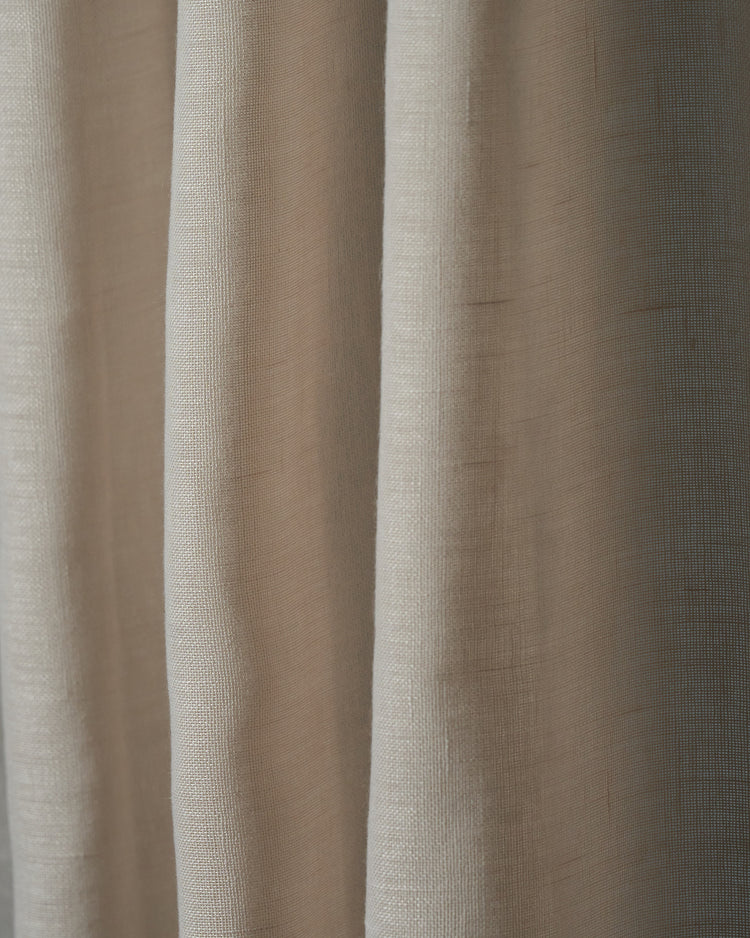
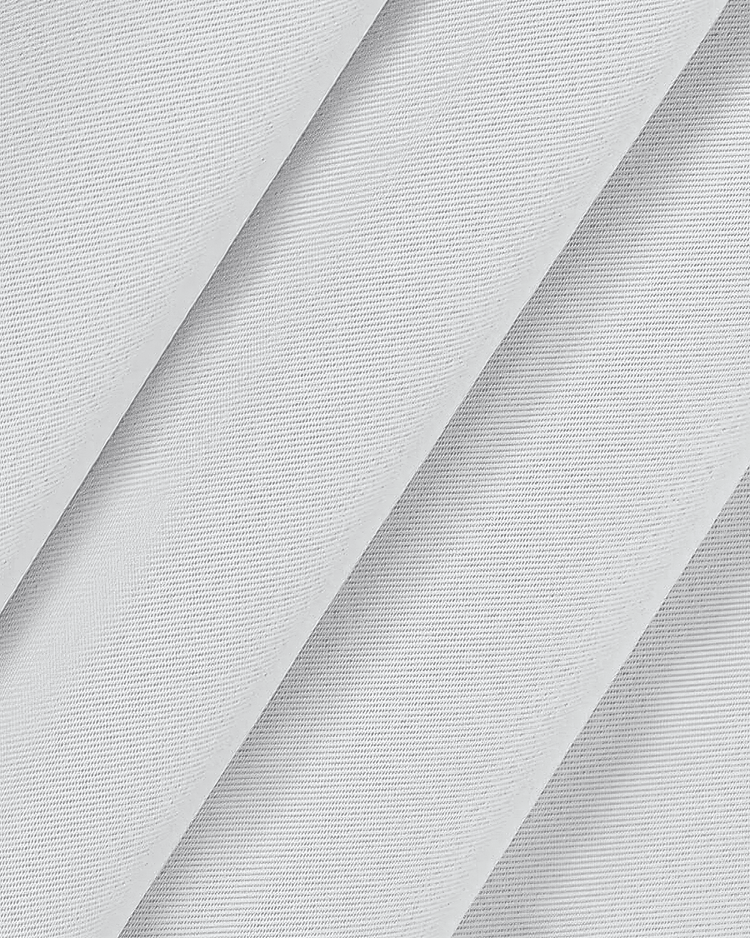
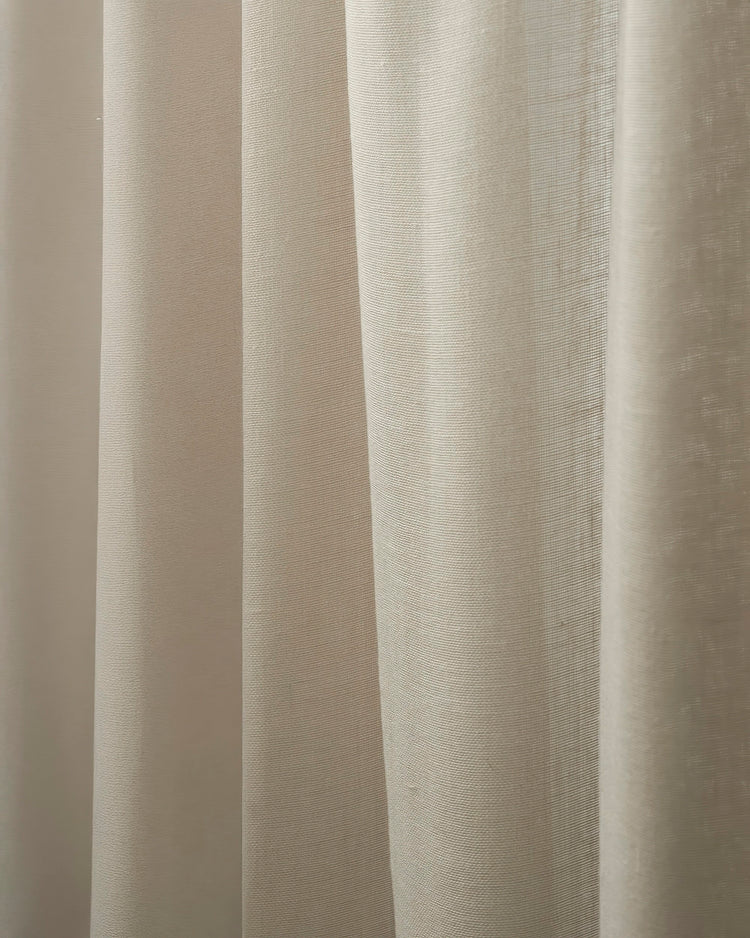
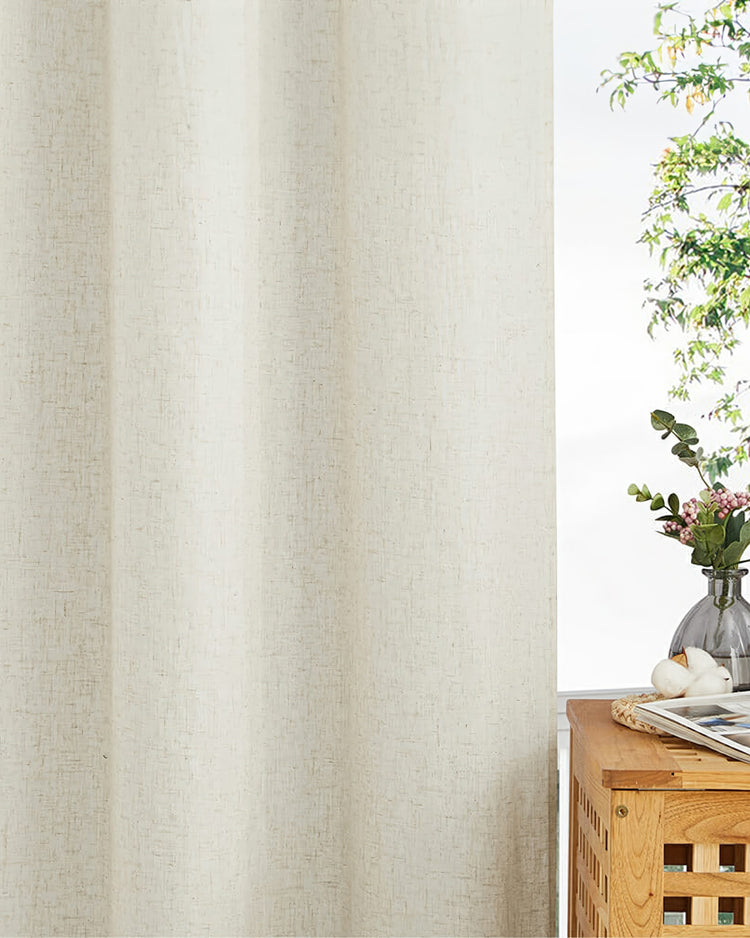
Linen-look fabrics and sheers can keep a tall room feeling open and bright. They are a good fit for living rooms, dining rooms, and spaces where the main goal is softness rather than full light blocking.
If you want daytime privacy without making the room feel closed in, sheer curtains can be layered with a more substantial panel. This gives the room flexibility while keeping the tall window treatment from feeling too heavy.

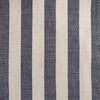
 100% Blackout
 Better sleep
 Noise Reducing
 Energy Saving
Blackout and thermal options for bedrooms and sunny rooms
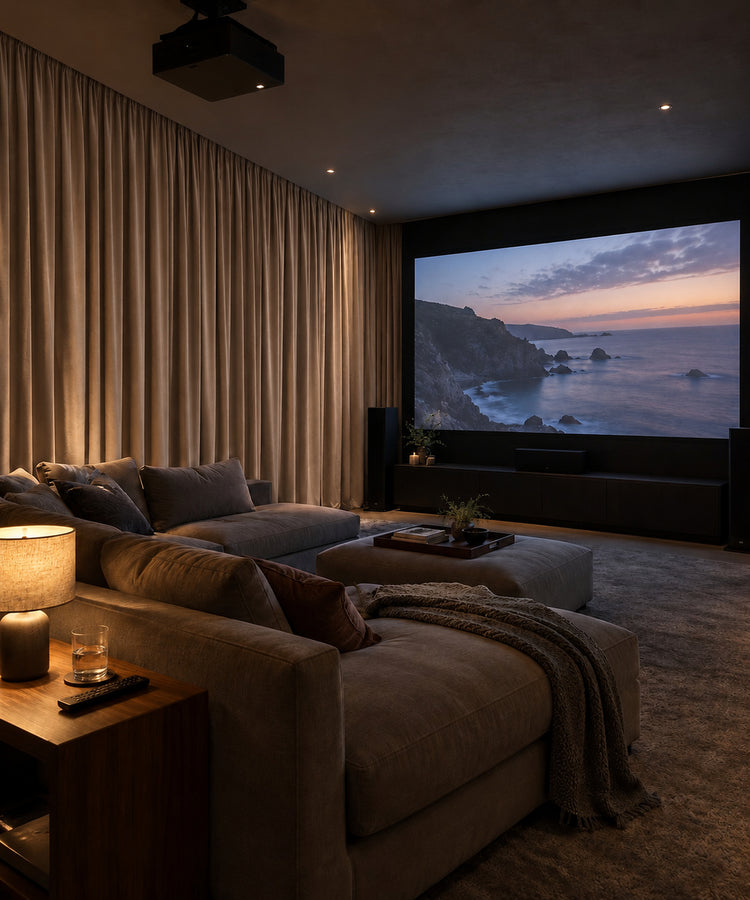
For bedrooms, media rooms, nurseries, and west-facing windows, function may matter more than airiness. Extra-long blackout curtains can help reduce unwanted light, while thermal curtains may help the room feel more comfortable near large glass areas.
These effects depend on the fabric, liner, window size, installation, and how well the curtains cover the opening. For better results, plan enough width, proper return at the sides, and the right finished length.

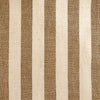
 Plant-based fiber
 Organic hand-feel
 Eco-conscious material
 Timeless elegance
Why lining matters more on tall windows
Lining adds body, improves the way the fabric hangs, and can help protect the face fabric from sun exposure. On tall windows, those benefits matter because there is more fabric surface and a longer drop.
If you are comparing light-filtering, room-darkening, blackout, or thermal options, review the curtain liner guide before you finalize your order.
One panel or two for extra-long curtains?
Panel count affects daily use, stack-back, and overall balance. For tall windows, it also affects how much weight each side of the hardware needs to carry.
Use one panel for narrow or asymmetric windows
A single panel can work well for narrow tall windows, decorative side panels, or windows where you want the curtain to draw to one side. Just make sure the panel has enough width to look full when closed.
Use two panels for wider windows
For wide windows, sliding doors, and large living room openings, two panels usually look more balanced and are easier to operate. Each panel carries less weight, and the window feels more symmetrical when the curtains are open.
If you are unsure, review the TheHues guide on one curtain panel or two before choosing your layout.
Hardware tips for heavy extra-long curtains
Extra-long curtains can be heavier than standard curtains, especially with blackout lining, thermal lining, velvet, or dense woven fabrics. Hardware should be planned as part of the curtain system, not as an afterthought.
Choose sturdy rods, brackets, or tracks
A lightweight decorative rod may not be enough for long, lined panels. Use hardware that is appropriate for the curtain weight and window span. Wider windows usually need center support, and very wide openings may need multiple brackets or a track system.
Anchor hardware securely
Whenever possible, brackets should be anchored into studs or solid structural material. If that is not possible, use appropriate wall anchors for the wall type and curtain weight. When in doubt, ask a qualified installer, especially for very tall rooms or heavy panels.
Consider ceiling-mounted tracks
Ceiling-mounted tracks can create a true floor-to-ceiling look and may be useful for modern spaces, large windows, or rooms where a rod would interrupt the clean vertical line. They can also help the panels glide more smoothly when installed correctly.
How extra-long curtains look in a tall room
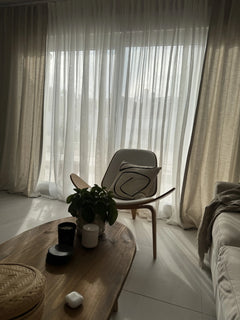
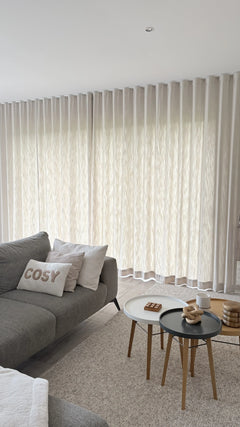
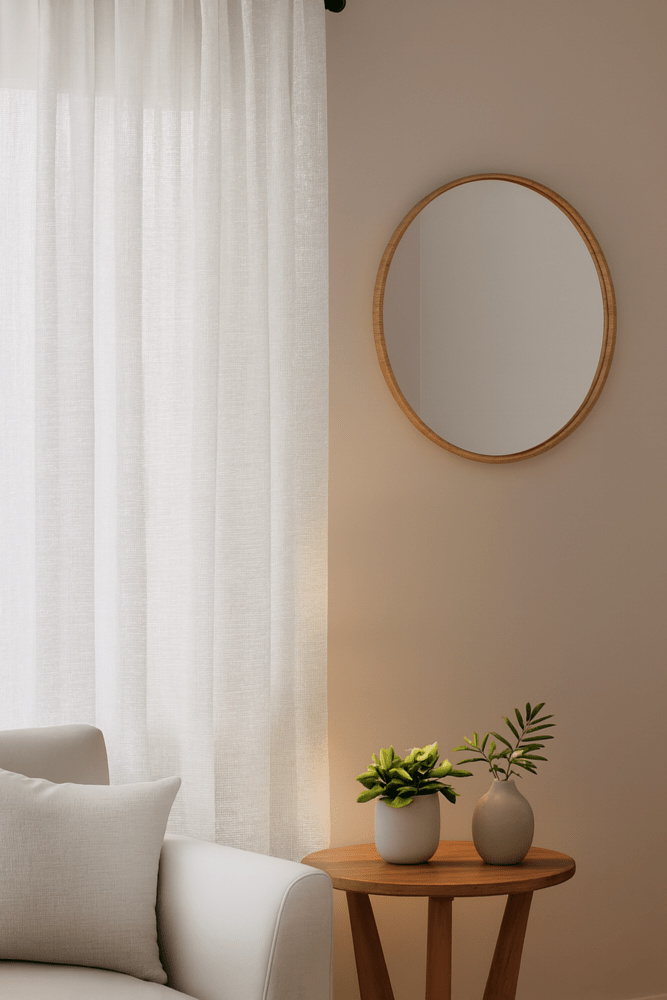
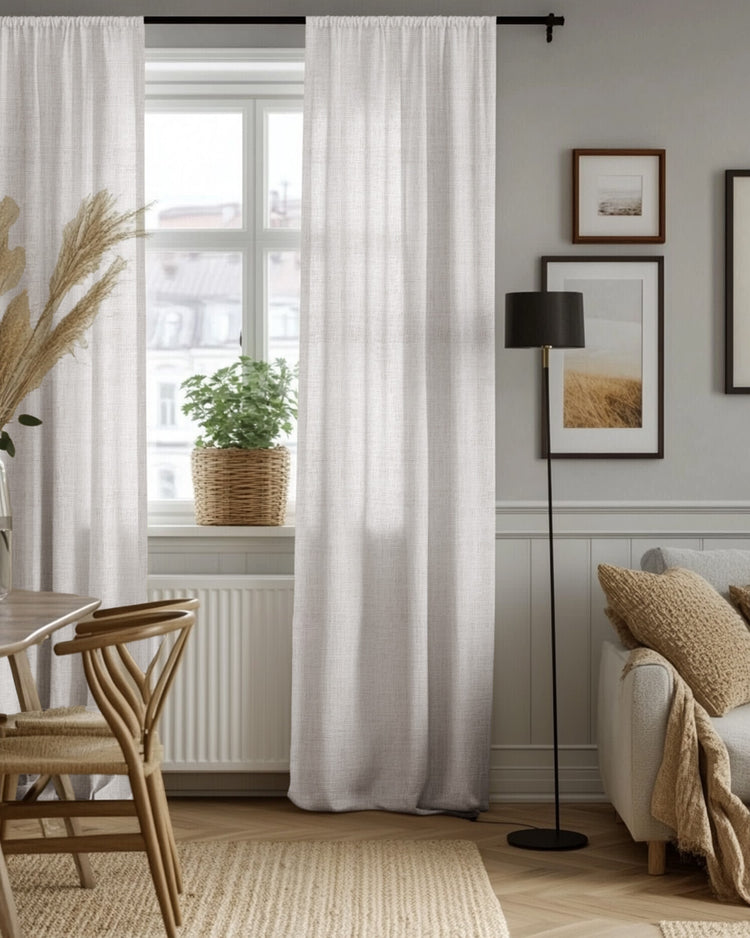
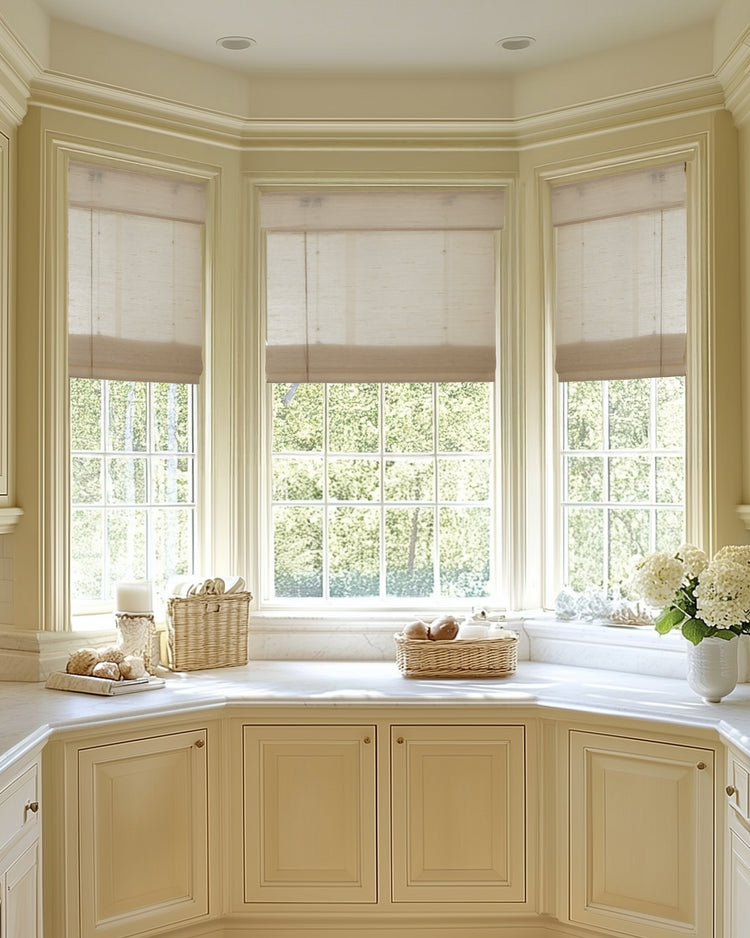
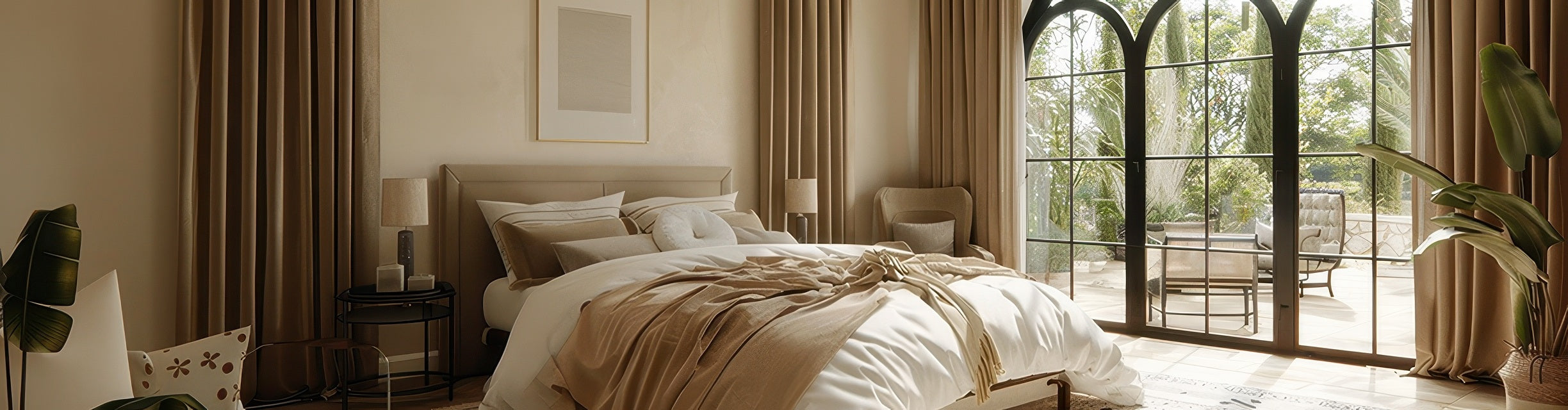
Seeing long curtains in a real tall space can make the scale easier to understand. A full-height curtain installation works best when fabric, fullness, header style, and hardware are planned together.
In a tall room, neutral fabric often keeps the space feeling open, while a structured header helps the panels look intentional instead of oversized. If you are working with a two-story window or an unusually large span, a preview can help you confirm the scale before ordering.
The TheHues visualization tool can help you compare fabric, header, and panel layout before you commit to a custom size.
How to order custom extra-long curtains online
Once you have the measurements and general style direction, the ordering process becomes much easier. Work through the steps in order instead of choosing fabric first and solving the details later.
Step 1: Confirm your finished length
Measure from the planned rod or track position to the floor. Decide whether you want a hover, kiss, break, or puddle. Then confirm that the number you enter matches the finished curtain length requested by the product page.
Step 2: Confirm your coverage width
Measure the area you want the curtains to cover, including any extra wall space beyond the window frame. Then account for fullness so the finished curtains do not look flat when closed.
Step 3: Choose fabric, header, and lining
Select the fabric based on the room's main need: softness, privacy, blackout performance, thermal comfort, or a more decorative finish. Choose the header based on both the look you want and how often the curtains will move.
Step 4: Use swatches or a preview if you are unsure
Large curtains amplify color and texture. A neutral that looks small on a screen can feel much stronger across a tall wall. If you are between fabrics, start with curtain swatches and check them in your room's daylight and evening light.
Step 5: Get help before ordering if the window is unusual
If your window is extra tall, extra wide, curved, angled, or part of a two-story room, it is worth getting a second opinion before placing a custom order. The free design service can help you review scale, fabric direction, and overall layout.
Common mistakes when ordering curtains for 12-foot ceilings
- Measuring only the window frame. For tall ceilings, you usually need to measure from the planned rod or track position to the floor, not just the glass.
- Choosing a standard length without checking the drop. “Extra long” can mean different things depending on the retailer. Always compare the actual finished length to your room.
- Using hardware that is too light. Long lined panels need rods, brackets, or tracks that can support their weight safely.
- Skipping fullness. A tall curtain that is too narrow can look flat and skimpy, even if the length is correct.
- Ignoring stack-back. Extra-long curtains also need enough side space to open neatly without crowding the glass.
- Choosing the fabric before the room goal is clear. A bedroom, sunny living room, and decorative dining room may need very different curtain setups.
FAQ about extra-long curtains for 12-foot ceilings
What curtain length do I need for 12-foot ceilings?
Many 12-foot rooms need curtains somewhere around 132 to 140 inches, but the exact number depends on rod height, floor clearance, and whether you want a hover, kiss, break, or puddle. Measure from the planned hardware position to the floor before choosing a length.
Are 120-inch curtains long enough for 12-foot ceilings?
Usually not if you want a near ceiling-to-floor look. A 120-inch curtain can work only when the rod is mounted much lower on the wall. For a tall, polished look, custom length is often the better option.
Can I order blackout curtains in extra-long lengths?
Yes. Custom blackout curtains can be made in longer lengths for bedrooms, media rooms, and tall windows where light gaps would be more noticeable. For best results, plan width, side coverage, and lining together.
Should extra-long curtains touch the floor?
They can hover slightly above the floor, lightly touch it, break, or puddle. A hover or light kiss is usually the easiest to maintain. A puddle is more decorative and works better in low-traffic rooms.
What header style is best for tall curtains?
Pinch pleat is a strong choice for a tailored, floor-to-ceiling look. Grommet headers are useful for smoother daily operation. Back tabs work well for a clean modern line, while rod pockets are better for more decorative panels that do not need frequent movement.
Final takeaway
Extra-long curtains for 12-foot ceilings are not just standard curtains made taller. The length, width, header, lining, and hardware all need to work together so the finished window treatment feels balanced and easy to live with.
Start by measuring from the actual rod or track position to the floor. Then choose the floor finish, panel count, header style, fabric, and liner based on how the room will be used.
If you already know your measurements, start with custom curtains and compare options by room function. If the scale is hard to picture, use the visualization tool or request help through the free design service before placing your custom order.