Where to Buy Custom Curtains in the U.S.: Etsy, Local Workrooms, Tailors, and Online Brands Compared


In this article 10 sections
- What makes curtains custom?
- Buying custom curtains from marketplace sellers
- Hiring a local drapery workroom
- Using a local tailor or seamstress
- Ordering from an online made-to-measure curtain brand
- Side-by-side comparison: where should you buy custom curtains?
- How to choose the right source for your project
- What to check before you order custom curtains anywhere
- FAQ: Where to buy custom curtains
- Final takeaway
Choosing custom curtains is not only about finding a fabric you like. The bigger question is where to buy them, because the source affects your measurements, fabric choices, lead time, support, and what happens if something feels wrong after the panels arrive.
In the U.S., most custom curtain shoppers compare four main options: marketplace sellers, local drapery workrooms, local tailors or seamstresses, and online made-to-measure curtain brands. Each route can work well, but they are not built for the same kind of project.
This guide breaks down the pros, tradeoffs, and best use cases for each option so you can choose the right path before you spend money on fabric, lining, hardware, or installation.
What makes curtains custom?
Before comparing where to buy custom curtains, it helps to define what “custom” actually means. The term is used loosely, and that can make shopping confusing.

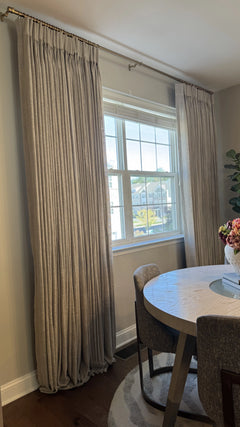
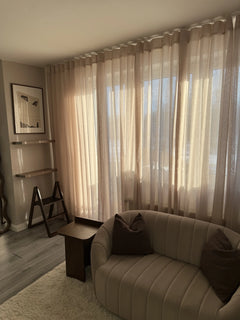
Custom or made-to-measure curtains are made for your specific window dimensions. You usually choose the width, length, header style, fabric, and liner. This is the category most shoppers mean when they want curtains that fit a room instead of simply covering a window.
Semi-custom curtains give you more choices than ready-made panels, but they still work within preset sizes or limited configurations.
Ready-made curtains come in standard sizes and fixed widths. They can be useful for quick updates, but they often require compromise on length, fullness, and coverage.
The source matters because two sellers can both use the phrase “custom curtains” while offering very different levels of measurement help, fabric guidance, construction options, and after-order support.

 100% Blackout
 Better sleep
 Noise Reducing
 Energy Saving
When you compare sources, focus on five practical factors:
- how much customization you actually get
- whether swatches are available
- how much help you get with measuring and design decisions
- how clear the production and shipping timeline is
- what the return or remake policy says for custom orders
Buying custom curtains from marketplace sellers
How marketplace custom curtains usually work
Marketplace platforms connect you with independent sellers, small sewing studios, or individual makers. You browse listings, send measurements, confirm fabric and header details, and place a made-to-order purchase through the platform.

This route can be appealing if you want a handmade look, a specific linen texture, or a simple panel style that does not need much design support.
When marketplace sellers can be a good fit
- You want a handmade or artisan look. Marketplace sellers can be strong for natural fabrics, niche textures, and smaller-batch styles.
- Your project is simple. A standard bedroom window with a basic rod pocket or back tab panel is easier to manage than a whole-home curtain plan.
- You are comfortable asking detailed questions. You may need to confirm width, length, lining, header style, and return terms directly with the seller.
What to watch for
- Quality can vary by seller. One shop may have excellent stitching and finishing, while another may be less consistent.
- Custom returns are usually limited. If the fabric color looks different in your room or your measurement was off, you may have fewer options.
- Design support is usually minimal. You are often responsible for measuring, choosing the header, and deciding how the curtains should mount.
- Lead times can change. Small sellers may have limited production capacity during busy periods.
If you choose this route, order swatches when available, read recent reviews carefully, confirm all specifications in writing, and avoid assuming that one seller’s “custom” process matches another’s.
Hiring a local drapery workroom
What a drapery workroom does
A local drapery workroom is a professional fabrication shop that focuses on custom window treatments. Some workrooms work mostly with interior designers, while others also take direct homeowner projects.
Workrooms are often the strongest option for complex projects, such as tall windows, bay windows, layered sheers and drapes, motorized tracks, specialty pleats, or installation that needs an experienced local professional.
Why a workroom may be worth it
- Deep customization. A skilled workroom can handle details that simpler sellers may not offer.
- In-person fabric review. You can see the fabric, feel the weight, and compare samples in real life.
- Professional measuring and installation may be available. This can reduce risk on high-value or technically difficult projects.
- Local accountability. If something needs to be discussed, you are working with a nearby team rather than a distant seller.
Possible drawbacks
- It is usually the most expensive route. You may be paying for custom labor, fabric sourcing, consultation, hardware, and installation.
- Timelines can be longer. Complex work, designer schedules, fabric availability, and installation appointments can all affect timing.
- Availability depends on your area. Some regions have many experienced workrooms; others have very few.
- Quotes may be harder to compare. One estimate may include installation and hardware, while another may only include fabrication.
A local workroom makes the most sense when the project is complex, the room is high priority, or you want full-service support from measuring through installation.
Using a local tailor or seamstress
When a tailor or seamstress can work
A local tailor or seamstress can be a practical choice for simple curtain projects. This route is especially useful when you already have fabric, need ready-made panels hemmed, or want a basic curtain made for a rental, guest room, or secondary space.
Simple projects may include:
- shortening ready-made curtain panels
- sewing basic rod pocket or back tab panels
- adding a simple lining to existing curtains
- adjusting length so the curtains sit better above the floor
Benefits of this route
- It can be cost-effective for simple work. You are usually paying for sewing labor rather than a full custom window treatment service.
- Turnaround may be faster. Basic alterations or panels can often move more quickly than a full custom workroom project.
- It is local and flexible. You can bring in fabric, discuss small changes, and review the finished work in person.
Limitations to consider
- Not every tailor specializes in drapery. Clothing alteration skills do not always translate to pleats, weighted hems, pattern matching, or fullness calculations.
- Header options may be limited. Rod pocket and simple tabs are easier than pinch pleat, ripple fold, or more structured treatments.
- You manage the design decisions. Fabric, measurements, liner choice, hardware, and mounting style are usually your responsibility.
This option is best for straightforward sewing needs. For large windows, tall panels, performance lining, or a highly tailored look, a dedicated curtain source will usually be safer.
Ordering from an online made-to-measure curtain brand
How online custom curtain brands work
Online made-to-measure brands let you configure custom curtains directly on a website. You enter your measurements, choose fabric, select a header style, pick a liner, and order panels made to your specifications.

This route is popular because it gives you more customization than ready-made curtains without requiring a local workroom. It can work especially well for bedrooms, living rooms, dining rooms, wide windows, tall ceilings, and whole-home projects where consistency matters.
If you are starting from scratch, TheHues custom curtains collection is a natural place to compare fabrics, header styles, and lining options together.

Why online made-to-measure works for many homes
- You get exact sizing. Custom width and length help the panels look intentional instead of almost right.
- You can compare multiple fabric and liner options. This is helpful when choosing between light filtering, privacy, blackout, or thermal comfort.
- Support tools reduce guesswork. A clear curtain measurement guide helps you choose the right dimensions before ordering.
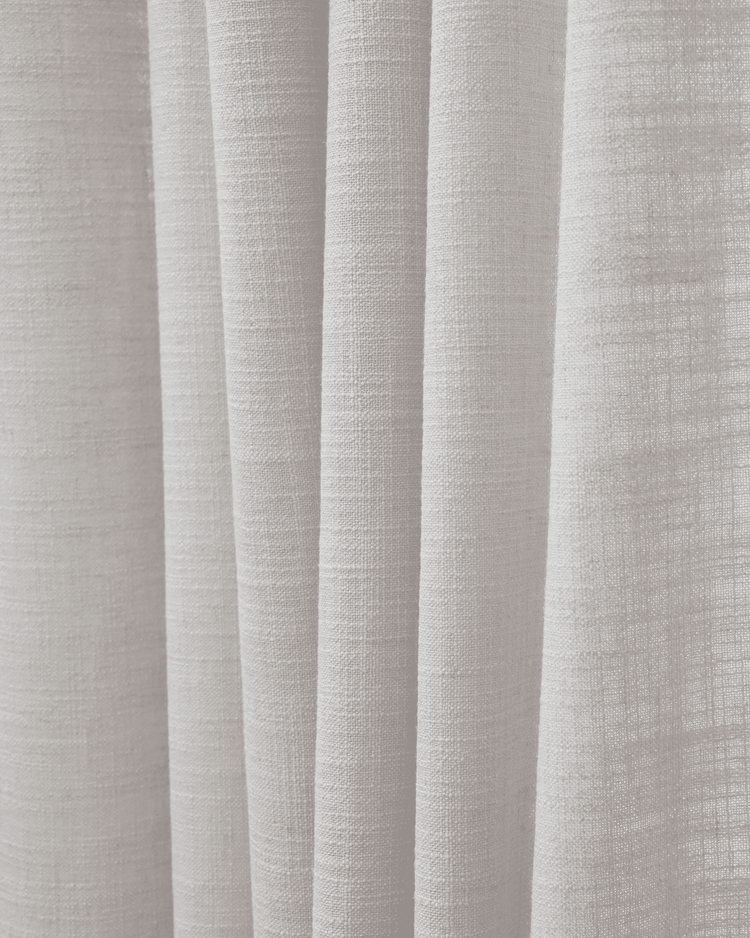
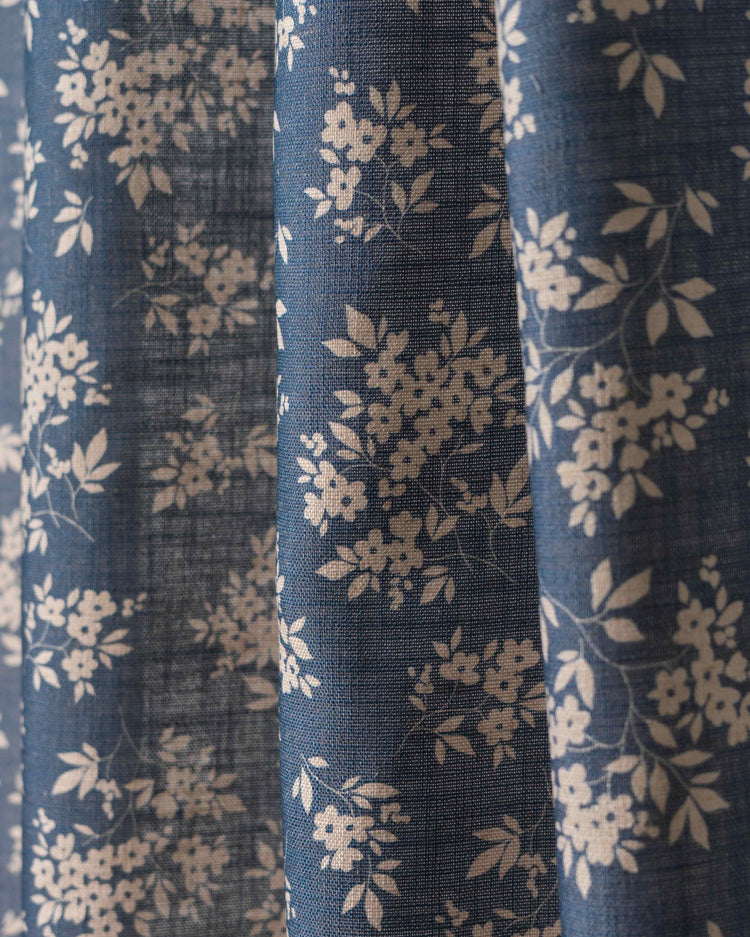
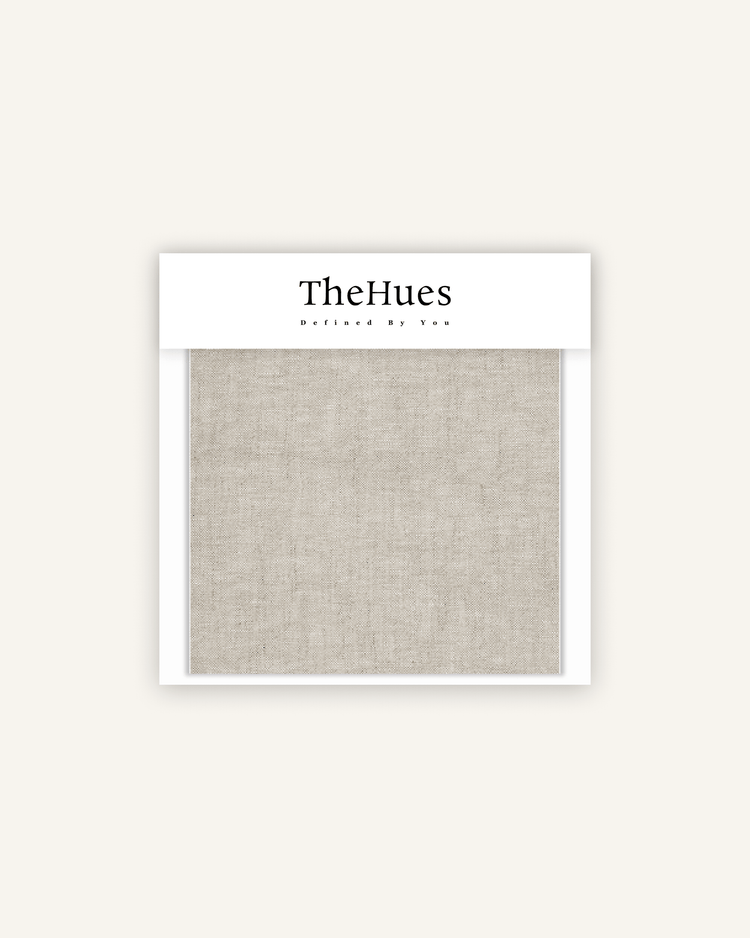
- Swatches help you test color at home. Use curtain swatches to compare undertones, texture, and opacity in your room’s real light.
- Design help may be available. TheHues offers a visualization tool and free design service if you want help seeing how a setup may look before ordering.
What to check before ordering online
- Measure carefully. Confirm whether you are entering finished curtain dimensions, window dimensions, or coverage width.
- Review the header style. Grommet, back tab, rod pocket, and pleated styles each hang differently. Use the curtain header guide if you are comparing options.
- Choose lining based on the room. A bedroom may need blackout support, while a living room may only need privacy or softened glare. The curtain liner guide can help you compare the tradeoffs.
- Read the policy details. Custom orders are usually treated differently from ready-made products, so review return, exchange, and measurement-support policies before checkout.
Side-by-side comparison: where should you buy custom curtains?
The best place to buy custom curtains depends on the room, budget, timeline, and how much support you want. Use this table as a quick starting point.
| Source | Best for | Main advantage | Main tradeoff |
|---|---|---|---|
| Marketplace seller | Simple panels, handmade fabrics, smaller projects | Unique styles and direct communication with the maker | Quality, policies, and support vary by seller |
| Local drapery workroom | Complex projects, specialty windows, full-service installs | High customization and professional fabrication | Usually higher cost and longer timeline |
| Local tailor or seamstress | Hemming, alterations, simple panels | Practical for basic sewing and small updates | Limited drapery-specific design support |
| Online made-to-measure brand | Bedrooms, living rooms, wide windows, whole-home consistency | Custom sizing with online tools and broad options | You still need to measure carefully and order swatches |
How to choose the right source for your project
Choose a marketplace seller if...
- you want a handmade look or niche fabric
- your window is straightforward
- you are comfortable managing measurements and specifications yourself
- you can wait if the seller has a production queue
Choose a local workroom if...
- your windows are unusual, oversized, or technically difficult
- you want professional measuring and installation
- you need layered treatments, specialty hardware, or advanced pleats
- you value in-person fabric review and local guidance
Choose a local tailor or seamstress if...
- you need basic hemming or simple panels
- you already have fabric
- the project does not require complex headers or lining
- you want a simple local solution for a smaller space
Choose an online made-to-measure brand if...
- you want custom sizing without managing a local workroom
- you need consistent curtains across multiple rooms
- you want to compare fabric, header, and liner options in one place
- you prefer using measurement guides, swatches, and design support before ordering
For many homeowners, online made-to-measure offers the most balanced path: more tailored than ready-made panels, easier to access than a local workroom, and more structured than buying from an individual seller.
What to check before you order custom curtains anywhere
No matter where you buy custom curtains, a few steps can help you avoid the most common mistakes.

- Measure the window and the wall. Curtain size depends on more than the glass. Rod height, stack-back space, and floor clearance all affect the final look.
- Order swatches before committing. Fabric color can shift with daylight, wall color, and evening lamps.
- Confirm the header style. Make sure the curtain top works with your rod, track, rings, or brackets.
- Choose the liner for the room’s job. Blackout curtains for a bedroom, thermal curtains for a drafty window, and light-filtering curtains for a living room solve different problems.
- Ask what is included. Clarify whether the price includes fabric, lining, hardware, installation, shipping, or design support.
- Review custom-order policies. Know what happens if the fabric arrives with a defect, the size is wrong, or the product does not match the confirmed specification.
FAQ: Where to buy custom curtains
Where is the best place to buy custom curtains?
The best place depends on your project. Online made-to-measure brands are often a strong choice for homeowners who want custom sizing, fabric options, and design support. Local workrooms are better for complex or full-service projects. Marketplace sellers and seamstresses can work well for simpler curtain needs.
Are custom curtains worth it?
Custom curtains are usually worth it when fit matters. They are especially helpful for tall ceilings, wide windows, sliding doors, bedrooms that need better light control, and rooms where standard panel lengths look slightly off.
Should I buy custom curtains online or locally?
Buy online if you want a guided, convenient made-to-measure process and can measure carefully. Buy locally if the project needs professional measuring, installation, unusual hardware, or a highly complex design.
Can a tailor make custom curtains?
A tailor or seamstress can often make simple panels or hem existing curtains. For pleated curtains, lined blackout panels, weighted hems, or large projects, a drapery workroom or dedicated custom curtain brand is usually a better fit.
What should I order before buying custom curtains?
Start with swatches. They help you judge color, texture, opacity, and undertone in your actual room. Then confirm measurements, header style, lining, and mounting method before placing the final order.
What is the biggest mistake when buying custom curtains?
The biggest mistake is treating custom curtains like ready-made panels. You need to confirm measurements, fullness, header compatibility, fabric behavior, liner choice, and policy details before checkout.
Final takeaway
There is no single best place to buy custom curtains for every home. The right source depends on how complex the window is, how much guidance you want, and how much control you need over fabric, lining, header style, and fit.
If you want the most hands-on local service, start with a drapery workroom. If you need basic sewing, a tailor or seamstress may be enough. If you want custom sizing, a wide range of options, and tools that help you make decisions from home, an online made-to-measure brand is often the most practical route.
To start with a tailored online setup, compare TheHues custom curtains, test your favorite fabrics with curtain swatches, and confirm your measurements with the measurement guide. If you are unsure about fabric, header style, or panel layout, use the free design service before you place your order.