2026 Latest Designs of Curtains for Bedroom


In this article 11 sections
- What are the bedroom curtain trends for 2026?
- What curtains are best for a bedroom?
- Why is layering the biggest bedroom trend in 2026?
- What bedroom curtain colors are trending in 2026?
- 2026 bedroom curtain styling looks worth copying
- How long should bedroom curtains be in 2026?
- What are the best curtains for a nursery or kids’ room in 2026?
- What fabrics are trending for bedroom curtains in 2026?
- How do you care for bedroom curtains?
- Frequently asked questions
- Bring your 2026 bedroom together
The headline 2026 bedroom curtain trends are quiet, earthy color palettes, layered sheers over blackout or room-darkening panels, natural textures like linen and cotton blends, and tailored pleated headers that read like a boutique hotel. The thread running through all of them is the same: a bedroom curtain in 2026 has to look calm and perform hard, controlling light for sleep, adding nighttime privacy, and softening sound and temperature swings.
This guide stays focused on the bedroom specifically, where sleep, blackout, layering, and the wall behind your headboard drive most decisions. If you want the broader picture across blinds, shades, and every room in the house, see our 2026 window treatment trends guide. Here, we go deep on the master bedroom, guest rooms, and the nursery.
What are the bedroom curtain trends for 2026?
Bedroom curtains in 2026 lean into “quiet luxury”: fewer loud patterns, more texture, and color that disappears into the room instead of competing with it. The five trends shaping bedrooms this year:
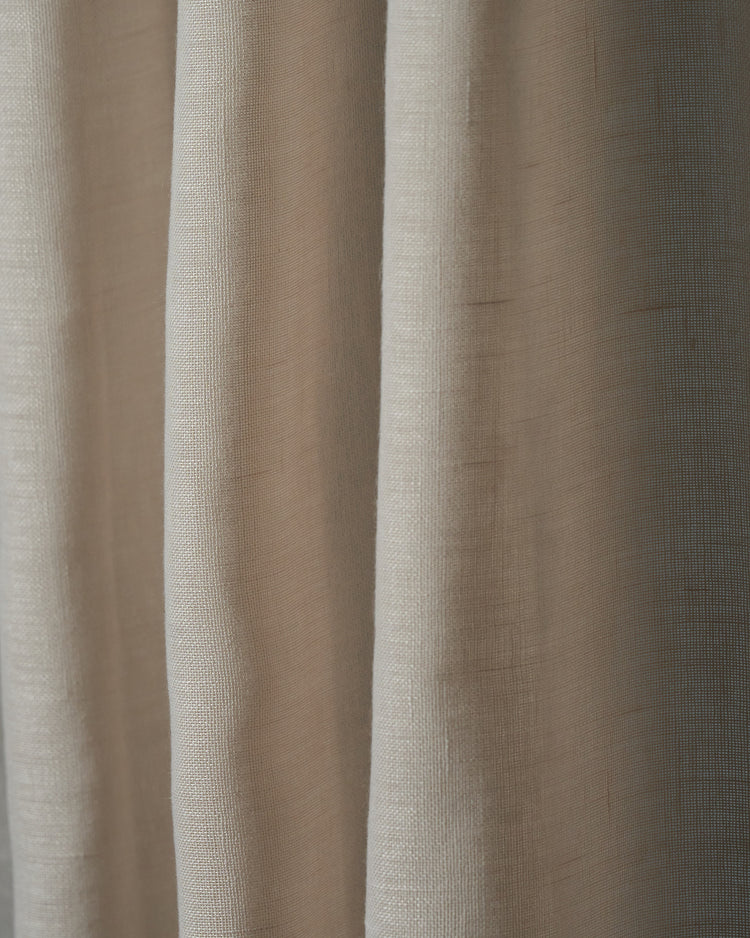
- Earthy, low-contrast color. Soft gray, sand, oatmeal, mushroom, olive, and warm clay replace stark white and high-contrast prints.
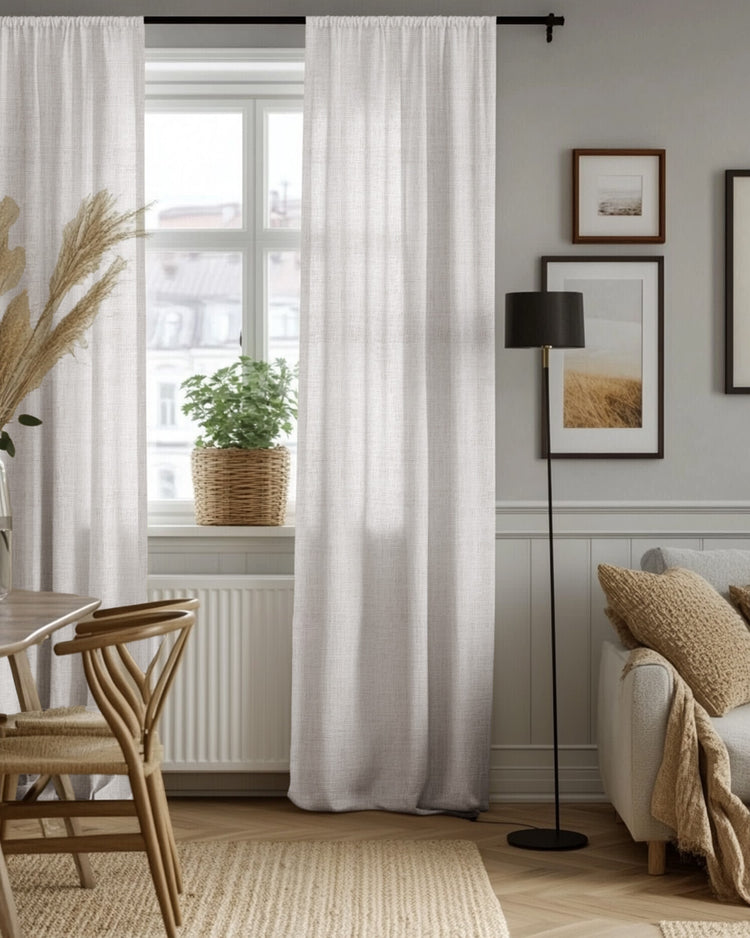
- Layered sheers over a light-blocking panel. A double setup gives you airy daylight and full nighttime privacy from the same window.
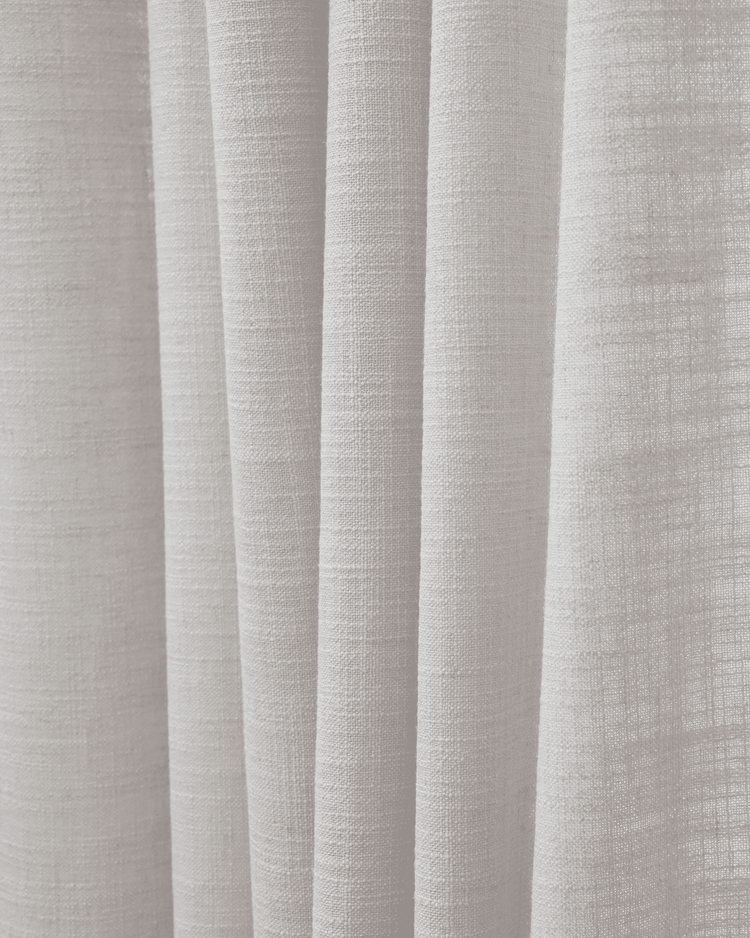
- Natural and natural-look textures. Pure linen, linen-blend, and matte cotton-look fabrics carry the “relaxed but intentional” mood.
- Tailored pleated headers. Pinch pleats and Euro pleats give a structured, hotel-suite drape instead of a casual gather.
- Performance built in. Blackout, room-darkening, thermal, and four-layer constructions are chosen for sleep and comfort, not just looks.
A quick accuracy note before you shop: a fabric labeled 100% blackout blocks light through the material, but the room only gets truly dark if you also close the gaps at the top, sides, and center of the window. We come back to that below, because it is the single biggest reason a “blackout” bedroom still leaks light at sunrise.
For broader bedroom design context beyond curtains, you can also compare these ideas with Good Housekeeping’s 2026 bedroom design trends.

What curtains are best for a bedroom?
The best bedroom curtains do three jobs at once: control light, add privacy after dark, and help with temperature. Match the curtain type to which of those matters most to you.
| If your priority is... | Best bedroom pick | Why |
|---|---|---|
| Sleeping past sunrise / daytime naps | Blackout or room-darkening panels | Block the most light so the room stays dark |
| Soft daylight without losing daytime privacy | Sheer or light-filtering panels | Diffuse light and screen the view in daytime |
| Both, from one window | Layered sheer + blackout | Sheers for day, the heavy panel drawn at night |
| Warmth in winter / less heat in summer | Thermal or four-layer curtains | Add an insulating layer at the glass |
| A calmer, quieter room | Four-layer sound-absorbing curtains | Reduce echo and muffle outside noise |
Two honest clarifications so you set the right expectations:
- Sheers are not nighttime privacy. A sheer panel screens the view in daylight, but once your interior lights are on after dark, people outside can see in. This is why the layered look is so popular in bedrooms. You keep the sheer for the day and draw the solid panel at night. See our full breakdown in Your Complete Guide to Sheer Curtains.
- Noise-reducing is not soundproof. Dense four-layer curtains can soften street noise and room echo, but no curtain makes a bedroom soundproof. Coverage, fullness, and sealing the edges matter as much as the fabric. For a realistic plan, read How to Soundproof a Bedroom.
If you are weighing how dark you actually need the room, our blackout vs room-darkening vs light-filtering comparison spells out the difference in plain terms.

 100% Blackout
 Better sleep
 Noise Reducing
 Energy Saving
Why is layering the biggest bedroom trend in 2026?
Layering wins in the bedroom because one window has two completely different jobs across the day, and a single panel cannot do both well. In the morning you want soft, filtered light; at night you want darkness and privacy. A layered setup gives you a dial instead of an on/off switch.
The standard bedroom layer is a sheer or light-filtering panel closest to the glass, with a blackout or room-darkening panel in front of it. During the day you keep the sheer drawn for diffused light and daytime screening. At night you pull the heavier panel across for darkness and privacy.
A few things to get right when you layer:
- Use a double curtain rod or track so each layer moves independently. The blackout panel needs to clear the sheer without snagging.
- For real darkness, mount wide and high. Extend the rod several inches past the window on each side and mount it well above the frame so the heavy panel overlaps the wall and reduces side and top light gaps. Fabric alone does not seal the perimeter.
- Let the two layers share a tone, not a texture. A white sheer with a sand or taupe blackout panel reads as designed, not accidental.
For setup specifics and styling ideas, see How to Layer Curtains Beautifully.

What bedroom curtain colors are trending in 2026?
The 2026 bedroom palette is built on calm, low-contrast color that helps the room read as restful. Pick your palette by the mood you want to wake up and wind down in.
| Mood | Color palette | Why it works |
|---|---|---|
| Relaxing and minimalist | Soft gray, ivory, sand | Keeps the room visually quiet and uncluttered |
| Warm and inviting | Terracotta, oatmeal, honey beige | Adds warmth and an organic, grounded feel |
| Bold and cozy | Deep green, charcoal, navy | Makes a larger room feel enveloping and rich |
| Romantic and soft | Dusty rose, mauve, champagne | Adds softness without going saccharine |
How to choose against your wall color:
- Gray or white walls: almost any curtain tone works. Match the wall undertone so the curtain does not clash; our guide on curtain color and gray wall undertones walks through this.
- Dark or moody walls: a slightly lighter curtain keeps the room from feeling closed in, while a tone-on-tone darker panel doubles down on the cocoon effect.
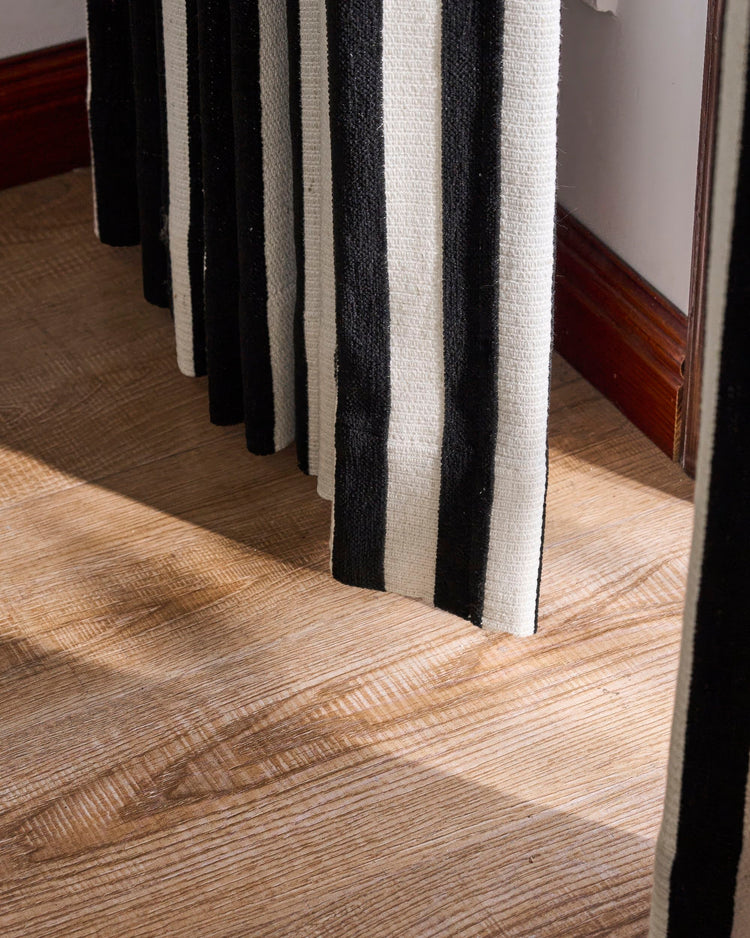
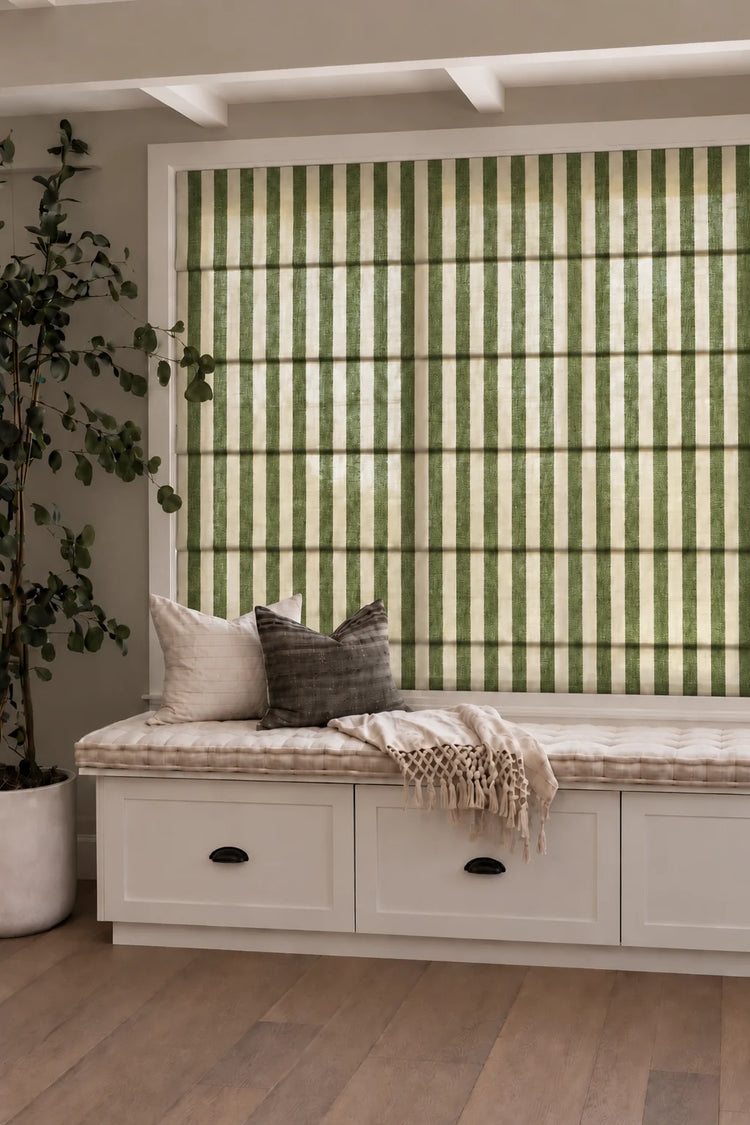
- If you want pattern: keep it subtle in a bedroom: tone-on-tone, a fine vertical stripe, or a soft woven texture rather than a busy print.
Should bedroom curtains match the bedding?
They do not have to match, and in 2026 most designed bedrooms deliberately avoid an exact match. Pull one shared tone between the curtains and bedding so they relate, then let textures differ. A linen curtain with a quilted or boucle bedspread in the same sand family looks more layered than head-to-toe matching. Matching everything can flatten the room; coordinating gives it depth.
Solid colors or prints for the bedroom?
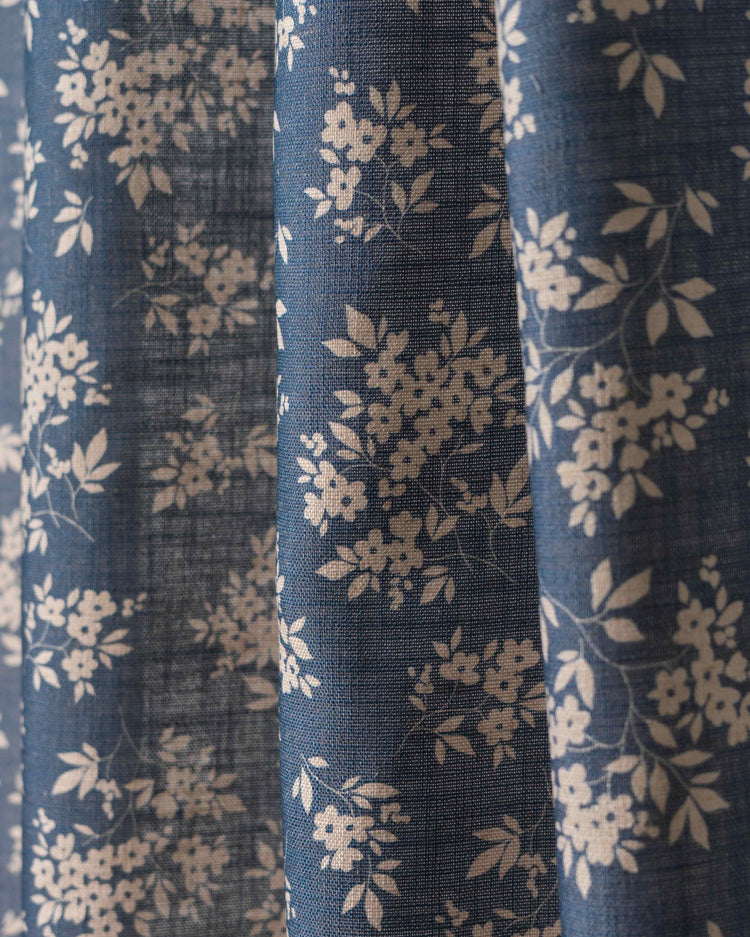
For most 2026 bedrooms, solids win for the main panels. Solid earthy tones are easier to live with night after night, easier to coordinate, and they keep the focus on texture and drape. Reserve pattern for an accent, such as a single accent panel, a subtle stripe, or a woven leaf motif, if the rest of the room is restrained. If you crave more pattern energy, that usually belongs in the living room, not the space you sleep in.

2026 bedroom curtain styling looks worth copying
These are the bedroom-specific looks designers are leaning on this year. Each one balances the calm-color trend with a real performance layer.
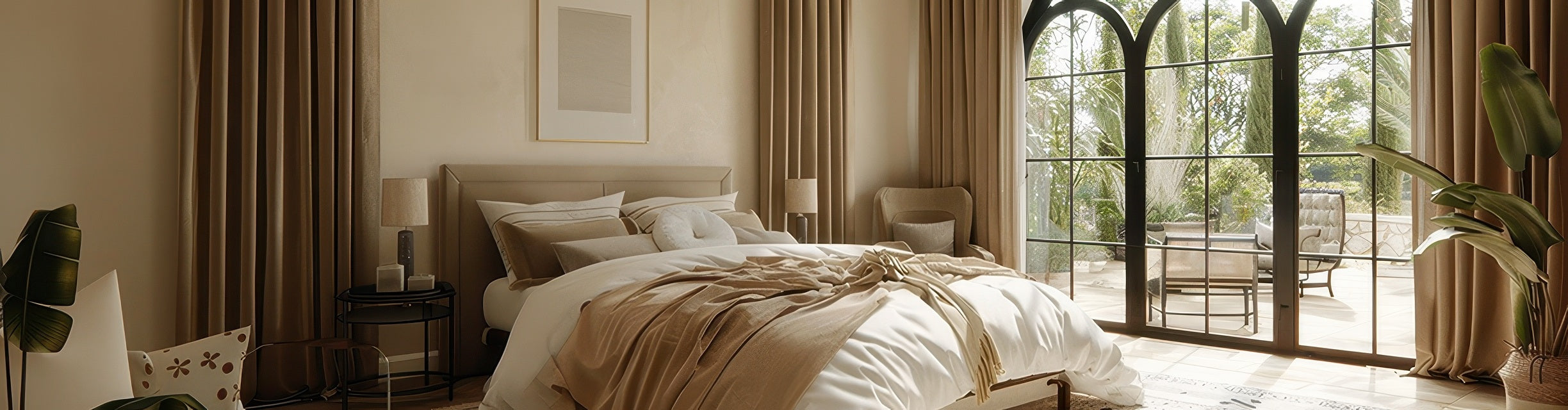
- Earthy elegance. Olive or sage linen panels with oak furniture and cream bedding. Warm, grounded, and forgiving with morning light.
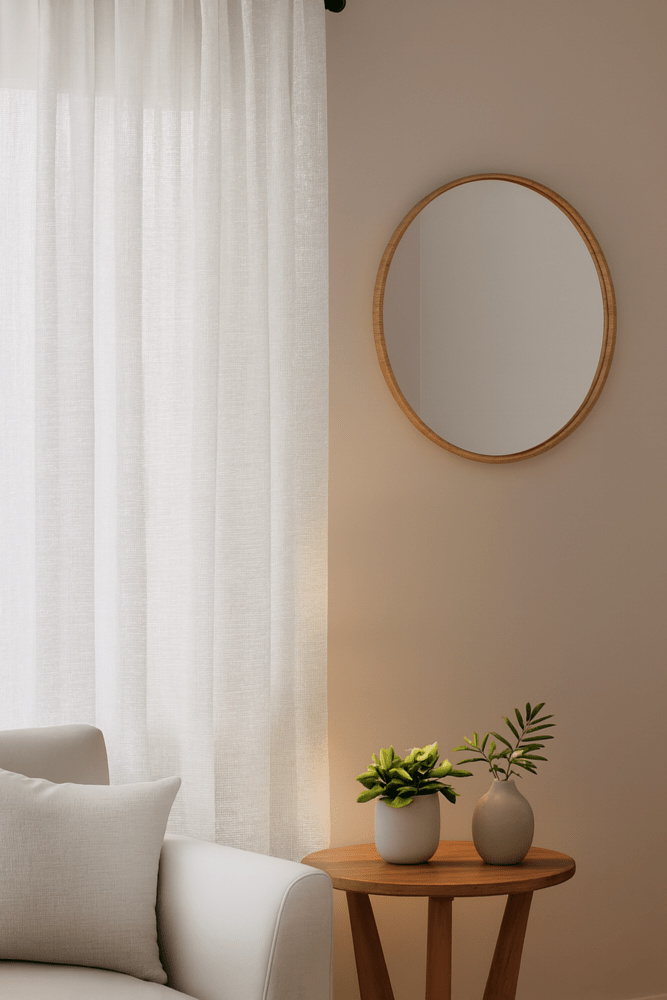
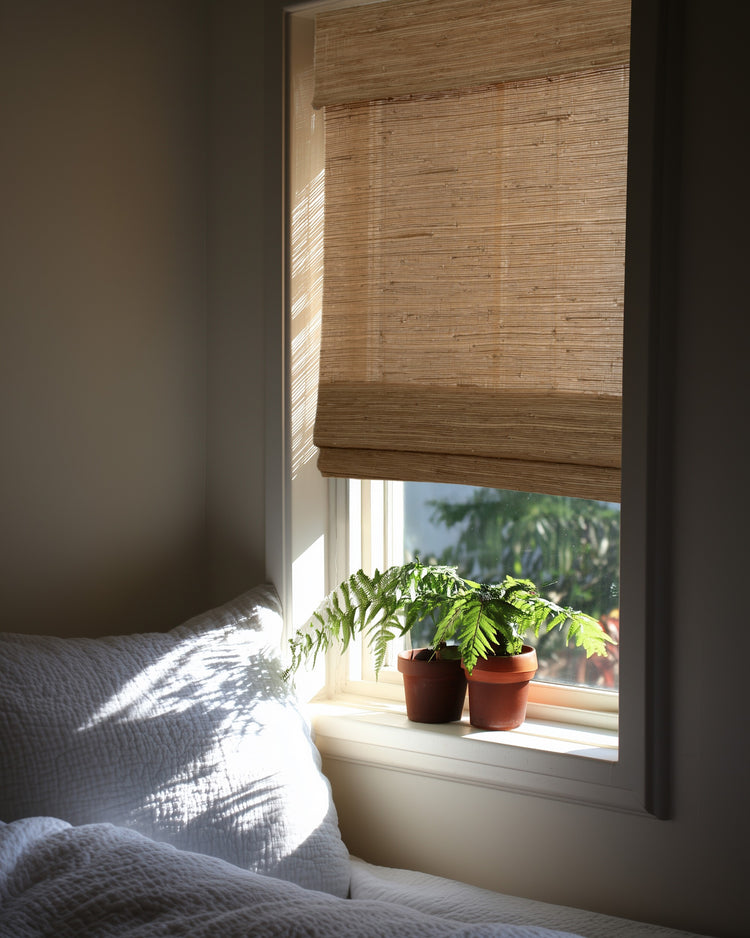
- Modern coastal. White sheers layered with a sandy-beige room-darkening panel that is breezy by day, private and dim at night.
- Luxury minimalism. Floor-length taupe blackout panels in a clean pleated header with matte brass or black hardware.
- Soft industrial. Charcoal cotton-blend panels on slim black rods for contrast against pale walls.
- Headboard-wall drama. Run floor-to-ceiling, wall-to-wall panels across the entire wall behind the bed, even past a smaller window, to frame the headboard and make the room feel taller and more hotel-like. This works best on a ceiling track and is one of the most-requested 2026 bedroom looks.
For the styling that pulls these together, pleated headers are doing a lot of work this year. See Your Ultimate Guide for Curtain Heading Types to pick the right one.
How long should bedroom curtains be in 2026?
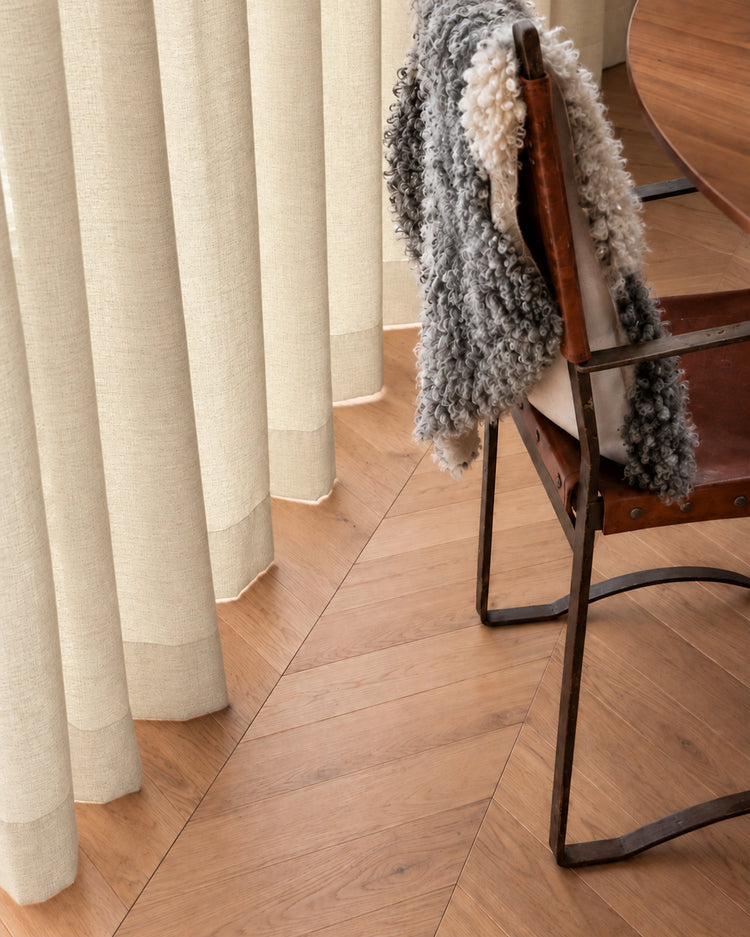
For a tailored 2026 look, hang bedroom curtains so they reach the floor, and choose between a “hover” finish about 1 inch off the floor or a “puddle” that pools about 3 inches onto the floor. Floor-length is the trend; short, sill-length panels read dated in a primary bedroom.
- Hover, about 1 inch off the floor: the practical default. Cleaner lines, easier to vacuum around, and better in active rooms or homes with pets.
- Puddle, about 3 inches onto the floor: softer and more luxurious, best in a formal, low-traffic bedroom. It gathers more dust, so treat it as a style choice, not the everyday default.
Measure from the bottom of the rod or track to the floor, not from the ceiling, because the header and rings change where the fabric actually begins. Custom finished lengths can vary by roughly 1 to 2 inches due to normal manufacturing tolerances, so do not expect millimeter precision. Our deep dive on puddled curtains and the right length covers every finish.
A note on fullness, since it is a common mistake: there is no universal “2 to 2.5 times the window width” rule. The right amount of extra fabric depends on your header style. Pleated headers already have fullness sewn in, so you order close to the rod width, while a rod-pocket sheer needs more. Use the header guide for your specific style rather than a blanket multiplier.
What are the best curtains for a nursery or kids’ room in 2026?
For a nursery, blackout or strong room-darkening curtains are the priority, because daytime naps and an early sunrise are the enemy of a baby’s sleep schedule. The trend toward calm, neutral nurseries pairs well with soft sand, sage, or greige blackout panels that grow with the room instead of a loud themed print.
Two non-negotiables for kids’ rooms:
- Seal the light, not just the fabric. Even a 100% blackout panel leaves a glow if light spills around the edges. Mount the rod high and wide so the panel overlaps the wall, and overlap the two center panels where they meet. We cover the realistic expectations in Do Babies Need Blackout Curtains for the Nursery.
- Make it safe. Anchor rods and tracks securely into the wall, keep any cords and tiebacks out of reach, and avoid long puddles a toddler can pull or trip on. Hanging panels to hover just above the floor, rather than puddling, reduces the chance of little hands pulling fabric down.
For more room-by-room ideas including playrooms, see Window Treatment Ideas for Kids’ Bedroom and Playroom.
What fabrics are trending for bedroom curtains in 2026?
Texture is the quiet star of 2026, and the bedroom favors soft, breathable, low-sheen fabrics over anything glossy.
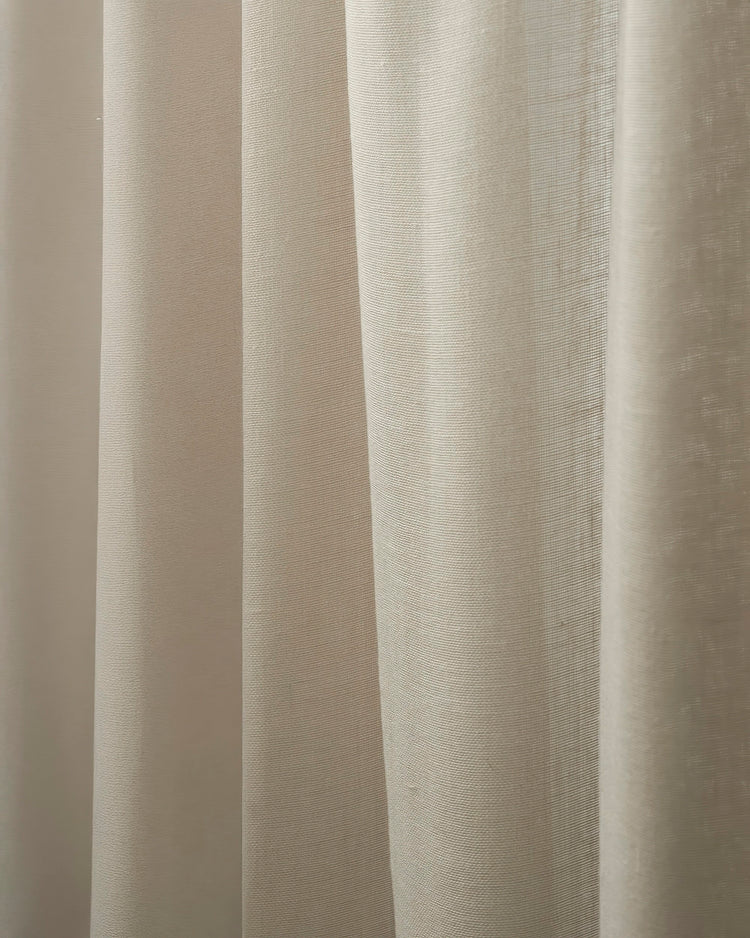
- Pure linen: the signature relaxed-luxury look, with natural slubs, soft drape, and a breathable feel. Expect some wrinkling and relaxed folds; that is the look, not a defect.
- Linen-blend / linen-look: keeps the linen texture with better shape retention and easier care. It is labeled separately from pure linen, so check the fiber content if that matters to you.
- Cotton and cotton-blend: soft, matte, and easygoing — good for casual and modern-coastal bedrooms.
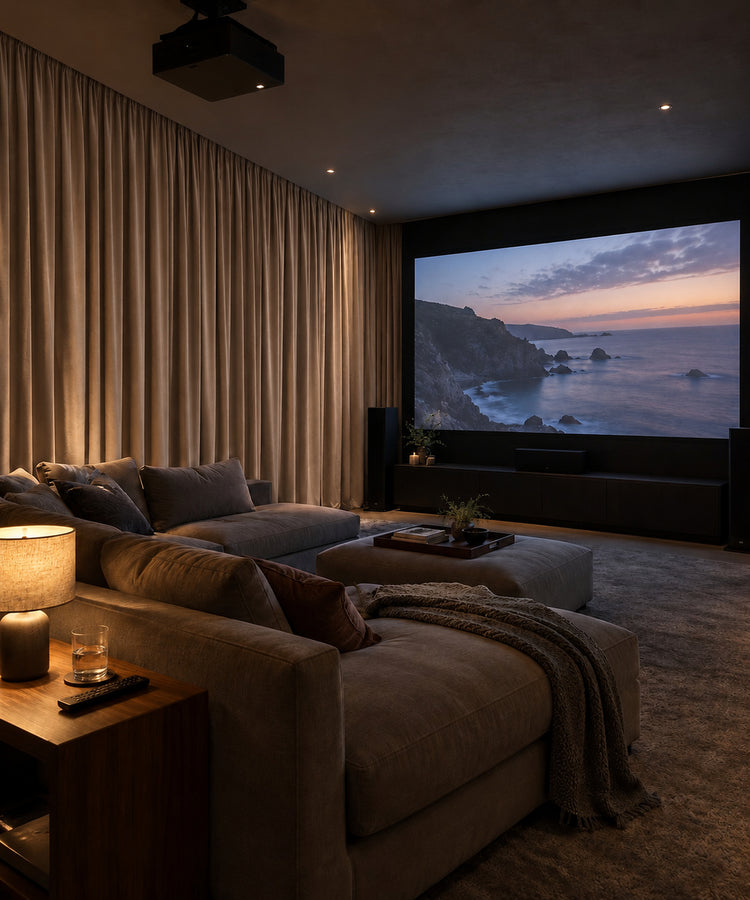
- Velvet: rich and enveloping, and often used in blackout or four-layer constructions for a cozy, dim, sound-absorbing bedroom. It is heavy, so it needs hardware rated for the weight.
- Four-layer thermal/blackout: a specialized construction, usually decorative face fabric plus dense sound-absorbing and insulating inner layers, for the bedroom that needs darkness, warmth, and noise reduction in one panel.
When you pair a bedroom with another room, keep one base tone consistent and vary the texture, such as linen in the bedroom and velvet or cotton elsewhere, so the home feels connected without being repetitive.
How do you care for bedroom curtains?
Care depends entirely on the specific fabric and construction, so always follow the product care label rather than a one-size rule. As a baseline for keeping bedroom panels fresh:
- Dust weekly with a vacuum brush attachment or a quick shake to stop buildup, which matters more in a bedroom where dust affects sleep.
- Wash only what the label allows. Some linen-look and linen-blend panels permit a cold gentle machine wash and line dry; coated, velvet, lined, and four-layer panels often do not. Never assume washability from how the fabric looks.
- Remove hooks, rings, or detachable liners first if the care instructions tell you to.
- Rotate panels in sunny rooms so they fade evenly, and swap a lighter sheer in summer for a heavier layer in winter to refresh the room seasonally.
Frequently asked questions
What is the biggest bedroom curtain trend in 2026?
Layered curtains, usually a sheer paired with a blackout or room-darkening panel, in calm, earthy colors. It gives you soft daylight, full nighttime privacy, and darkness for sleep from the same window.
What color curtains are in style for bedrooms in 2026?
Soft, low-contrast earthy tones are in style for bedrooms in 2026: sand, oatmeal, soft gray, sage and olive green, and warm clay. Solids are favored over busy prints for the main panels.
Do blackout curtains make a bedroom completely dark?
Not by themselves. The fabric blocks light through the material, but light still leaks at the top, sides, and center unless you mount the rod high and wide, overlap the panels, and close the perimeter gaps.
Should bedroom curtains touch the floor?
Yes, floor-length is the 2026 standard. Choose a hover finish about 1 inch off the floor for easy upkeep, or a 3-inch puddle for a softer, more formal look in low-traffic rooms.
Are soundproof curtains worth it in a bedroom?
Dense, four-layer curtains can noticeably reduce street noise and echo, but no curtain is truly soundproof. Pair full coverage and generous fullness with other steps for the best result.
Should bedroom curtains match the bedding?
No need to match exactly. Share one tone so they coordinate, then vary textures for a more layered, designed look.
Bring your 2026 bedroom together
The best 2026 bedroom starts at the window. Decide your light goal first, whether that is nap-ready darkness, soft daylight, or both. Then choose a calm earthy color that relates to your walls and bedding, and layer a sheer over a blackout or room-darkening panel if you want the flexibility of day and night control. Finish with a texture and header that match the mood: linen for relaxed, velvet for cozy, and a tailored pleat for hotel polish.
When you are ready to size your panels, use the header guide for the correct fullness, measure from the rod to the floor, and confirm your setup before you order. And if you are refreshing more than the bedroom, our broader 2026 window treatment trends guide carries these ideas across the rest of the home.