Why Your Thermal Curtains Are Causing Mold (and How to Stop It)


In this article 9 sections
- Why thermal curtains can lead to window condensation
- Signs of moisture behind thermal curtains
- How to reduce condensation without losing the benefits of thermal curtains
- Check whether floor vents are trapped behind the curtains
- Should you use window insulation film with thermal curtains?
- Adjust how your thermal curtains hang
- How to choose thermal curtains with moisture in mind
- FAQ about thermal curtains and condensation
- Final takeaway
Thermal curtains can make a room feel warmer, softer, and more comfortable in cold weather. But in some homes, they can also reveal a problem you may not notice right away: moisture collecting on the window glass or windowsill behind the curtain.
This does not mean thermal curtains are bad for your home. It usually means the window, room humidity, airflow, and curtain setup need to work together more carefully.
If you see condensation after installing thermal curtains, start by checking the window area, adjusting airflow, and reviewing your indoor humidity. In many cases, a few practical changes can help you keep the warmth without trapping too much moisture behind the fabric.
Why thermal curtains can lead to window condensation
Thermal curtains work by helping slow heat transfer around the window. In winter, they keep more warm room air on the room side of the curtain and reduce the cold feeling near the glass.
That insulating effect is useful, but it can also leave the glass colder. When warm indoor air reaches a cold window surface, moisture in the air can turn into condensation. It is similar to the way a cold drink sweats on a warm day.
The issue is usually more noticeable with single-pane windows, older windows, very cold outdoor temperatures, or rooms with higher humidity from showers, cooking, humidifiers, or indoor laundry drying.

 100% Blackout
 Better sleep
 Noise Reducing
 Energy Saving
Before the curtains were installed, more warm air may have reached the glass. After the curtains are closed, the space between the curtain and the window can become cooler and less ventilated. If moisture collects there and does not dry out, the window frame, sill, or curtain lining may start to smell musty or show spots over time.
The goal is not to stop using thermal curtains. The goal is to keep enough warmth in the room while giving the window area a chance to dry.
Signs of moisture behind thermal curtains
A little condensation on very cold mornings can happen in many homes. What matters is whether the moisture clears quickly or stays trapped behind the curtain.
Check behind your curtains during colder months, especially in bedrooms, bathrooms, kitchens, and rooms with older windows.

- Window glass stays foggy for hours after morning.
- Water sits on the sill or frame after the curtains are opened.
- The curtain lining or lower hem smells musty.
- You see gray, black, or brown spots near the sill, trim, or fabric edge.
- Wood trim feels soft, swollen, or looks like it is peeling.
- Condensation appears most often after showers, cooking, or using a humidifier.
If you see visible mold, treat it as a moisture issue first. Clean the affected area safely, keep the fabric dry, and review your ventilation habits. For more curtain-specific cleaning guidance, you can also read TheHues' guide on how to get mold off curtains and blinds.
How to reduce condensation without losing the benefits of thermal curtains
Most homes do not need a dramatic fix. Start with the simplest habits first, then adjust the curtain setup if the problem continues.
Open the curtains during the day
Thermal curtains work best when they are closed during the times you need insulation most. But if they stay closed all day, the window area may not get enough light or airflow to dry.
Open the curtains for part of the day when possible. Even on cloudy winter days, letting air move around the glass can help moisture evaporate.
Wipe the glass and sill when moisture appears
If you wake up to wet glass or water on the sill, wipe it dry before closing the curtains again. This is especially important with wood trim, painted frames, or fabric that hangs close to the sill.
A quick morning wipe can prevent repeated moisture from sitting in the same area every day.
Lower indoor humidity when the weather is very cold
Indoor humidity that feels comfortable in fall may be too high for a cold winter window. When outdoor temperatures drop, cold glass is more likely to collect condensation.
A small hygrometer can help you understand what is happening in the room. As a general starting point, many homes feel better when winter humidity is kept moderate rather than high. The colder the window glass gets, the more carefully humidity needs to be managed.
| What you notice | What to try first |
|---|---|
| Light fog that clears quickly | Open curtains during the day and improve airflow near the window |
| Water on the sill each morning | Wipe the sill dry, reduce humidity, and check for blocked vents |
| Musty smell near the curtain hem | Dry the area fully, clean the fabric if needed, and keep the curtain from touching damp surfaces |
| Recurring spots on trim or lining | Address the moisture source and consider changing the curtain setup or window insulation approach |
Use exhaust fans after showers and cooking
Bathrooms and kitchens add a lot of moisture to indoor air. Use exhaust fans while showering or cooking, and let them run long enough to clear humid air from the room.
If a bedroom is near a bathroom, this still matters. Moist air can move through the home and collect on the coldest glass overnight.
Check whether floor vents are trapped behind the curtains
Many American homes have floor vents or baseboard heating near windows. That is not an accident. Warm air moving near the glass can help reduce cold surfaces and support comfort in the room.
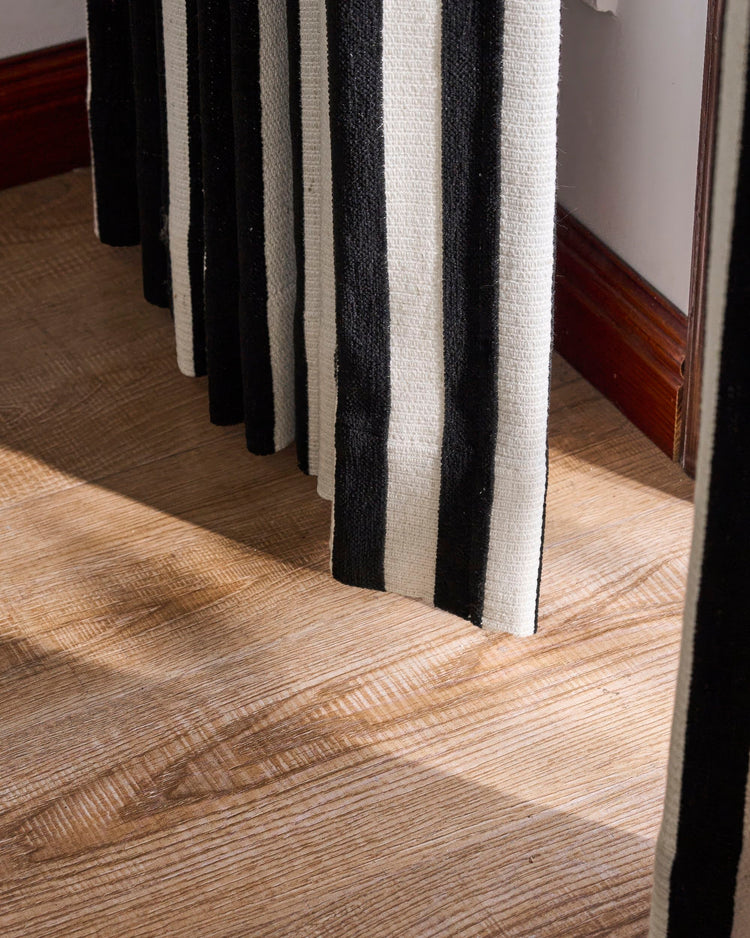
Long thermal curtains can sometimes block that airflow. The fabric may trap warm air behind the curtain, push it away from the room, or create a pocket where the glass stays cold and damp.

If you have a floor vent under the window, check these details:
- Make sure the curtain is not fully covering the vent.
- Keep fabric away from direct heat sources and moving air vents.
- Use a vent deflector only if it is safe for your heating system and room layout.
- Watch whether redirecting air improves room comfort but increases condensation on the glass.
A vent deflector can help move warm air into the room, but it may also reduce the warm airflow that reaches the glass. If condensation gets worse after adding one, you may need to adjust the curtain length, rod position, or window insulation approach.
Should you use window insulation film with thermal curtains?
Window insulation film can be useful in some cold-weather homes, especially with older windows or drafty frames. The film creates an added barrier at the window, which can reduce drafts and help separate moist indoor air from the cold glass.
It is not necessary for every room, and it is not a cure for every condensation problem. But if your windows are older, your climate is cold, or you want to keep thermal curtains closed for longer periods, it may be worth considering.

Follow the product instructions carefully and check the window periodically. If moisture becomes trapped between the film and the glass, remove or adjust the setup.
For rooms where warmth is the main goal, pair the right window treatment with the right liner. TheHues' curtain liner guide can help you compare privacy, blackout, and thermal lining choices before you order.
Adjust how your thermal curtains hang
If you do not want to use window film, you can often reduce condensation by allowing a little more air movement around the window.
That may mean hanging the curtain slightly farther from the glass, avoiding fabric that presses tightly against the sill, or choosing a length that does not trap moisture at the bottom edge.

This setup may slightly reduce the strongest insulating effect, but it can be a good compromise in rooms where moisture is the bigger concern.
Try these adjustments:
- Mount the rod so the curtain has enough space to hang freely.
- Avoid puddled curtains in damp or condensation-prone rooms.
- Open the panels fully during part of the day.
- Keep the bottom hem away from wet sills or tile ledges.
- Use the curtain measurement guide before ordering replacement panels.
If you are choosing new panels, custom curtains can help because the length, width, liner, and header style can be planned around the actual window instead of forced into a standard size.
How to choose thermal curtains with moisture in mind
If you live in a cold or humid climate, think about condensation before you order. The warmest-looking curtain is not always the easiest one to live with if the window area cannot dry.
Choose the right liner for the room
Bedrooms, drafty living rooms, and street-facing windows may benefit from a thermal or blackout liner. Bathrooms, laundry areas, and damp rooms may need a lighter, easier-to-dry setup or a shade instead of heavy fabric.
Match curtain length to the window area
Floor-length panels look polished in many rooms, but the hem should not sit in a wet zone. If the window regularly collects water on the sill, keep the fabric clear of that area.
Plan for daily use
If you will open and close the curtains every day, choose a header and hardware setup that glides smoothly. A curtain that is easy to operate is more likely to be opened for light and drying during the day.
If you are unsure which setup fits your room, TheHues' free design service can help you review the window, fabric choice, and measurements before you place a custom order.
FAQ about thermal curtains and condensation
Do thermal curtains cause condensation?
Thermal curtains do not create moisture on their own. Condensation happens when warm, humid indoor air meets cold glass. Thermal curtains can make the glass area colder and less ventilated, which may make existing moisture issues more noticeable.
Should I stop using thermal curtains if I see condensation?
Not necessarily. Start by opening the curtains during the day, wiping the window dry, checking indoor humidity, and improving airflow. If moisture keeps returning or you see mold, address the moisture source before relying on the curtains again.
Can blackout or thermal lining make condensation worse?
It can in some rooms. Heavier lining may block more warm air from reaching the glass, especially when curtains are closed for long periods. That does not make lining wrong; it just means the room may need better airflow or a different setup.
Are thermal curtains safe near floor vents?
They can be, but the fabric should not block airflow or sit too close to heat sources. Check your heating system's guidance, keep vents clear, and avoid letting fabric rest directly over active vents.
What is the best curtain setup for cold windows?
The best setup depends on the window, climate, and room humidity. In many homes, thermal curtains work best when paired with good measurement, enough side overlap, daily airing, and a liner that matches the room's real needs.
Final takeaway
Thermal curtains can help make a cold room feel more comfortable, but they work best when the window area stays dry. If condensation appears, do not assume the curtains failed. Look at the full system: window temperature, indoor humidity, airflow, liner choice, curtain length, and vent placement.
Start with simple habits. Open the curtains during the day, dry the glass when needed, use exhaust fans, and keep vents clear. If the problem continues, review the curtain setup or consider window insulation film for older or drafty windows.
For a better fit from the start, compare thermal curtains, review the curtain liner guide, and confirm your dimensions with the measurement guide before ordering.