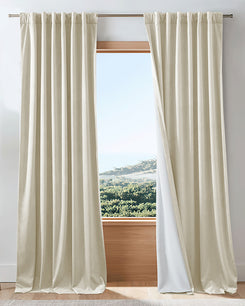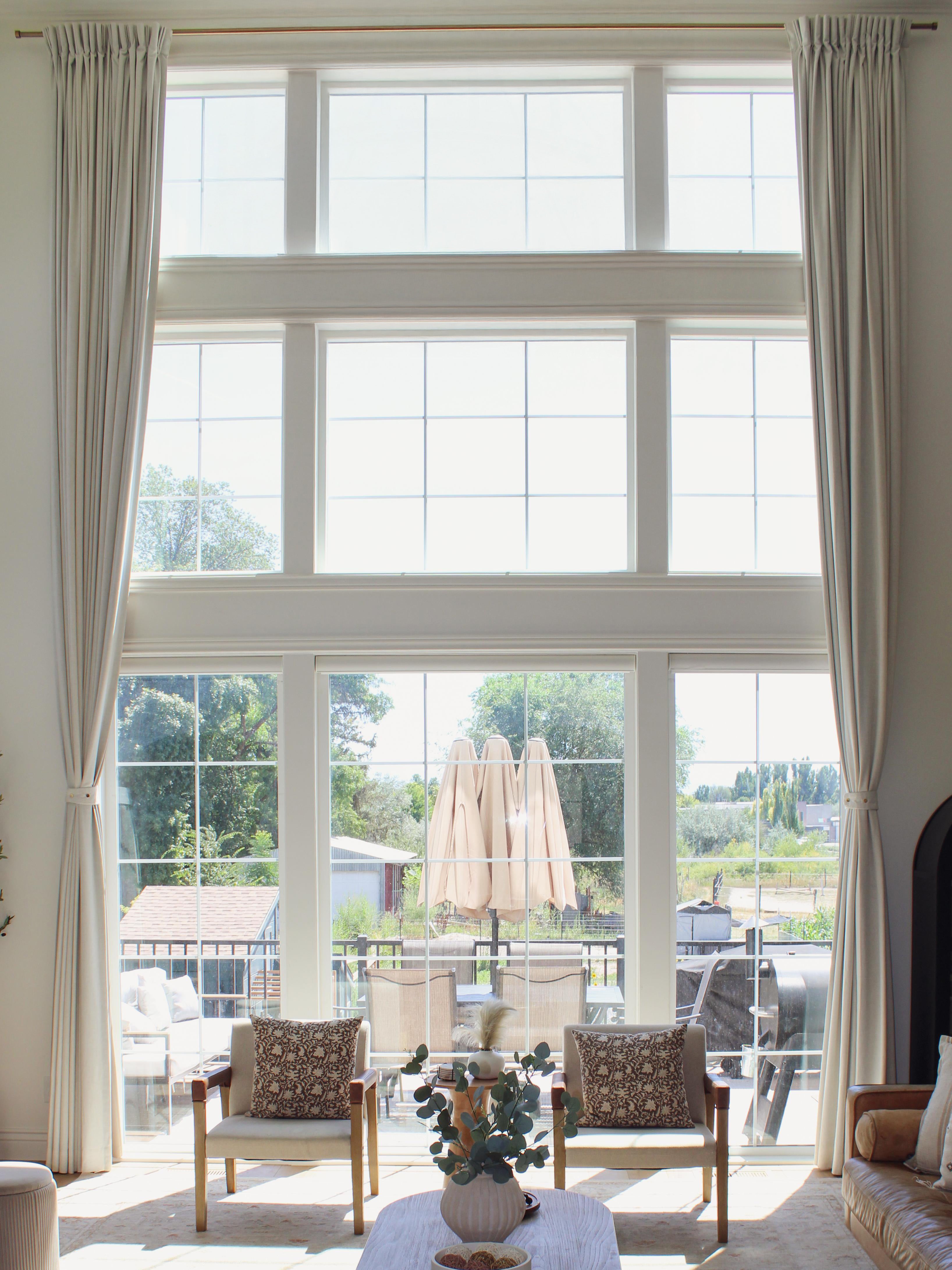


Thermal curtains promise to lower heating bills and, sure, you may have splurged on heavy lined fabrics or insulated back panels. But your curtains aren't the problem; your room still feels drafty and the thermostat keeps climbing because curtain material matters less than the way you hang them. Your thermal curtains aren't doing their thermal fabric work because there is a gap around the edges.
The air moving around your curtains is the real problem.
Behind your curtains on a cold night, warm air from your room rises and slips through the gap at the top, then hits the cold window glass. The air that cools becomes denser and sinks toward the floor. If you have a gap at the bottom, cold air spills into your room while warm air is replaced. You can lose warm air through the gap and cold air is pulled in. This creates a constant loop and convection current. Your window is cooling your room, and that's why you need to address the problem with your curtains.
If you want to be technical about it, that's called the chimney effect, and it is also the reason even the best thermal curtains can't keep a room warm. The curtain might be great at insulating, but if air can circulate around it, it really doesn't help. What you are trying to do is not just keep the heat from getting through the fabric. You are also trying to keep a layer of air between the curtain and the window. Air insulates well, provided that you can keep it still.
This is also the reason why cheap polyester curtains can outperform premium thermal curtains. If the polyester curtain is sealed around the edges and the thermal curtain has a loose fit on the rod, the polyester curtain will work better.
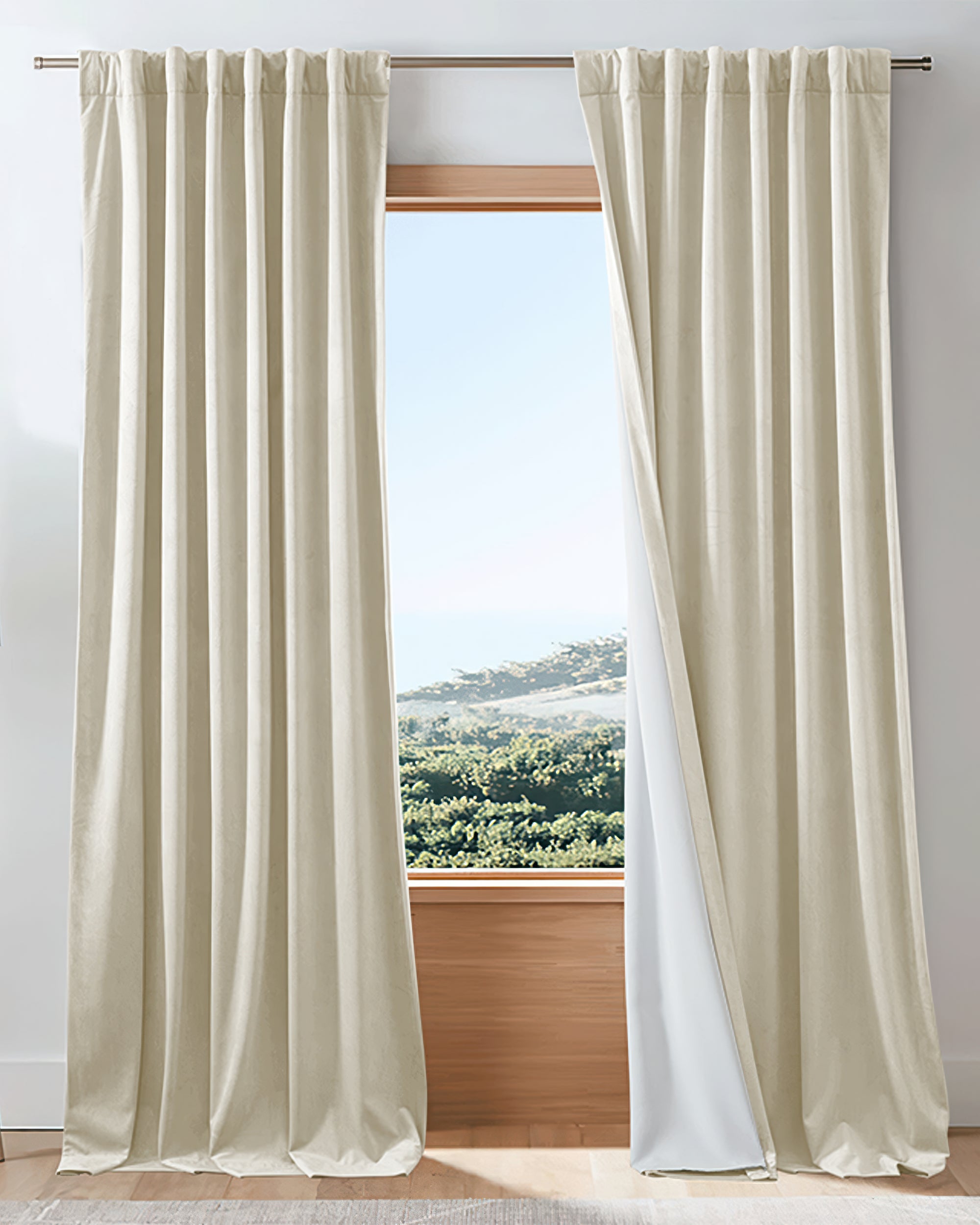
 100% Blackout
 Better sleep
 Noise Reducing
 Energy Saving
Seal the top first: why a cornice or valance makes the biggest difference
Most heat loss happens at the top of the curtains. Air that's warmed by the heating vent is diverted downward and pulled through the opening.
A cornice is sometimes referred to as a valance box. These structures use a board or box mounted above the curtain to prevent air from escaping through the curtain top. There are various solutions for different price points and completion levels. The easiest method is to install the curtain rod as close to the ceiling as possible to create a small gap for air to escape. A ceiling-mounted track system that bends to the wall on each side is the best option for seal.
If you would like a more thorough seal, a valance box constructed from foam board or plywood can seal the top edge. Since it will be above eye level, it does not need to be perfectly finished.
Fabric-covered cornices can be found at most home improvement stores or you can create your own to have a more refined finish.
The most important quality of the top seal is that convection requires a top and bottom entry point. Close off the top, and you have interrupted the entire loop of circulation.

Wrap-around curtain rods: the perfect way to fill gaps
Aside from looking unsightly, the gaps between the curtain fabric and the walls can allow air to flow between the curtain and the window. By sealing the gaps, the curtain would function more effectively and would create a trapped air pocket.
While you can find many DIY options on the internet, such as using adhesive velcro or magnetic strips to seal curtain edges, there are problems with these solutions. The strips can pull off paint from the wall, which can be a renter's nightmare come deposit time. If the window frames are not metal, then the magnetic strips are useless, which is the case with most modern US windows since they are vinyl or wood.
But a better option is a wrap-around curtain rod, also known as a French return rod. These rods allow you to hang the curtain such that it will seal the gaps, and when done, looks very clean and modern. You will find them at most home improvement stores or online for between $30-$50. These rods return to the wall, which allows the curtain to wrap around and sit flush against the wall.
Wrap-around rods are adjustable and can fit most windows. To install, simply follow usual curtain rod instructions; brackets get mounted to the wall.

Before sealing the bottom, check your floor vents
Cold air sinks and pools at floor level. If your curtains hang close to the floor, cold air from the window spills into your room, while warmer air gets drawn up behind the curtain.
American homes have a specific issue that most curtain advice ignores: forced air heating. In the US, HVAC floor registers are commonly placed directly under windows. This is done so that warm air coming from the vent is able to counteract the cold air coming from the glass.
If you let your curtains "puddle" on the floor, or use a draft snake along the bottom, you may be covering your heat source. This traps warm air behind the curtain and creates an energy-wasting scenario that could even strain your HVAC system.
Before finishing the bottom of your curtains, look for floor vents. If there's a register under your window:
- Hem your curtains to hang above the vent to allow airflow.
- Use a vent deflector to direct the warm air into the room instead of behind the curtain.
- Think about whether sealing the bottom of the curtain is necessary at all (sealing the top and sides is more important).
If there are no floor vents under your windows, you have more choices. A weighted hem will help the curtain hang closer to the floor. Curtains that extend slightly past the floor create a dust seal, which will complicate cleaning and vacuuming.

Why a curtain and a blind is better than just a curtain
In most American homes, the best window insulation is not a better curtain. It's a combination of using a cellular shade inside the window frame and a curtain outside.
Cellular shades, also known as honeycomb shades, have higher R-values than any other type of window covering according to the US Department of Energy. Designed with air-trapping honeycomb structures, cellular shades installed within a window frame seal to the glass and frame, blocking the part of the window that pulls the most heat. Curtains installed outside the frame block any remaining areas around the frame.
Together, cellular shades and outside-mount curtains can significantly reduce heat loss during the winter. The honeycomb shades deal with the window glass while the curtains deal with the window frame.
In the case of a budget that allows for only one window covering, a cellular shade that fits correctly and is installed inside a window frame will outperform a set of thermal curtains that are expensive and hung loosely. The tightness of the shade's fit to the window frame will matter more than the window covering fabric's weight.

How close is too close? Avoiding condensation and mold
Over-sealing is one of the trade-offs to avoid. Curtains close to the window trap air, but if curtains are a tight fit against the glass, you'll have a moisture problem.
Cold glass on the window causes moisture in the air to form droplets. This moisture then evaporates back into the room. If a curtain is sealed too tightly, air is trapped against the window and moisture cannot circulate, resulting in a buildup. The moisture runs down the window and onto the frame and sill, which creates conditions for mold to form.
The ideal scenario is a curtain that is close enough to the window to trap air, but not so close that it touches the glass. Finding the optimal distance is not exact science. It is dependent on the humidity levels, the outside temperature, and the insulation of your windows. After improving your curtain seals, look out for moisture on your windows. If you see more moisture, that means you sealed too tightly.
Rooms that are high in humidity require more care. Bedrooms where the doors are closed, kitchens while cooking, and bathrooms all add moisture that can get trapped behind sealed curtains. In these areas you may need to open the curtains during the day to dry the space, or you may need to accept a little less thermal sealing in trade for better moisture management.
Stop blaming the fabric
Curtains come with promises of R-values and thermal backing. In reality, the results are almost entirely determined by the installation. Start with the top seal since warm air escapes from the top fastest. Use wrap-around rods for the sides instead of adhesive strips that damage walls. Before sealing the bottom, check for floor vents. For best results, consider adding a cellular shade inside the frame.
The gaps are more important than the materials.