Shade sails in windy areas: how to choose a setup that holds up


In this article 8 sections
- Can shade sails work in windy areas?
- Breathable vs waterproof shade sails for windy spaces
- Shape and size matter in windy yards
- Installation details that help shade sails handle wind
- When should you take a shade sail down?
- Shade sail or outdoor curtains: which is better for your space?
- FAQ: shade sails in windy areas
- Final takeaway: choose the shade sail your site can support
Shade sails can work well in windy areas, but only when the fabric, size, slope, and anchor points match the site. A sail that looks clean in a product photo can still flap, sag, or pool water if the layout is too flat, the span is too large, or the anchors are not strong enough.
If your patio, pool deck, balcony, or backyard gets regular gusts, start with the conditions first. The best shade sail for a windy area is not always the heaviest or most waterproof option. It is the setup that lets the fabric stay stable, drain properly, and move safely with the space around it.
This guide explains how to choose between breathable and waterproof shade sails, when to use one large sail or multiple smaller sails, what installation details matter most, and when outdoor curtains may be a better fit than overhead shade.
If you are already comparing options, start with the TheHues sun shade sail collection, then use this guide to review your site before ordering.
Can shade sails work in windy areas?
Yes, shade sails can work in breezy spaces, but they should be planned as tensioned fabric structures, not as simple fabric covers. Wind pulls on the sail, the corners, the hardware, and the anchor points. That means the whole system matters.
In calm conditions, a slightly imperfect setup may still look acceptable. In a windy yard, small issues show up faster. A sail that is too loose can flap. A waterproof sail that is too flat can collect rain. A span that is too wide can place extra stress on the corners.
Before choosing a shade sail for a windy area, review these five factors:
- Fabric type: breathable fabric usually handles daily wind better than solid waterproof fabric.
- Shape and span: oversized sails can create more wind load than smaller, better-placed sails.
- Slope and drainage: waterproof sails need a clear runoff path.
- Anchor strength: every corner needs a secure load path, not just a convenient attachment point.
- Maintenance: tension, hardware, and fabric condition should be checked through the season.

Breathable vs waterproof shade sails for windy spaces
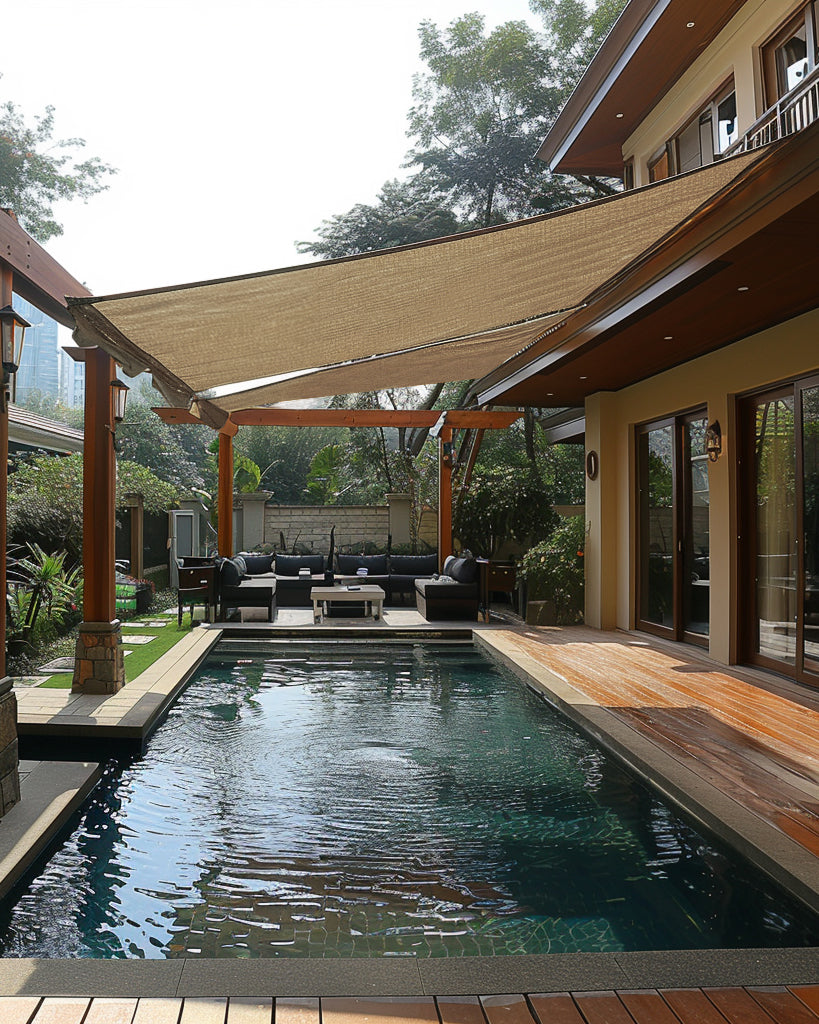
For exposed spaces, breathable shade sails are often the safer starting point because they allow some airflow through the fabric. That can reduce the pressure placed on the sail and anchor points during everyday wind.
Waterproof shade sails can still be useful, especially when light rain protection matters. But they need more careful installation because wind and water both add stress. A waterproof sail should not be installed flat, and it should not be treated like a permanent roof.
When breathable shade sails usually make more sense
A breathable shade sail is usually the better fit when the main goal is sun relief, airflow, and everyday comfort. This type of setup works especially well for open patios, pool areas, hot backyards, and breezy yards where rain cover is not the main priority.
Choose breathable fabric when:
- your space gets regular wind or gusts
- you want cooler shade and better airflow
- the area is open rather than protected on several sides
- you do not need the sail to act as rain cover
- you want a more forgiving option for daily outdoor use
When waterproof shade sails may be the better fit
A waterproof shade sail may be a better choice when you want shade plus light rain protection over a seating, dining, or grilling area. The tradeoff is that the installation needs more planning.
Waterproof fabric should have enough slope so rain can move off the surface instead of collecting in the middle. The anchor points also need to be strong enough for the extra load that can happen during rain and wind.
Choose waterproof fabric when:
- rain protection matters more than maximum airflow
- the site is calmer or partially sheltered
- you can create a clear high side and low side
- you are willing to remove or loosen the sail during severe weather
 Kid-friendly
 OEKO-TEX® Certified
 Durable
 Low maintenance
Quick decision table
| Your priority | Better starting point | Why it matters |
|---|---|---|
| Daily wind exposure | Breathable shade sail | Allows more airflow through the fabric |
| Hot patio comfort | Breathable shade sail | Creates shade without making the area feel sealed off |
| Light rain protection | Waterproof shade sail | Can help shed water when installed with proper slope |
| Exposed open yard | Breathable shade sail | Usually more forgiving in gusty conditions |
| Covered dining zone | Waterproof shade sail | Useful when rain cover is part of the goal |
If you are unsure which fabric matches your exposure, review the shade sail measurement guide before buying. Measuring anchor points, height differences, and runoff paths often makes the better fabric choice much clearer.
Shape and size matter in windy yards
Wind problems often start with the wrong size or shape. A larger shade sail may look simpler, but it can place more load on each corner and become harder to tension correctly.
In windy areas, a slightly smaller or better-positioned sail may perform better than one oversized sail trying to cover everything.
Triangle vs rectangle shade sails in wind
There is no single best shape for every yard. Triangle shade sails can work well in irregular spaces and may be easier to tension in some exposed layouts. Rectangle shade sails provide broader coverage, but they often require more careful anchor placement, slope, and tension.
The right question is not simply “Which shape is better?” It is “Which shape can my anchor points support without creating a sail that is too flat, too wide, or too difficult to tension?”
If your anchor points naturally form a compact triangle, forcing a large rectangle into the space may create more stress than value. If your site supports a smaller rectangle with secure anchors and height variation, that may still be a good option.
One large sail vs multiple smaller sails
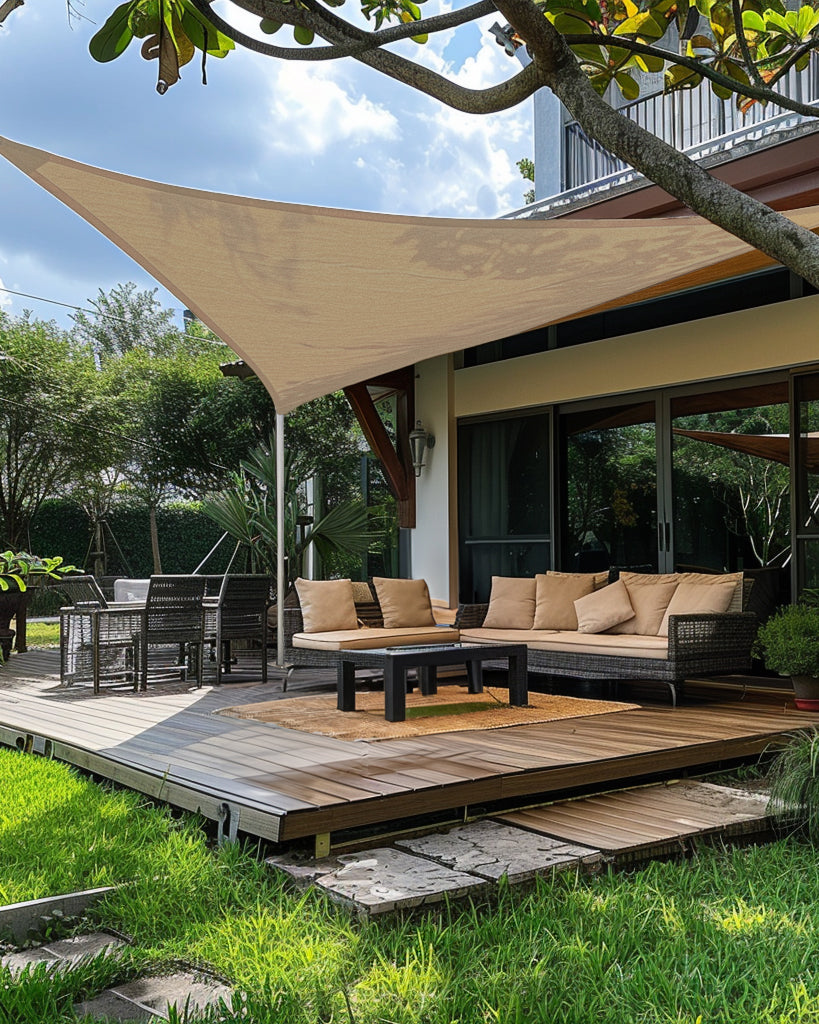
For wide patios or large seating areas, multiple smaller sails may work better than one oversized sail. Smaller sections can reduce fabric stress, improve airflow between panels, and make it easier to create height variation.
Multiple sails can also make maintenance easier. If one section needs adjustment or seasonal removal, you may not have to take down the entire shade setup at once.
Consider two smaller sails when:
- the area is wide or irregular
- one large sail would sit too flat
- anchor points are uneven or spread far apart
- wind hits one side of the space more strongly
- you want a layered shade look instead of one large canopy

Installation details that help shade sails handle wind
In windy spaces, installation planning matters as much as fabric selection. A breathable sail can still fail if the anchors are weak or the tension is poor. A waterproof sail can still disappoint if it is too flat to drain.
Use anchor points that can handle tension
Every corner of a shade sail pulls under load. The anchor points should connect to a structure that can handle that tension, not just a surface that happens to be nearby.
Before ordering, ask:
- What will each corner attach to?
- Is that attachment point structural enough for outdoor tension?
- Are the corners balanced, or is one anchor doing too much work?
- Will the final layout give the sail enough slope?
- Can the hardware be inspected and adjusted over time?
If the anchor layout feels uncertain, use the TheHues free design service before placing an order. A room or patio photo with measurements can help prevent a layout that looks good on paper but struggles outdoors.
Give waterproof sails enough slope
Slope is especially important for waterproof shade sails. Without a clear high side and low side, rain can collect on the fabric. That extra weight can stretch the sail, distort the shape, and increase stress on the hardware.
A flat waterproof sail may look clean at first, but it is usually not the best choice for real outdoor weather. Plan drainage before you choose the final size.
Keep the sail properly tensioned
A loose sail moves more in wind. More movement can lead to flapping, noise, edge wear, and hardware stress.
Good tension does not mean pulling the sail as hard as possible. It means the sail is correctly sized for the anchor points, the corners are aligned, and the hardware lets the fabric sit taut without twisting the shape.
Watch for these warning signs:
- constant flapping
- visible center sag
- edges that curl unevenly
- one corner loosening faster than the others
- hardware that needs frequent retightening
These are not just cosmetic issues. In windy setups, they can be early signs that the sail is carrying load poorly.

When should you take a shade sail down?
A shade sail may handle everyday wind and still need to come down before severe weather. Daily breezes and storm conditions are different problems.
Follow the product care instructions for your specific sail, and treat storm preparation as part of owning an outdoor fabric structure.
Take action before severe weather
Remove the sail, loosen it, or detach a corner when conditions are likely to exceed normal daily wind. This is especially important for waterproof sails, because heavy rain can add weight quickly if drainage is not working well.
Take action when:
- a severe storm warning is in effect
- wind is expected to rise beyond your usual local pattern
- heavy rain could cause pooling
- hardware has started to loosen
- you will be away and cannot monitor the setup
Use a seasonal maintenance checklist
At the start of each outdoor season, check the full setup before relying on it every day.
- Inspect each anchor point for movement, rust, cracks, or loose hardware.
- Check turnbuckles, shackles, and tensioning parts.
- Look for fabric wear, edge damage, loose stitching, or shape distortion.
- Confirm that waterproof sails still drain properly.
- Retension only according to the product's instructions.
If something looks strained, do not ignore it. Wind-related problems are easier to correct early than after a sail stretches, tears, or pulls at the anchor points.
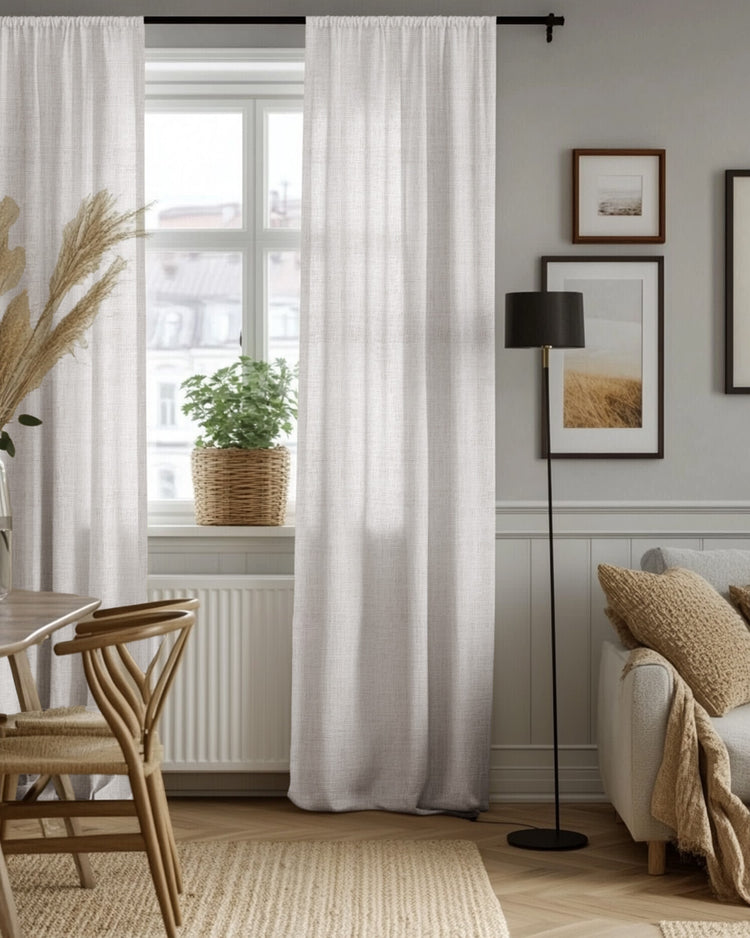
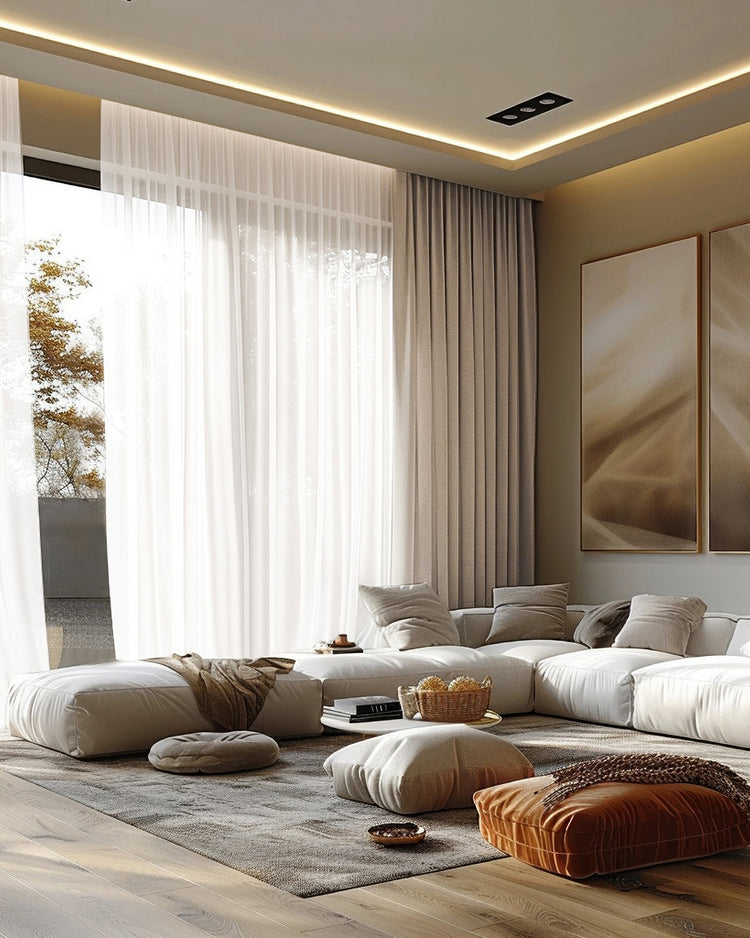
Shade sail or outdoor curtains: which is better for your space?
Sometimes the issue is not whether a shade sail is strong enough. It is whether a shade sail is solving the right problem.
Choose a shade sail when:
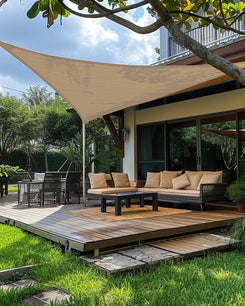
- you need overhead sun control
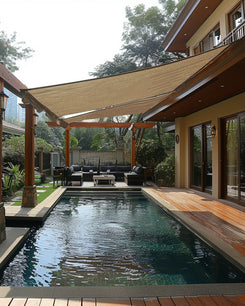
- you want shade over a patio, pool area, or seating zone
- you have secure anchor points with enough height variation
- you want an architectural outdoor look
Choose outdoor curtains when:
- privacy is the bigger concern
- side glare matters more than overhead sun
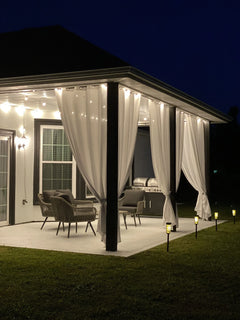
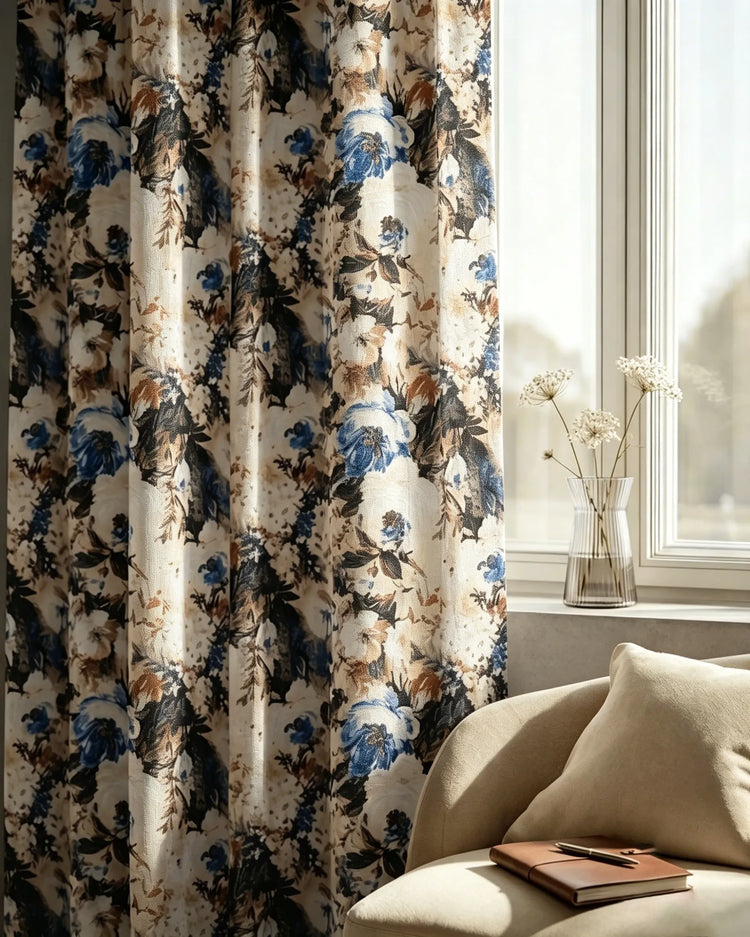
- you want a softer pergola or porch enclosure
- you need something that can open, close, or change seasonally
For many homes, the best answer is not about choosing the most dramatic product. It is about choosing the product that matches the way the space is actually used.
FAQ: shade sails in windy areas
Are breathable shade sails better than waterproof ones in windy areas?
Usually, yes. Breathable fabric is often the better starting point for exposed areas because it allows more airflow through the sail. Waterproof fabric can work, but it needs better slope, drainage, and storm awareness.
What is a good shade sail wind rating?
There is no single number that applies to every home. Wind performance depends on the sail fabric, shape, span, anchor strength, installation angle, hardware, and local exposure. Review the product guidance and avoid assuming a rating applies to every layout.
How tight should a shade sail be?
It should be tight enough to stay stable and avoid flapping, but not forced into a distorted shape. Correct sizing, aligned anchors, and suitable hardware matter more than simply pulling harder.
Can you leave a shade sail up all year?
That depends on the product, installation, and local climate. In areas with storms, snow, heavy rain, or strong seasonal wind, removing or loosening the sail during harsh weather is usually the safer habit.
Can a rectangle shade sail work in a windy yard?
Yes, if the span is reasonable, the anchors are secure, and the layout gives the sail enough slope and tension. Rectangle sails are not the problem. Oversized, flat, or poorly anchored rectangle sails are.
Final takeaway: choose the shade sail your site can support
The best shade sail for windy areas is the one your site can actually support. Start with exposure, then choose breathable or waterproof fabric based on whether airflow or rain cover matters more. After that, map the anchor points, confirm the slope, and size the sail for the real layout.
That order helps you avoid the most common mistake: buying by appearance first and solving installation later.
If you are ready to plan your setup, review the shade sail measurement guide, compare options in the sun shade sail collection, or use the free design service if your anchor layout still feels uncertain.