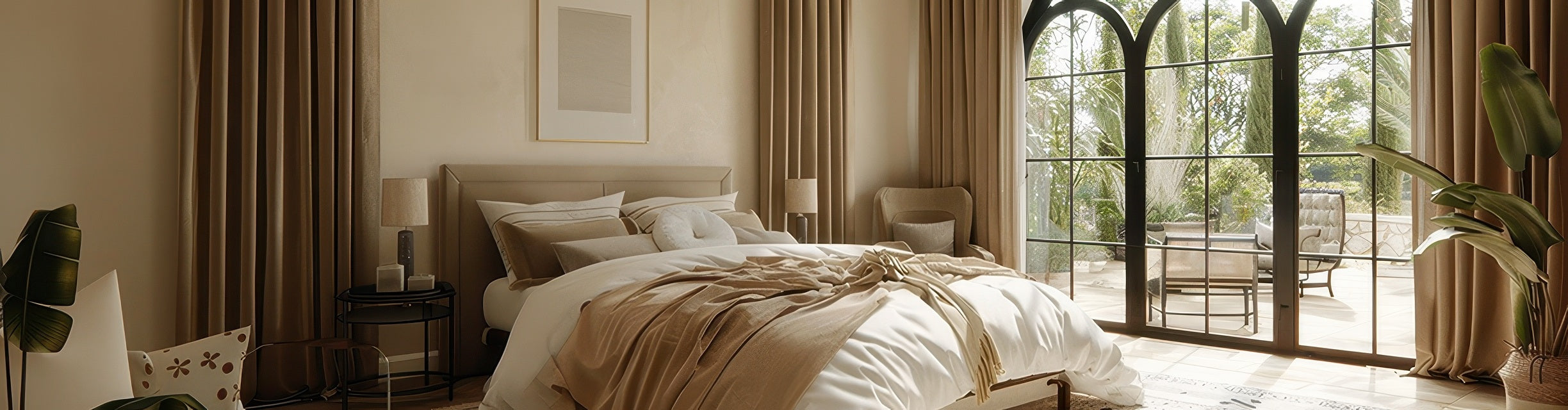
Curtain stack back explained: how to size it right


In this article 8 sections
Curtain stack back is one of the most overlooked details in curtain planning. Many people measure only for how the curtains will look when closed, but the open position matters just as much.
If the rod is too short or the panels need more room than expected, the curtains can block part of the glass even when fully open. That means less daylight, a smaller-looking window, and a setup that feels cramped instead of intentional.
In this guide, you will learn what curtain stack back means, how to estimate it, which header styles need more room, and what to do when your wall space is limited.
If you are still planning your order, start with TheHues curtain measurement guide. Confirm your window width first, then choose your rod length, header style, and panel setup with stack back in mind.
What Does Curtain Stack Back Mean?

Curtain stack back is the amount of space your curtain panels take up when they are pushed fully open. In simple terms, it answers this question: how much room does the fabric need beside the window when you want the glass clear?
This detail matters because two curtain setups can cover the same window when closed but look very different when open. One setup may expose almost all the glass. Another may still cover part of the window because the fabric stacks too far into the opening.
You may also see the term drapery stack back. It means the same thing. “Drapery” is often used in design and workroom language, while “curtain” is more common for everyday shopping and home projects.
Stack-Back Width vs. Stack-Back Depth
There are two parts of stack back to consider:
- Stack-back width: How far the curtain extends sideways along the wall when open.
- Stack-back depth: How far the curtain projects out from the wall when open.
For most homes, stack-back width is the priority. It affects how far the rod should extend past the window so the curtain can sit mostly on the wall instead of blocking the glass.
Stack-back depth matters more when you are layering sheers and drapes, using a curtain track, working around a sliding door handle, or placing curtains near furniture, cabinets, or built-in shelves.
How to Calculate Curtain Stack Back

You do not need a perfect formula to make a good decision. You need a realistic estimate based on fabric weight, header style, fullness, and how the curtains will open.
Start With a Simple Planning Rule
For standard center-open curtains, use this basic process:
- Measure the full window width.
- Estimate how much space the curtains will need when open.
- Split that stack-back space between the left and right sides.
- Extend the rod past each side of the window so the open curtains can sit mostly off the glass.
For example, if your window is 60 inches wide and your curtains need about 24 inches of total stack-back space, you would want roughly 12 inches of extra rod extension on each side. That would make the full rod width about 84 inches.
This is only a planning example. Your actual number may change depending on the fabric, lining, header style, and fullness.
Use Header Style as Your First Estimate
Header style has a major effect on curtain stack back. A flatter header usually stacks tighter. A fuller pleated style usually needs more space.
| Header Style | General Stack-Back Tendency | Best For |
|---|---|---|
| Grommet | Usually tighter | Casual rooms, simple operation, smaller wall returns |
| Rod pocket | Moderate | Decorative windows that are not opened often |
| Back tab | Moderate | Clean, casual looks with soft folds |
| Pinch pleat or euro pleat | Needs more room | Tailored rooms, formal spaces, custom curtains |
| Ripple fold or wave style | Usually needs the most room | Modern rooms, wide windows, track systems |
Use this table as a guide, not a fixed rule. Heavier fabric, blackout lining, extra fullness, and layered treatments can all increase the amount of space the curtains need when open.
Center-Open vs. One-Way Draw
The way your curtains open also changes stack back.
If your curtains open from the center, the fabric stacks on both sides. This usually creates a more balanced look and reduces the amount of wall space needed on each side.
If your curtains draw to one side, the full stack lands on one side. This can work well for sliding doors or modern layouts, but only if there is enough wall return for all the fabric.
If you are deciding between one large panel and two smaller panels, read TheHues guide on one curtain panel or two. It can help you choose a panel setup that works better for wide windows, patio doors, and tight wall spaces.
How Far Should the Rod Extend Past the Window?
There is no single number that works for every window, but most curtain rods should extend beyond the window frame if you want the curtains to look finished and keep more glass visible when open.
For many standard windows, extending the rod several inches past each side is enough. For wide windows, pleated curtains, blackout curtains, or sliding doors, you may need a more generous extension.
As a practical starting point:
- Use a smaller extension for flatter headers and lighter fabrics.
- Use a larger extension for pleated headers, lined curtains, and heavier fabrics.
- Plan extra carefully for sliding doors because daylight, access, and traffic flow all matter.
Curtain Stack Back by Header Style

Header style changes both the look of the curtain and how much fabric collects when the panels are open. Before choosing a header, think about the wall space beside the window as well as the style you want.
Grommet and Rod Pocket Curtains
Grommet curtains usually stack more tightly than fuller pleated styles. They are practical when you want easy operation, a casual look, and less fabric bulk beside the window.
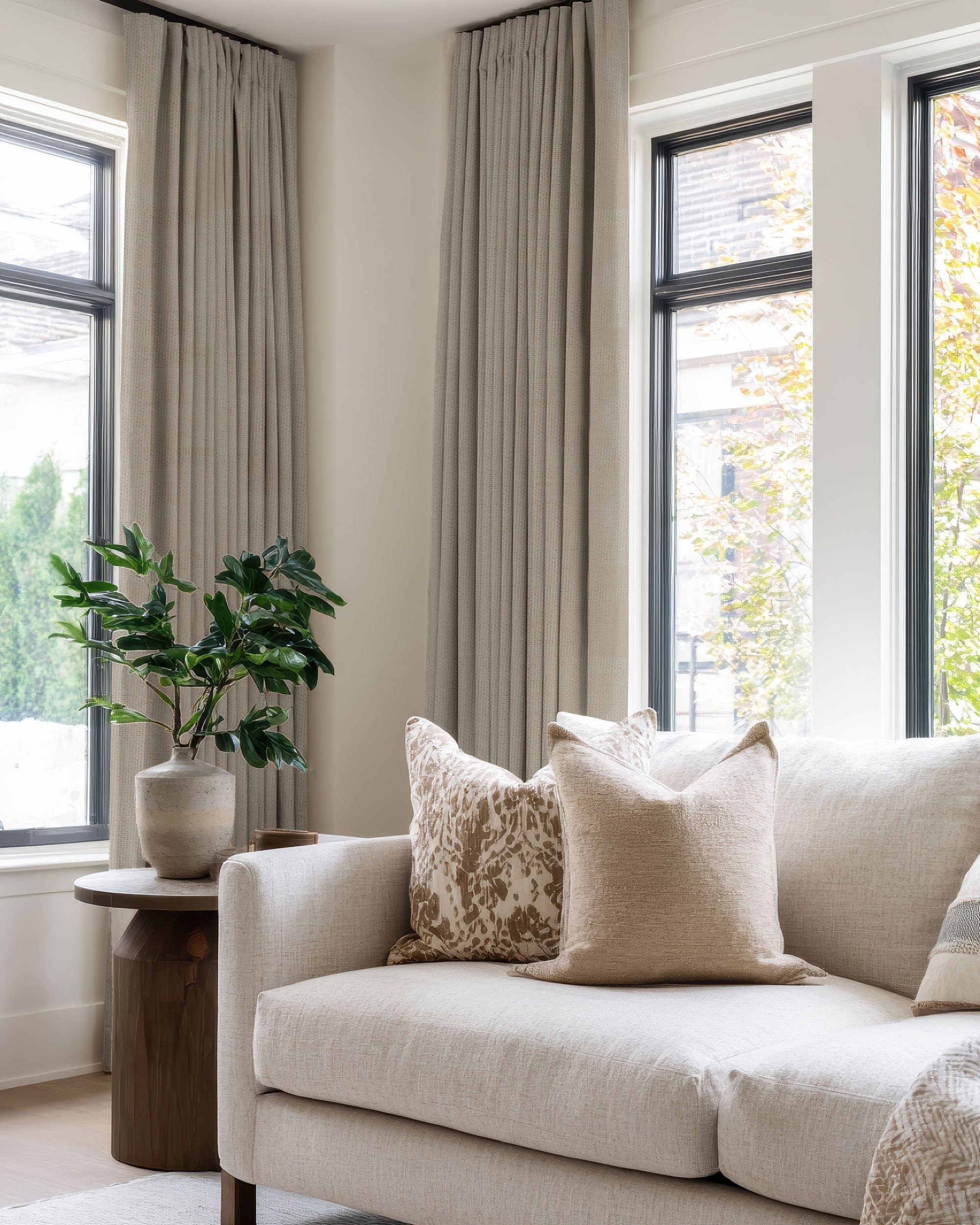
 Kid-friendly
 OEKO-TEX® Certified
 Durable
 Low maintenance
Rod pocket curtains can create a soft, classic look, but they are usually better for windows where the curtains will not be opened and closed every day. Because the fabric gathers along the rod, they may not move as smoothly as rings, grommets, or tracks.
If your goal is a tighter stack and simple daily use, grommet curtains may be easier to manage. If your goal is a more tailored, custom look, pleated styles may be worth the extra stack-back space.
Pinch Pleat and Euro Pleat Curtains
Pinch pleat and euro pleat curtains usually need more wall space because the folds are more structured. The result looks polished and custom, but the open stack can be wider than many homeowners expect.

 Statement décor
 Luxury Velvet
 Foil Detailing
 Designed in Italy
This matters even more if you choose blackout lining, heavy fabric, or extra fullness. The more structure and fabric you add, the more room the curtains need when open.
If you are comparing header styles, review TheHues curtain header types before finalizing your order.
Ripple Fold and Wave-Style Curtains
Ripple fold and wave-style curtains create a clean, modern look with consistent waves across the window. They are especially popular for wide windows, sliding doors, and contemporary spaces.
However, these styles often need more stack-back space than simpler curtains. They work best when the wall return is generous enough for the fabric to stack neatly without covering too much glass.
If your wall space is tight, consider a flatter header style, a different panel split, or a custom layout recommendation before choosing ripple fold curtains.
What Affects Curtain Stack Back in Real Rooms?
Even a good stack-back estimate can change once fabric, lining, fullness, and hardware are selected. Here are the main details that affect the final result.
Fabric Weight and Lining
Lightweight sheers usually compress more tightly. Heavy linen blends, velvet, blackout lining, and layered constructions take up more room.
If your room needs better light blocking, privacy, or insulation, a thicker curtain can be the right choice. Just make sure the rod length allows for the added bulk when the curtains are open.
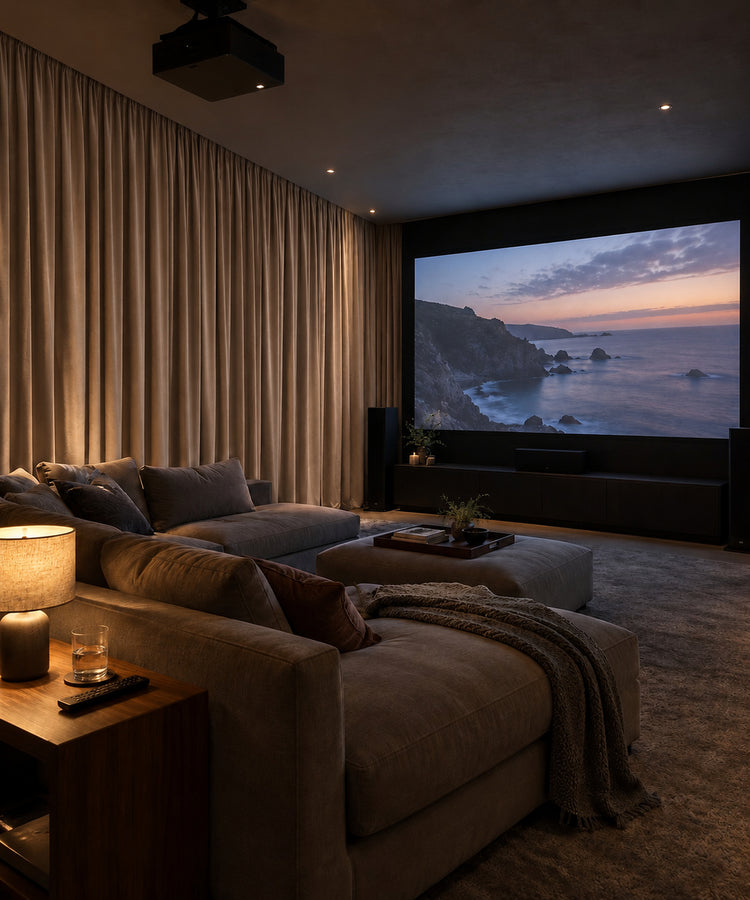
For bedrooms, nurseries, and media rooms, this is especially important. If you are choosing blackout curtains, plan for more stack-back space than you would need for unlined decorative panels.
Fullness Ratio
Fullness is the extra fabric used beyond the exact width of the window or rod. More fullness creates deeper folds and a richer look when the curtains are closed. It also means more fabric has to stack somewhere when the curtains are open.
If your wall space is limited, more fullness is not always better. A slightly more restrained fullness level may give you a cleaner everyday result while still looking polished.
Hardware and Projection
Hardware affects both width and depth. Rings, rods, tracks, overlap arms, return brackets, and layered hardware can make the open stack feel larger.
This is especially important when curtains sit in front of shades, near cabinets, or close to furniture. A setup that looks fine on paper may feel crowded if the curtain projects too far into the room.
One Panel vs. Two Panels
Panel split changes where the fabric goes. Two panels can spread the stack across both sides and make daily operation easier. One panel can create a simple modern look, but all the fabric stacks on one side.
For sliding doors, breakfast nooks, and narrow wall returns, this decision can make a big difference. If one side has a cabinet, sofa, or wall corner nearby, a center-open two-panel setup may feel more balanced.
Where Curtain Stack Back Matters Most

Bedroom Windows With Blackout Curtains
On a bedroom window, stack back affects how bright the room feels during the day. If blackout curtains still cover part of the glass when open, the room may feel darker than expected.
Because blackout curtains are usually thicker than light-filtering panels, they often need more rod extension. Pleated blackout curtains will usually need more stack-back room than unlined grommet curtains.
Sliding Glass Doors
Sliding doors are one of the most important places to plan stack back carefully. You need privacy at night, easy access during the day, and as much daylight as possible when the curtains are open.
Before ordering curtains for a sliding door, ask:
- Will the curtains open from the center or draw to one side?
- Is there enough wall space for the full open stack?
- Will the stack block the door handle or walking path?
- Is the fabric lined, heavy, or extra full?
If the answers are unclear, confirm your layout before ordering custom curtains.
Extra-Wide Living Room Windows
Wide windows make stack back more visible. If the rod is too short, the open curtains can crowd the glass and make the window look smaller.
For larger openings, compare:
- One panel vs. two panels
- Flatter headers vs. fuller pleats
- Standard rod extension vs. wider extension
- Light-filtering panels vs. lined curtains
If you are planning a wide window, you may also find this guide to curtains for wide windows helpful.
Want to preview the look before ordering? Use TheHues visualization tool to compare curtain styles and see how different options may work in your space.
What to Do When Stack Back Takes Too Much Wall Space
If your curtains take up too much room when open, you do not always need to choose a completely different window treatment. Often, the solution is to adjust the layout.
Extend the Rod Farther
If your wall allows it, extend the rod so the fabric can sit off the glass. This is usually the simplest and cleanest solution.
Choose a Flatter Header Style
If your wall return is limited, switch from a fuller pleat to a flatter style. You may give up some structure, but you can gain more daylight and easier daily function.
Adjust the Fullness
More fullness creates a richer look, but it also increases stack back. If the open curtains already crowd the window, a slightly lower fullness ratio may work better.
Split the Panels Differently
Changing from one-way draw to center-open, or from one large panel to two smaller panels, can spread the fabric more evenly without changing the curtain fabric itself.
Use Custom Guidance
Made-to-measure curtains should fit how the room works, not just how the window looks in a product photo.
If you are choosing between different panel layouts, header styles, or rod lengths, use TheHues free design service. A room photo and a few measurements can help you avoid a setup that looks too bulky when open.
Quick Checklist Before Ordering Custom Curtains
Use this checklist before finalizing your order:
- Measure the full window width.
- Decide whether you want the glass mostly clear when the curtains are open.
- Choose the header style before finalizing rod length.
- Account for lining, fullness, and fabric weight.
- Decide whether the panels will open from the center or draw to one side.
- Confirm there is enough wall return for the expected stack.
- Check whether furniture, shades, cabinets, or door handles affect stack depth.
- Review your measurements before placing a custom order.
Final Takeaway
Curtain stack back is not a small technical detail. It affects how much daylight you keep, how large the window feels, and whether the finished curtain setup looks clean or crowded.
The most important rule is simple: do not size your curtains only for the closed position. Size them for the open position too.
When you plan for stack back, your curtains can frame the window instead of blocking it. That gives you better daylight, better balance, and a more polished finished room.
For the next step, compare TheHues custom curtains, confirm your dimensions with the curtain measurement guide, and compare styles in the curtain header guide.
If you want a second opinion before ordering, send your room details through the free design service.