Best outdoor curtain hardware for long spans and high winds


In this article 7 sections
- What matters most when choosing outdoor curtain hardware?
- Outdoor curtain rod vs. outdoor curtain track: which should you choose?
- What hardware works best for windy outdoor curtains?
- How to size and install outdoor curtain hardware
- When outdoor curtain hardware may not be the best answer
- FAQ about outdoor curtain hardware
- Final takeaway
Outdoor curtains can make a porch, patio, pergola, or balcony feel more private and comfortable. But the curtains are only as good as the hardware holding them. If the rod sags, the brackets loosen, or the panels swing too much in the wind, even the right fabric can become frustrating to use.
When choosing outdoor curtain hardware, start with the conditions of your space: the width of the opening, how exposed it is to wind, how heavy the curtains are, and how often you plan to open and close them.
This guide explains when an outdoor curtain rod is enough, when a supported rod makes more sense, when an outdoor curtain track is the better choice, and when a different shade solution may work better than curtains.
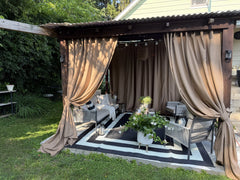
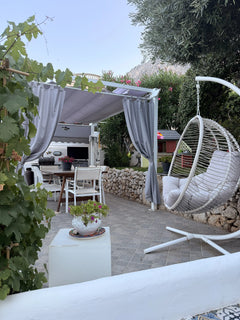
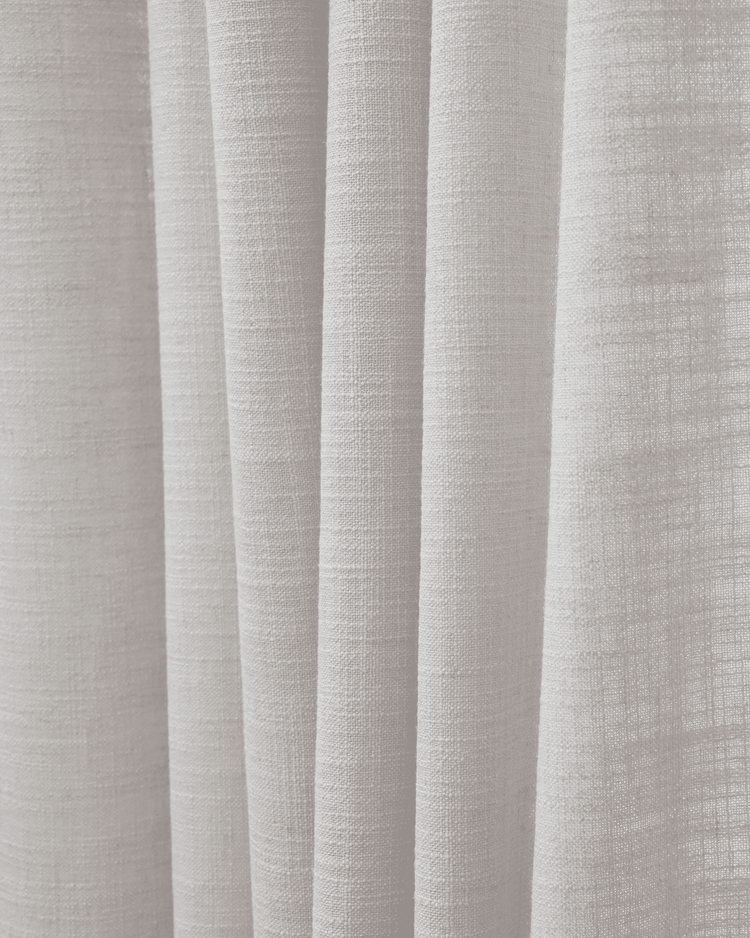
If you are still choosing the panels themselves, start with TheHues outdoor curtains, then use this guide to match the fabric and hardware to the way your outdoor space actually works.
What matters most when choosing outdoor curtain hardware?
Before comparing finishes, rod shapes, or bracket styles, look at the job the hardware needs to do. Outdoor hardware has to manage weight, movement, moisture, and daily use. A setup that works on a covered porch may not be strong enough for an open pergola.

Span length changes the hardware choice
An 8-foot porch opening and an 18-foot pergola run should not use the same hardware plan. The longer the span, the more important support points become.
For shorter, sheltered openings, a sturdy outdoor-rated curtain rod may work well. For wider openings, the system may need center brackets, connected sections, multiple panels, or a track. The goal is not just to make the rod reach across the space. It is to keep the curtains moving smoothly without sagging or putting too much stress on the brackets.
Before ordering, measure the full width you want to cover and mark where brackets can safely mount. If the only available mounting points are far apart, a track or a different panel layout may be more practical than a single long rod.
Wind exposure matters as much as width
Outdoor curtains move with air. That is part of their appeal, but it also means wind must be part of the hardware decision.
A covered porch with light breezes can usually use a simpler setup than an exposed pergola, rooftop deck, or coastal patio. In breezier spaces, the hardware should not only hold the curtain from the top. It should also work with tiebacks, bottom stabilization, or a track system that helps keep the panels controlled.
No outdoor curtain setup should be treated as storm-proof. If strong weather is expected, secure the panels, tie them back, or remove them according to the product care guidance.
Curtain weight and panel width add hidden load
The fabric itself changes the hardware requirements. Lightweight outdoor curtains put less stress on rods and brackets. Heavier, wider, or lined panels need stronger support and smoother operation.
Panel size also matters. One oversized panel may look simple online, but it can be hard to slide, difficult to tie back, and heavier on one side of the hardware. In many wide outdoor spaces, two or more panels work better because they distribute weight and make daily use easier.

Outdoor-safe materials are not optional
Indoor rods and brackets are not designed for outdoor moisture, sun exposure, and temperature changes. For patios, porches, and pergolas, look for outdoor-rated materials and finishes that are intended to resist rust and finish breakdown.
Good outdoor curtain hardware usually starts with:
- rust-resistant or outdoor-rated metal finishes
- brackets that match the rod or track system
- secure mounting into appropriate structure
- hardware that can support the curtain weight and span
- simple operation for the way you use the space every day
A beautiful curtain will not perform well if the hardware is undersized or mounted into a weak surface.
Outdoor curtain rod vs. outdoor curtain track: which should you choose?
Both rods and tracks can work outdoors. The better choice depends on whether style, span, or performance matters most.
| Need | Outdoor curtain rod | Outdoor curtain track |
|---|---|---|
| Visible decorative hardware | Usually better | Usually more minimal |
| Short covered porch opening | Often a good fit | Can work, but may be more than you need |
| Wide patio or pergola span | May need center support | Often easier to operate |
| Heavy or extra-wide panels | Needs careful support planning | Usually a stronger starting point |
| Frequent opening and closing | Works with the right header | Usually smoother |
| Wind control | Needs tiebacks or bottom control | Can help keep movement more controlled |
Choose an outdoor curtain rod when the span is manageable
A rod is a good choice when the opening is not too wide, the patio is partly sheltered, and you want the hardware to be part of the look. Rods are familiar, easy to understand, and often work well for covered porches, smaller pergolas, and decorative side panels.
Look for a rod setup that includes:
- a larger, sturdier profile than a basic indoor rod
- outdoor-rated brackets
- secure end supports
- center support when the span or curtain weight requires it
- a curtain header that can move smoothly on a rod
Header style matters here. Grommet curtains often move more easily on rods than rod pocket styles, especially outdoors. If you are comparing options, review the TheHues curtain header guide before choosing the panel construction.
Choose an outdoor curtain track when performance matters more
An outdoor curtain track is often the better option for wide spans, heavier curtains, ceiling-mounted layouts, or spaces where the panels will open and close often.

Tracks are less decorative than rods, but they solve practical problems. They can make long runs easier to operate, reduce friction, and help the panels move more predictably. For patios, pergolas, and large outdoor openings, that can matter more than visible hardware style.
If you are working with a wide or heavy-panel project, compare the TheHues heavy-duty custom curtain track with your planned curtain weight and mounting conditions before defaulting to a decorative rod.
Use a supported rod system when you want a rod look on a wider opening
Some outdoor spaces sit between the two choices. You may want the look of a rod, but the span is too long for a simple end-to-end setup. In that case, a connected rod with center support may work.
The key is to plan the panel layout around the support points. If a center bracket blocks one large curtain panel from moving across the full span, split the curtains into two panels or multiple sections. That usually works better than forcing one oversized panel to do the whole job.
What hardware works best for windy outdoor curtains?
In windy spaces, strength matters, but control matters just as much. A thick rod alone will not solve the problem if the panels swing freely, twist at the top, or lift from the bottom.
Add bottom stabilization early
Bottom movement is one of the main reasons outdoor curtains become annoying in wind. The fabric lifts, snaps, twists, or pulls back against the top hardware. That movement can wear the fabric and stress the brackets over time.
For breezy patios, consider:
- bottom grommets or tie-down points
- side tiebacks or holdbacks
- weighted hems when appropriate
- enough clearance so hems do not drag through water or dirt
- a track or guided setup for wider exposed openings

 Kid-friendly
 OEKO-TEX® Certified
 Durable
 Low maintenance
Use lighter panels when the space is very exposed
Heavier is not always better outdoors. In an exposed space, a lighter outdoor-rated curtain can sometimes be easier to manage because it dries faster, puts less load on the hardware, and works better with tiebacks or bottom stabilization.
For sheltered patios, a heavier curtain may feel more substantial and private. For open pergolas, breezy decks, and areas with regular gusts, focus on a fabric and hardware system that you can realistically control.
Know when to secure or remove the panels
Outdoor curtains are made for outdoor living, not for severe weather. If strong wind, heavy rain, or storms are expected, do not leave panels loose and hope the hardware holds.
A simple storm routine can prevent damage:
- Close or tie back the curtains before strong weather arrives.
- Secure bottom corners if the setup includes tie-down points.
- Remove panels when the forecast or product care instructions call for it.
- Check brackets, screws, and fabric after repeated windy days.
This is especially important for renters, balcony setups, and exposed patios where mounting surfaces may not be as strong as a permanent outdoor structure.
How to size and install outdoor curtain hardware
Outdoor curtain hardware should be planned before you order the curtains. That helps you avoid panels that are the right fabric but the wrong size for the way the hardware actually works.

Measure the full opening and the stack-back space
Do not measure only the clear opening. Measure the space where the curtains will sit when open, too. This is especially important for patios and pergolas because open panels can block views, walkways, furniture, or doors if there is not enough stack-back space.
Start with these measurements:
- full width you want the curtains to cover
- available mounting surface on each side
- height from mounting point to desired curtain finish
- ground clearance needed to avoid dirt, water, or deck debris
- space available for panels to stack when open
If the setup is custom, use the TheHues curtain measurement guide before ordering. Outdoors, a curtain that is too long can drag through moisture and wear faster, while a curtain that is too short may look unfinished or leave too much exposure at the bottom.
Plan support points before you choose panel count
Support brackets and track joins affect how curtains move. If a bracket blocks the fabric, the panel layout needs to account for it.
For wide openings, ask:
- Will a center bracket stop one large panel from sliding across?
- Should the opening use two panels instead of one?
- Would multiple narrower panels move better than one oversized panel?
- Does a track solve the movement issue more cleanly than a rod?
For unusual pergolas, screened porches, gazebos, or balcony layouts, the TheHues free design service can help you review the opening before ordering.
When outdoor curtain hardware may not be the best answer
Sometimes the right solution is not a stronger rod. It is a different type of outdoor shade.
Use outdoor curtains for privacy and flexible side coverage
Outdoor curtains are usually the better fit when you want:
- movable privacy around a porch, balcony, or pergola
- a softer, more room-like outdoor feel
- side coverage for low-angle sun
- the option to open and close the space through the day
Consider a shade sail when the main problem is overhead sun
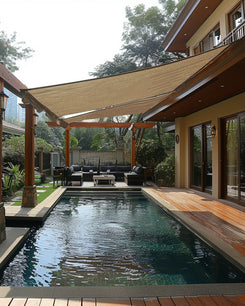
If your main issue is overhead sun on a wide, exposed patio, a sun shade sail may be a better fit than free-hanging curtain panels. Shade sails create overhead coverage, while outdoor curtains are better for side privacy and flexible enclosure.
For some homes, the best setup may include both: a shade sail for overhead sun and outdoor curtains for privacy or low-angle glare. The right choice depends on what you need the space to do first.
FAQ about outdoor curtain hardware
What is the best outdoor curtain rod for a pergola?
For a smaller, partly sheltered pergola opening, an outdoor-rated rod with secure brackets can work well. For longer spans, heavier panels, or frequent daily use, a supported rod or outdoor curtain track is usually a better starting point.
Is a track better than a rod for wide outdoor curtains?
Often, yes. A track can handle long runs and daily movement more smoothly than many decorative rods. A rod can still work if the span is manageable and the brackets are properly supported.
How do you keep outdoor curtains from blowing in the wind?
Use tiebacks, bottom stabilization, enough ground clearance, and hardware that matches the exposure level. In exposed spaces, a track, guided setup, or different shade solution may work better than a basic rod.
Can I use indoor curtain rods outside?
Usually no. Indoor rods and brackets are not designed for moisture, sun, wind, and outdoor temperature changes. Use outdoor-rated hardware whenever the setup will be exposed to the elements.
Should outdoor curtains touch the ground?
Usually no. Outdoor curtain hems should stay clear of standing water, soil, and debris. A small clearance above the ground or deck helps the fabric dry faster and reduces wear.
Final takeaway
The best outdoor curtain hardware is the system that matches your opening, not the one that simply looks strongest online. Start with the span, wind exposure, curtain weight, and daily use. Then choose a rod, supported rod, or track based on what the space actually needs.
For shorter, sheltered openings, a sturdy outdoor curtain rod may be enough. For wide, heavy, or frequently used panels, a track often makes more sense. For exposed spaces, plan wind control from the beginning with tiebacks, bottom stabilization, and a clear storm routine.
When you are ready to build the setup, compare outdoor curtains, confirm measurements with the measurement guide, and use the free design service if your patio, porch, or pergola layout is unusual.