How Soundproof Curtains Can Help Create a Quieter Bedroom (What Actually Works)


In this article 8 sections
- 1. Why Bedroom Noise is Ruining Your Sleep (And Where Sound Actually Enters)
- 2. What Are Soundproof Curtains and How Do They Actually Work?
- 3. Can Soundproof Curtains Completely Silence Your Room? (The Acoustic Reality)
- 4. Key Specs to Look For: Weight, Layers, and Fabric Density
- 5. The Installation Mistake That Destroys Soundproofing Performance
- 6. How to Test Acoustic Materials Risk-Free Before You Buy
- Frequently Asked Questions
- Final Verdict: Are Soundproof Curtains Worth It for Your Bedroom?
Street traffic, early morning commotion, and thin apartment walls shatter sleep quality. When standard glass windows let every decibel leak straight into your bedroom, acoustic curtains offer a practical barrier to restore peace.
1. Why Bedroom Noise is Ruining Your Sleep (And Where Sound Actually Enters)
Acoustic disruption wrecks sleep continuity without most people realizing it. Sudden spikes in environmental noise force the brain out of deep REM cycles, causing micro-awakenings that leave you exhausted by morning.
In residential construction, glass windows represent the weakest acoustic point in the room. Standard double-pane glass vibrates easily when hit by airborne sound waves from passing cars, barking dogs, and early yard work.
Because windows lack the mass of insulated drywall, sound energy passes right through them with minimal resistance. Addressing bedroom noise requires treating this primary transmission point directly rather than relying on earplugs or white noise machines.
2. What Are Soundproof Curtains and How Do They Actually Work?

Soundproof curtains differ fundamentally from standard decorative drapes or light-blocking bedroom liners. Regular curtains use single-layer fabrics designed purely for privacy or sun control, whereas acoustic panels are engineered with heavy multi-layer architecture.
| Curtain Type | Construction & Materials | Acoustic Function |
|---|---|---|
| Standard Drapes | Single-layer cotton, linen, or polyester | Provides basic visual privacy and light filtration |
| Blackout Curtains | Tight weave face fabric with thin synthetic lining | Blocks light penetration, minimal sound dampening |
| Soundproof Curtains | Multi-layer heavy weave, dense core batting, mass backing | Absorbs airborne sound waves, dampens structural vibrations |
The mechanics rely on mass and absorption. Heavy fabrics like multi-weave velvet or dense thermal chenille trap sound waves inside their complex fiber matrices, converting acoustic energy into microscopic amounts of heat.
Internal high-density batting layers act as a sound deadener, reducing the volume of noise that manages to pass through the window glass.
3. Can Soundproof Curtains Completely Silence Your Room? (The Acoustic Reality)
Marketing hype often suggests that hanging a heavy curtain will turn a busy city apartment into a silent recording studio. Physics dictates otherwise.
Acoustic curtains deliver noticeable reductions in mid-to-high frequency sounds, such as tire hums, bird chirps, and human voices. They take the sharp edge off outdoor noise, softening harsh sounds into manageable background murmurs.
| What Soundproof Curtains Fix | What They Cannot Eliminate |
|---|---|
| Mid-to-high frequency airborne noises (traffic hums, sirens) | Low-frequency bass vibrations (heavy trucks, distant construction thuds) |
| Direct window glass resonance and harsh street sound spikes | Sound leaks through unsealed gaps in window frames, sills, and floor |
However, low-frequency bass vibrations—such as heavy truck engines or distant construction thuds—travel through building foundations and walls. Curtains cannot block structural vibration. Understanding these real-world limits prevents disappointment and ensures proper expectations.
For parents wanting a peaceful, uninterrupted naptime for their little one, heavy fabric layering makes all the difference. In this cozy nursery styled by @wonen.bij.iris, drawing the Iris curtains instantly softens the space, cutting out harsh light and outside noise to create a true sleep sanctuary.
4. Key Specs to Look For: Weight, Layers, and Fabric Density
Evaluating acoustic curtains requires ignoring aesthetic fluff and looking strictly at material specifications. Weight serves as the primary indicator of sound-dampening capability.
- Fabric Weight (GSM): Look for panels rated at high grams per square meter. True sound-blocking curtains typically weigh several pounds per panel because heavy mass is required to block sound transmission.
- Multi-Layer Core: Quality acoustic panels feature a three-layer sandwich design. This includes a decorative front face, a dense middle core acting as a sound barrier, and an opaque thermal backing.
- Weave Density: Loose weaves allow air and sound to pass freely through tiny gaps. Tightly woven, dense textiles create a physical barrier that traps acoustic energy.
5. The Installation Mistake That Destroys Soundproofing Performance
Even the heaviest acoustic curtain will fail if installed incorrectly. Sound travels like water; if there is a gap, it will pour right through.
Standard flush-mounted curtain rods leave wide openings at the top, sides, and bottom where sound waves bypass the fabric entirely. To achieve true acoustic control, use the "go high and wide" mounting rule:
- Extend the Rod: Mount the curtain rod 4 to 6 inches wider than the window frame on each side. This ensures the panel covers surrounding wall gaps.
- Raise the Height: Position the rod several inches above the upper window casing to block sound from leaking over the top header.
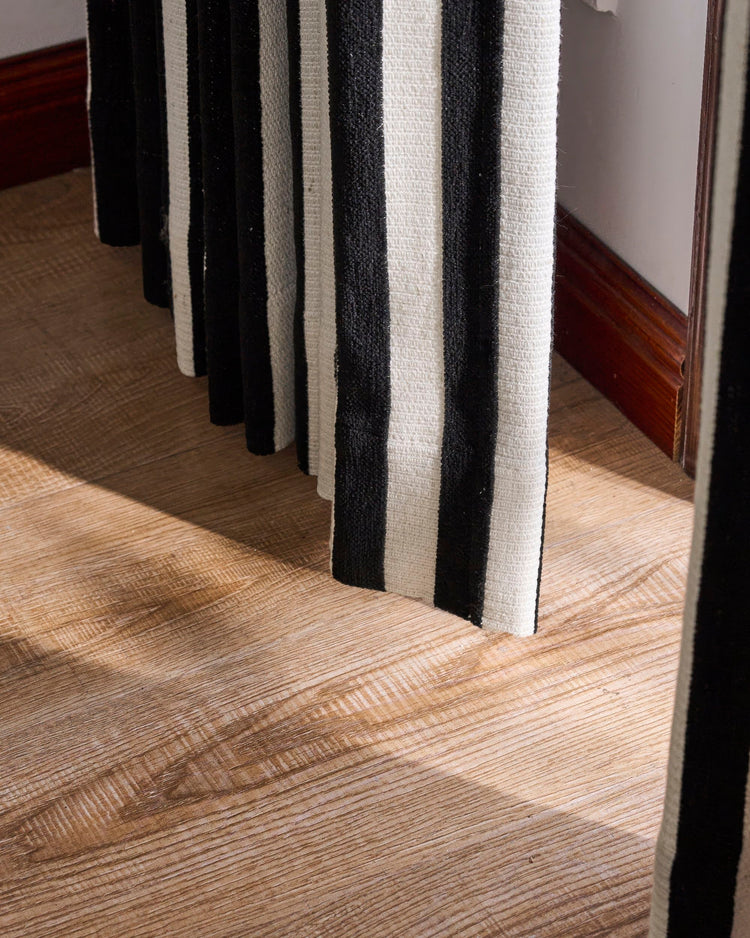
- Seal the Bottom: Let the hem of the curtain puddle slightly on the floor or rest flush against the baseboard to prevent sound from creeping underneath.
- Use Wraparound Hardware: Curved curtain rods that return flush to the wall seal side gaps completely, locking sound out of the room.

6. How to Test Acoustic Materials Risk-Free Before You Buy
Choosing heavy fabrics online introduces uncertainty regarding color accuracy, weight, and room coordination. Digital product photos fail to convey how dense a textile feels or how it interacts with bedroom lighting.
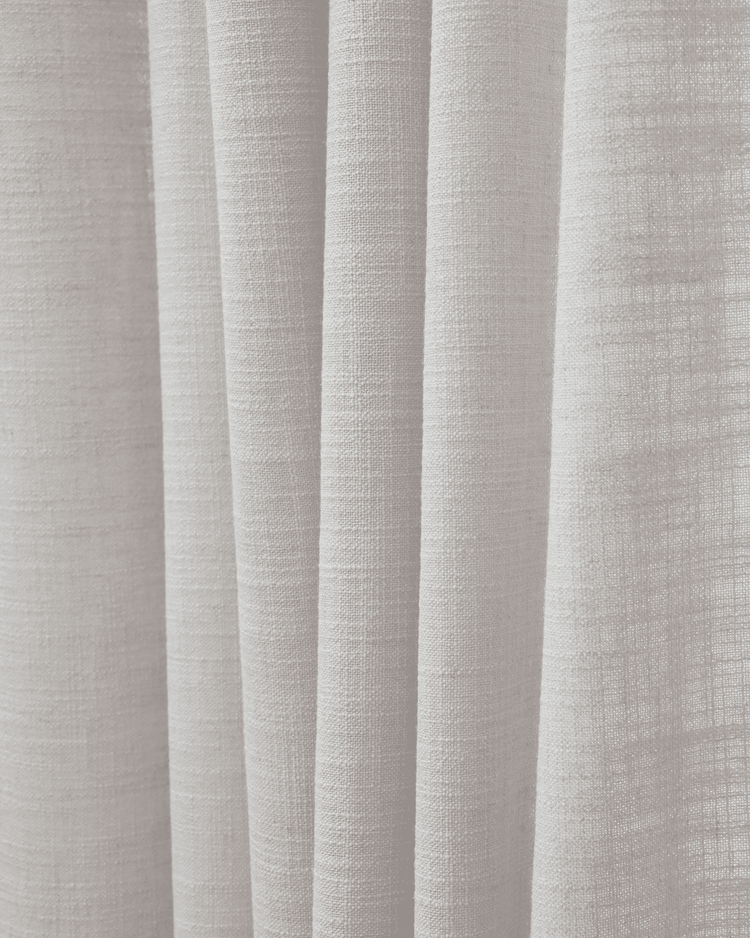
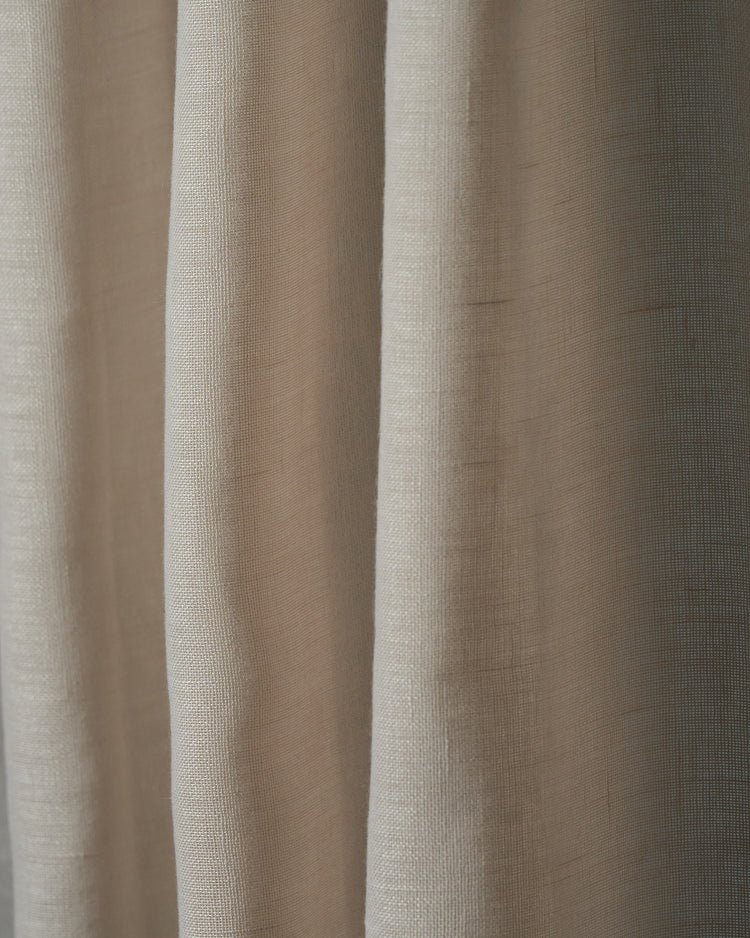
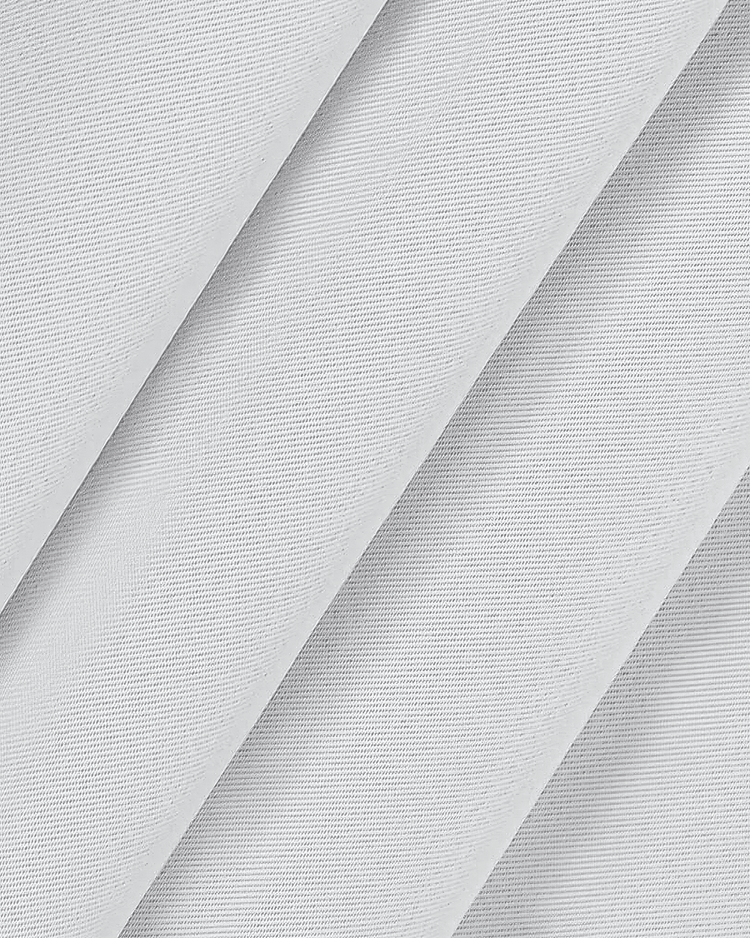
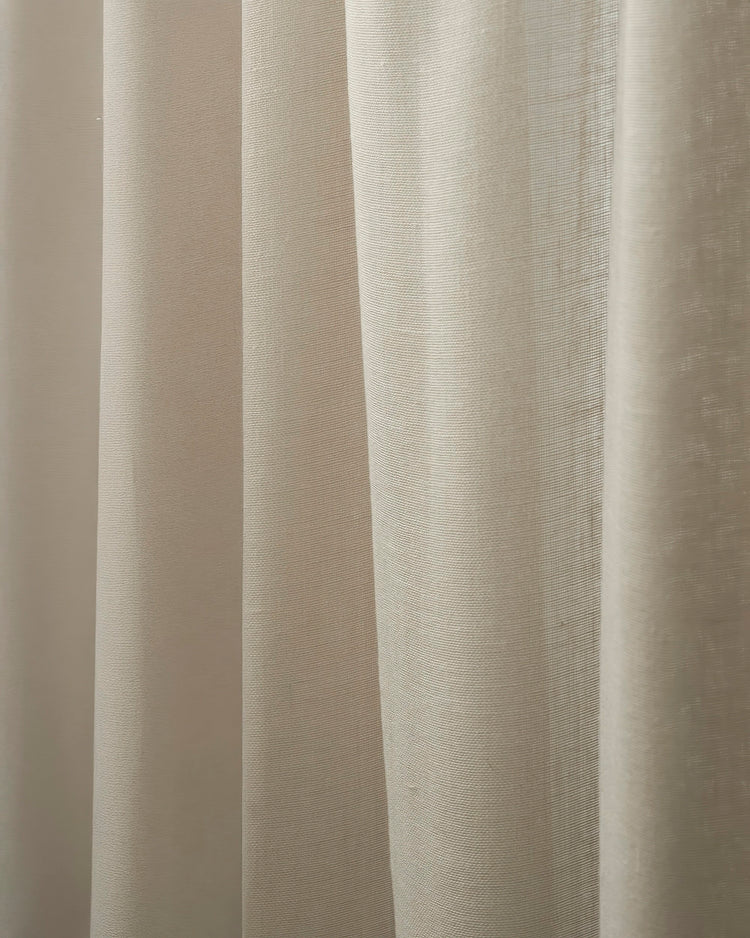
Ordering physical swatches eliminates this guesswork. Tape a fabric sample directly to your wall near the window to evaluate its texture and weight in natural morning light versus evening illumination.
For comprehensive planning, utilize a Free Design Service to consult with layout specialists regarding your bedroom dimensions.
Pairing this expert guidance with a Free Mockup preview allows you to visualize digital renderings of heavy acoustic drapes superimposed onto real photos of your room, guaranteeing total confidence before placing an order.
Frequently Asked Questions
Do soundproof curtains block light as well as sound?
Yes. Because soundproof curtains require dense, multi-layered fabrics and high weight to absorb acoustic energy, they naturally function as premium blackout panels. They block nearly all incoming sunlight, making them ideal for bedrooms.
How heavy are soundproof curtains, and do I need heavy-duty rods?
True soundproof panels are significantly heavier than standard window treatments, often weighing between 4 and 10 pounds per panel. This weight requires sturdy metal mounting brackets anchored directly into wall studs or heavy drywall anchors.
Do soundproof curtains help lower heating and cooling bills?
Yes. The same dense, multi-layer construction that traps sound waves also provides exceptional thermal insulation. These panels block solar heat gain in summer and prevent indoor heat from escaping through cold window glass during winter.
Final Verdict: Are Soundproof Curtains Worth It for Your Bedroom?
Acoustic curtains provide a targeted, cost-effective solution for anyone battling urban street noise and broken sleep cycles. While they will not silence structural bass vibrations, installing heavy, multi-layered panels with proper wraparound hardware dramatically quiets a room. Testing physical material samples and planning your mount height ensures your investment delivers restful, uninterrupted sleep.