Pro Tips for Hanging Curtain Rods at Home

In this article 3 sections
There is no faster way to elevate a room than changing the window treatments, but installing curtain rods correctly is the difference between a custom, high-end look and a messy DIY disaster.
Many homeowners make the mistake of hanging rods right on the window frame, which makes ceilings look lower and windows smaller. We are going to fix that. Here is the professional guide to hanging curtain rods perfectly, ensuring your TheHues room darkening curtains look expensive and function flawlessly.
Tools You Will Need
- Curtain rod with brackets and finials
- Metal tape measure
- Level (crucial for straight rods)
- Power drill and drill bits
- Pencil
- Stud finder
- Wall anchors (if you aren't drilling into studs)
- Stepladder

The Golden Rule: High and Wide
Before you measure, understand the goal. In modern US interior design, we follow the "High and Wide" rule:
- High: Hanging the rod closer to the ceiling draws the eye up, making your room feel taller.
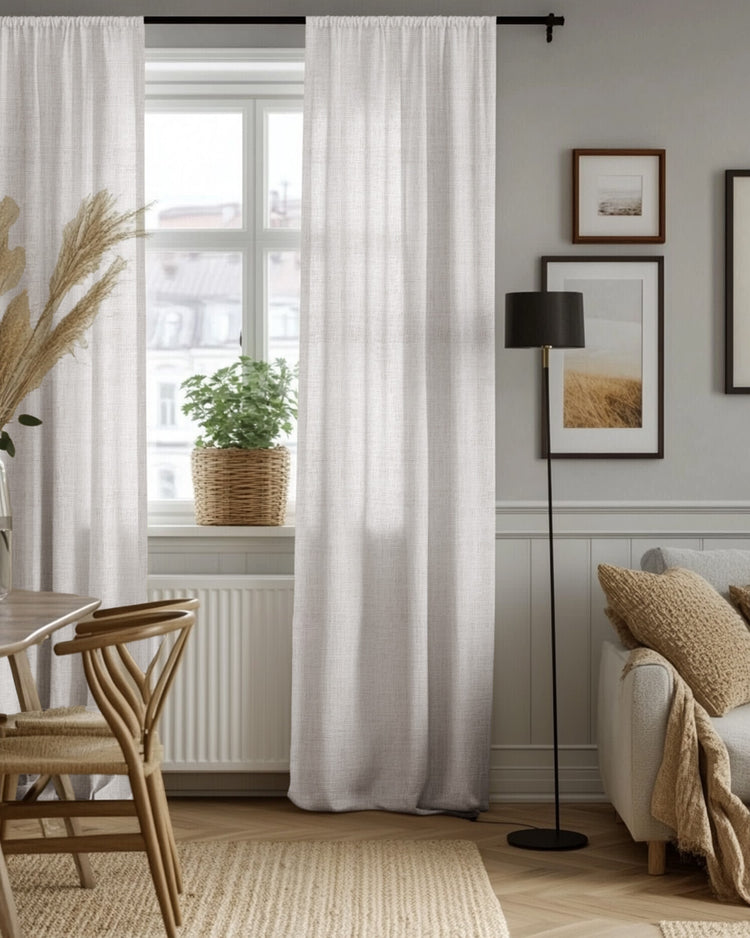
- Wide: Extending the rod past the window frame allows the curtains to "stack" on the wall, maximizing natural light and making the window appear wider.
Step 1: How to Measure for Curtain Rod Width
Don't just measure the window frame. To get that luxurious look, you need to account for "stack back"—the space the curtains take up when they are open.
- Measure the width of your window casing (frame) from outside edge to outside edge.
- Add 8 to 12 inches to each side (16–24 inches total). This ensures that when your curtains are open, they rest against the wall, not covering the glass.
- Example: If your window is 50 inches wide, your rod (excluding finials) should be roughly 66 to 74 inches long.
Step 2: Determining Rod Placement Height
Where you drill your holes determines the visual height of the room.
- Standard Rule: Install the rod at least 4–6 inches above the window frame.
- The Designer Look: Measure the distance between the top of the window frame and the ceiling (or crown molding). Install the rod halfway to two-thirds of the way up that space.
- Floor Length: Ensure you measure from your desired rod height down to the floor to choose the correct curtain length. For a clean look, the fabric should just "kiss" the floor.

 100% Blackout
 Better sleep
 Noise Reducing
 Energy Saving
Step 3: Choosing the Right Hardware
Aesthetics matter, but structural integrity comes first. Your hardware must support the weight of the drapery.
- Brackets: Ensure your brackets extend far enough from the wall (projection) so the curtains clear any window handles or trim. Usually, a 3 to 4-inch projection is standard.
- Center Supports: Do not skip this. If your rod is longer than 60 inches, or if you are using heavy blackout curtains, you must use a center support bracket. Without it, the rod will bow in the middle over time.
- Rod Diameter: For standard curtains, a 1-inch diameter rod is the sweet spot. Anything thinner than 0.75 inches may look cheap and bend under weight.
Alternative: How to Hang Curtains Without Drilling
If you are renting or have brick walls where drilling is difficult, Tension Rods are the solution. These use an internal spring mechanism to hold the rod in place inside the window frame (Inside Mount).

Tips for Tension Rod Success:
- Measure the Recess: Measure the exact width inside your window frame at the top.
- Buy the Right Range: Buy a rod where your measurement falls in the middle of the range. If your window is 30 inches wide, buy a 28–48 inch rod. Do not buy a rod that maxes out exactly at your width.
- Tighten Correctly: Extend the rod about 1 inch wider than the window opening, then compress it to fit it in. This creates the necessary tension to hold heavy fabric.
Still unsure about the perfect size for your space? Contact TheHues design support team, and we will help you calculate the perfect fit for your home.