It's not the curtain, it's the gap: 5 installation secrets for maximum insulation


In this article 11 sections
- Why Gaps Matter With Thermal Curtains
- Seal the Top First
- Use a Wrap-Around Rod for Side Gaps
- Other Ways to Reduce Side Gaps
- Before Sealing the Bottom, Check for Floor Vents
- Layer Curtains With Shades for Better Insulation
- Balance Insulation With Moisture Control
- Best Header Styles for Better Sealing
- Quick Checklist: How to Make Thermal Curtains Work Better
- When Sealing Matters Most
- Final Takeaway
Thermal curtains can help make a room feel warmer, but fabric alone is not enough. If your curtains still feel drafty, the problem is often not the curtain material. It is the gaps around the top, sides, and bottom of the window.
Even heavy thermal curtains can underperform if warm air escapes behind the fabric and cold air moves back into the room. To get better insulation, you need to help the curtain create a more stable pocket of air between the fabric and the window.
In this guide, you will learn how to seal thermal curtains more effectively, where heat loss usually happens, how to choose the right rod or cornice, and what to check before sealing the bottom of the curtain.
If you are still comparing curtain options, start with TheHues thermal curtains buyer’s guide or browse thermal curtains designed for comfort, privacy, and everyday use.

 100% Blackout
 Better sleep
 Noise Reducing
 Energy Saving
Why Gaps Matter With Thermal Curtains
Thermal curtains work best when they reduce air movement around the window. The fabric helps slow heat transfer, but the air pocket behind the curtain is just as important.
On a cold night, warm indoor air can rise and slip into the gap at the top of the curtain. When that warm air touches the cold window glass, it cools down and sinks. If there is an opening at the bottom, that cooler air can move back into the room.
This creates a loop of moving air behind the curtain. Instead of keeping the room warmer, the window area keeps cooling the air and sending it back into the living space.
That is why a well-installed curtain can sometimes feel more effective than a heavier curtain hung loosely. A good seal helps the curtain perform the way it was meant to.
Seal the Top First
The top of the curtain is one of the most important places to control airflow. Warm air rises, so a large gap above the curtain gives heat an easy path behind the fabric.
There are several ways to reduce this top gap.
Use a Cornice or Valance
A cornice or valance covers the top of the curtain and helps block air from moving behind the fabric. This can improve insulation while giving the window a more finished look.
A fabric-covered cornice can look tailored and decorative. A simpler valance can also help if you want a softer look. The goal is not only style. It is to reduce the open space where warm air can escape.

Mount the Rod Higher
If a cornice is not an option, mounting the curtain rod higher can help reduce the top opening. A rod placed closer to the ceiling or above the window frame can give the curtain better coverage.
This also makes the window look taller and more polished, which is a useful design benefit.
Consider a Ceiling-Mounted Track
A ceiling-mounted curtain track can provide a cleaner top seal, especially for wide windows, sliding doors, or rooms where you want a modern look.
If the track can return toward the wall at the sides, it can also help reduce side gaps.
Use a Wrap-Around Rod for Side Gaps
Side gaps are another common reason thermal curtains lose performance. If the curtain hangs several inches away from the wall, air can move around the sides and weaken the insulating effect.
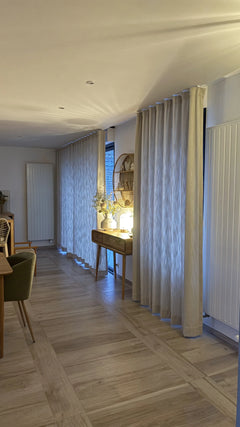
A wrap-around curtain rod, also called a French return rod, curves back toward the wall. This lets the curtain wrap around the sides and sit closer to the wall.
The result is both practical and attractive. You get a cleaner curtain shape, better side coverage, and fewer visible gaps around the window.

Wrap-around rods are especially useful for:
- Bedrooms that need better blackout and insulation
- Drafty windows in older homes
- Street-facing rooms that need more privacy
- Thermal or blackout curtains that should sit closer to the wall
If you are using custom curtains, planning the rod style early can help you get a better fit and a cleaner finished look.
Other Ways to Reduce Side Gaps
If you cannot install a wrap-around rod, there are other ways to bring curtain edges closer to the wall.
Use Holdbacks Carefully
Holdbacks can keep curtains neat when open, but they should not pull the curtain too far away from the wall when closed. If insulation is your main goal, make sure the curtain can still cover the side edges fully at night.
Use Removable Fasteners
For renters, removable fasteners may help hold curtain edges closer to the wall. Use them carefully and test in a small area first, since some adhesives can affect paint or wall finishes.
Use Magnetic Strips Only When Compatible
Magnetic strips or magnetic curtain solutions can work on some metal surfaces, but they will not work on every window or wall. Many window frames are vinyl, wood, or aluminum, which may not hold magnets well.
Before choosing a magnetic solution, test the surface first.
Before Sealing the Bottom, Check for Floor Vents
The bottom of the curtain can also affect comfort. Cold air naturally settles near the floor, so a curtain that reaches close to the floor may help reduce drafts.
However, many U.S. homes have heating vents or registers below windows. If a long thermal curtain blocks the vent, it can trap warm air behind the curtain instead of letting it flow into the room.

Before choosing your curtain length, check what is below the window.
If there is a floor vent or heating register under the window, consider:
- Using curtains that stop above the vent
- Choosing sill-length or apron-length curtains
- Using a vent deflector to guide warm air into the room
- Keeping the bottom open while sealing the top and sides
If there is no vent or heater below the window, you have more flexibility. A curtain that reaches close to the floor can help reduce cold air movement. A slight break at the floor may improve draft control, but it may also collect more dust and require more cleaning.

Layer Curtains With Shades for Better Insulation
For many homes, the strongest solution is layering. A shade close to the glass and a curtain outside the frame can work together to improve comfort.
Cellular shades, also called honeycomb shades, are useful because their structure traps air near the window. When paired with thermal curtains, they create two layers of protection.

This layered setup can be helpful for:
- Older windows
- Large picture windows
- Cold bedrooms
- West-facing rooms that overheat in summer
- Rooms that need both privacy and temperature control
If your budget allows only one upgrade, choose based on your main problem. A fitted shade can work well close to the glass, while a thermal curtain adds softness, coverage, and a more finished room look.
Balance Insulation With Moisture Control
A tighter curtain setup can improve insulation, but you still need to pay attention to condensation.
Cold glass can cause indoor moisture to condense on the window. If the curtain is sealed too tightly and the area never gets airflow, moisture may stay on the glass, sill, or frame longer than it should.
This is more common in:
- Older single-pane windows
- Bedrooms with doors closed overnight
- Homes with high indoor humidity
- Kitchens, bathrooms, or laundry areas
- Windows that already show condensation in winter
After improving your curtain seal, check the window for moisture during cold weather. If you see more condensation than usual, open the curtains during the day to let the area dry. You may also need better ventilation or humidity control.
The goal is not to make the window completely airtight. The goal is to reduce unwanted airflow while still keeping the window area healthy and dry.
Best Header Styles for Better Sealing
The way the curtain hangs at the top affects both style and insulation. Some header styles leave more gaps than others.
Rod Pocket
Rod pocket curtains sit close to the rod and can help reduce top gaps. They work well for curtains that do not need to be opened and closed constantly.
Back Tab
Back tab curtains create a cleaner look than rod pockets while still sitting relatively close to the wall. They can be a good option for bedrooms and living rooms.
Pinch Pleat or Track Styles
Pinch pleat curtains and track systems can create a more tailored look and smoother movement. When installed well, they can offer strong coverage for custom thermal curtains.
Grommet
Grommet curtains are easy to slide and have a casual look, but the ring openings may leave more space for air movement at the top. They can still work, but they are usually not the first choice when maximum insulation is the goal.
If you are comparing header options, use TheHues curtain header guide before choosing your final style.
Quick Checklist: How to Make Thermal Curtains Work Better
- Mount the rod high enough to reduce top gaps.
- Use a cornice, valance, or ceiling track when top sealing matters.
- Choose a wrap-around rod to reduce side gaps.
- Make sure the curtain overlaps the window frame.
- Use enough curtain width so the fabric is not pulled flat.
- Check for floor vents before choosing floor-length curtains.
- Use shorter curtains or vent deflectors if a heating register is below the window.
- Layer cellular shades with thermal curtains for added comfort.
- Watch for condensation after improving the seal.
- Open curtains during the day when the window area needs airflow.
When Sealing Matters Most
Improving the seal around thermal curtains is most helpful when the window already feels uncomfortable.
Focus on sealing if you have:
- Older or drafty windows
- Single-pane glass
- Cold bedrooms at night
- Large picture windows
- Sliding glass doors
- Street-facing rooms that need more privacy
- High-sun windows that overheat in summer
If your windows already perform well, sealing may still improve comfort, blackout, and privacy, but the difference may be less noticeable.
Final Takeaway
Thermal curtain fabric matters, but installation is what allows that fabric to perform well.
To get the most from your thermal curtains, start by reducing the top gap. Then address the side gaps with a wrap-around rod or better mounting. Before sealing the bottom, check for vents, radiators, or heaters below the window. If you need stronger insulation, layer thermal curtains with shades.
At the same time, keep moisture in mind. A good curtain setup should reduce drafts without trapping condensation against the glass all day.
When installed thoughtfully, thermal curtains can make drafty windows feel more comfortable, improve privacy, support better light control, and give the room a softer, more finished look.
To get started, compare TheHues thermal curtains, review curtain header styles, or use the free design service if you want help choosing the right curtain, rod, and installation style.