23/05/2025
How to Make the Right Choice Between Blinds and Shades - TheHues

Quick comparison

Blinds Shades
Light control Adjustable tilt plus raise/lower Raise/lower only
Privacy Good, with some gaps between slats Complete when lowered
Insulation Minimal Good, especially cellular
Cleaning Each slat needs dusting Occasional vacuuming
Durability 10 to 15 years typical 5 to 10 years typical
Style options Wood, faux wood, aluminum, vinyl Roller, cellular, Roman, woven
Starting price $15 to $30 for basic $20 to $40 for basic

Blinds vs shades: what's the difference?

Blinds and shades both cover your windows and control light, but they work differently. Blinds have horizontal or vertical slats made from wood, faux wood, aluminum, or vinyl. You can tilt these slats to adjust how much light comes in, or raise the whole thing up. Shades are made from a continuous piece of fabric or woven material that rolls, folds, or stacks when you open them.

The main practical difference comes down to light control. Blinds let you fine-tune the angle of incoming light without fully opening or closing them. Shades are all-or-nothing: they're either up, down, or somewhere in between, but you can't redirect the light.

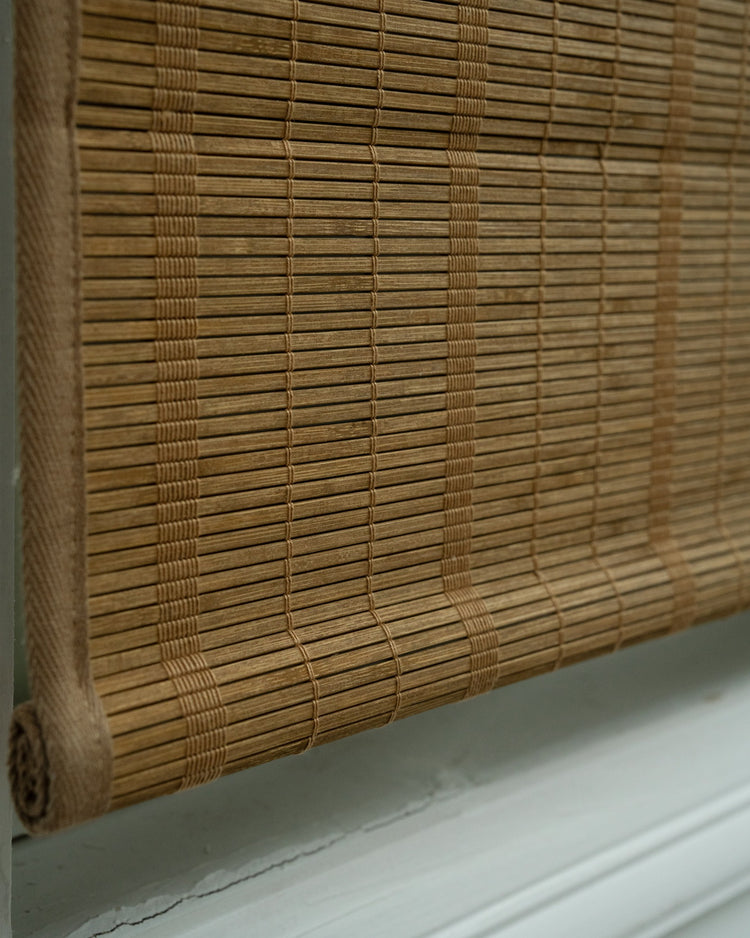
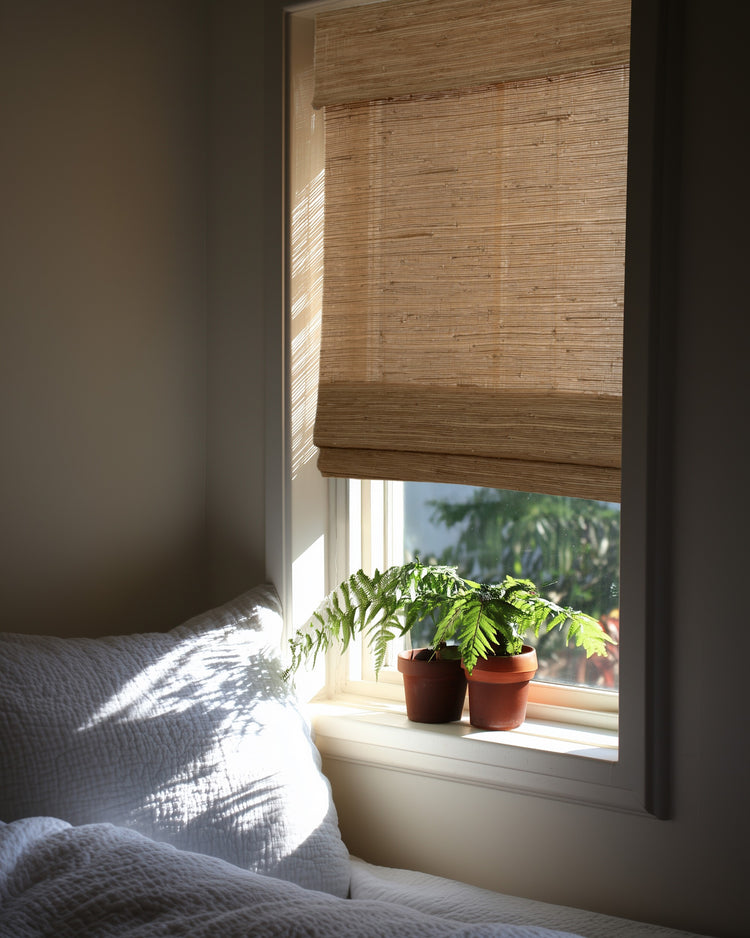
Window blinds example

Which gives you better light control and privacy?

Blinds win on flexibility. Tilt the slats downward to let light bounce off the ceiling while blocking direct views from outside. Tilt them upward to see the sky but not the street. This works well in home offices where you need light but don't want glare on your screen, or in living rooms facing a busy sidewalk.

Shades offer simpler, more complete coverage. When a shade is down, nothing gets through, which makes blackout shades ideal for bedrooms or media rooms. Sheer and light-filtering shades split the difference: they soften harsh sunlight and obscure the view from outside while still letting you see shapes and movement outdoors.

For rooms where you need precise control throughout the day, blinds are more practical. For rooms where you mostly want light or dark with nothing in between, shades work fine.

How easy are they to clean?

Cleaning blinds

Blinds collect dust on each individual slat, which adds up quickly. For regular maintenance, close the blinds flat and wipe across with a microfiber cloth or duster. Every few months, you'll want to clean more thoroughly. Wood and faux wood blinds can be wiped with a damp cloth. Aluminum and vinyl blinds can handle more moisture; some people take them down and rinse them in the bathtub.

The downside: if you skip cleaning for too long, dust builds up in the corners where slats meet the ladder strings. That's harder to reach and takes more time.

Cleaning shades

Fabric shades generally need less frequent cleaning since there are no slats trapping dust. A vacuum with a brush attachment works for most roller and Roman shades. Spot-clean stains with mild soap and water, but check the manufacturer's care instructions first since some fabrics don't do well with moisture.

Cellular shades have a honeycomb structure that can trap dust inside the cells. A can of compressed air or a hairdryer on cool setting helps blow it out. Don't crush or flatten the cells when cleaning, as they're harder to reshape.

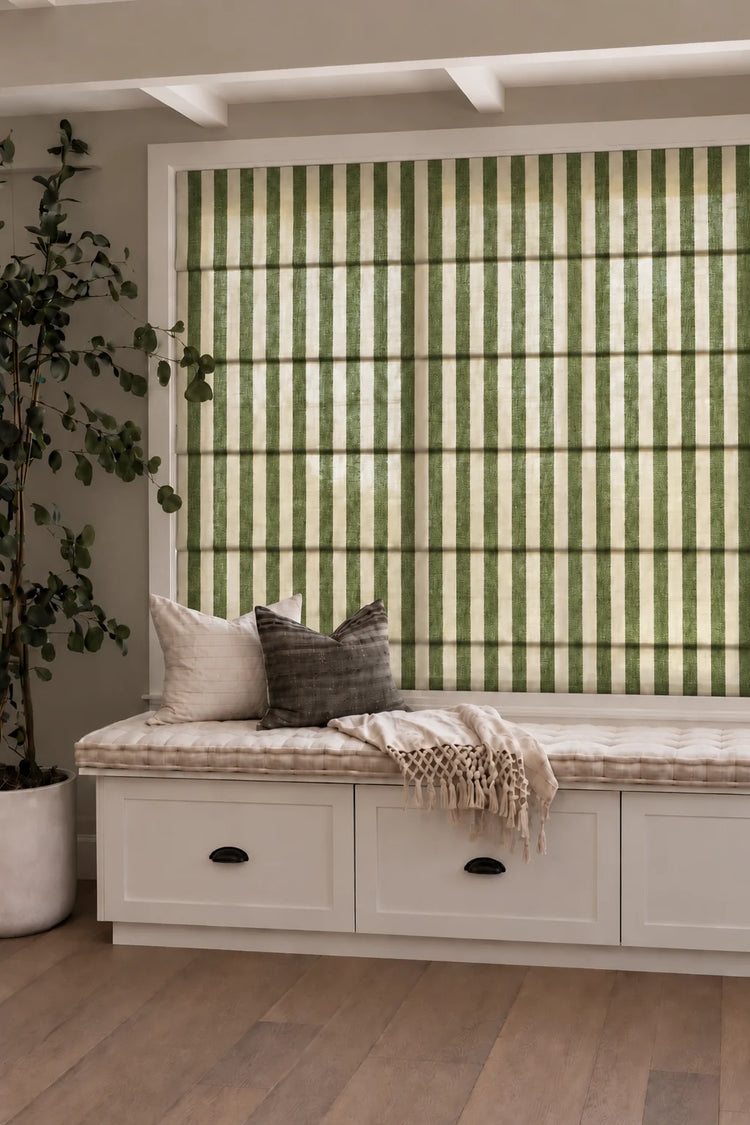
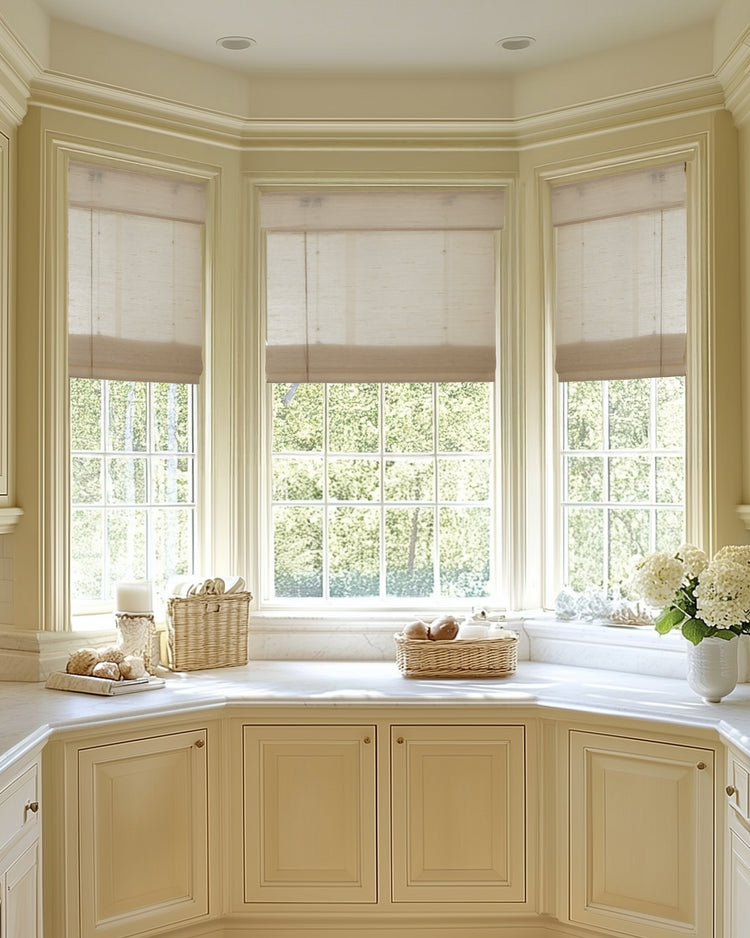
Zoe Plain Fold Linen Look custom Roman shades on three dining room windows, offering elegant privacy & light control for home decor.

Which lasts longer?

Blinds made from aluminum or faux wood typically last 10 to 15 years with normal use. Real wood blinds can last longer but are more vulnerable to humidity and warping in bathrooms or kitchens. The mechanisms that tilt and raise blinds are usually the first thing to fail, especially on cheaper models.

Fabric shades vary more depending on material and sun exposure. In a south-facing window with direct sun, lighter fabrics may fade or become brittle within 5 to 7 years. Shades in less sunny spots can last 10 years or more. Cellular shades sometimes lose their shape over time as the fabric softens.

If longevity is your priority, faux wood blinds or quality roller shades in a UV-resistant fabric are your safest bets.

Which keeps your home warmer or cooler?

Shades generally insulate better than blinds. Cellular shades are the standout here: their honeycomb pockets trap air, creating a buffer between the window glass and your room. Single-cell shades offer some insulation; double-cell shades do more. In cold climates, this can make a noticeable difference in rooms with large or drafty windows.

Roman shades and roller shades with thermal backing also help, though not as much as cellular. The fabric creates a barrier but doesn't trap air the same way.

Blinds leave gaps between slats even when closed, so they don't do much for insulation. They can help reflect summer heat if you choose a light-colored or reflective material, but they won't keep cold air out in winter.

What about child and pet safety?

Corded window coverings are a strangulation hazard for young children. This applies to both blinds and shades. Since 2018, most window coverings sold in the US must meet the ANSI/WCMA A100.1 safety standard, which limits accessible cord lengths.

The safest options for homes with small children are cordless. Cordless blinds lift with a simple push up on the bottom rail. Cordless shades work the same way, or use a continuous cord loop that stays tight against the wall.

Motorized blinds and shades eliminate cords entirely. You control them with a remote, wall switch, or phone app. These cost more but offer the highest safety level plus convenience.

If you have existing corded blinds or shades, you can retrofit them with cord cleats that keep cords wrapped up and out of reach, though this is a partial fix rather than a full solution.

How do prices compare?

Basic aluminum blinds start around $15 to $30 for a standard window. Faux wood blinds run $30 to $80. Real wood blinds range from $60 to $150 or more depending on the wood species and finish.

For shades, basic roller shades start around $20 to $40. Cellular shades typically cost $40 to $100 for a standard window. Roman shades, which use more fabric and have a more complex construction, usually run $80 to $200.

Custom sizing adds cost regardless of which type you choose. Motorization typically adds $50 to $150 per window on top of the base price.

Budget pick: aluminum mini blinds or basic roller shades. Mid-range: faux wood blinds or cellular shades. Higher-end: real wood blinds or Roman shades.

Common shade types compared to blinds

Roller shades vs blinds

Roller shades are about as simple as window coverings get. The fabric rolls around a tube at the top. They're easy to operate, easy to clean, and fit a modern or minimalist look. Compared to blinds, they're less fussy visually but offer less light control. You're choosing between all the way up, all the way down, or somewhere in between.

Cellular shades vs blinds

Cellular shades have a distinctive honeycomb cross-section that traps air for insulation. They're a good choice for energy efficiency, especially in climates with hot summers or cold winters. Unlike blinds, they can't tilt to redirect light. Unlike roller shades, they stack at the top rather than rolling, which creates a thicker profile when open.

Roman shades vs blinds

Roman shades fold into horizontal pleats when raised, creating a softer, more decorative look than blinds or roller shades. They work well in living rooms, dining rooms, and bedrooms where you want the window treatment to feel like part of the decor. The tradeoff is higher cost, more complex cleaning, and a look that skews traditional rather than modern.

Installation basics

Both blinds and shades install with brackets mounted either inside the window frame or on the wall above it. Inside mount gives a cleaner look and works when you have enough depth in the frame. Outside mount covers more of the wall and can make windows look larger.

Most standard blinds and shades come with mounting hardware and instructions. You'll need a drill, a level, and about 15 to 30 minutes per window. The trickiest part is making sure the brackets are level so the blinds or shades hang straight.

If your windows are non-standard sizes, you'll need custom-cut blinds or shades. Many retailers offer free custom cutting, or you can order made-to-measure online. Measure twice: width at the top, middle, and bottom of the window opening, plus height on both sides. Use the smallest width and largest height for inside mount.

TheHues From Real Life

Looking for a way to enhance your sleep and improve energy efficiency in your home.

Sahara

A few cozy updates in our apartment this month — new tanks, a small balcony refresh, and some early christmas vibes slowly finding their way in

Discover More
Zoe

Blackout curtain = focus mode on 🧠🖤 close the blackout curtains and watch your brain quiet down

Discover More
Sally

A big window to watch the snow fall was top of my house hunting list! 🥹 this room was a big seeking point for us

Discover More
Yarn

La mia casa è il posto dove ritrovo la calma dopo giornate intense

Discover More
Sunveil

Elevated living—with kids & pets! ✨ proof that elegant style and family life can absolutely mix! @krthome achieved the perfect living room glow-up with our sunveil linen sheer custom curtains in white

Discover More
Laborien

Elevated elegance ✨ @decoratewithkatie just transformed her space with our laborien custom curtain in white

Discover More
Yuki

Sleep sanctuary achieved 🌙 @evokehome mastered darkness with our yuki linen custom woven shades in an outside mount

Discover More
Hana

Textural elegance, perfected 🌾 @my_eclectic_home_designs brought a rich, rustic elegance to her lounge with our hana bamboo shade in tan

Discover More
Sunveil

Embrace the sunshine☀️ dining room glow-up ✨ @livedincasita did a simple touch to her space with our sunveil linen sheer custom curtain in white

Discover More
Yuki

Rustic kitchen charm ☀️ @maisonxblanche crafted the perfect blend of warmth and elegance in her kitchen with our yuki linen custom woven shades

Discover More
Ivy

Sweet dreams guaranteed ✨ @sweethouseliving just created the ultimate nursery sanctuary with our ivy linen blend blackout custom curtain in ivory

Discover More
Sally

Extra long curtains: custom-made for grand windows ✨ @home_is_calling searched everywhere for curtains for her 18-foot windows—and finally found her match

Discover More
Sally

Flow + function perfected ✨ @coosje_and_julius transformed their space into a serene retreat with our sally custom 100% blackout linen blend curtain in beige

Discover More
Hana

Kitchen's missing piece ✨ @juliaterpstra found the perfect finishing touch for her kitchen refresh with our hana bamboo woven shade in bark

Discover More
Sally

Dreamy curtain moment ✨ @jennyb

Discover More
FadeShield™

Breathtaking outdoors ☀️🌙 @__palko__ ’s patio glow-up is pure goals! our fadeshield™ canvas waterproof curtains in pure white (with easy-glide grommets) add instant elegance + battle sun, rain, and wind

Discover More
Sally

Café charm perfection ✨ @neutrals_n_colors proves timeless doesn’t mean dull with our sally linen blend custom café curtain in sage

Discover More
Zoe

Bare windows or dressed with curtains—what's your pick? 🪟✨ we're loving how @omabelle transformed her space with our zoe linen look soft custom curtains in ivory white

Discover More