Layering 101: How to Style Sheers + Blackout Curtains for a Luxury Look


In this article 14 sections
- How to layer sheer and blackout curtains
- Should sheers go in front of or behind blackout curtains?
- Can you hang sheer and blackout curtains on one rod?
- Why layered curtains look more finished
- How much fullness do layered curtains need?
- Choose the right hardware for layered curtains
- Mount curtains higher and wider for better coverage
- Get the curtain length right
- How to reduce light gaps with blackout curtains
- Best rooms for layering sheer and blackout curtains
- Common layered curtain mistakes
- Layered curtain checklist before you order
- FAQ
- Final takeaway
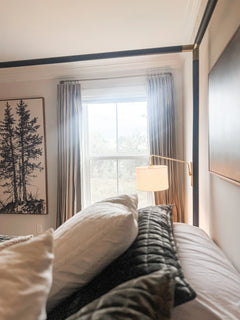
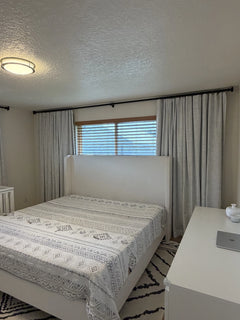
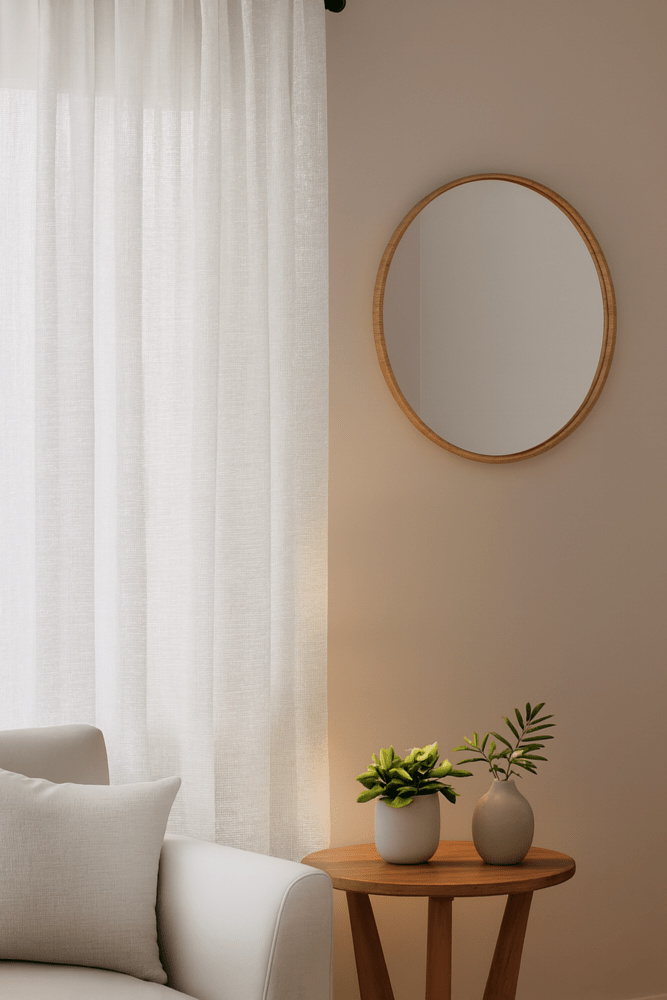
Layering sheer and blackout curtains is one of the easiest ways to make a room more flexible. Sheers keep daytime light soft and private, while blackout curtains help when you need darkness, stronger privacy, or a more finished look at night.
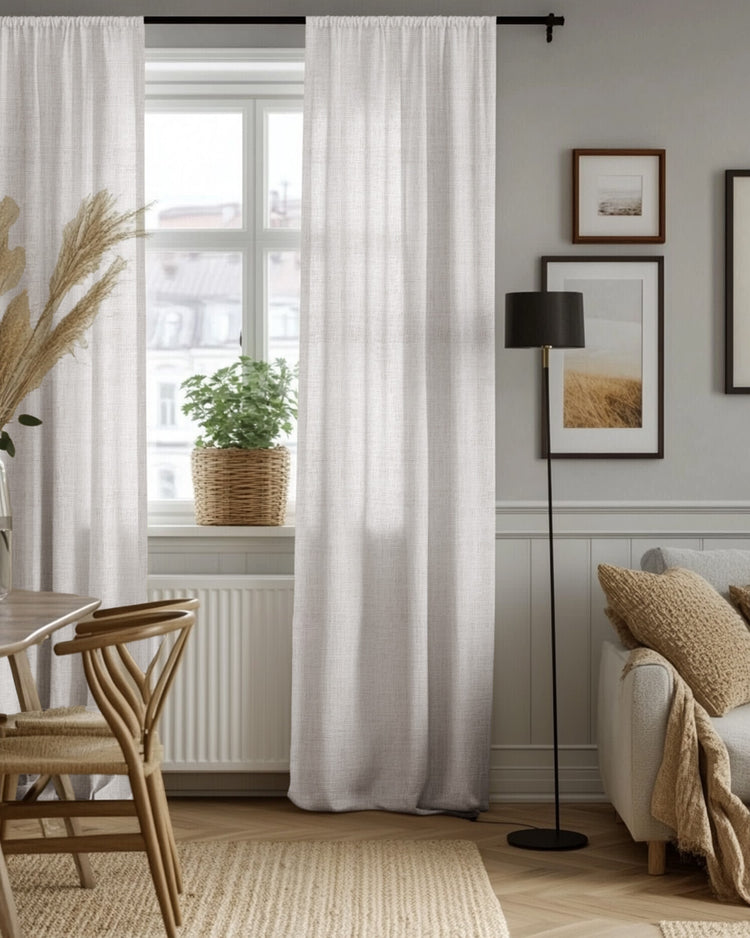
The best setup is usually simple: place the sheer curtains closest to the window and the blackout curtains on the room side, then hang both layers on a double rod or double track. That gives each layer its own job and keeps the curtains easier to open and close.
If you are planning this look for a bedroom, living room, nursery, or street-facing window, the details matter. Fabric fullness, rod placement, curtain length, and edge coverage all affect whether the final result feels polished or awkward.

How to layer sheer and blackout curtains
For most homes, the most practical order is:
- Sheer curtains closest to the window for soft daylight and daytime privacy.
- Blackout curtains on the room side for darkness, privacy, and a more substantial finished look.
- A double curtain rod or double track so each layer can move separately.
- Enough curtain width so the panels still look full when closed.
- Higher and wider mounting to reduce light gaps and make the window look larger.
This setup works because each layer solves a different problem. The sheer layer keeps the room from feeling exposed during the day. The blackout layer gives you more control when the room needs to feel darker, quieter, or more private.
If you are still choosing fabrics, compare sheer curtains with blackout curtains before deciding on the full setup.
Should sheers go in front of or behind blackout curtains?
In most rooms, sheers should go behind blackout curtains, closer to the glass. This is the cleanest day-to-night arrangement.
During the day, you can leave the blackout panels open and keep the sheers closed for soft light and privacy. At night, you can close the blackout layer over the sheers for a darker, more private room.
You can place sheers in front of blackout curtains in some traditional or highly decorative rooms, but it is less practical for everyday use. The sheer fabric becomes the visible face layer, so it needs to look polished enough to carry the whole window treatment.
For most bedrooms, living rooms, and apartments, sheers inside and blackout panels outside is the easier choice.

 100% Blackout
 Better sleep
 Noise Reducing
 Energy Saving
Can you hang sheer and blackout curtains on one rod?
You can, but it is usually not the best long-term setup.
When both layers share one rod, the curtains tend to bunch, drag, or move together. That makes the window harder to use and defeats one of the main benefits of layering: separate control over light and privacy.
A single rod can work if you are making a temporary setup or rarely open and close the curtains. For daily use, a double rod or double track is usually worth the upgrade.
| Hardware option | Best for | What to keep in mind |
|---|---|---|
| Double curtain rod | Bedrooms, living rooms, rentals, and most homes | Simple to understand, widely available, and easy to operate |
| Double track | A cleaner, more tailored look | Works especially well for heavier blackout panels or ceiling-mounted designs |
| Single rod | Temporary or low-use setups | Layers may not move independently and can look crowded |
Why layered curtains look more finished
Layered curtains often make a room feel more complete because they add depth, softness, and better proportion around the window.
A single curtain layer can look flat if the fabric is too narrow, the rod is too low, or the panels are too short. Adding a sheer layer gives the window more dimension, while the blackout layer adds structure and privacy.
The result should not feel busy. The best layered curtain setups usually use calm colors, simple hardware, and enough fabric to drape naturally.

How much fullness do layered curtains need?
Fullness is the extra fabric that creates soft folds when curtains are closed. Without enough fullness, curtains can look stretched and flat, even if the fabric itself is beautiful.
As a general guide, many rooms look best with at least 2x fullness. If you want a fuller custom drapery look, 2.5x to 3x fullness may look more generous, depending on the fabric and header style.
That does not mean every room needs the maximum amount of fabric. Smaller rooms, narrow windows, and heavy fabrics may need a more restrained approach. The goal is to create soft movement without making the window feel bulky.
- Use lighter fullness when the room is small or the fabric is already thick.
- Use more fullness when the window is wide or the fabric is light and airy.
- Check both layers together so the window does not feel overbuilt.
If you are ordering custom curtains, confirm whether the size you choose refers to finished panel width, coverage width, or a recommended fullness calculation.

Choose the right hardware for layered curtains
Hardware is what makes layered curtains easy or frustrating to use. A beautiful fabric combination can still feel wrong if the rods sag, the panels catch, or the layers do not move smoothly.
Double curtain rod
A double curtain rod is the most straightforward choice for many homes. The inner rod holds the sheers, and the outer rod holds the blackout curtains. Each layer slides separately, which makes daily use much easier.
This is a good choice for bedrooms, family rooms, apartments, and most standard windows. If you want a deeper comparison of hardware and heading options, review the TheHues curtain header guide before choosing a top style.

Double track
A double track can create a cleaner, more built-in look. It also helps heavier blackout curtains glide more smoothly, especially on wide windows or ceiling-mounted installations.
Tracks may require more planning than rods, but they can be a strong option when you want the window treatment to feel tailored and minimal.

Single rod
A single rod is the simplest option, but it is usually the least convenient for two layers. If you open and close the curtains often, a single rod can make the fabric feel crowded and harder to manage.
Use it only when the setup is temporary, decorative, or rarely adjusted.
Mount curtains higher and wider for better coverage
Rod placement changes how the whole window feels. Mounting the rod higher can make the wall look taller. Extending the rod wider gives the panels room to stack beside the window instead of blocking the glass.
This matters even more with blackout curtains. If the rod is too narrow, light can leak at the sides. If the rod is too low or too far from the wall, light can show at the top.
For a more finished look, plan the curtain layout around the full wall area, not just the glass. The TheHues curtain measurement guide can help you confirm height, width, and finished length before you order.
Get the curtain length right
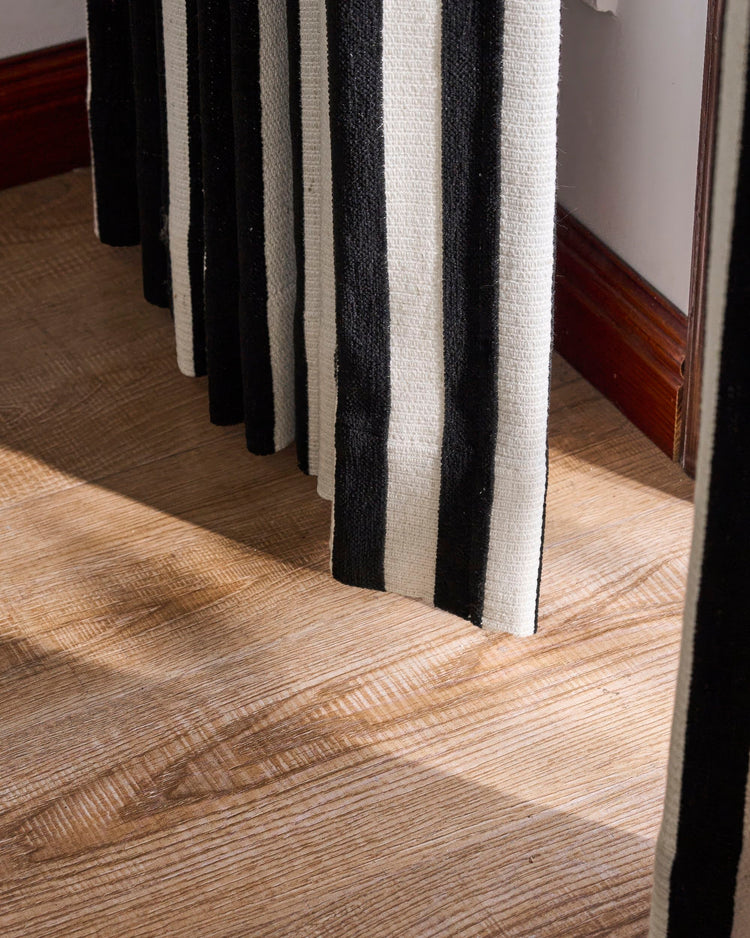
Layered curtains look best when the lengths feel intentional. In most rooms, a clean floor-length look is the safest choice. The curtain should either just touch the floor or sit very close to it, depending on your preference and the fabric.
Avoid panels that hover awkwardly a few inches above the floor unless there is a practical reason, such as a baseboard heater, high-traffic area, pets, or cleaning needs.
If you prefer a puddled look, keep it controlled. Large puddles can look dramatic in photos, but they may collect dust and become less practical in everyday rooms.
How to reduce light gaps with blackout curtains
If blackout curtains still let light in, the problem is often coverage rather than fabric. Light usually enters around the top, sides, bottom, or center opening.
To reduce light gaps:
- Extend the blackout layer beyond the window frame on both sides.
- Mount the rod high enough to reduce top glow.
- Choose enough width so the center overlap does not pull open.
- Use a return-style rod or track if side light is a major problem.
- Choose the right liner for the room’s darkness and privacy needs.
For bedrooms, nurseries, and media rooms, it helps to think of blackout as a full setup, not just a fabric choice. The curtain liner guide can help you compare liner options before deciding how much light control you need.
Best rooms for layering sheer and blackout curtains
Bedrooms with early morning light
Layering works especially well in bedrooms because the room needs different things at different times. Sheers can keep the room soft during the day, while blackout curtains help create a darker sleep environment at night.
Street-facing windows
If your window faces a sidewalk, neighbor, or nearby building, sheers can add daytime privacy without making the room feel closed off. The blackout layer gives stronger privacy after dark.
Living rooms that feel bare
Some living rooms need softness more than darkness. A sheer layer can filter glare and make the room feel more finished, while the outer layer adds structure and warmth.
Nurseries and kids' rooms
Layering can help manage naps, privacy, and changing daylight throughout the day. Keep safety in mind: avoid loose cords, make sure hardware is secure, and choose lengths that work for how the room is used.
Common layered curtain mistakes
Using too little fabric
If the curtains look stretched when closed, they probably need more width. This is especially common on wide windows and sliding doors.
Mounting the rod too low
A low rod can make the window and ceiling feel shorter. Raising the hardware often makes the same curtains look more custom.
Choosing layers that are both too heavy
If both layers are dense, dark, or highly textured, the window can feel bulky. Let the sheer layer stay light and use the blackout layer for privacy and darkness.
Ignoring hardware strength
Layered curtains add more weight than a single panel. Make sure the rod, brackets, anchors, or track are suitable for the full setup.
Trying to fix light gaps with darker fabric only
Darker fabric does not solve poor coverage. If light is leaking around the edges, improve overlap, rod placement, and liner choice before changing color.
Layered curtain checklist before you order
- Choose sheers for daytime privacy and soft light.
- Choose blackout curtains for darkness, privacy, and stronger coverage.
- Use a double rod or double track for separate operation.
- Measure the full rod or track width, not just the glass.
- Plan enough fullness for both layers.
- Mount higher and wider when the wall allows it.
- Check hardware strength before hanging heavier blackout panels.
- Review your liner choice if darkness or insulation matters.
FAQ
Do sheer curtains go behind blackout curtains?
Yes, in most rooms. Sheers usually work best closest to the window, with blackout curtains on the room side. This gives you soft daylight privacy during the day and stronger coverage at night.
Can I layer sheer and blackout curtains without a double rod?
You can, but a double rod or double track usually works better. A single rod can make the layers harder to move separately and may cause the panels to bunch together.
Should both curtain layers be floor-length?
For the most cohesive look, yes. Matching floor-length layers usually feel more intentional. However, shorter lengths may be better near baseboard heaters, in kids' rooms, or in areas where fabric could get in the way.
Will layered curtains make a room feel too heavy?
Not if the fabrics are balanced. Keep the sheer layer light, choose calm colors, and avoid using two very dense fabrics together unless the room is large enough to handle the extra visual weight.
Are layered curtains good for bedrooms?
Yes. Bedrooms are one of the best places to use layered curtains because they need daytime softness and nighttime darkness. For stronger light control, start with blackout curtains and choose a liner that fits your sleep needs.
Final takeaway
Layering sheer and blackout curtains works best when each layer has a clear purpose. Let the sheers handle soft daylight and daytime privacy. Let the blackout curtains handle darkness, stronger privacy, and a more finished look.
The most important details are simple: use the right hardware, measure for enough width, hang the curtains higher and wider when possible, and plan for light gaps before you order.
If you want help visualizing the final setup, compare options with the TheHues visualization tool or send your room details to the free design service before finalizing your custom curtain order.