Clear vinyl patio curtains for winter: what to know before you buy


In this article 9 sections
- Are clear vinyl patio curtains good for winter?
- When clear vinyl patio curtains make sense
- What to look for before you buy clear vinyl patio curtains
- The real winter tradeoffs buyers overlook
- Clear vinyl patio curtains vs other outdoor options
- How to measure and plan clear vinyl patio curtains for winter
- Best setup recommendations by use case
- FAQ
- The bottom line on clear vinyl patio curtains for winter
On the first cold Saturday in November, Dana zipped up her coat, stepped onto her covered patio in Minneapolis, and realized the space she loved all summer had become dead square footage. She didn't want a full renovation. She wanted a barrier that could block wind, keep out blowing rain, and still let in the view. That's exactly why so many homeowners start looking at clear vinyl patio curtains once winter hits.
If that sounds familiar, you're not starting from zero. Most buyers already know they need some kind of winter patio enclosure. What they usually don't know is where clear vinyl works well, where it disappoints, and which details make the difference between a setup that feels tailored and one that flaps, fogs, or fails in the first storm. In this guide, you'll learn when clear vinyl patio curtains make sense, what specs matter before you order, and how to plan a winter-ready setup that feels practical, not improvised.
Clear vinyl patio curtains can make a covered outdoor space more usable in winter, but they are weather barriers, not insulated walls. They help most with wind, cold rain, snow splash, and comfort retention around a seating area. They do much less for true heat retention than many product pages imply.
Are clear vinyl patio curtains good for winter?
Yes, clear vinyl patio curtains can be a smart winter upgrade if your goal is to extend patio use, not turn an outdoor space into a fully conditioned room. They work best when you already have a roof or overhead structure and need to control side exposure.
Think of them as a shield. They cut drafts, reduce direct wind across the body, and keep precipitation from blowing into the seating zone. That alone can make a huge comfort difference. The U. S. Department of Energy says windows account for about 30% of a home's heating energy loss, which is a useful reminder that exposed openings matter when you're trying to hold onto warmth or reduce cold air movement.
What clear vinyl patio curtains do not do is create the same thermal performance as framed walls, insulated glazing, or a true sunroom. If you go in expecting "outdoor room, but warm like inside," you'll probably be disappointed. If you go in expecting "covered patio that stays calmer, drier, and more comfortable in winter," the results are often much better.

That difference matters because winter comfort is usually cumulative. You get a better result from several small wins at once:
- blocking crosswinds
- reducing snow or rain blow-in
- keeping cushions and rugs drier
- retaining some warmth around people and surfaces
- pairing the barrier with safe, ventilated heating strategies when appropriate
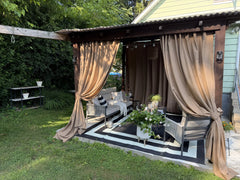
Want a softer-looking setup for year-round use, not just winter weather? Start with outdoor curtains from TheHues, then decide whether you need clear panels for visibility or fabric panels for shade and privacy.

When clear vinyl patio curtains make sense
Not every outdoor space needs the same solution. Clear vinyl performs best when the structure does part of the work already.
Covered patios
A roofed patio is the easiest case. The top is already protected, so the vinyl's job is mostly lateral. That means less weather intrusion and fewer structural demands than a fully exposed deck.
If your main issue is winter wind that cuts across the patio from one or two open sides, clear panels can make the space feel dramatically calmer. You still get daylight and visibility, which is often the point of choosing clear material in the first place.
Screened porches
Screened porches are another strong use case. Many homeowners want to keep the screened feel in spring and summer, then add a removable cold-season layer once temperatures drop.
In that situation, a clear vinyl patio enclosure can work like a seasonal skin. You preserve the porch's original openness while adding a temporary wind and weather barrier that can be rolled up or removed later.

Pergolas and gazebos
These spaces can work well, but only if the structure is strong enough and the mounting points are clear. Pergolas with open slats overhead still allow more air movement than a solid roof, so expectations need to stay realistic.
If the space is exposed on multiple sides, panel anchoring becomes far more important. The vinyl itself is only part of the system. The attachment method, edge reinforcement, and bottom restraint often decide whether the setup feels solid in January.
Seasonal entertaining spaces
Victor in coastal New Jersey learned this the hard way in December 2025. He ordered budget clear panels online for his back deck, hung them from simple hooks, and assumed the weight of the material would keep them steady. The first windy night pushed the panels inward, twisted two corners, and soaked the rug near the dining table.
When he rebuilt the setup with reinforced edging and tied the bottom to fixed anchor points, the difference was immediate. Same patio, same winter, very different result.
That story is common because buyers focus on the sheet of vinyl, not the system around it.
What to look for before you buy clear vinyl patio curtains
If you only compare price and size, you'll miss the details that affect real-world winter performance.
Cold-weather performance
Start by checking whether the material is rated or described for low-temperature conditions. Some vinyl panels stay flexible longer in the cold, while cheaper options become stiff, brittle, or more prone to cracking.
This is especially important in climates with freeze-thaw cycles. A panel that looks fine in mild rain may behave very differently after repeated cold snaps.
Reinforced borders and edge construction
The clearest part of the panel gets most of the attention, but the borders do much of the hard work. Reinforced edging helps distribute tension, reduces tearing near hardware, and gives the panel cleaner lines when installed.
This is also where a more tailored look starts to show. A well-finished border reads more intentional than a raw tarp-style edge, especially on residential patios where appearance matters.

Grommets, tracks, zippers, and roll-up access
Different systems solve different problems:
- Grommets are simple and versatile for straightforward mounting.
- Tracks give a more polished sliding operation when the structure supports them.
- Zippers help create entry points or connect multiple panels.
- Roll-up systems are best when you want ventilation and seasonal flexibility.
If you expect to open and close the panels often, usability matters almost as much as protection. The Department of Energy notes that 75% of residential window coverings stay in the same position every day. Outdoor barriers can fall into the same trap if they are awkward to operate.
Bottom anchoring
This is one of the most overlooked buying criteria. A clear panel that hangs beautifully in still air may become chaotic in winter gusts.
Look for a plan to stabilize the bottom edge:
- weighted hem
- bottom pocket with pipe or rod
- straps
- hooks
- clips to deck hardware or ground anchors
Without bottom restraint, even a well-made panel can slap, billow, or let water in.
Panel layout and visibility
One wide panel may look simpler on paper, but it can be harder to handle, roll, or secure. Multiple panels often give you better access, cleaner overlap options, and easier replacement if one section gets damaged.
If you're unsure which layout will function better, read one curtain panel or two and adapt that same decision logic to your outdoor opening.

 Kid-friendly
 OEKO-TEX® Certified
 Durable
 Low maintenance
Need help visualizing a cleaner, custom-fit setup before ordering? Use the TheHues visualization tool or request the free design service so you can compare panel configurations against your actual patio.
The real winter tradeoffs buyers overlook
Product pages show polished photos, but they rarely walk through the everyday annoyances buyers actually notice after installation. For most buyers, the real tradeoffs with clear vinyl patio curtains show up after the panels are already hanging.
Condensation and airflow
Clear material helps preserve light and block wind, but it can also create condensation when warm interior-side air meets a cold surface. If the patio is tightly enclosed, moisture from people, cooking, or heating can collect on the vinyl.
That doesn't mean clear vinyl is a bad choice. It means you should plan for airflow and wipe-down maintenance. A little venting is often better than chasing a perfectly sealed enclosure that stays damp.
Wind load
Wind is the biggest operational stress test for most winter setups. In real life, the problem is not "Will the panel hang?" It's "What happens when gusts hit the panel over and over for weeks?"
This affects:
- hardware selection
- spacing between grommets or fasteners
- border reinforcement
- overlap between panels
- how securely the bottom edge is held in place
Scratching, yellowing, and storage
Clear panels need cleaner storage habits than many buyers expect. Dirt trapped in rolled material can scratch the surface. Prolonged sun exposure can lead to clouding or yellowing over time, especially with lower-grade material.
Porch Enclosure Systems says its systems average 7 to 10 years of life depending on maintenance. That's a useful benchmark, but only if the panels are cleaned, secured, and stored properly.
Safe heating and carbon monoxide
If you partly enclose a patio for winter, you must think about ventilation and heater safety before the first cold night.
The CDC warns that generators should stay at least 20 feet from doors and windows, and grills should not be used in or next to a home. That guidance is a good baseline for any semi-enclosed outdoor setup. Clear panels can change how fumes move, so never treat a zipped-up patio like open air just because it isn't fully indoors.

If heating is part of the plan:
- follow the heater manufacturer's ventilation guidance exactly
- avoid trapping fumes in a partly enclosed space
- keep exits clear
- do not improvise with grills, ovens, or unapproved heat sources
Clear vinyl patio curtains vs other outdoor options
The right answer depends on what problem you're really trying to solve.
Clear vinyl patio curtains vs fabric outdoor curtains
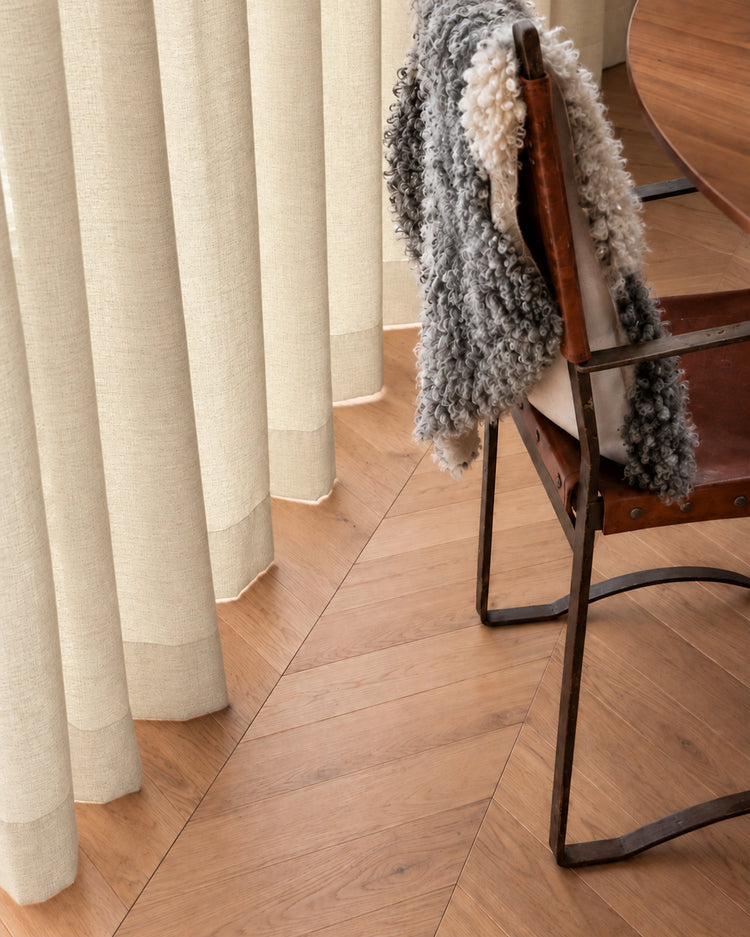
Choose clear vinyl patio curtains when winter visibility, wind blocking, and rain protection matter most. Choose fabric outdoor curtains when you want softness, sun control, privacy, and a more design-led look.
Fabric outdoor curtains usually feel warmer visually. They soften the structure, hide hardware better, and integrate more naturally with residential design. Clear vinyl wins when the view matters and weather protection is the main priority.
Many buyers end up wanting a hybrid approach: clear barriers for the harsh-weather side, and fabric curtains elsewhere for softness and flexibility.
Clear vinyl patio curtains vs shade sails
Shade sails solve a different problem. They are excellent for overhead shade and sun control, but they do not create the same side protection against winter wind and blow-in rain.
If your problem is summer glare, a sun shade sail may be the better investment. If your problem is cold-season exposure on the sides of a covered patio, clear vinyl is more relevant.
Clear vinyl patio curtains vs a permanent enclosure
This is the biggest budget and expectation gap. Permanent enclosures offer stronger thermal performance, better structural integration, and more year-round comfort. They also cost more, take longer, and change the architecture more permanently.
Lena and Chris in Denver faced that exact choice before Thanksgiving 2025. Their contractor quoted them nearly $24,000 for a more permanent enclosure on a small patio. Instead, they spent a fraction of that on custom seasonal panels, anchored them carefully, and used the space for winter dinners while they saved for a longer-term project.
It wasn't a substitute for a sunroom. It was a smart interim step that matched their budget and timeline.
If you need a temporary winter patio enclosure, clear vinyl is often the best bridge option. If you need true four-season indoor-style comfort, you'll probably outgrow it.
How to measure and plan clear vinyl patio curtains for winter
A good result starts before you buy. Measuring clear vinyl patio curtains takes more care than many homeowners expect. Outdoor openings punish sloppy measuring more than indoor windows do because gaps, pooling, and bad overlaps are more obvious once wind and water show up.
Measure width, drop, and overlap
Record the full opening width first, then the exact drop from your mounting point to the desired bottom position. After that, think about overlap.
Overlap matters because panels need a little forgiveness. A too-tight measurement can leave visible gaps or stress the hardware. A little planned overlap usually gives a better seal and a cleaner look.
Confirm the mounting surface
Ask these questions before ordering:
- Where will the top attachment go?
- Is the structure strong enough for repeated wind load?
- Do you need side fasteners?
- How will the bottom edge stay stable?
If you can't answer those clearly, you're not ready to choose final panel specs yet.
Decide on one panel or multiple panels
Multiple smaller sections are often easier to manage, especially on wider patios. They can open more neatly, reduce handling strain, and make repairs simpler later.
If custom sizing is part of the project, use a proper curtain measurement guide and document each opening carefully. Outdoor projects go smoother when every panel has a clear label, mounting plan, and intended overlap.
Best setup recommendations by use case
Every patio has its own exposure pattern, so the best setup depends on where the weather pressure is coming from.
Small covered patio
For a compact covered patio, prioritize:
- fewer panel breaks
- clear visibility
- simple top mounting
- bottom stabilization that won't clutter the floor
This is often where custom sizing pays off quickly because small spaces look messy fast when the fit is off.
Windy deck or exposed porch
For exposed sites, prioritize durability over convenience. Reinforced borders, tighter anchoring, and more secure mounting hardware matter more than elegant operation.
Don't underspec the system. Wind punishes optimism.
Outdoor dining area
For dining zones, visibility and access matter more. You want people to move through the space easily, and you don't want a bulky panel layout disrupting chairs, serving flow, or sightlines.
That usually means multiple access points or a roll-up strategy rather than one giant fixed panel.
Seasonal entertaining space
If the patio is used for holidays, gatherings, or occasional winter lounging, think in layers:
- weather barrier
- lighting
- seat-friendly textiles
- safe heating plan
- easy open-close access
This is where design support can save time. You are not just buying material. You are planning how the space should function on a cold evening when guests arrive with coats, food, and low patience for awkward setups.
FAQ
Do clear vinyl patio curtains keep heat in?
They help retain comfort by reducing wind exposure and limiting blow-in rain or snow, but they are not true insulation. Expect a calmer, more protected patio, not indoor-level thermal performance.
Do clear vinyl patio curtains cause condensation?
They can. Condensation is more likely when warm air, moisture, and cold vinyl surfaces meet. Ventilation, safe heater use, and routine wipe-downs help.
Are clear porch curtains better than fabric outdoor curtains?
They are better for visibility and winter weather blocking. Fabric curtains are usually better for softness, shade, privacy, and a more residential look.
How long do outdoor vinyl curtains last?
It depends on material quality, sun exposure, wind stress, and maintenance. One cited industry benchmark puts average system life at 7 to 10 years with proper care.
The bottom line on clear vinyl patio curtains for winter
If your goal is to keep a covered patio drier, calmer, and more usable in cold weather, clear vinyl patio curtains can be a smart solution. They work best when you plan them as a complete system, not just a sheet of material. Fit, anchors, access, and airflow matter as much as the vinyl itself.
Remember the practical takeaways:
- expect weather protection, not miracle insulation
- choose hardware and bottom restraint as carefully as the panel material
- plan for condensation and ventilation
- measure precisely before ordering
- pick the setup that matches your structure and how you actually use the space
If you're comparing winter-ready options now, start with custom outdoor curtains, then use the measurement guide or free design service to narrow the right layout before you buy.
A better fit usually means a better-looking patio and fewer winter surprises.