How to Hang Curtains Over Blinds?


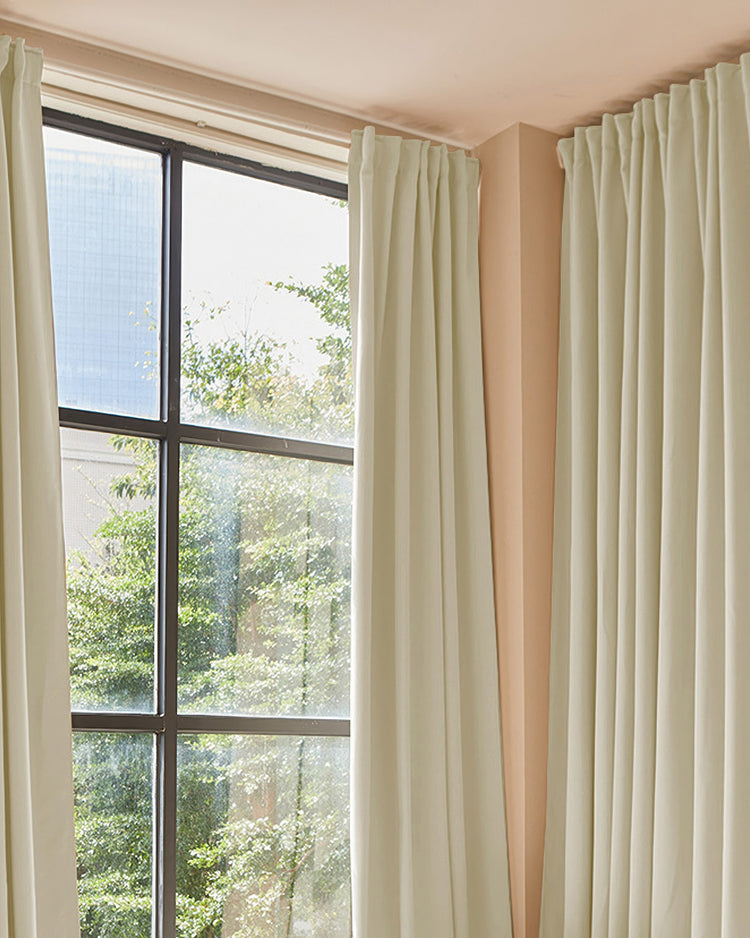
To hang curtains over blinds, mount the curtain rod 4–6 inches above the window frame and extend it 4–10 inches past each side, so the panels clear the blind's headrail and stack off the glass. Use a wall-mounted rod for the cleanest result, a headrail bracket if you can't drill into the wall, or a tension rod for a fully no-drill setup. That clearance above and beside the blinds is the whole trick — get it right and the two layers work together instead of fighting each other.
Layering curtains over blinds gives you something neither does alone: blinds tilt for precise daytime light and privacy, while curtains add full blackout, insulation, softness, and color. Here's how to do it properly.

Can you put curtains over blinds?
Yes. It's one of the most practical window treatment combinations, especially if you already have blinds installed and don't want to replace them. Adding curtains on top lets you:
- Dial in light and privacy together. Tilt the blinds for daytime light, then close room-darkening or blackout panels at night.
- Insulate the window. A second layer traps a pocket of air, which cuts heat loss in winter and blocks summer heat gain.
- Soften the window visually. Blinds are flat and utilitarian; adding fabric softens a hard window with texture, warmth, and a finished look.
- Save money on upgrades. Covering windows with curtains over existing blinds beats buying premium blinds for every opening.
It's also a strong move for renters and anyone with a street-facing or ground-floor window who wants real nighttime privacy without ripping out what's already there.

 Tailored Folds
 Low maintenance
 Motorized Option
 Child-Safe Cordless
How to hang curtains over blinds, step by step
Step 1: Decide inside-mount vs outside-mount blinds
If you're installing or reworking the blinds first, choose an inside mount inside the window recess whenever the frame is deep enough. Inside-mounted blinds sit flush, don't crowd the drapery, and leave the frame open so the curtains have room to hang and stack cleanly. Outside-mounted blinds work too, but they need a curtain rod set even higher and wider to clear the headrail.
If you are measuring new blinds before layering curtains, use a reliable guide to measuring for blinds and shades so the base layer fits the window correctly.

Step 2: Mount the curtain rod high and wide
This is where most people go wrong. The rod has to sit above and outside the blinds so the panels never snag the headrail or tilt wand:
- Height: 4–6 inches above the window frame, or, for a taller look, midway between the frame and the ceiling.
- Width: Extend the rod 4–10 inches past each side of the frame so open panels stack off the glass and don't block the blinds.
- Brackets: Use wall-mounted brackets anchored into a stud where possible. Into drywall, use toggle or anchor bolts rated for the panel weight — heavier blackout and velvet panels need the stronger anchor.
Step 3: Account for the extra length
Because the rod sits higher than a curtains-only setup, your panels need to be longer. Measure from the top of the mounted rod, not the top of the window, down to your target hem. Aim for the panels to just kiss the floor or float ½ inch above it. Measuring from the window instead of the rod is the most common reason layered curtains end up too short.
Step 4: Hang the panels with even fullness
Use enough fabric for 2 to 2.5× the rod width so the curtains look full rather than stretched flat. Space rings or clips evenly — about one every 4–6 inches — so the panels pleat consistently and glide without catching.

How to hang curtains over blinds without drilling
Renters and anyone avoiding wall holes have three solid no-drill options:
- Tension rod — the simplest. It clamps inside the window recess with no hardware or marks. The catch: it only holds lightweight panels, and the recess has to be deep and sturdy enough to grip.
- Headrail brackets — clips that attach a curtain rod directly to the blind's headrail. They give a clean look with no wall damage and work with both inside- and outside-mounted blinds.
- Adhesive or command-style rod hooks — fine for sheers and light panels on smooth surfaces; not for heavy blackout or velvet.
For more reversible methods, see our guide to hanging curtains without drilling.
Curtains over vertical vs horizontal blinds
Horizontal blinds are the easy case — they sit flat against the window, so a standard curtain rod mounted above and wide of the frame layers over them with no interference. This is the most common setup and the most forgiving.
Vertical blinds need one adjustment: the slats swing open into the room, and on wide patio or sliding-door windows they can brush the panels. Mount the rod a little wider and higher, and if the slats still catch, loosely secure them at the bottom with the chain so they swing less. This keeps both layers usable on big openings.

Blackout curtains over blinds
For bedrooms, nurseries, and shift-sleepers, layering blackout curtains over blinds is the most effective light-blocking combo you can build. The blinds knock down most of the light; the blackout panels close the gaps the slats leave behind.
One thing to know: blinds alone leak light around and through the slats, and blackout panels leak at the edges. So go oversized: extend the rod well past the frame and use panels long enough to puddle slightly at the floor, so the fabric overlaps the window opening on all sides. That edge coverage, not the fabric itself, is what gets you a truly dark room.
Pairing curtains with shades instead
Blinds aren't your only option underneath. The same layering works with:
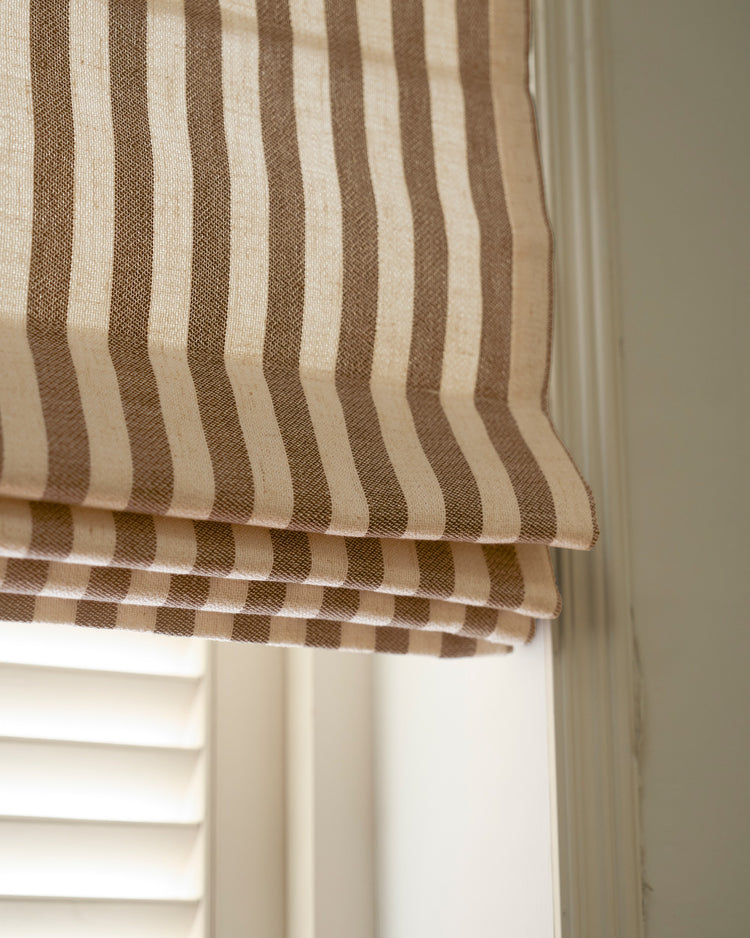
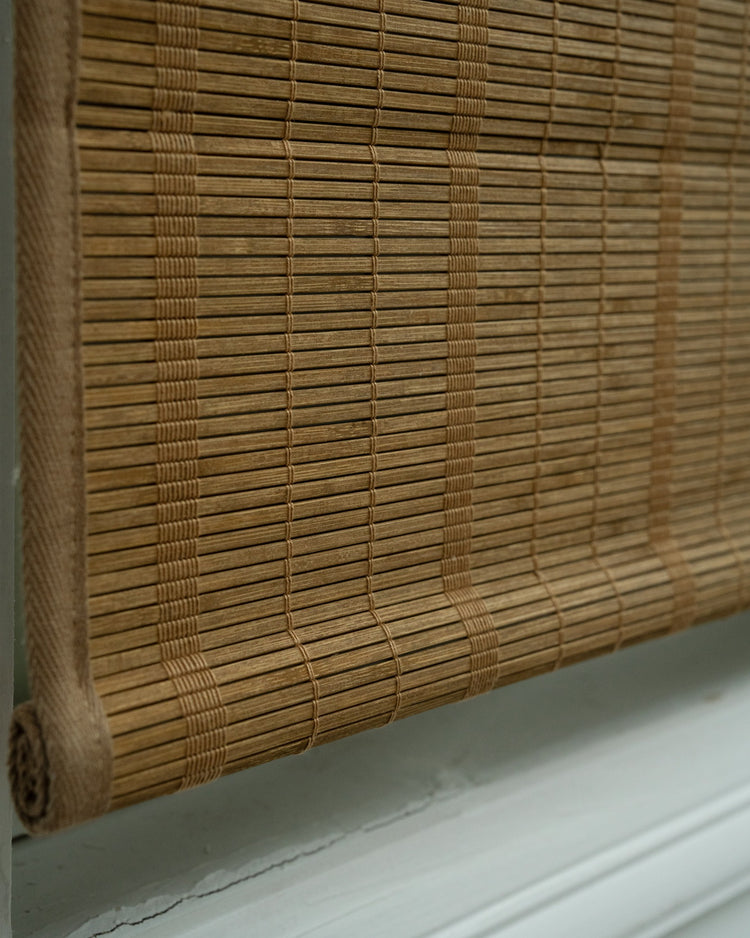
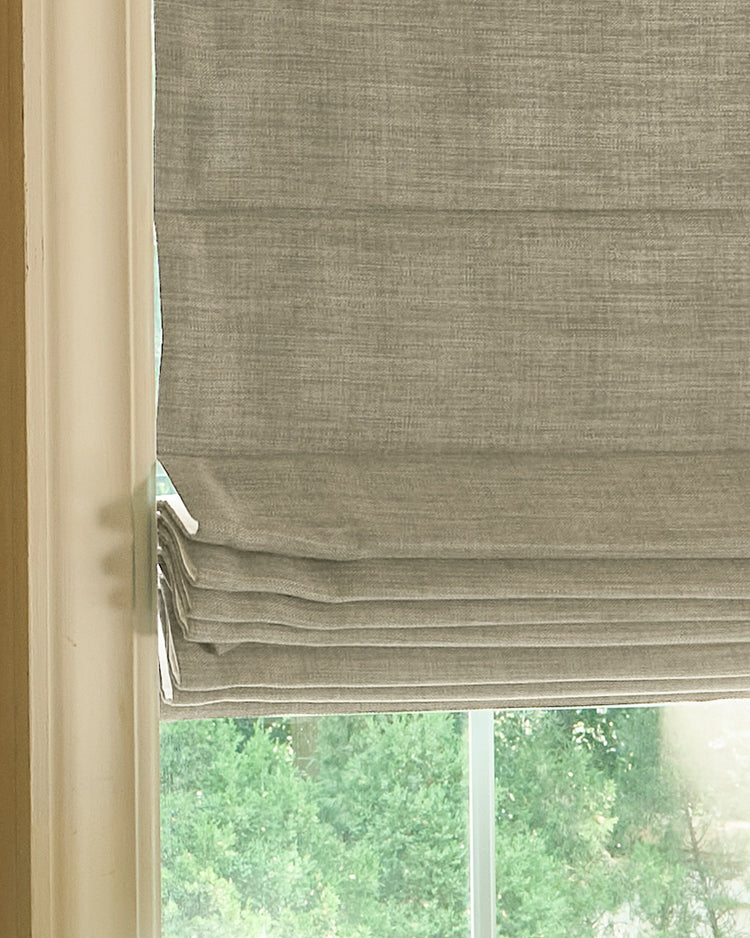
- Roman shades for a soft, tailored look — available sheer or blackout.
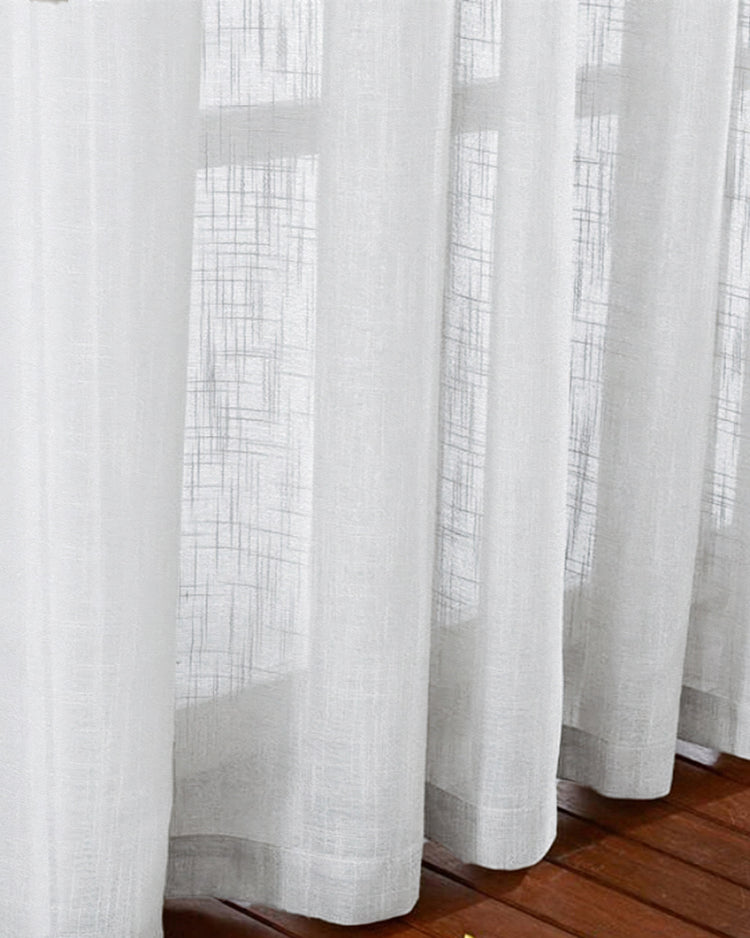
- Roller or zebra shades for a clean, modern base layer; add a sheer panel on top for contrast.
The principle is identical: mount the rod above and wide so the soft layer and the curtains never fight for the same space. For the full approach, see our guide on how to layer curtains beautifully.


A few tips that make or break the look
- Keep patterns simple. You're already mixing two textures and two materials. Let one layer be the statement and keep the other quiet — busy patterns on both reads cluttered.
- Match the curtain function to the job. Sheers for softening and daytime privacy; room-darkening or blackout for sleep and glare; thermal for drafty or sun-baked windows. For street noise, a heavier layered panel also helps — see our guide to soundproofing curtains. Mass and thickness can shave roughly 3–7 dB.
- Mind panel weight. Heavier panels over blinds need a sturdier rod and stronger anchors — don't hang velvet on a tension rod.
Frequently asked questions
Do curtains over blinds block more light?
Yes. Tilted-closed blinds plus closed blackout panels block far more light than either alone, because the curtains cover the slat gaps and the window edges.
How high should I hang curtains over blinds?
4–6 inches above the window frame, with the rod extended 4–10 inches past each side so the panels clear the headrail and stack off the glass.
Can I hang curtains over blinds in a rental?
Yes — use a tension rod inside the recess or headrail-mounted brackets, both of which leave no holes.
Do the curtains need to be longer than usual?
Usually, yes. Because the rod sits higher than a window-mounted rod, measure from the rod down to the floor, not from the top of the window.
Layering curtains over blinds is mostly about clearance: rod high, rod wide, panels long and full. Get those right and you get the precise daytime control of blinds with the privacy, blackout, and warmth of curtains — in one window.