Innovative and Different Ways of Hanging Sheer Curtains


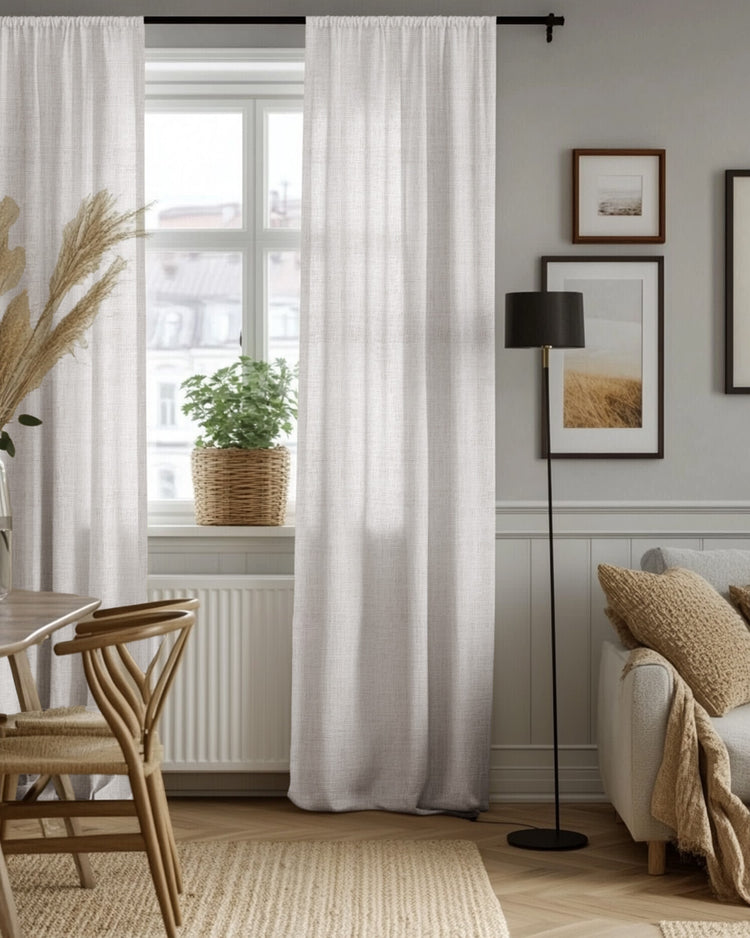
The most useful ways to hang sheer curtains are: as a single layer for soft, diffused daylight; layered behind drapes or blackout panels on a double rod for day-and-night control; mounted high and wide so the fabric reads full instead of flat; or hung without drilling on a tension rod or adhesive track in a rental. Which one is right depends on a single decision. Do you want sheers as the only treatment, or as the soft front layer of a two-layer setup? This guide walks through every method, the hardware each one needs, and the one honest limit you should plan around. A sheer is translucent, so it diffuses daylight and gives daytime softness, but it is not reliable nighttime privacy once your interior lights are on.
Below you will find the layering mechanics, with and without a double rod, the fullness numbers that keep sheers from looking skimpy, no-drill options for renters, and a few decorative methods worth trying.
What can sheer curtains actually do, and not do?
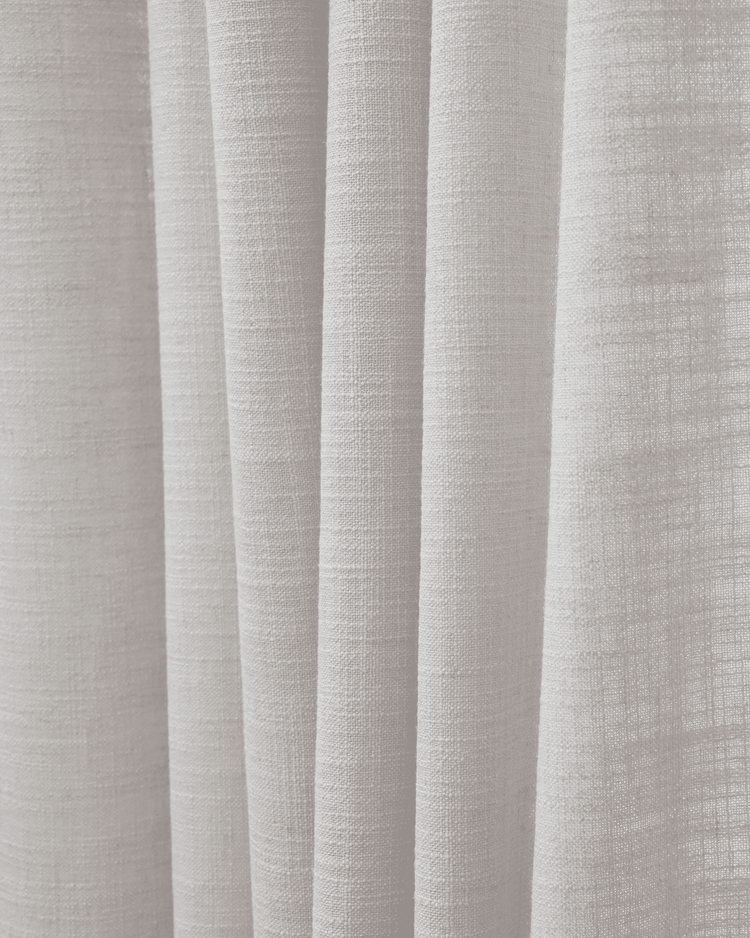
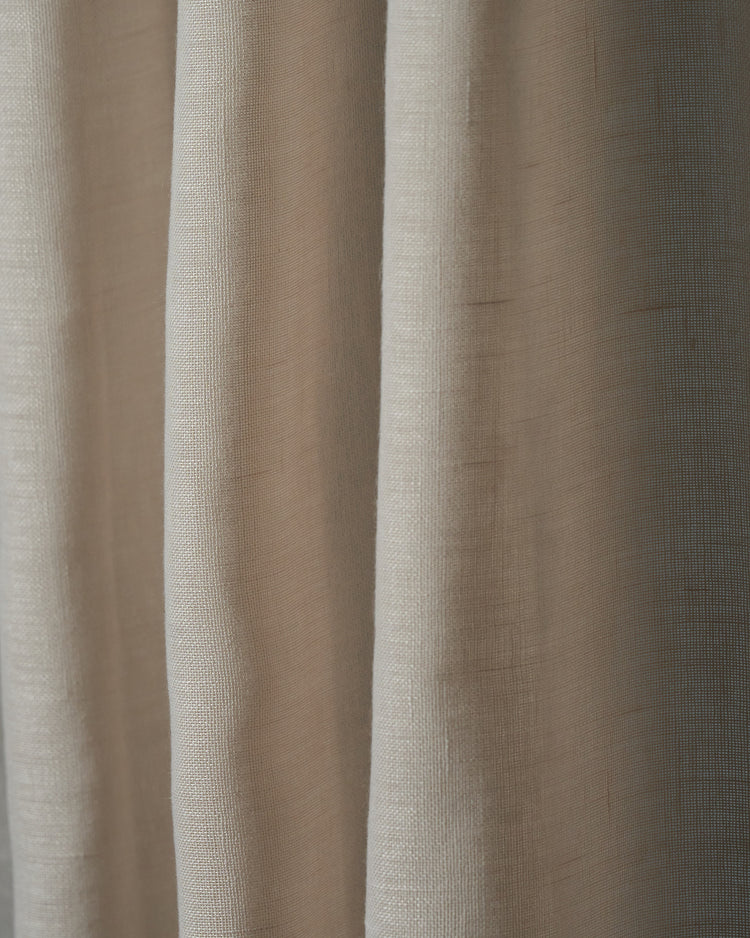
A sheer is a translucent panel, usually voile, a linen look, or a polyester blend, that scatters incoming daylight. Set expectations correctly before you choose a hanging method:
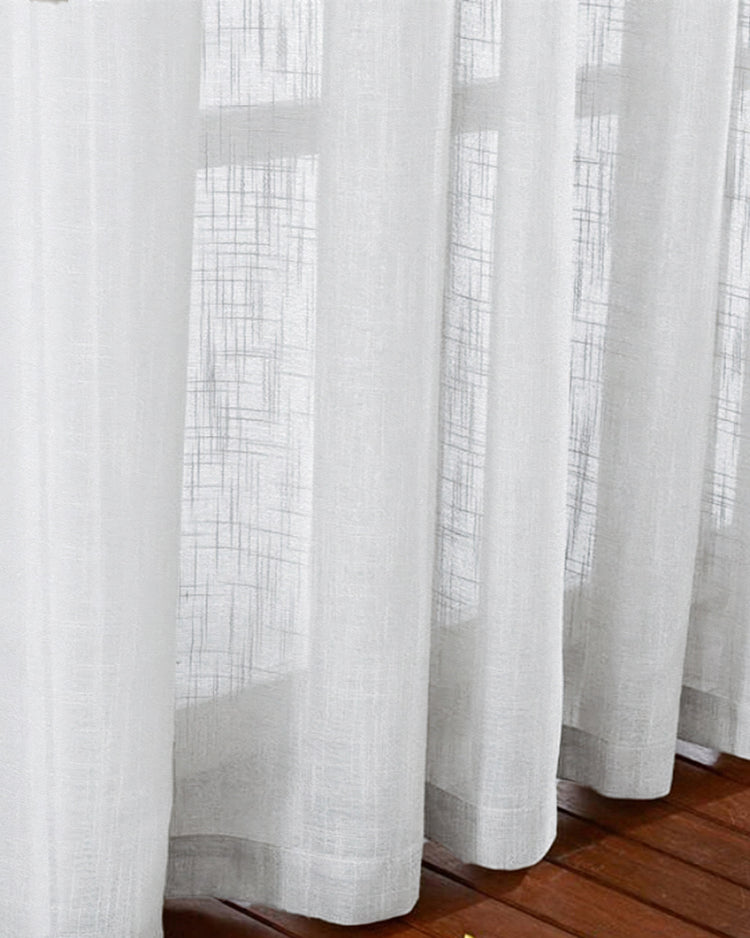
- Daytime softness, not privacy on demand. In daylight, a sheer obscures a clear view and softens harsh sun. With white or ivory sheers, people outside see less detail than you might expect during the day.
- No reliable nighttime privacy with lights on. Once interior lights are on after dark, the light and dark balance flips and silhouettes become visible from outside. This is the single most important trade-off, and it is why most US homes pair sheers with a second, opaque layer in bedrooms and street-facing rooms.
- Light filtering, not light blocking. A sheer alone will not darken a room for sleep or a media setup. For that you need a room-darkening or blackout layer behind it.
- Limited insulation and sound control. Thin fabric does little for temperature or noise on its own. The insulating work comes from the heavier layer you add.
If you want the full background on fabrics, opacity by color, and where sheers work best, see our complete guide to sheer curtains. This page focuses on the hanging mechanics.

How much fullness do sheers need so they do not look flat?
More than you think. Sheers generally need more fabric than heavier curtains to read as soft and gathered rather than thin and skimpy. A flat sheer is the most common reason a setup looks cheap.
TheHues fullness is set by header type, and sheers sit at the higher end of the range:
| Header style | Recommended fullness for sheers |
|---|---|
| Rod pocket | 2x rod width |
| Back tab | 2x rod width |
| Pleat hook | 2x rod width |
| Grommet top | 1.5x rod width |
| Clip rings | 1.5x rod width; clips suit lightweight and sheer fabric well |
Use this formula so you order enough fabric:
Finished width per panel = rod width × fullness ÷ number of panels
Example: a 100-inch rod, a 2x rod-pocket sheer, and two panels need two 100-inch finished-width panels: 100 × 2 ÷ 2. That is the gather that keeps a sheer looking full. If you are choosing a header, our guide to curtain heading types explains how each one looks and operates.
One note on hardware: TheHues recommends clip rings for lightweight or sheer fabric, which is why they are a clean, low-fuss choice for a single sheer layer. Do not carry that over to heavy drapes; clips are not built for that weight.

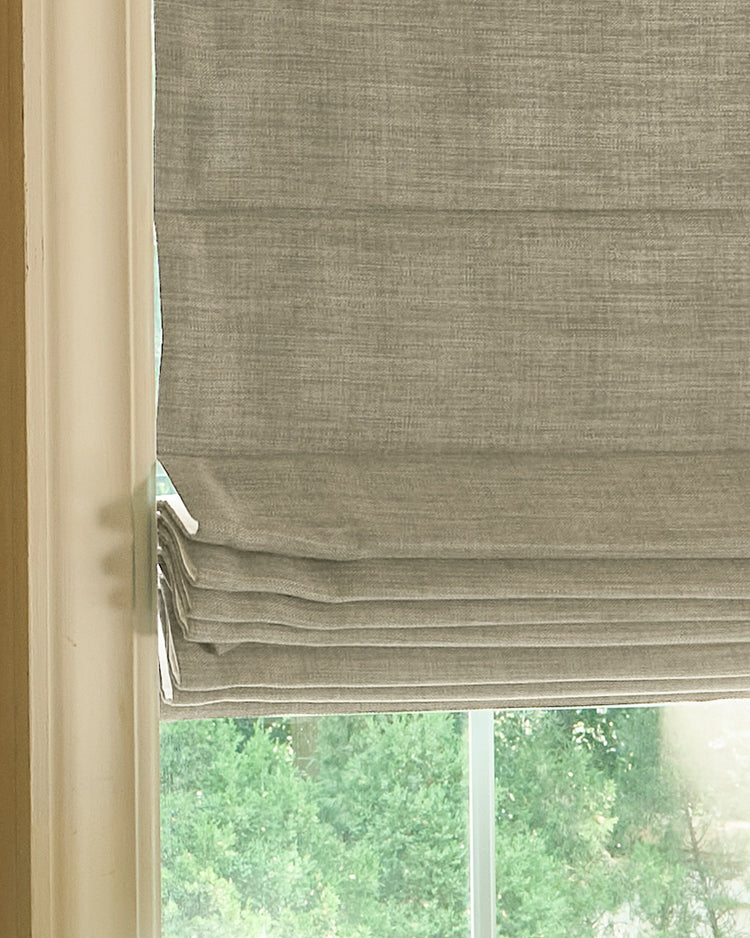
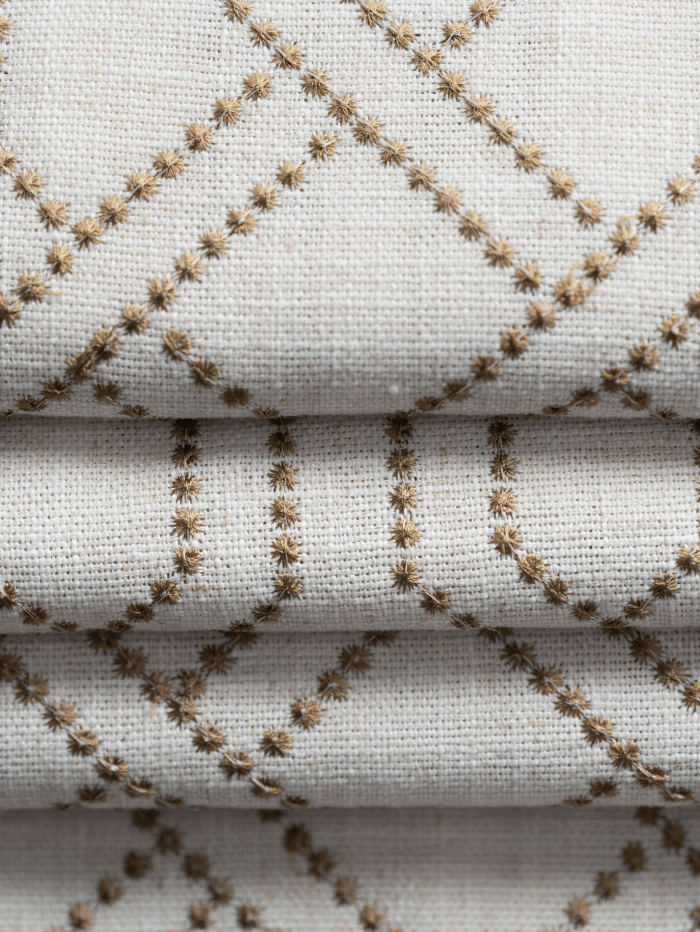
 Daytime Privacy
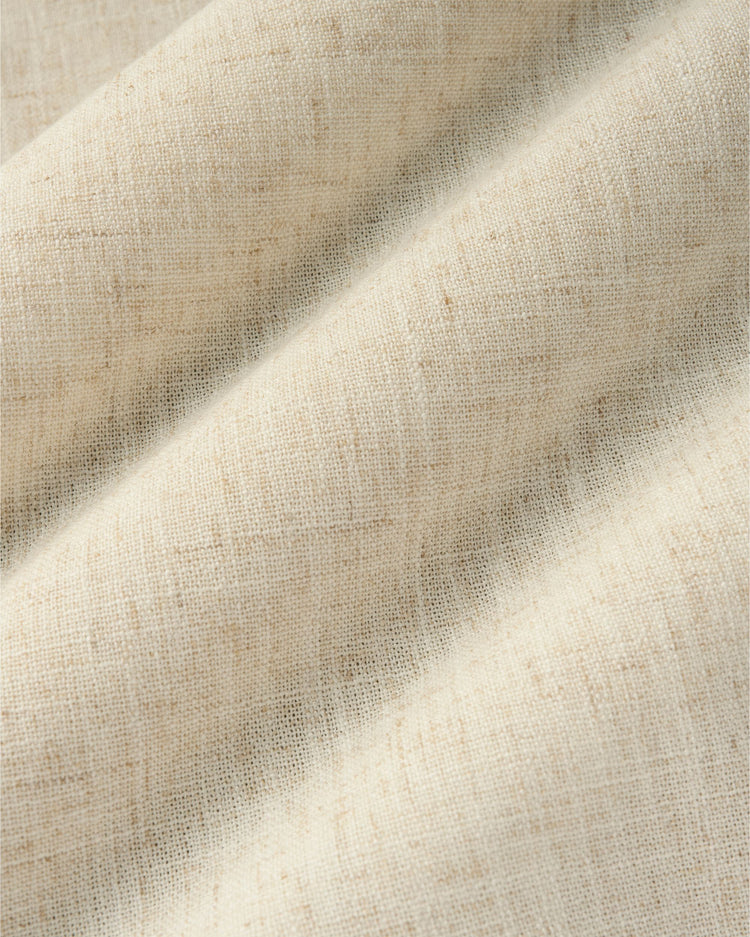
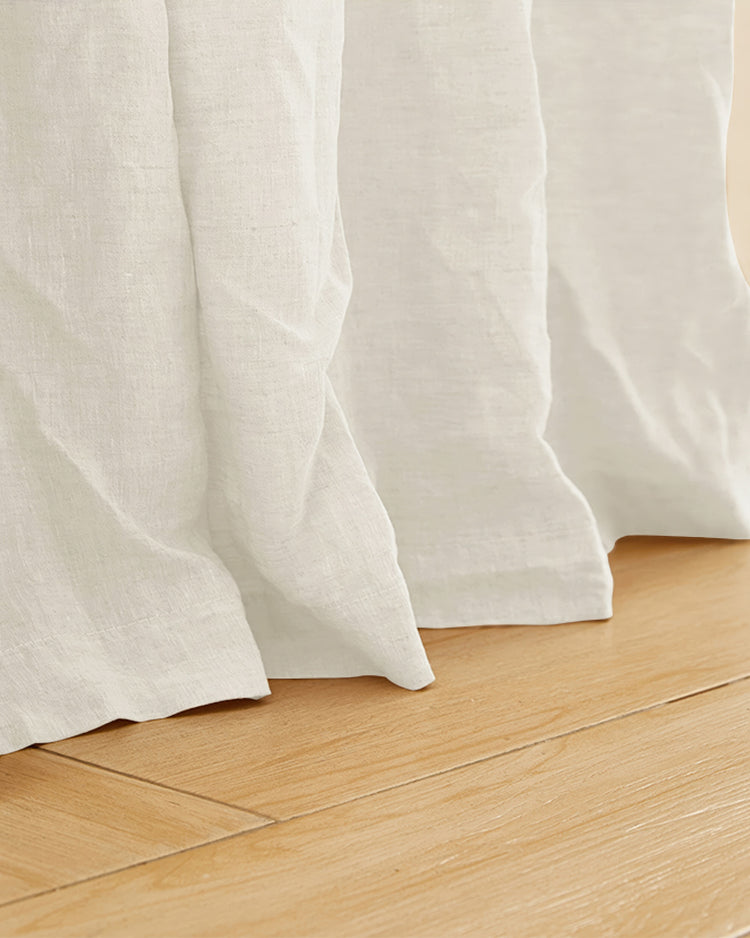
 Airy drape
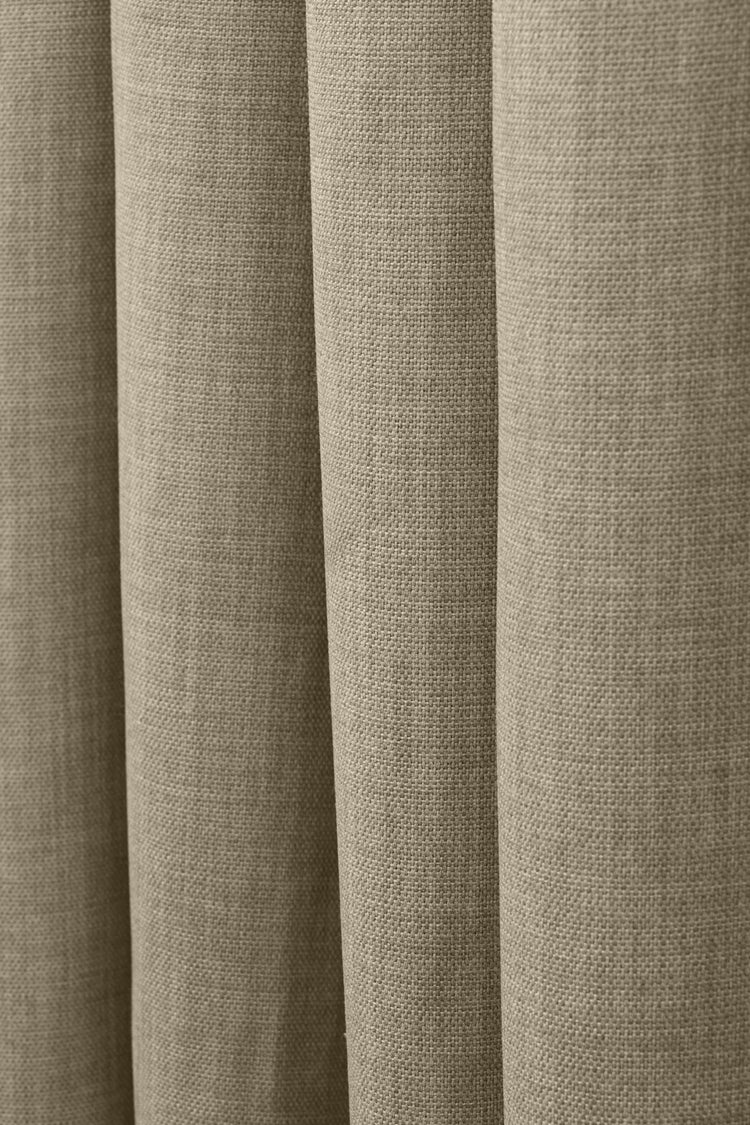
 Gentle airflow
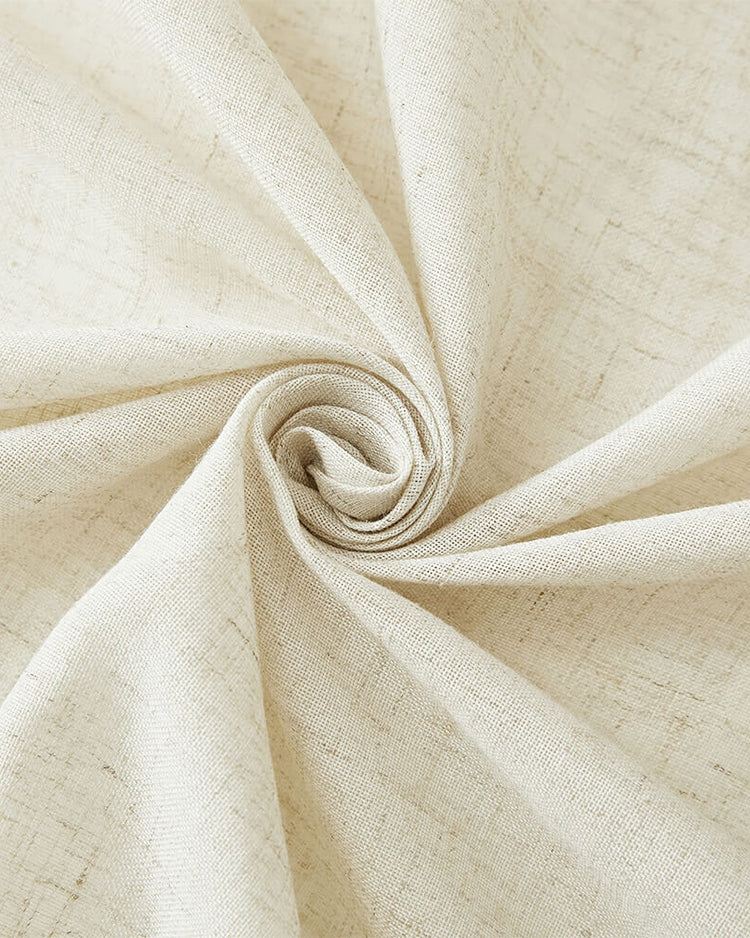
 Layered styling
How do you layer sheer curtains with drapes on a double rod?
Layering is the designer move, and a double curtain rod is the standard way to do it. A double rod carries two separate panels at two depths: sheers on the inner back rod nearest the glass, and your heavier drapes or blackout panels on the outer front rod. This gives you true day-and-night flexibility. Sheers diffuse light all day, and you draw the front layer closed for privacy, darkness, or warmth at night.
Step by step:
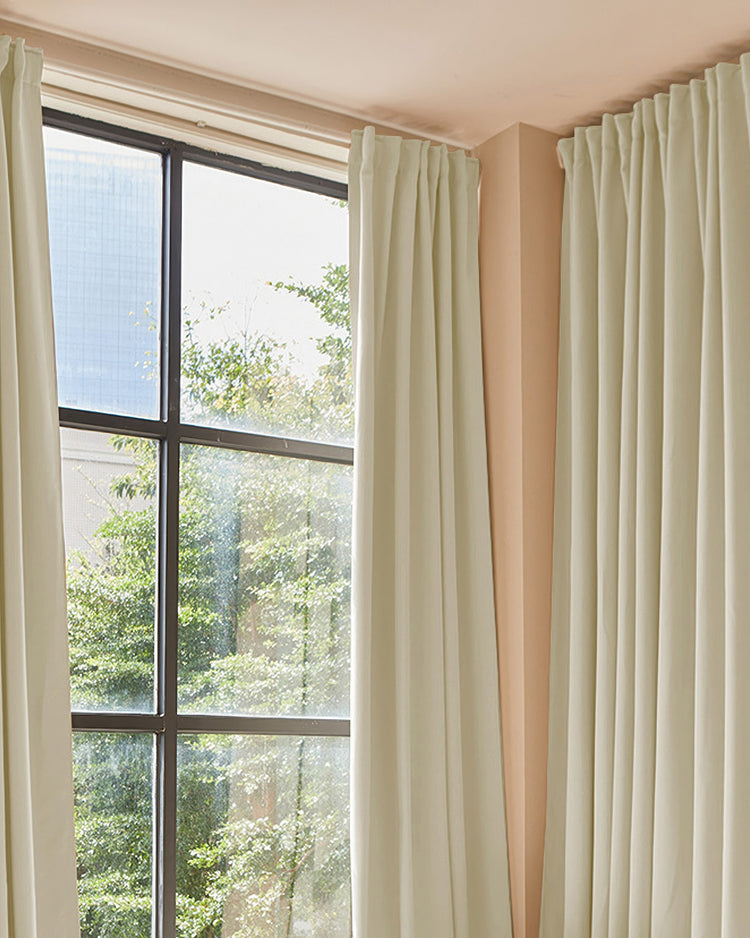
- Mount the rod high and wide. Place the bracket set 4–8 inches above the window frame, and extend the rod 4–12 inches beyond each side. Mounting high and wide makes the window look larger and lets the front layer stack off the glass when open. Position brackets about 4–6 inches inward from each rod end, excluding finials.
- Hang the sheers on the back rod, closest to the glass. Use the higher fullness above so they gather softly. The sheers can overlap slightly at the center for a clean meeting point.
- Hang the drapes or blackout panels on the front rod. Extend the front panels past the window frame so, when drawn, they overlap the sheers and reach toward the wall. This is what reduces side light gaps at night.
- Confirm projection and weight. The front bracket must project far enough that the drapes clear the sheer behind them without dragging. Match the rod’s load rating to the heavier front layer, not the sheers.
This is also where you choose color contrast: white or neutral sheers behind bolder or textured drapes is the most forgiving combination. For the full theory of stacking layers, weights, and proportions, see how to layer curtains; for hardware specifics, our guide to double curtain rods covers brackets, projection, and weight.
Can you layer sheers without a double rod?
Yes. You do not need a double rod to layer sheers. Here are three approaches when a double rod is not an option or you want a different look:
- Two single rods stacked. Install one rod for the sheers a few inches above and slightly forward, and a second rod for the drapes below or behind it. This costs a little more in hardware but lets you set each layer’s exact height and projection.
- Clip rings on a single rod, alternating panels. On a wide single rod you can run a sheer panel and a heavier panel side by side using clip rings, letting one slide in front of the other. This works best when you do not need both layers to cover the full window at once.
- A track plus a rod. Put the sheers on a ceiling-mounted track close to the glass for a clean floor-to-ceiling line, and hang the drapes on a wall rod in front. Tracks suit frequent operation and pleated or hook headers.
Whatever you choose, the rule that matters is depth separation: the two layers need enough space between them that they move independently and the front layer can fully cover the sheer when closed.
How do you hang sheer and blackout curtains together for sleep?
For a bedroom or nursery, layer the sheer in front and the blackout panel behind it on a double rod, then plan for the gaps, because blackout fabric only blocks light through the material, not around the edges.

- Put the blackout layer on the back rod, against the glass. Size it generously: extend it beyond the frame on each side and mount it high so it overlaps the opening on all sides.
- Hang the sheer on the front rod. It softens the look by day and hides the bulkier blackout panel when that is pulled open.
- Plan the perimeter, not just the fabric. Even a 100% blackout panel leaves light at the top, sides, center, and floor. For real darkness, favor more side overlap, a high mount, and a center that closes fully. Fabric rating alone will not seal a room.
- Use tiebacks for flexibility. Hold the blackout layer back during the day and draw it at night.
Reverse the front and back order if your priority is a sheer look by day and you only close the blackout occasionally; just keep the blackout panel as the one that overlaps the frame. For a styled, room-by-room version of this setup, see how to style sheers and blackout curtains for a luxury look. Note that layering reduces, but does not guarantee, total darkness; always check the top, side, center, and sill gaps.
How do you hang sheer curtains without drilling?
Renters and anyone avoiding wall damage have several reversible options. The right one depends on the panel’s weight and the window’s width:
- Tension rod. A spring-loaded rod wedges inside the window recess with no screws. It is ideal for lightweight sheers in a standard window. It is the simplest no-drill method but is best kept to modest widths and light fabric; a long, heavy run will sag or slip.
- Adhesive hooks or brackets. Stick-on hooks hold a lightweight rod for a sheer panel. Follow the weight limit on the package and let the adhesive cure before hanging.
- Tension wire or cable. Thin cable strung between two anchor points gives a clean, minimal look for very lightweight sheers. It suits airy panels, not heavy drapery.
- Branch or dowel rod. A slim wooden dowel or even a smooth branch on simple hooks reads boho or farmhouse and keeps a sheer weightless.

Keep heavy blackout layers off no-drill hardware, since tension rods and adhesive hooks are sized for light fabric. If you want a layered look in a rental, hang the sheers on a tension rod and skip the heavy second layer, or use a no-drill solution rated for the combined weight. Our beginner’s guide to hanging curtains without drilling compares these methods in more detail.
What are some decorative ways to hang sheers?
Beyond the standard window, sheers are easy to style because they are light:
- Bed canopy. Run sheers on a ceiling track or rods around or above the bed for a soft, draped effect. Coordinate the color with your bedding and leave clear walking space so the fabric does not tangle.
- Window scarf. Drape a single long sheer over decorative rod ends or holdbacks for an asymmetric, swagged look with no formal heading. See how to hang a window scarf for swag and draping patterns.
- Multiple panels for depth. Hang two or three sheer panels in the same hue at the same height to build color and movement on a wide span. Keep the tops level so the look stays intentional.
- Room or zone divider. A floor-to-ceiling sheer on a track separates a space while keeping it light and open.

Hanging sheers on a very wide span has its own considerations, including stack-back, panel count, and rod support. For that, see our dedicated guide to hanging curtains for wide windows.

How do you measure and finish sheer curtains correctly?
Two numbers decide the look: width, or fullness, and length, which is where the hem lands.
- Width: apply the header-specific fullness above. Measure the usable rod width, excluding finials.
- Length: measure from the bottom of the rod or track to the floor. For sheers, a hover finish, about 1 inch off the floor, keeps the hem clean and easy to maintain. A puddle finish, about 3 inches onto the floor, looks soft and romantic on sheers but gathers dust and suits low-traffic rooms.
- Tolerance: finished custom dimensions can vary by about ±1–2 inches, so do not expect millimeter-perfect hems.
How do you care for sheer curtains?
Always check the care label first. Instructions are fabric- and construction-specific, not something to guess from how the fabric looks. As a general approach for many sheers:
- Wash gently in cold water with a mild detergent if the label allows it.
- Do not wring or twist; press water out gently.
- Hang to air-dry while slightly damp so the weight pulls out wrinkles.
- Avoid bleach and high heat, which damage fine weaves.
If the care label is missing or unclear, dust regularly, spot-test in a hidden area, and contact support before a full wash.
FAQ
Can you see through sheer curtains at night?
Yes. Once your interior lights are on after dark, sheers do not provide reliable privacy, and silhouettes are visible from outside. Layer a room-darkening or blackout panel behind them for nighttime privacy.
Do sheer curtains block any light?
They diffuse and soften daylight but do not darken a room. For sleep or glare control you need a room-darkening or blackout layer.
What is the difference between sheer and voile?
Voile is a type of sheer: a tightly woven cotton or polyester yarn that gives a crisper, smoother hand. Both are translucent and diffuse light; voile just reads slightly more structured than a soft, floaty sheer.
Do I need a double rod to layer sheers with drapes?
A double rod is the easiest way, but not the only way. You can stack two single rods, use a track plus a rod, or run alternating panels on clip rings, as long as the layers have enough depth separation to move independently.
How wide should sheer panels be?
Wider than heavier curtains. Use about 2x the rod width for rod-pocket, back-tab, and pleat-hook sheers, or 1.5x for grommet or clip-ring headers, divided by your panel count.
Next step
Decide first whether your sheers are the only layer or the soft front of a two-layer setup. That single choice sets your hardware, whether single rod, double rod, or track, and your fullness. Then measure your rod width, pick a header, and run the numbers through the finished-width formula above before ordering. If you are layering for a bedroom, plan the perimeter overlap, not just the fabric. When you are ready, browse TheHues custom sheers and confirm your setup with our measurement guide and design support.