No Room for Stack Back? Best Curtain Solutions When Your Window Is Too Close to a Wall or Door


In this article 10 sections
- What is curtain stack back?
- How to hang curtains when a window is against a wall
- Curtains next to a door frame
- How to handle corner windows
- Best curtain headers for tight spaces
- When shades are a better choice than curtains
- How custom curtains help with tight windows
- Quick guide: what to choose based on wall space
- FAQ about curtains for tight window spaces
- Final takeaway
Some windows are easy to dress. Others sit right against a corner, beside a door frame, or between two tight walls with almost no room for curtain panels to stack.
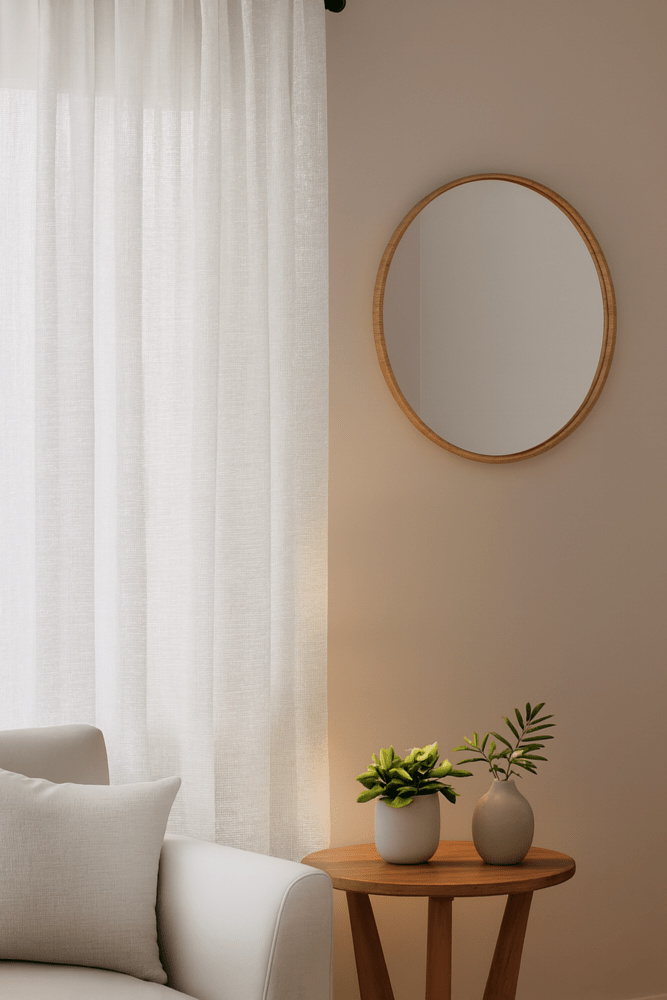
If you are looking for curtains for a window against a wall, the main challenge is not just the curtain size. It is where the fabric goes when the curtains are open. Without enough stack-back space, the panels can block the glass, reduce natural light, and make the window feel smaller.
The good news is that tight windows are usually fixable. A return rod, ceiling track, single custom panel, compact header style, or shade can all work depending on the space you have. Start by measuring the tight side of the window, then choose the setup that fits the room instead of forcing a standard two-panel layout.
What is curtain stack back?
Stack back is the amount of horizontal space your curtains take up when they are fully open. Think of it as the space where the fabric rests after you pull the panels away from the glass.
For a standard window, designers often extend the rod beyond the frame so the curtains can open without covering much glass. But when a window is close to a wall, corner, or door frame, there may not be enough space for that standard setup.
The amount of stack back depends on several details:
- Header style: Back tab, rod pocket, and ripplefold styles usually stack tighter than bulky pleats or grommets.
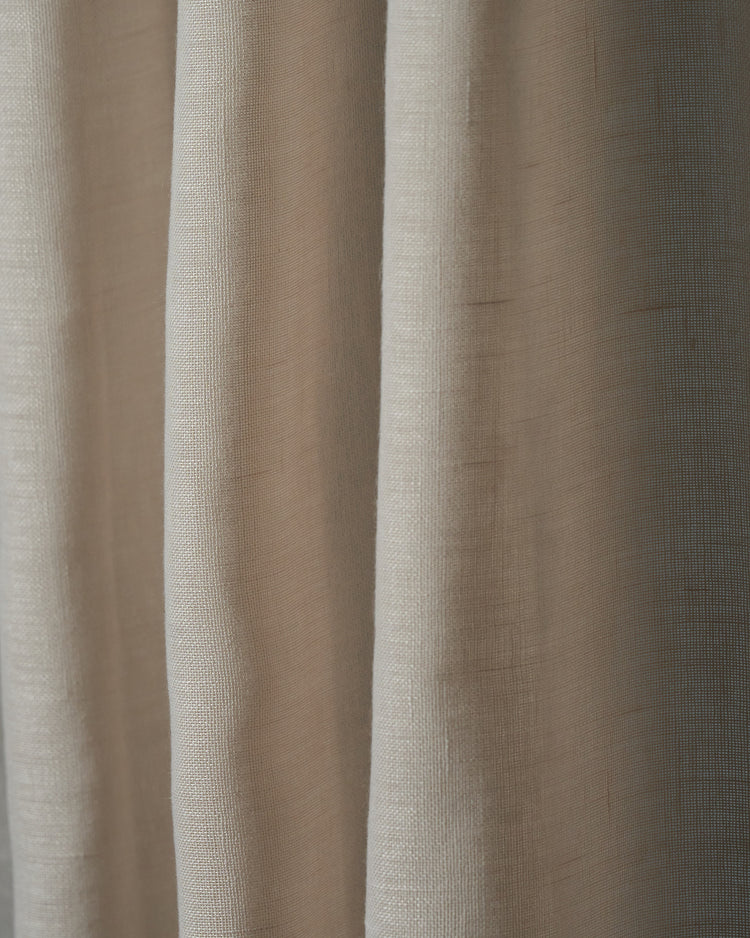
- Fabric weight: A light linen-look fabric stacks more compactly than velvet, heavy blackout fabric, or thick thermal fabric.
- Lining: Unlined curtains stack the tightest. Blackout and thermal linings add more bulk.
- Fullness: More fullness creates a richer look, but it also takes up more space when open.
Before choosing hardware, measure from the outer edge of the window trim to the nearest wall, corner, door frame, or cabinet. That number will guide the right solution.

How to hang curtains when a window is against a wall
When one side of the window has plenty of room and the other side has only a few inches, the goal is to keep the tight side clean while moving most of the fabric to the open side.
Use a return rod for a cleaner edge
A return rod, sometimes called a wraparound rod, curves back toward the wall instead of ending with a large finial. This helps the curtain sit closer to the wall and creates a more finished look on the tight side.
Return rods are especially useful for bedrooms, media rooms, and other spaces where you want better light control. When the fabric wraps toward the wall, it can help reduce side gaps compared with a standard rod and finial.

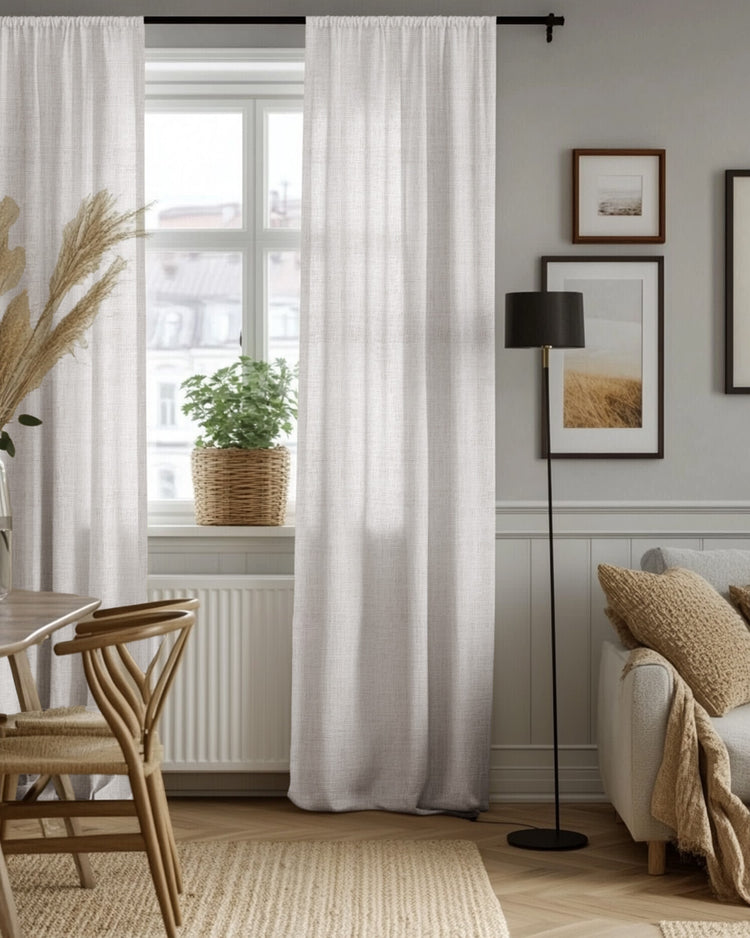
For return rods, compact headers usually work best. Back tab and rod pocket curtains tend to wrap more smoothly than grommet curtains, which can leave awkward gaps near the bend.
If you are still comparing top styles, review the TheHues curtain header guide before ordering.
Choose low-profile brackets and simple end caps
If a return rod is not the right fit, low-profile brackets can help reduce visual bulk. These brackets keep the rod closer to the wall, which can make a tight corner feel less crowded.
On the wall side, use a simple end cap instead of a decorative finial. Large finials can look nice on open walls, but they often waste valuable inches in tight spaces.
Use one custom-width panel instead of two
A single curtain panel can look more intentional than two uneven panels when the window sits close to a wall. Instead of forcing fabric to stack on both sides, the panel stacks fully on the open side.
This works well when one side of the window has enough wall space and the other side has almost none. It also helps avoid the “crowded corner” look that happens when one panel has nowhere to go.

 Kid-friendly
 OEKO-TEX® Certified
 Durable
 Low maintenance
For a balanced look, choose enough width for the curtain to cover the window comfortably when closed. If you are unsure whether one panel or two panels makes more sense, TheHues' guide on choosing one curtain panel or two can help you compare the options.
Use a ceiling track when wall space is limited
A ceiling-mounted curtain track can solve many tight-space problems because it does not rely on wall-mounted brackets beside the window. The curtain can glide along the track and stack where the room allows.
This can be a strong option for corner windows, wide windows, modern rooms, and windows where both sides are tight. It also creates a cleaner floor-to-ceiling look when paired with the right curtain length.
Curtains next to a door frame
When a window sits beside a patio door, French door, closet door, or entry door, you need to think about two things: stack back and door clearance.
Windows beside patio or French doors
If a curtain panel sits too close to the door swing, it can get caught, pulled, or constantly pushed out of place. In this setup, a single panel that stacks away from the door is often more practical than two panels.
A return rod on the door side can also help keep the fabric close to the wall instead of drifting into the door path.
For more specific door-window layouts, review TheHues' guide on how to hang door curtain panels.
Entry door sidelights
Sidelight windows usually have very little wall space. In many cases, an inside-mount shade, narrow rod pocket panel, or small tension rod treatment works better than a full curtain panel.
The goal is to add privacy without interfering with how the door opens, closes, or locks.
Windows beside closet doors
For a window beside a closet door, keep the curtain stack away from the closet side whenever possible. If the clearance is extremely tight, a shade may be the cleaner solution because it needs no side wall space.
How to handle corner windows
Corner windows can make a room feel brighter and more architectural, but they can be tricky to dress because both windows compete for stack-back space near the corner.
For corner windows, the most reliable rule is simple: stack the fabric away from the corner. This keeps the corner open and prevents the two panels from bunching into the same tight area.
Two common solutions work well:
- Corner connector rods: These allow a rod to turn the corner so the setup feels continuous.
- Continuous ceiling tracks: These can create a cleaner look and allow panels to move more smoothly around the corner.

If the windows are also extra wide, use TheHues' guide on curtains for wide windows to compare panel layouts before choosing hardware.
Best curtain headers for tight spaces
When space is limited, the header style matters as much as the fabric. A bulky header can make a small stack-back problem worse, while a compact header can help the curtain sit cleaner when open.
| Header style | Stack profile | Best for |
|---|---|---|
| Ripplefold | Very compact | Ceiling tracks, modern rooms, tight openings |
| Back tab | Compact | Return rods, clean lines, limited wall space |
| Rod pocket | Compact | Simple windows, return rods, classic styling |
| Double pleat | Moderate | Rooms with some stack-back space |
| Triple pinch pleat | Bulkier | Formal rooms with generous wall space |
| Grommet | Bulkier | Rooms where easy sliding matters more than compact stack |
Fabric and lining also affect the stack. If you need blackout curtains or thermal curtains in a tight window space, pair the heavier function with a more compact header style.
You can also review the curtain liner guide to compare how different linings affect light control, privacy, and fabric weight.
When shades are a better choice than curtains
Sometimes the best window treatment for a tight space is not a curtain. If you have almost no wall space and do not want a ceiling track, a shade may be more practical.

 Tailored Folds
 Motorized Option
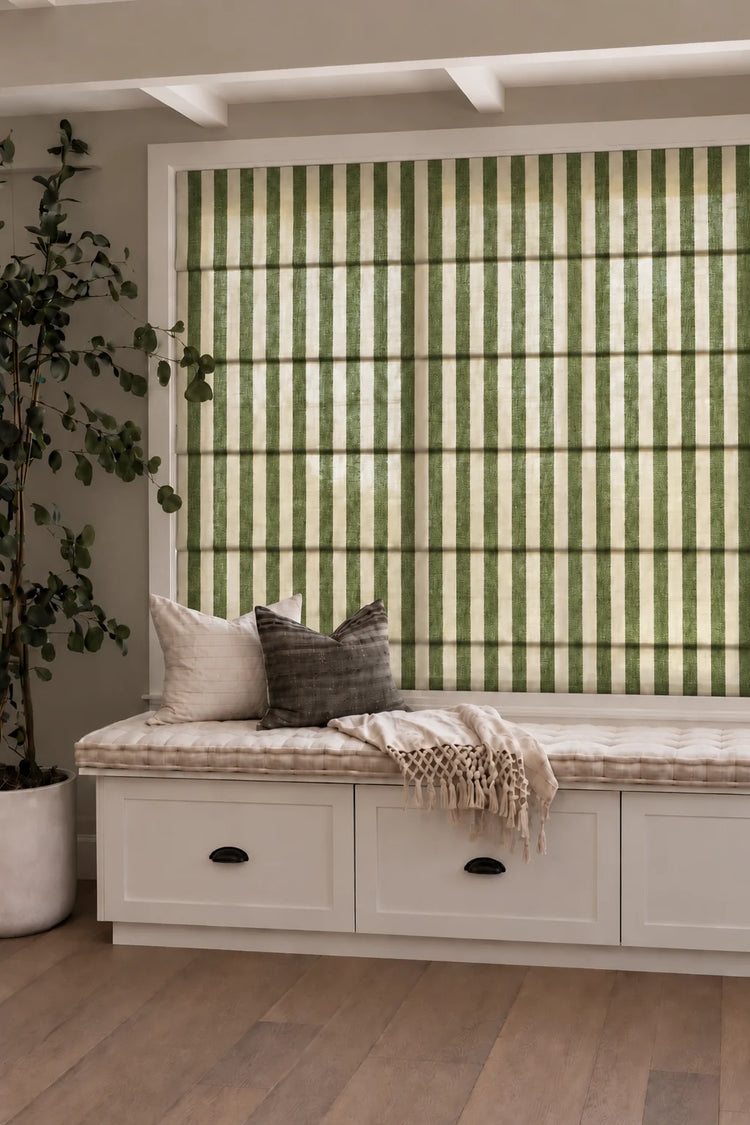
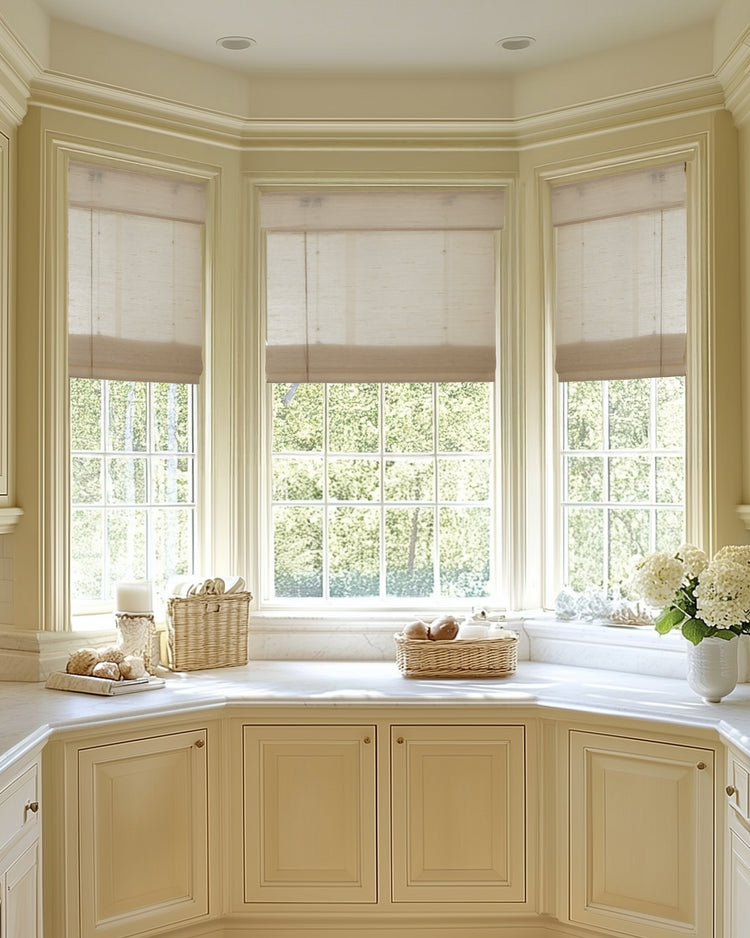
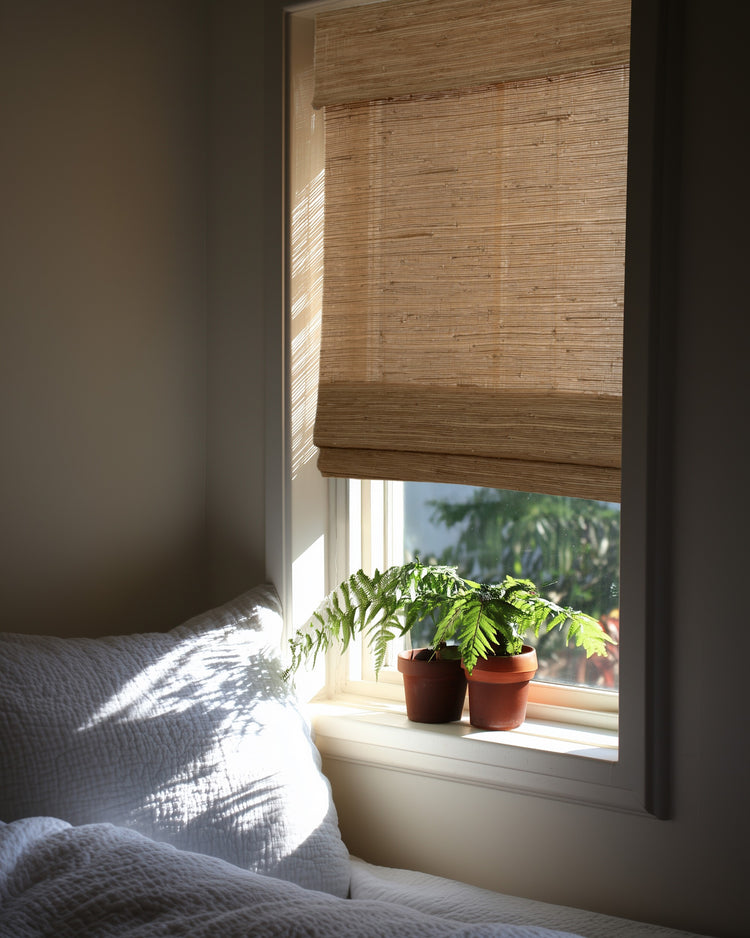
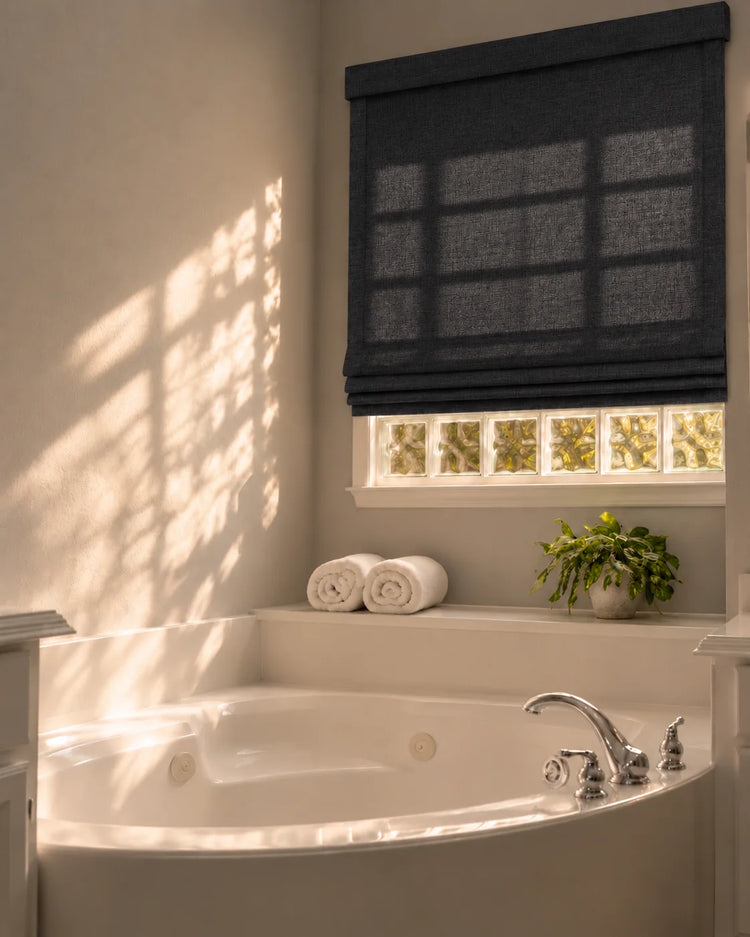
Roman shades are a good option when you want softness and fabric texture without side stack. They work especially well for bedrooms, kitchens, offices, and windows close to corners.
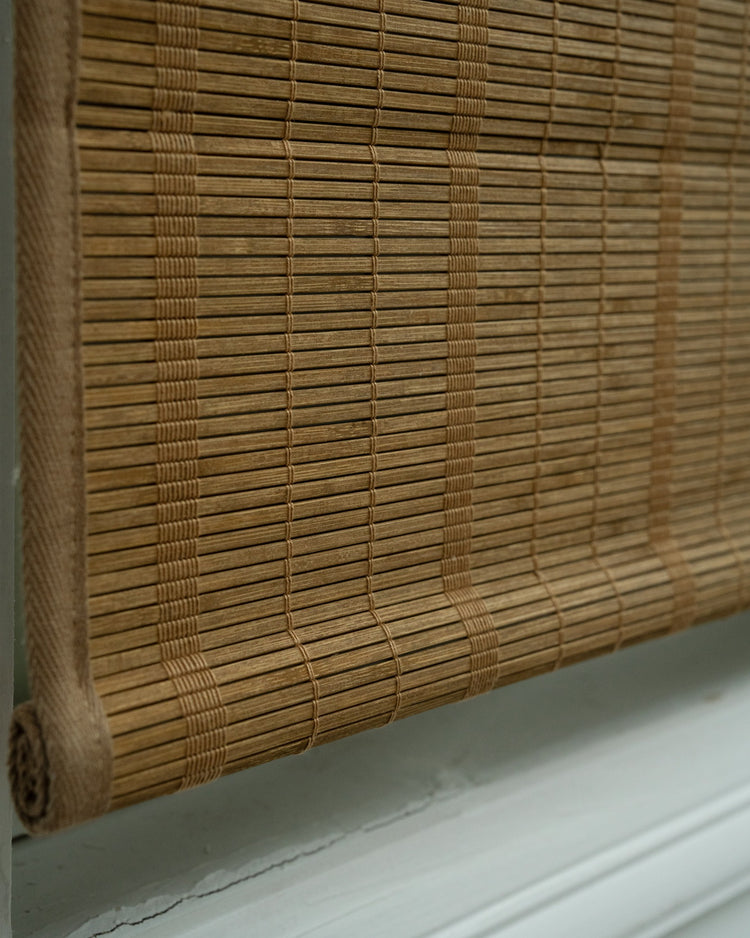
Roller shades are usually the most minimal option because the fabric rolls up above the window and does not need side wall clearance.
A layered approach can also work. Use a shade for privacy and light control, then add a single decorative curtain panel on the open side for softness.
If you prefer a fabric shade with a more tailored look, compare TheHues Roman shades before forcing a curtain layout that does not fit the space.
How custom curtains help with tight windows
Tight-space windows are difficult because standard curtain sizes are not designed around your exact wall conditions. Ready-made panels may be too narrow, too wide, too full, or too bulky for the space available.
Custom curtains give you more control over width, length, fullness, header style, and lining. That matters when a few inches can decide whether the curtain looks tailored or crowded.
Custom sizing is especially useful for asymmetrical layouts, corner windows, wide windows, and windows beside doors. Instead of buying two standard panels and hoping they work, you can choose a panel setup that fits the actual wall.
Before placing an order, use the curtain measurement guide to confirm the window width, finished length, mounting height, and available stack-back space.
Quick guide: what to choose based on wall space
Measure from the edge of the window trim to the nearest wall, corner, cabinet, or door frame. Then use this guide as a starting point.
| Available side space | Best starting option | What to avoid |
|---|---|---|
| 12 inches or more | Standard rod with two panels | Overly bulky fabric if the room is small |
| 6 to 12 inches | Return rod, simple end cap, or single panel | Large finials and very full pleats |
| 2 to 6 inches | Single panel, ceiling track, or shade plus decorative panel | Two bulky panels stacked into the corner |
| Under 2 inches | Inside-mount shade or ceiling track | Standard wall rod with finials |
FAQ about curtains for tight window spaces
Can I hang curtains if my window is right against a wall?
Yes. The best setup is usually a return rod, ceiling track, or single panel that stacks on the open side. If there is almost no wall space, a shade may be the cleaner solution.
Should curtains always extend past the window frame?
Extending the rod past the frame usually helps curtains clear the glass, but it is not always possible. When space is limited, focus on compact hardware, a clean stack, and a panel layout that fits the room.
Are one-panel curtains okay?
Yes. A single curtain panel can look polished when the window is close to a wall, door, or cabinet. The key is choosing enough width so the panel still looks full when closed.
What curtain header is best for limited wall space?
Back tab, rod pocket, and ripplefold headers are usually better starting points because they stack more compactly than grommet or heavy pleated styles.
Should I use curtains or shades for a tight window?
Use curtains if you want softness, framing, or stronger decorative impact. Use shades if you have almost no side wall space, need a cleaner fit, or want a treatment that stays within the window area.
Final takeaway
Curtains can work on a window against a wall, but the setup needs to match the space. Measure the tight side first, then decide whether the room needs a return rod, ceiling track, single panel, compact header, or shade.
For most tight windows, the biggest mistake is forcing a standard two-panel curtain layout where the fabric has nowhere to go. A better solution is often simpler: move the stack to the open side, reduce hardware bulk, or use a shade where curtains are not practical.
If your window is tricky, start with the measurement guide, test the look with the visualization tool, or use the free design service before placing a custom order.