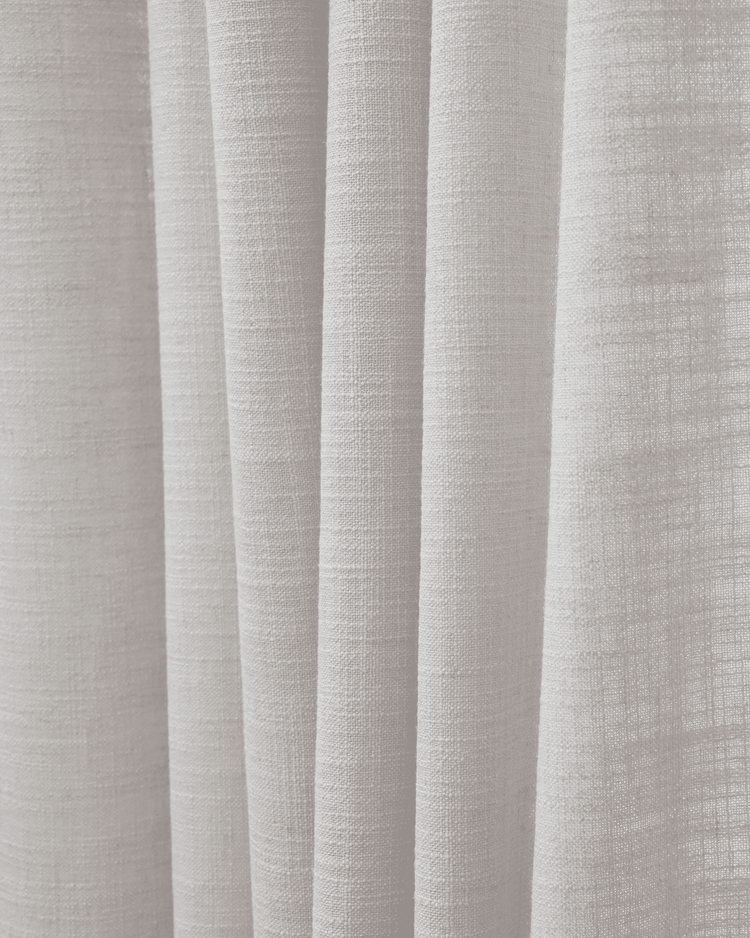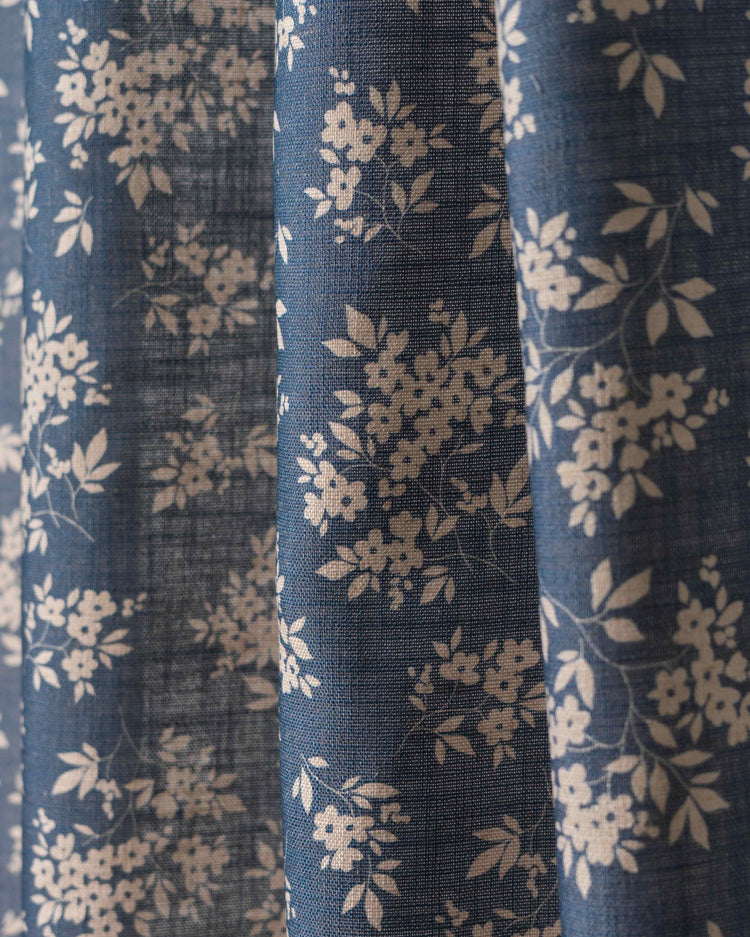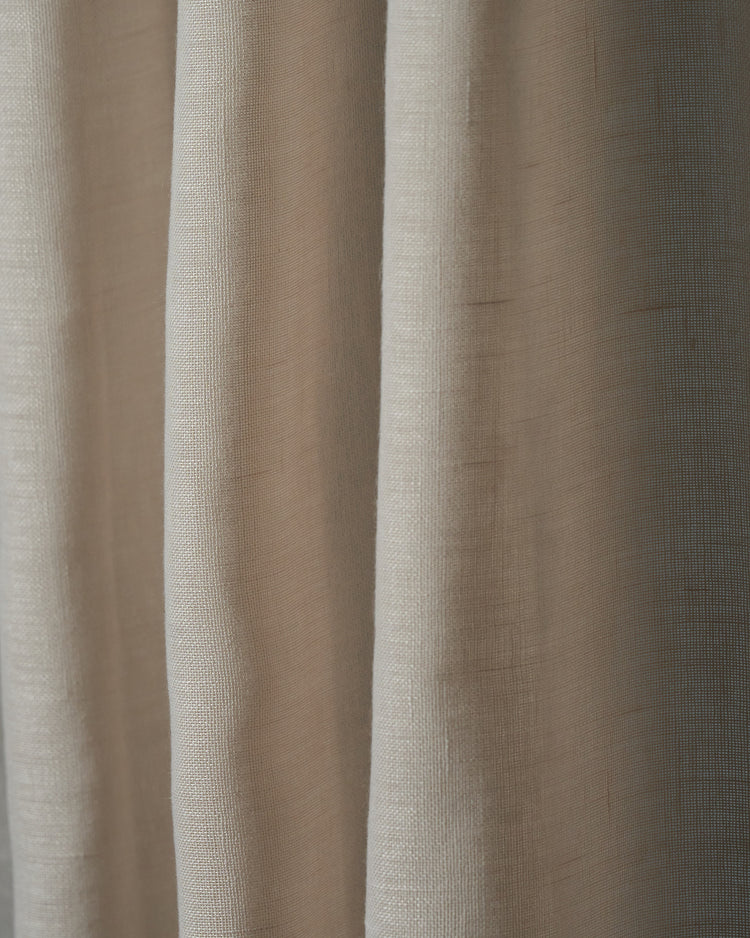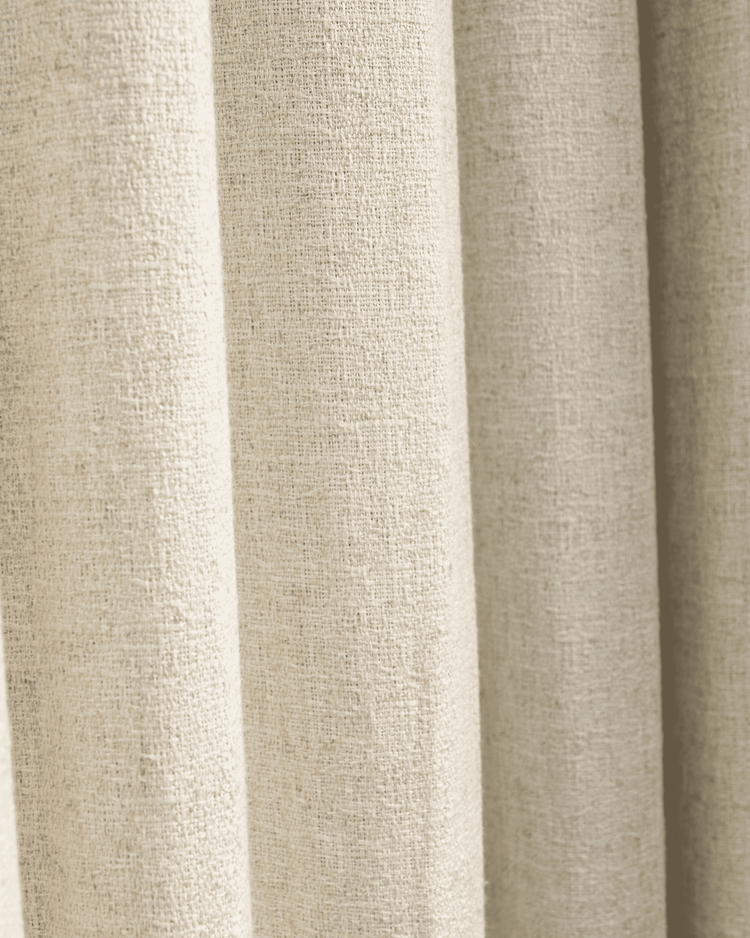
What are Grommet Curtains?


Grommet curtains are panels with a row of reinforced metal rings, called grommets or eyelets, punched along the top hem, and the curtain rod slides straight through those rings. That single detail is what makes them glide so easily and fall into the even, rolling waves you see across the panel. They're a modern, mainstream header style — best for living rooms, sliding doors, and any window you open and close every day — and despite what you'll read online, they are not out of style. Grommets are simply one of the cleaner, lower-maintenance ways to hang a curtain.
If you're comparing header types, grommet sits between casual rod pocket and tab top styles and formal pinch pleat styles. It gives you a tidy, contemporary look without the cost of custom pleating. Here's exactly how grommets work, what they do well, where they fall short, and how to hang them right.
What is a grommet, and what does it do?
A grommet is a metal, and sometimes molded plastic, ring set into a punched hole at the top of the panel. It does two jobs at once: it reinforces the fabric so the hole can't tear or fray under the panel's weight, and it gives the rod a smooth, hard surface to slide against instead of dragging on raw fabric.
You'll find the same hardware on boat covers, tarps, tents, banners, and flags — anywhere a hole needs to take repeated stress without ripping. On a curtain, the rings are spaced evenly across the top so the fabric folds into uniform vertical waves. Standard panels typically have an even number of grommets, usually 8 for a standard-width panel, which matters because an even count makes both edges of the panel face the wall, so the leading edges sit flat instead of flaring out.

One sizing detail that trips people up: the grommet's inner diameter has to be larger than the rod's diameter. Most retail grommet panels use a roughly 1.5- to 1.6-inch inner ring, which fits rods up to about 1.25 inches. If your rod is thicker — a heavy decorative or 2-inch rod — confirm the ring will clear it before you buy.
What are the benefits of grommet curtains?

They slide effortlessly
This is the main reason people choose grommets. The hard rings ride directly on the rod with almost no friction, so panels open and close with one smooth pull — no fighting gathered fabric, no bunching. For a window you operate daily, such as a living-room slider, a patio door, or a bedroom window you open every morning, that ease is the whole point.
They fold into clean, even waves
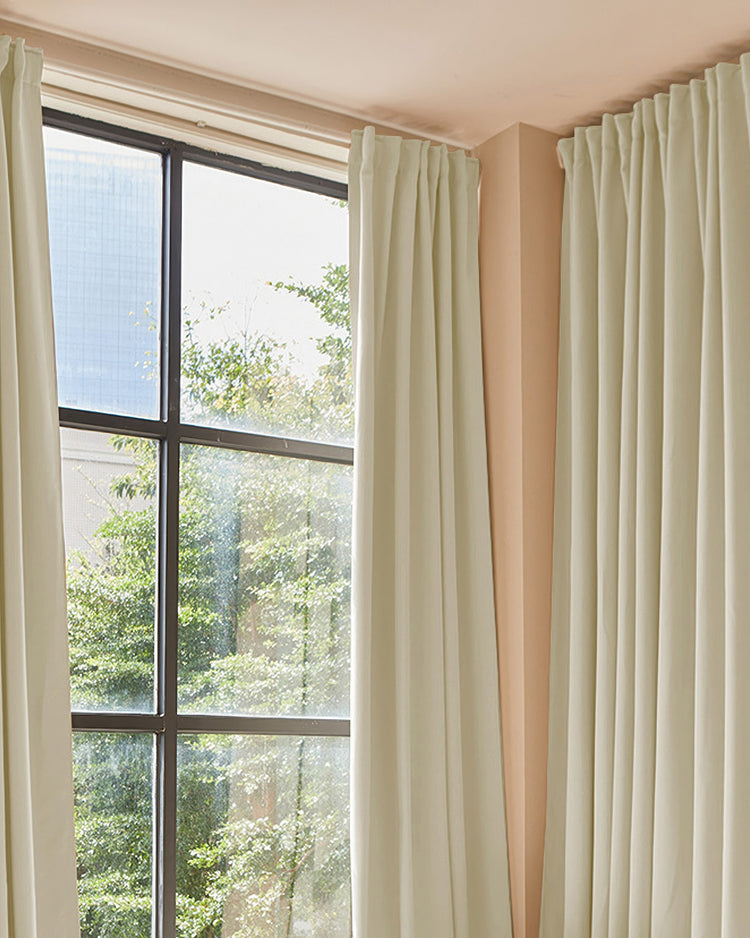
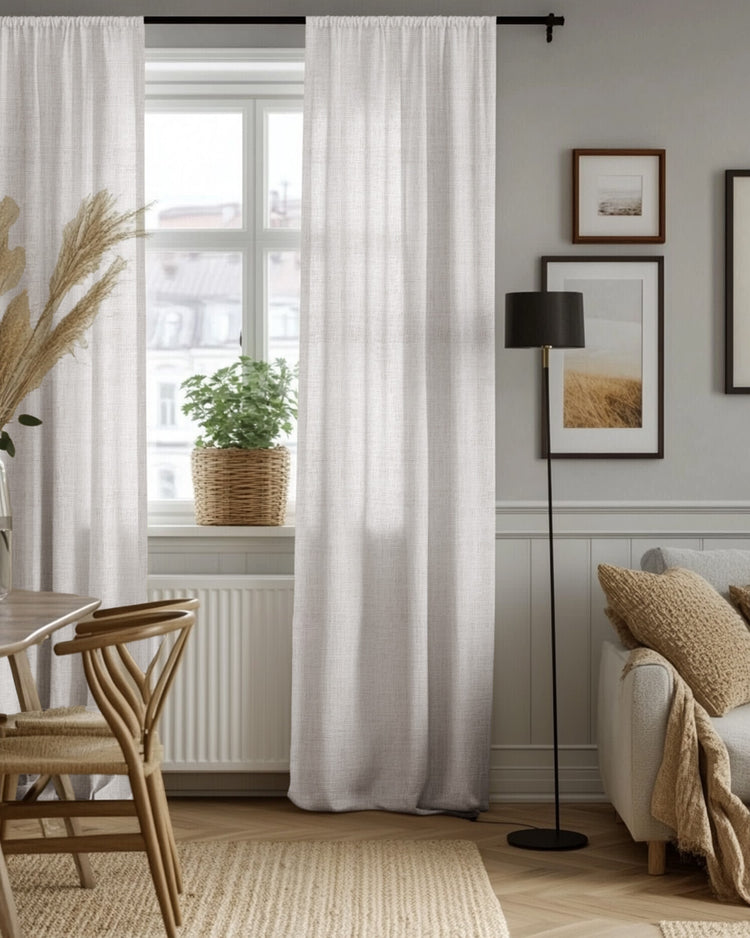
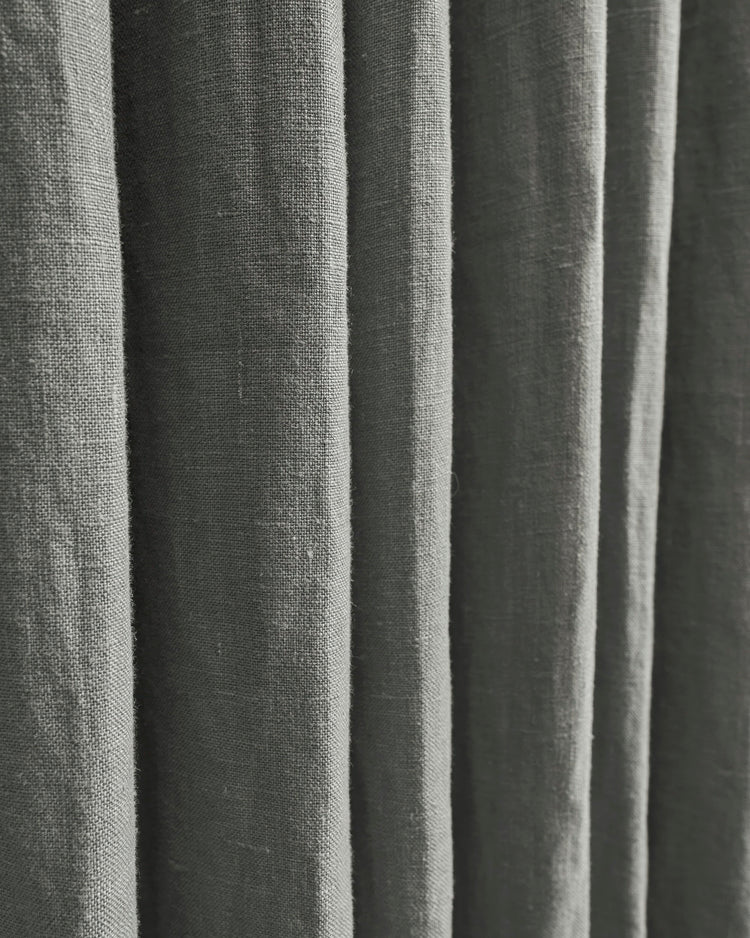
Grommet panels self-pleat. When you draw them open, the fabric folds front-to-back into consistent, rolling S-waves from top to bottom — no fussing or hand-arranging needed. Closed, that same structure reads as a tailored, modern surface rather than the dense, random gathers of a rod-pocket panel. It's the most designed look you can get without paying for custom pinch pleats.
They work with almost any fabric and budget
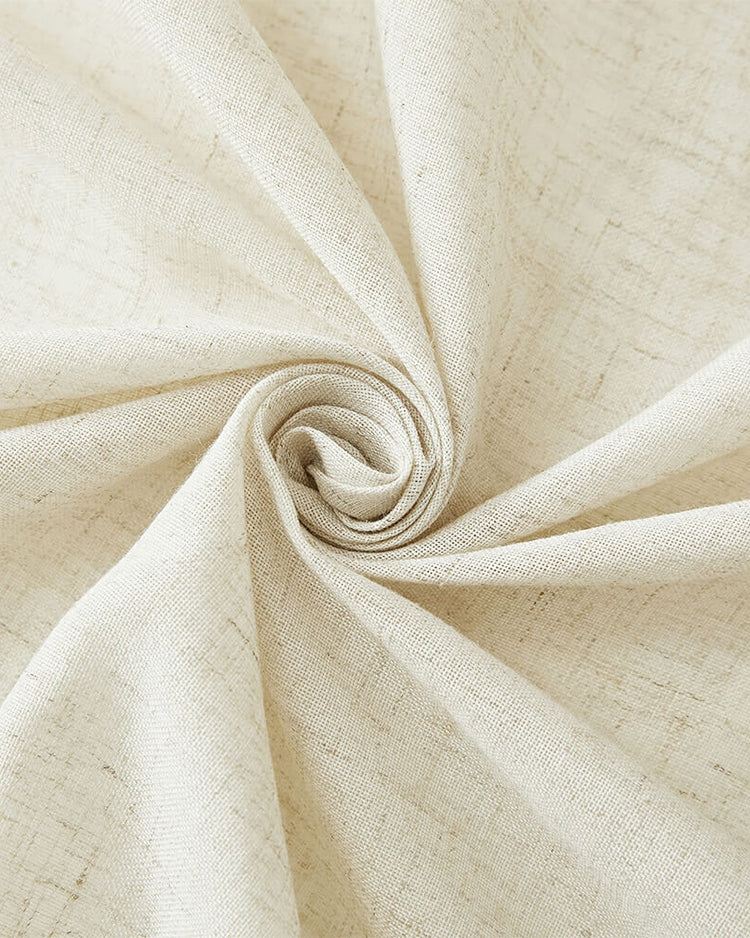
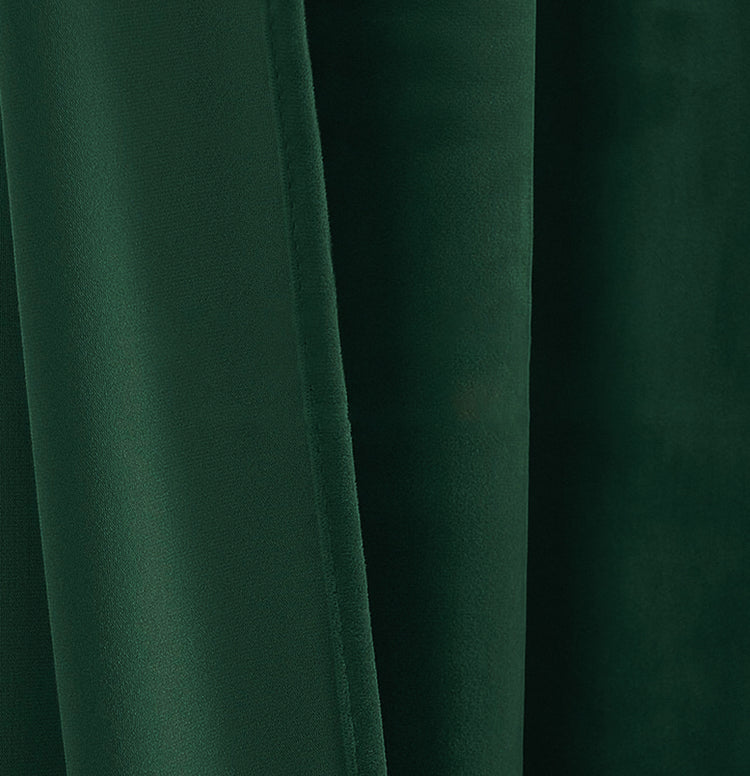
Grommet is a header style, not a fabric, so it comes in everything from light linen-look cotton to 4-layer blackout and heavyweight velvet, across the full price range. Heavier fabrics actually hang especially well on grommets because the weight helps the waves fall deep and even. They're also widely stocked, so you're rarely hunting for an odd size.

 100% Blackout
 Better sleep
 Noise Reducing
 Energy Saving
They reduce wear on the fabric
Because the rod never touches the raw cloth — only the metal ring — the top of a grommet panel takes far less abrasion over years of opening and closing than a rod-pocket panel, where the fabric itself drags across the rod every time.
What are the drawbacks of grommet curtains?
Honest trade-offs, because they're real and depend on your taste:
- The rod stays visible. The panel hangs below the rod, so your hardware is on display. That's a plus if you bought a decorative rod and want to show it off, and a minus if you wanted the fabric to start right at the rod. Back-tab or rod-pocket headers hide the hardware better.
- The waves are fixed. Grommets give you that wavy, dimensional top whether you want it or not. If your taste runs to a perfectly flat, crisp panel, the built-in undulation may not be for you.
- Grommets can clink and they don't tie back as tightly. Metal rings make a soft click against a metal rod, and a grommet panel won't cinch into as tight a tieback bunch as a softer header.
- The rings wear over decades, not years. Cheap molded-plastic grommets can crack with very heavy daily use; metal rings on a quality panel hold up far longer. It's worth paying for metal if the window gets daily traffic.
None of these are dealbreakers — they're preference calls. For a side-by-side on how grommet stacks up against the two most common alternatives, see our breakdown of grommet vs. back tab vs. rod pocket curtains.
Are grommet curtains out of style in 2026?
No. Grommet curtains are not out of style, and the idea that they are is one of the more persistent myths in home decor. They remain a mainstream, contemporary header — the default modern choice for living rooms, media rooms, and high-traffic windows where easy operation matters.
Here's where the myth comes from. A few years ago, designers leaned hard into two competing looks: the soft, gathered rod-pocket cottage style on one end, and the ultra-clean ripple-fold and pinch-pleat looks on the other. Grommets sat in the middle and got typecast as builder basic. But that's a fashion cycle, not a verdict on the style itself. Grommet's core strengths — the effortless slide and the self-forming even waves — are exactly what makes a modern room feel intentional, and they've never actually left the mainstream.
A couple of points that settle the question:
- The wave look is having a moment. The ripple-fold or wave header is one of the most requested modern styles right now, and grommet panels produce a very similar continuous wave at a fraction of the cost, with no track required. Far from dated, the grommet silhouette is on-trend.
- Function doesn't go out of style. A window you open daily needs a header that slides easily. That practical need is permanent, which is why grommets stay in rotation regardless of the trend cycle.
The one place grommets genuinely look wrong is somewhere formal — a traditional dining room or a tailored bedroom where pinch pleats set the tone. That's a context mismatch, not a dated style. To see where each header fits, our ultimate guide to curtain heading types lays out all six side by side.
Do grommet curtains look like shower curtains?
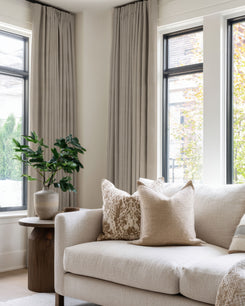
This is the other half of the tacky worry, and the fix is simple: it comes down to fabric weight and fullness, not the grommets. A thin, flat, skimpy panel on a rod looks cheap with any header. Use 2 to 2.5 times the rod width in total panel width so the waves are deep and full, choose a fabric with real body, such as linen-look, cotton blend, blackout, or velvet, and let the panels hang to the floor. Done that way, grommet curtains read as tailored drapery — nothing like a shower liner.
How to hang grommet curtains
Grommets are one of the most forgiving headers to install. The setup is the same as any rod-mounted panel, with a few grommet-specific tips:
- Measure your window. Get the width and the drop. For full guidance on getting these numbers right, see our curtain measurement guide.
- Mount the rod high and wide. Set it 4 to 6 inches above the window frame and extend it 4 to 10 inches past each side, so open panels stack off the glass and the window looks taller and wider.
- Match the rod to the rings. Confirm the rod diameter is smaller than the grommet's inner diameter so the panels slide freely. Need help picking hardware? See how to measure and select curtain rods.
- Buy enough fullness. Total panel width should be 2 to 2.5 times the rod width. Below that, the waves flatten out and the panel looks skimpy.
- Thread and train the waves. Slide the rod through the grommets, then hang the rod on its brackets. Run your hand down each fold front-to-back to set the wave direction — they'll hold that shape on their own from then on.
- Pick your length. Float, ½ inch off the floor, is the easy-care modern choice; kiss, just touching the floor, is the classic safe bet. Skip a deep puddle on a high-traffic window — it collects dust and drags when you slide the panels.
Frequently asked questions
Are grommet curtains out of style?
No. They're a mainstream, modern header and remain the standard choice for living rooms and any frequently opened window. The grommet wave even mimics the on-trend ripple-fold look without a track.
What's the difference between grommet and eyelet curtains?
None — eyelet is the British term for the same metal-ringed header. Grommet and eyelet curtains are the same thing.
How many grommets does a curtain panel need?
Standard-width panels usually have 8, and an even number is important so both edges of the panel face the wall and hang flat.
Will any curtain rod fit grommet curtains?
Only if the rod is thinner than the grommet's inner ring. Most grommets fit rods up to about 1.25 inches; check the ring size before pairing with a thick decorative rod.
Are grommet curtains good for bedrooms?
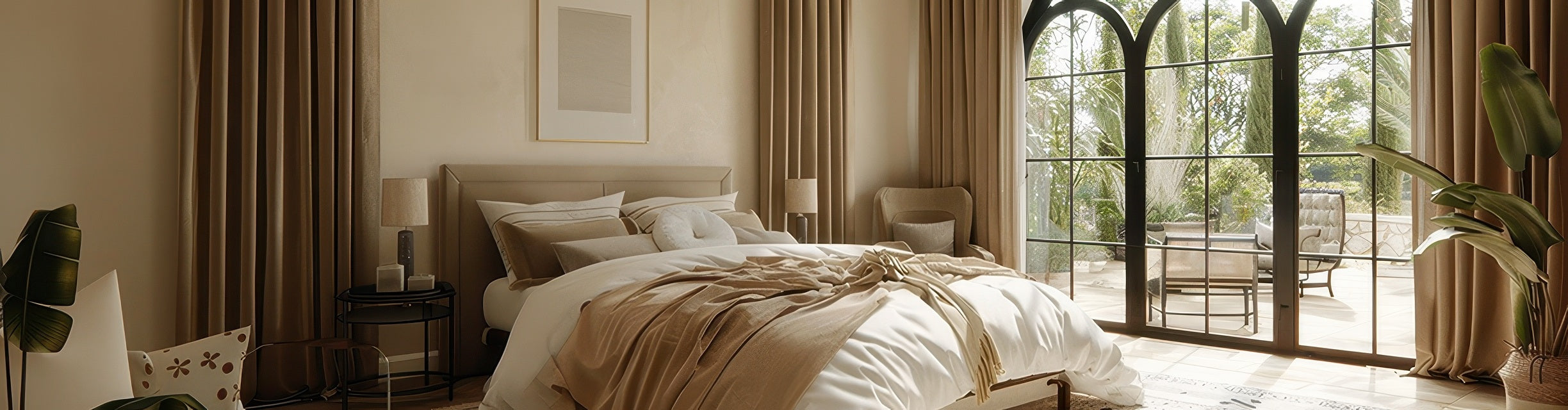
Yes, especially in a blackout fabric. The easy slide suits a window you open every morning; just buy oversized and floor-length so the edges overlap the opening and block light leak.
Do grommet curtains block light well?
The header doesn't block light — the fabric does. A grommet panel in a room-darkening or blackout fabric blocks light just as well as any other header, as long as you size it wide and long enough to cover the edges.