Should Curtains Touch the Floor?


In this article 9 sections
- Should My Curtains Touch the Floor?
- Are Bedroom Curtains supposed to touch the floor?
- Should Shower Curtain be in Contact with the Flooring?
- What Curtain Length Do I Need?
- Considerations When Deciding Curtain Length
- How to Measure Curtain Length
- Applied Cases: When The Curtains Must (and Mustn’t) Touch The Ground
- Conclusion: Yes, or No, Curtains on the Floor?
- Related FAQs
All the details when styling a room cannot have a more dramatic effect as your curtains can. They are what establish percentages, have this impact on the levels of light, and determine the environment that is to be lived in. But here is one issue, which still makes endless discussions among homeowners and decorators, whether curtains touch the floor.
The short answer——it depends. The length of the curtains is very crucial in functionality, and style and through knowledge of the various lengths offered, you will be able to gain the desired appearance and performance in your act. Classic floor grazing curtains, silky drapes, and spicy sill-long panels may have a distinctively different aesthetic value.
Key Takeaways:
- A perfect curtain length is determined by the type of room, style and functionality.
- Most elegant and unified will be floor-length curtains.
- Redder curtains would be more convenient in the kitchen or children rooms.
- Measure everything correctly and balance and proportion of your decor are achieved.

Should My Curtains Touch the Floor?
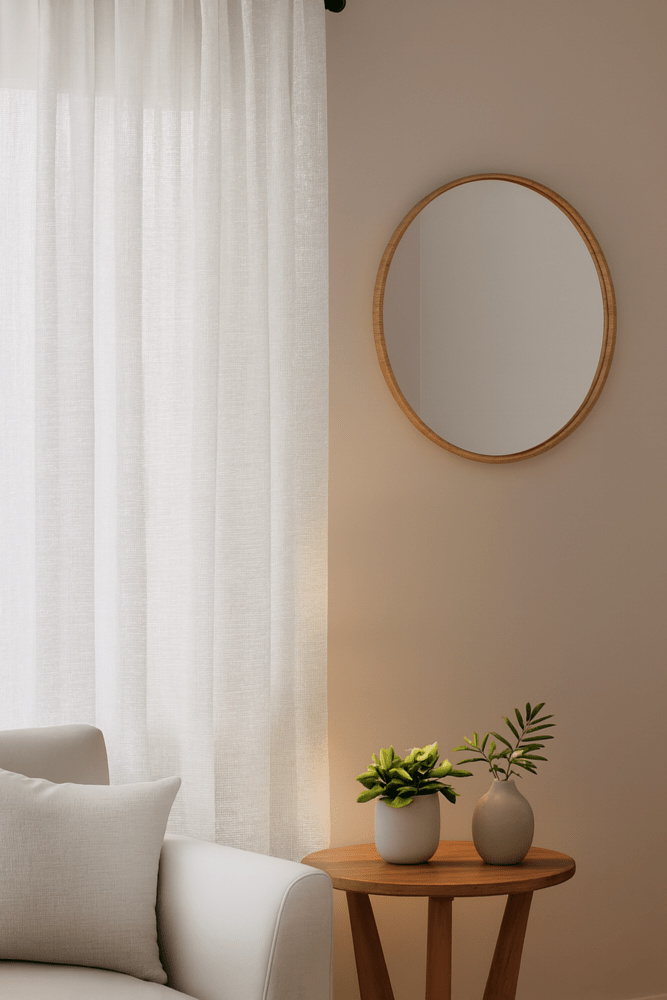
This is among the most widespread questions that are posed when individuals embark on adorning a room. The rule of thumb is that, yes, curtains should touch the floor , or pretty near so. Curtains which fall to the floor give the appearance of a room being longer than it is, they make ceilings higher and a touch of perception of luxury is brought.
Not all exceptions, however; When you have radiators, pets or when you have a high traffic area, you may need to use curtains which are just above the ground to avoid being wore or cluttered.
Here’s a quick guide:
- Floor length: This is preferable to outside design, elegant and suitable in a living room or a dining room.
- Puddled: The extra-long extravagant style of old style interiors.
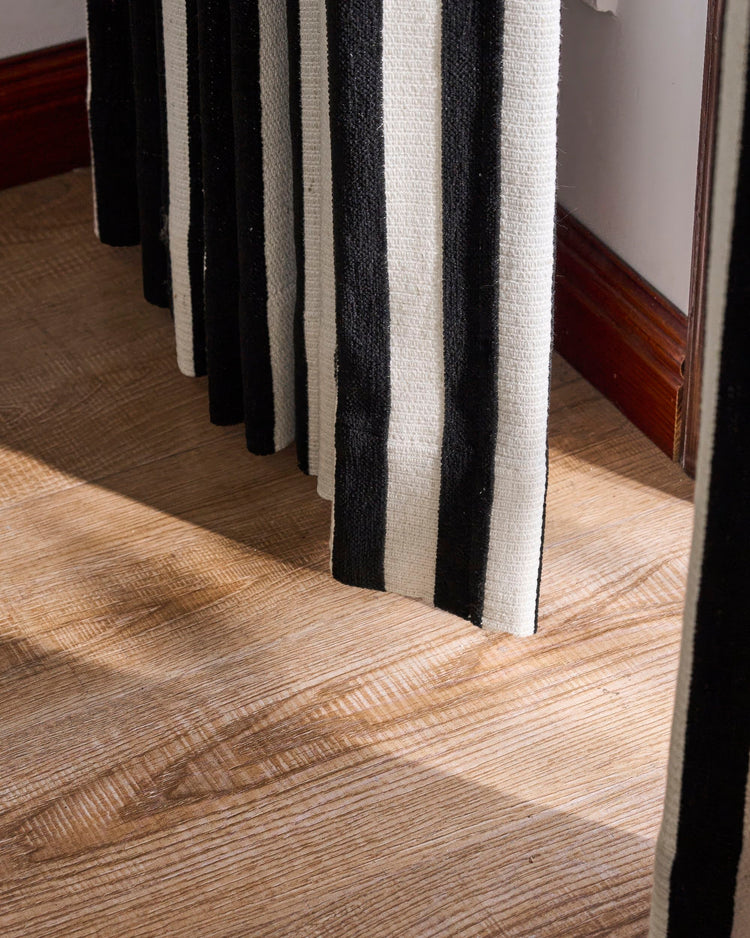
- Floating: Approximately a half inch above the floor- modern, clean and easy to keep.
In the case of the majority of U.S. homes, the golden mean between the style and function is where floating curtains are concerned.
Are Bedroom Curtains supposed to touch the floor?
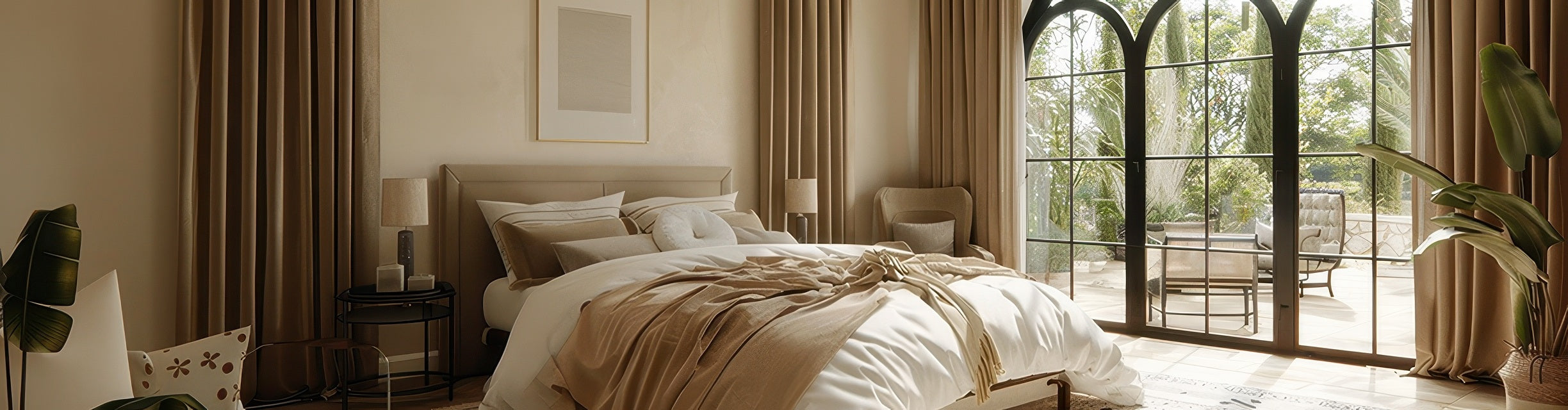
In case of the bedroom curtains , satisfaction and seclusion are the most important factors. Full-length curtains are in most situations the way to go- they block the majority of the light and make your bedroom warm and connected to the floor.
When you feel like having a soothing hotel-like appearance go with curtains that either just touch or pool on the floor . This makes it soft and better sounds are insulated. Conversely, you tend to have a neat and spartan feel and appearance, then consider having floating panels suspended right over the floor.
Pro Tip: In case of blackout curtains , never leave them on the floor, so that the light does not creep through the bottom.

Should Shower Curtain be in Contact with the Flooring?
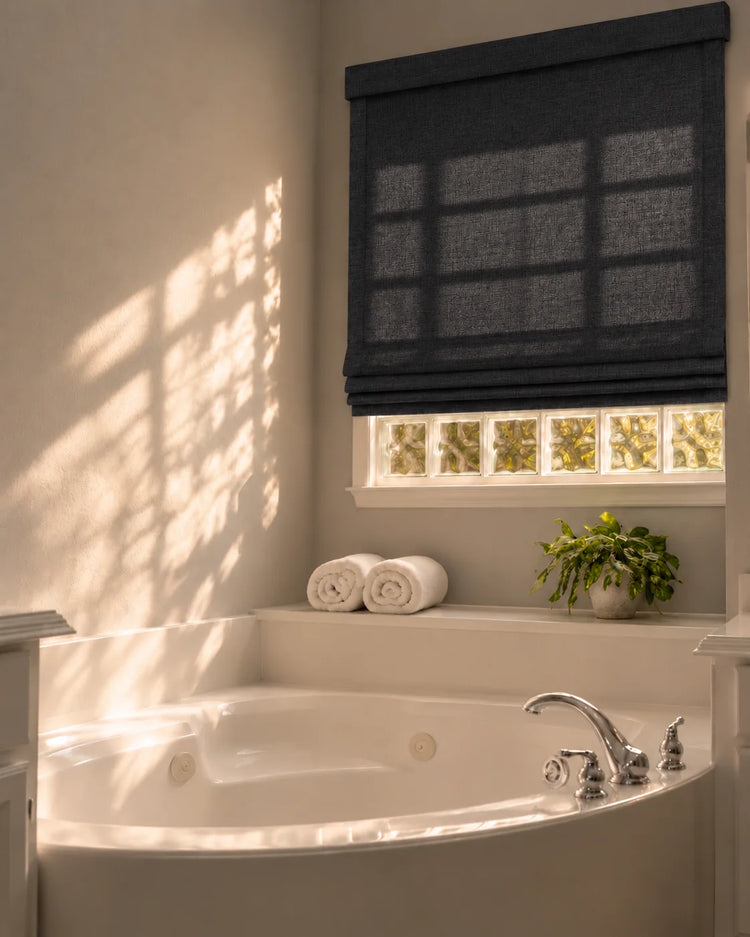
A shower curtain must never reach the floor as compared to a living or bedroom curtain. It must protrude slightly over the tub edge, typically 1-2 inches upwards in order to prevent mould, mildew and pooling water.
In the case of walk-in showers, the curtain would come all the way to the end of the threshold line without pulling the water out. It is to keep in mind that bathroom curtains are hygienic, secondarily stylish.

What Curtain Length Do I Need?
This depends on the height of ceiling as well as desired design objectives. Standard U.S. sizes such as 63, 84, 96 and 108 are normally the lengths of the curtains.
The following are the ways of matching them with your space:

 100% Blackout
 Better sleep
 Noise Reducing
 Energy Saving
- 63 inches: This size is suitable to small window size or under furniture.
- 84 inches: The standard most popular ceiling size of 8ft ceilings is 84 inches.
- 96 inches or more: It is ideal in high ceilings, or dramatic, grand style.
When you want a unique size to your window, or there is no ready-made one, you may want to think of custom curtain panels - you can adjust them to any size you want without altering length or width.
Considerations When Deciding Curtain Length
Consider the following before you go and buy your curtains:
- Preference of style : Do you prefer the polished modern look, traditional look or polished modern?
- Room type: The shorter panel would be needed in practicality such as in kitchens or bathrooms.
- Maintenance: Floor-length curtains accumulate more dust, and they have to be periodically cleaned.
- Window height: Tall windows are more attractive with longer curtains.
Interestingly, housewives living in a wet climate such as Florida or on the coastline, can use a slightly elevated curtain to minimize exposure to moisture but in northern states, more heavy draping which is floor-length is used to provide a warmer feeling inside the house during winter.
How to Measure Curtain Length
The basis of a perfect fit is the measuring. All you need is a basic instructions on how to measure curtain length like a professional:
-
Measure from the rod to the floor: Starting with the top of curtain rod (not window frame) and measure all the way to a straight position of where you want the curtain to fall.
-
Adjust curtain headers : If your curtain has grommeted or rings add 1-2 inches.
-
Decide your style:
- Flooring: Fancy 1/2 inch to give it a slight customary appearance.
- Puddling Add 2-4 inches of dramatic volume.
- Floating: Price a third inch less to a clew cutting-edge look.
Always have a second check-up before the order-it is more accurate than it seems.

Applied Cases: When The Curtains Must (and Mustn’t) Touch The Ground
- Living Rooms: Yes--effortless and elegant.
- Bedrooms: No--it adds privacy and coziness.
- Kitchens: Generally no--have them short to prevent a stain.
- Kids’ Rooms: Slightly off medium floor.
- Bathrooms: Never—do not touch wet space.
The rooms are going to have an alternate story; the curtain length can be used to characterize that.
Conclusion: Yes, or No, Curtains on the Floor?
Finally, the decision of whether your curtains are expected to touch the floor, or not, depends upon the appearance that you are trying to achieve and how you intend to utilize the room. Floor-length curtains are an ideal combination of beauty and the suitability of the room to the majority of rooms.
Curtain length, when used wisely, can help make your room appear to stretch up higher, to be warm and homely, and they will make your windows look like a real design statement.
Related FAQs
Q1: The position of curtains should be far away the floor.
To achieve a contemporary and neat appearance, maintain the level of the curtain at the half an inch above the floor. To be more romantic or luxurious, they should be allowed to puddle 2-3 inches.
Q2: Which width of curtains to be used: per panel or per window?
Always measure per panel. The width of the curtain should be 1.5-2 times the width of the window to make it full.
Q3: Do longer curtains make a room look bigger?
Yes. Flooring curtains also create the illusion of lengthening the walls making the ceiling look taller and the room open.
Q4: What happens when I have uneven windows or when they are off-centered?
Thumb the rod to make the positions higher and broader so as to have symmetry and balance.
Q5: What type of fabric is the most suitable with floor-length curtain?
Linen , velvet , and thermal blackout are great materials that can be hung and serve as an addition of warmth and texture to the room.