The Role of Curtains in Acoustic Improvement


In this article 7 sections
Noise-reducing curtains can make a room feel calmer, but they are not a complete replacement for solid walls, upgraded windows, or professional soundproofing. Their strongest role is softening certain everyday noises, reducing echo, and adding mass and coverage around a window.
If you live near traffic, neighbors, street activity, or a busy apartment hallway, the first step is understanding what kind of noise you are dealing with. Some sounds respond well to heavy curtains. Others need sealing, window inserts, or structural changes.

Noise-reducing curtains work better for some sounds than others
A useful way to think about noise is the difference between low-frequency rumble and higher-frequency hiss.
Low-frequency noise: the rumble
Examples include bus engines, idling trucks, highway vibration, bass from speakers, and heavy mechanical hums. These sounds have longer wavelengths and can move through glass, walls, and building structure.
Heavy curtains may soften the room and reduce some harshness, but they usually cannot fully stop deep rumble. For this type of noise, you may need better window sealing, window inserts, heavier glass, or help from a building professional.
Higher-frequency noise: the hiss
Examples include tire sound on pavement, wind, birds, distant chatter, and some street activity. These sounds are often easier for fabric to soften, especially when the curtain is dense, full, and installed with good coverage.
This is where custom curtains with heavier fabric or lining can help. The goal is not total silence. The goal is to make sharp or distracting sounds feel less noticeable inside the room.

 100% Blackout
 Better sleep
 Noise Reducing
 Energy Saving
Installation matters as much as the curtain fabric
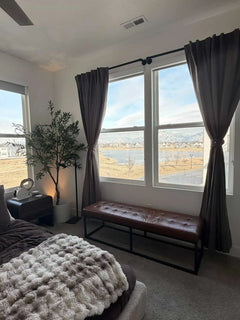
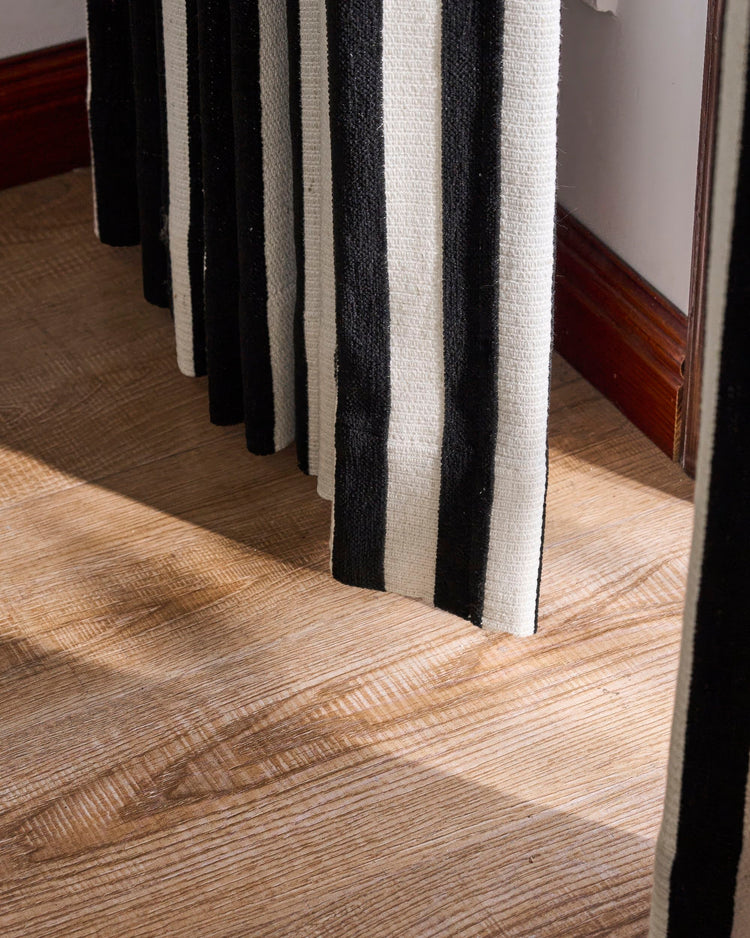
Sound behaves a lot like air. If there is a gap, sound can pass through it. A heavy curtain will work better when it covers the full window area and sits close to the wall.
Standard rods often hold fabric away from the wall, which can leave side gaps. Those gaps reduce both acoustic and light-control performance. For better results, consider:
- mounting the rod wider than the window frame
- using enough panel width for full, relaxed coverage
- choosing floor-length curtains when possible
- using returns or side coverage to reduce gaps
- checking for drafts around the window before relying on fabric alone
If you are ordering new panels, use the TheHues curtain measurement guide so the curtains are not too narrow for the window.

3 ways to improve noise reduction at a window
1. Seal visible gaps
Gaps around the window frame can carry both air and noise. Weatherstripping, caulk, or basic draft repair may help if the window is leaking air. Follow product instructions carefully, and use renter-friendly methods if you cannot make permanent changes.
2. Choose dense, layered fabric
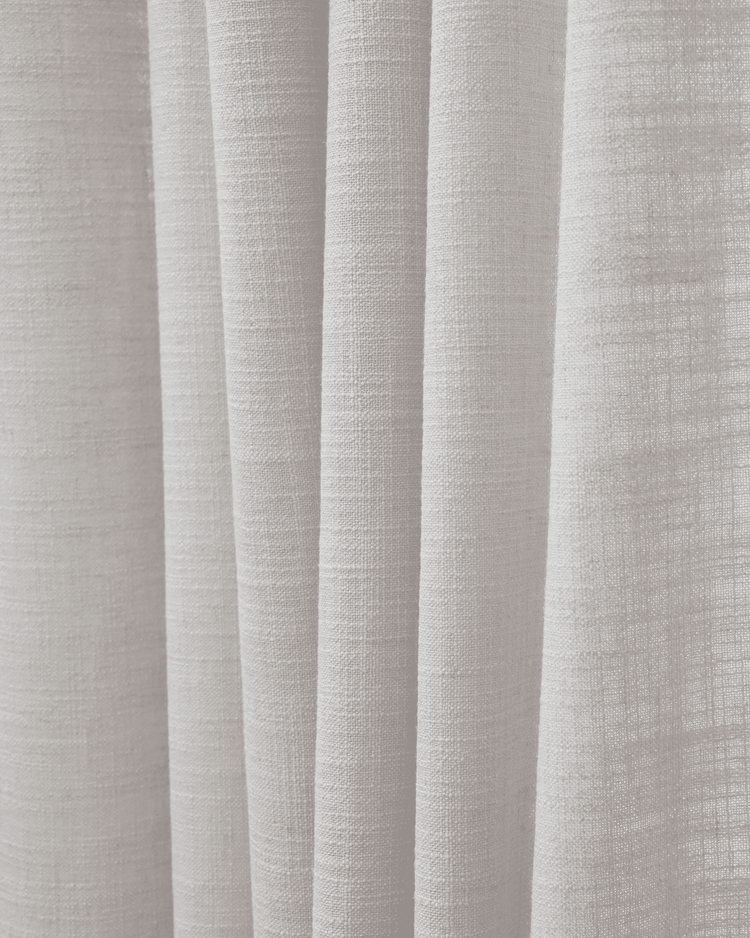
Heavier fabrics and lined curtains usually perform better than thin panels. A blackout or thermal liner can add body, reduce light, and help the curtain sit more like a barrier.
For bedrooms, blackout curtains can be useful because they address both light and some sound softness. For drafty windows, thermal curtains may also help make the room feel more comfortable.
3. Reduce the distance between fabric and wall
The closer the curtain sits to the wall, the fewer paths sound has around the edges. Returns, wraparound rods, wider panels, and careful side coverage can all improve the result.

Realistic expectations for common noise sources
| Noise source | Can curtains help? | Best strategy |
|---|---|---|
| Birds, wind, light street sounds | Often, yes | Use heavier curtains with good side coverage |
| Voices outside the window | Somewhat | Use dense fabric, lining, and better window sealing |
| Tire hiss or distant traffic | Sometimes | Combine heavy curtains with sealed edges |
| Idling trucks or highway rumble | Limited | Consider window inserts or structural upgrades |
| Neighbors through walls or ceilings | Limited at the window | Address the wall, ceiling, door, or floor path directly |
When curtains are not enough
If the noise is deep, constant, or coming through the building structure, curtains alone may not solve it. In those cases, look at the full path of the sound: window gaps, door gaps, wall construction, flooring, and ceiling transfer.
For windows, a removable window insert can sometimes provide a stronger barrier than fabric alone because it creates a tighter layer over the glass area. For serious noise issues, it may be worth talking to a local window or acoustic professional.

FAQ: noise-reducing curtains
Are noise-reducing curtains the same as soundproof curtains?
Not exactly. “Soundproof” suggests complete blocking, which fabric alone usually cannot provide. Noise-reducing curtains are better described as a way to soften certain sounds, reduce echo, and improve comfort when combined with good coverage and sealing.
Do blackout curtains reduce noise?
They can help slightly, especially if they are heavy and lined. Their main job is light control, but added fabric mass can also soften some outside noise.
Should curtains touch the floor for better noise reduction?
Floor-length curtains usually work better than short panels because they cover more surface area. A slight break at the floor can help reduce gaps, but choose a length that still works for cleaning and daily use.
What should I choose for a noisy bedroom?
Start with dense, lined curtains that fully cover the window. Then check for drafts and side gaps. If light is also a problem, choose blackout lining and review the TheHues curtain liner guide before ordering.
Final takeaway
Noise-reducing curtains can make a room feel more comfortable, especially when the noise is sharper, lighter, or coming through a window. They work best when the fabric is dense, the panels are wide enough, and the installation reduces gaps around the window.
For a better fit, compare custom curtain options, review your measurements, and use the TheHues free design service if you are working with an unusually wide, drafty, or noisy window.