Designer Custom Curtains: Allie's Styling Rules


Ready-made curtains can work well for standard windows, short-term spaces, and tight timelines. But when the proportions, fabric, or function need to respond to a specific room, fixed sizes can force compromises. That is where designer custom curtains offer a practical advantage: they begin with the window and the way the room is used, rather than a standard package size.
This is the second story in the TheHues x TheNottingHome collaboration. In the first article, we introduced Allie and the creative partnership behind the collection. Here, we look more closely at the design decisions that help curtains feel intentional in a real home.
Allie is the founder of The Nottinghome, a lifestyle and home design brand shaped around family, creativity, and spaces that feel timeless yet lived-in. The guidance below translates that point of view into useful curtain choices. It should not be read as a claim that every ready-made panel is poorly made or that one formula suits every room.
When Ready-Made Curtains Work - and Where They Fall Short
The honest comparison starts with context. Ready-made curtains are affordable, available quickly, and easy to replace. They can be a sensible choice for renters, guest rooms, standard-size windows, or homes that need a temporary solution.
Their limitations become clearer when a room has tall ceilings, wide glass doors, uneven floors, unusual window dimensions, or specific privacy and light-control needs. A panel may be close to the right length but still end several inches above the floor after the rod is mounted higher. A pair may cover the window but look nearly flat when closed. Standard options may also limit the available header, lining, color, or opening direction.
| Decision factor | Ready-made curtains | Designer custom curtains |
|---|---|---|
| Best fit | Standard windows and quick updates | Tall, wide, unusual, or design-led windows |
| Lead time | Usually available immediately | Made after measurements and selections are confirmed |
| Choice | Preset sizes and limited configurations | Size, header, lining, fabric, and finish can be coordinated |
| Budget | Lower initial cost | Higher initial cost, with value tied to fit and customization |
Allie's Three Rules for Designer Custom Curtains
1. Start with proportion, not a standard size
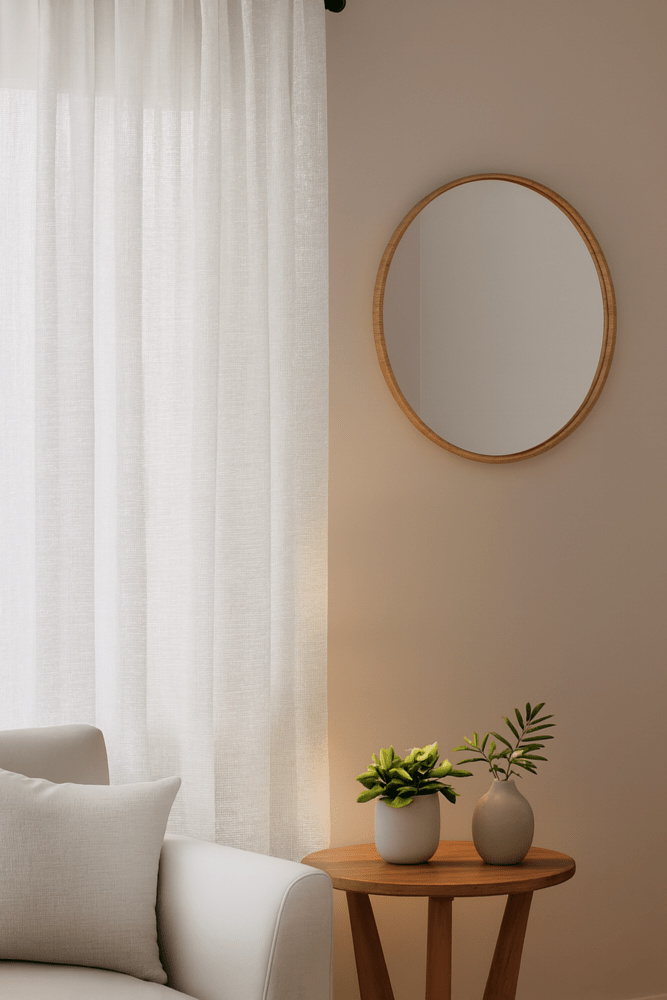
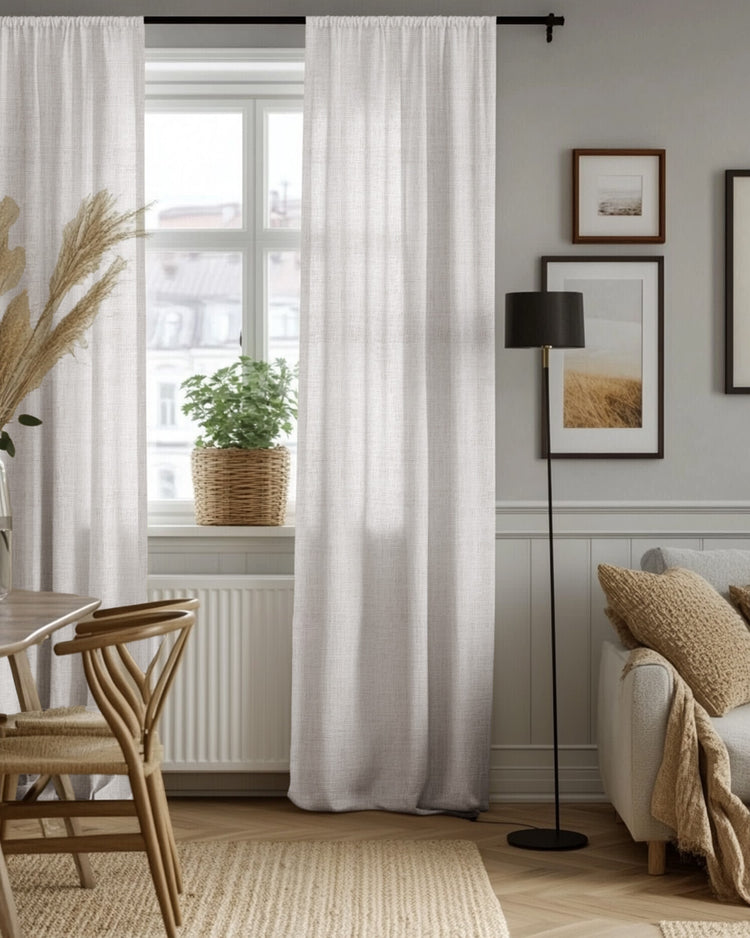
Rod placement changes how the eye reads the window. Mounting hardware above the frame can draw attention upward, while extending the rod beyond each side creates room for the panels to stack away from the glass. The goal is not to follow a dramatic fixed measurement. It is to balance ceiling height, available wall space, hardware strength, and the amount of glass you want to reveal.
Decide the rod or track position before ordering. Then measure from the actual installation point. The TheHues Curtain Measurement Guide explains where to begin and end each measurement for different header styles.
 2. Choose a floor finish that suits daily life
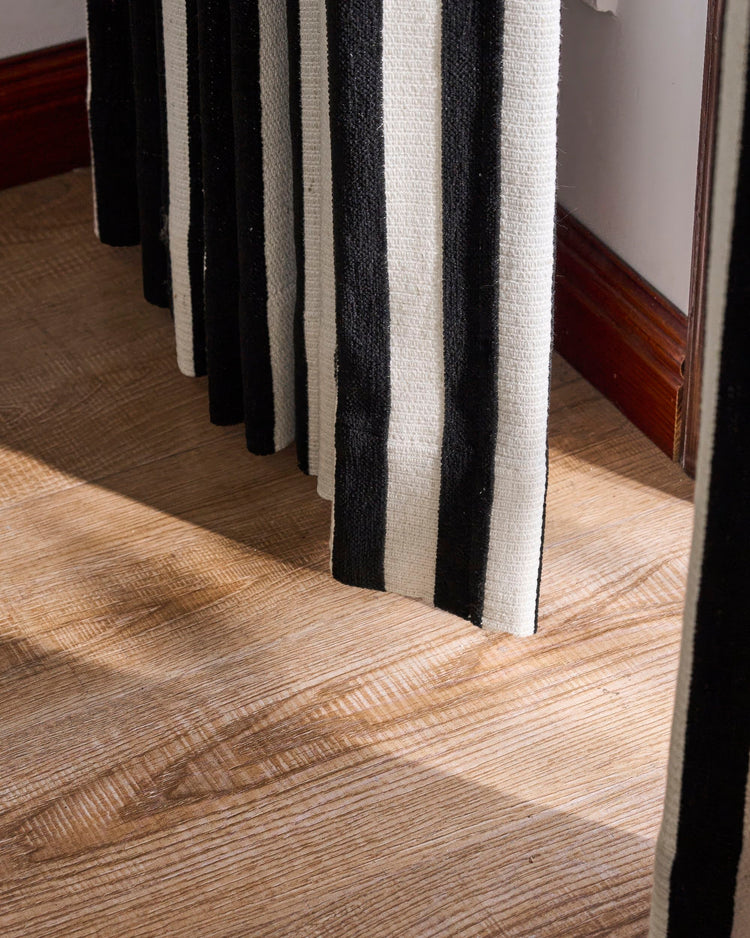
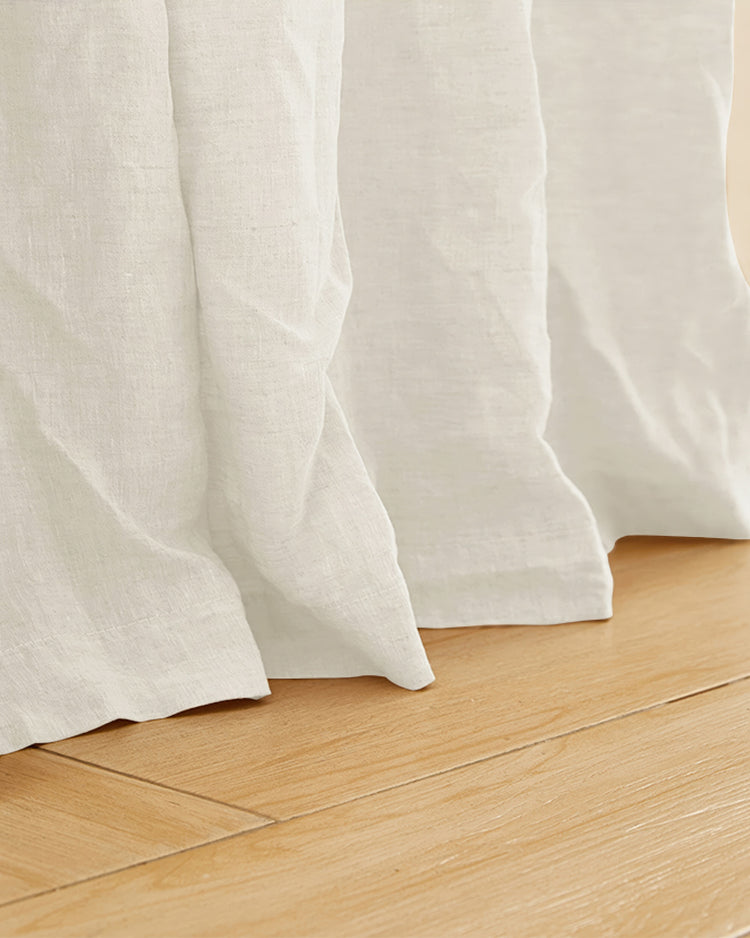
Curtains do not need to puddle to look considered. A float, usually a small clearance above the floor, is practical in busy rooms and easier to keep clean. A kiss lightly meets the floor and creates a tailored finish. A slight break adds a softer, more relaxed line. The right choice depends on the floor, traffic level, pets, children, and how often the curtains will open and close.
Measure the drop in more than one place because floors and ceilings are not always perfectly level. That small step matters more than an absolute rule such as adding exactly one inch to every panel.
3. Match fullness to the fabric and header
Fullness describes the relationship between the fabric width and the finished span. Too little fabric can look flat when the curtains close. Too much can add unnecessary bulk or strain the hardware. A practical range for many soft-top curtains is about 1.8 to 2.5 times the rod width, but the correct amount depends on fabric weight, transparency, header construction, and the look you want.
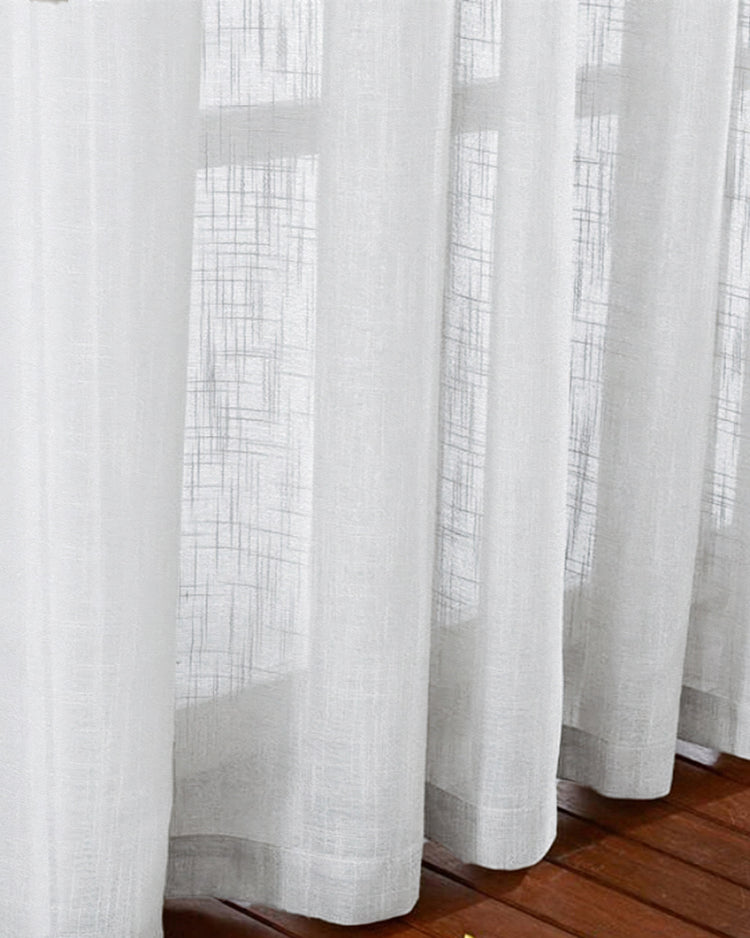
Light sheers often need more fullness to create visible folds. Heavy fabrics may need less. Pleated and ripple-fold systems can calculate fullness differently, so users should follow the configuration instructions for the selected header rather than applying one ratio to every product.
For a broader explanation of lining, hardware, hems, and trained folds, see How to Make Curtains Look Custom: 9 Designer Details. This collaboration article focuses on Allie's approach rather than repeating the full styling guide.
Why Texture Matters More Than the Fiber Label
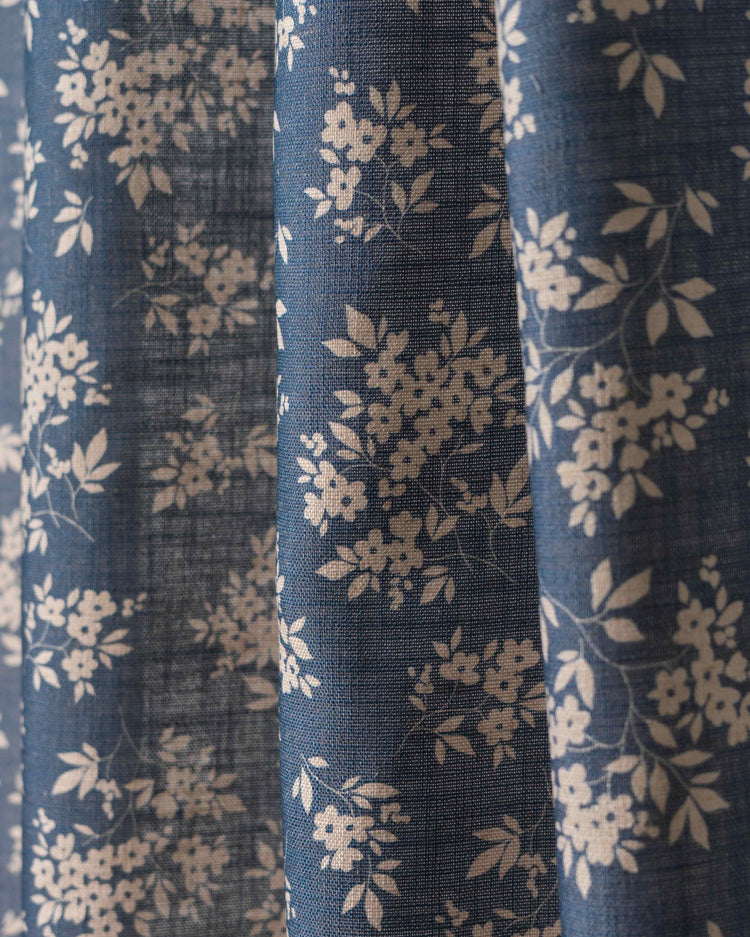
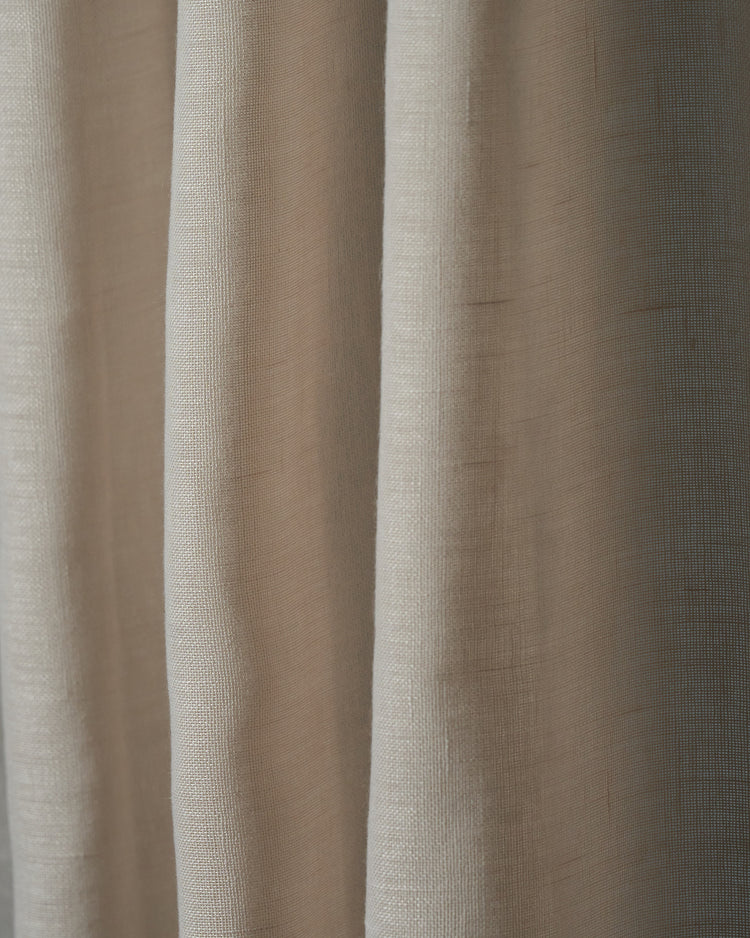
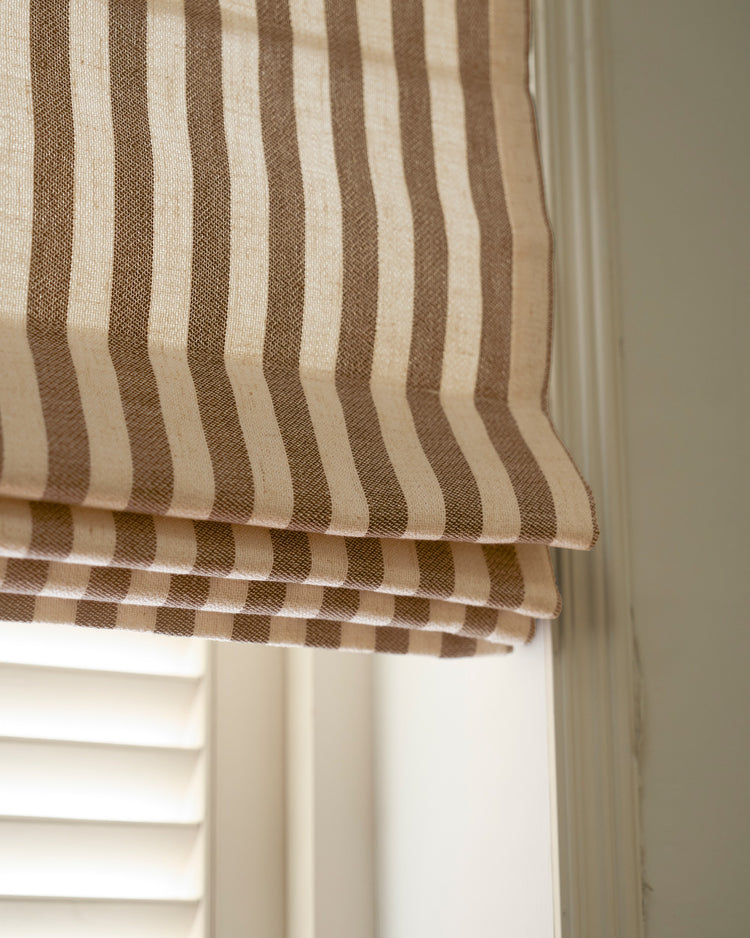
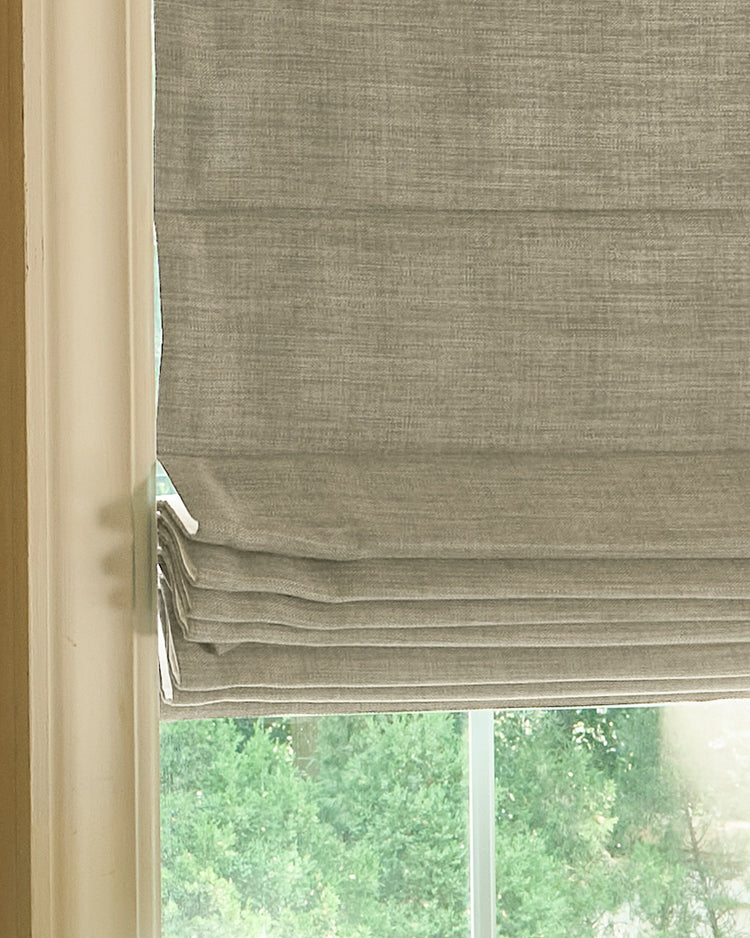
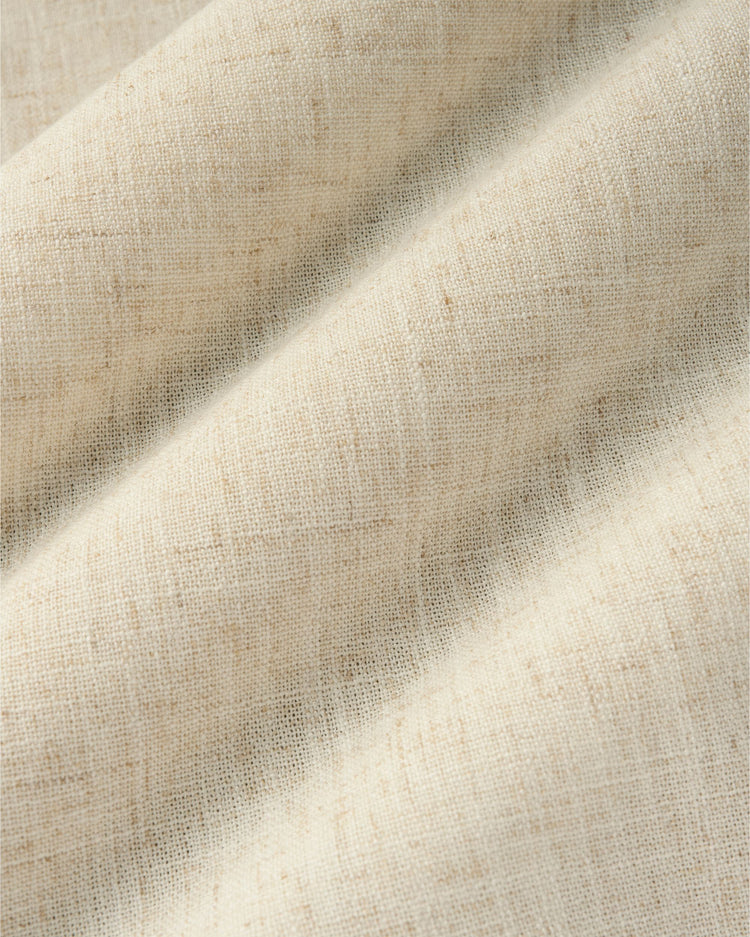
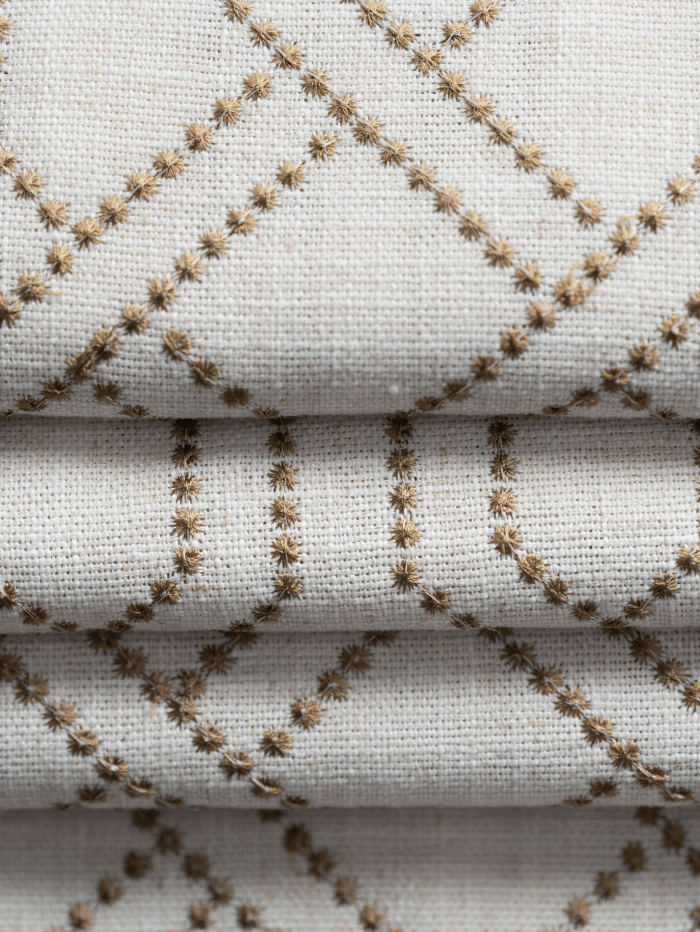
A curtain's appearance is shaped by more than whether the fiber is natural or synthetic. Weight, weave, yarn texture, finish, lining, and color all affect how the fabric hangs and responds to daylight. A well-made polyester or blended fabric can be durable and attractive. A natural-fiber fabric can still wrinkle, fade, or require careful cleaning.
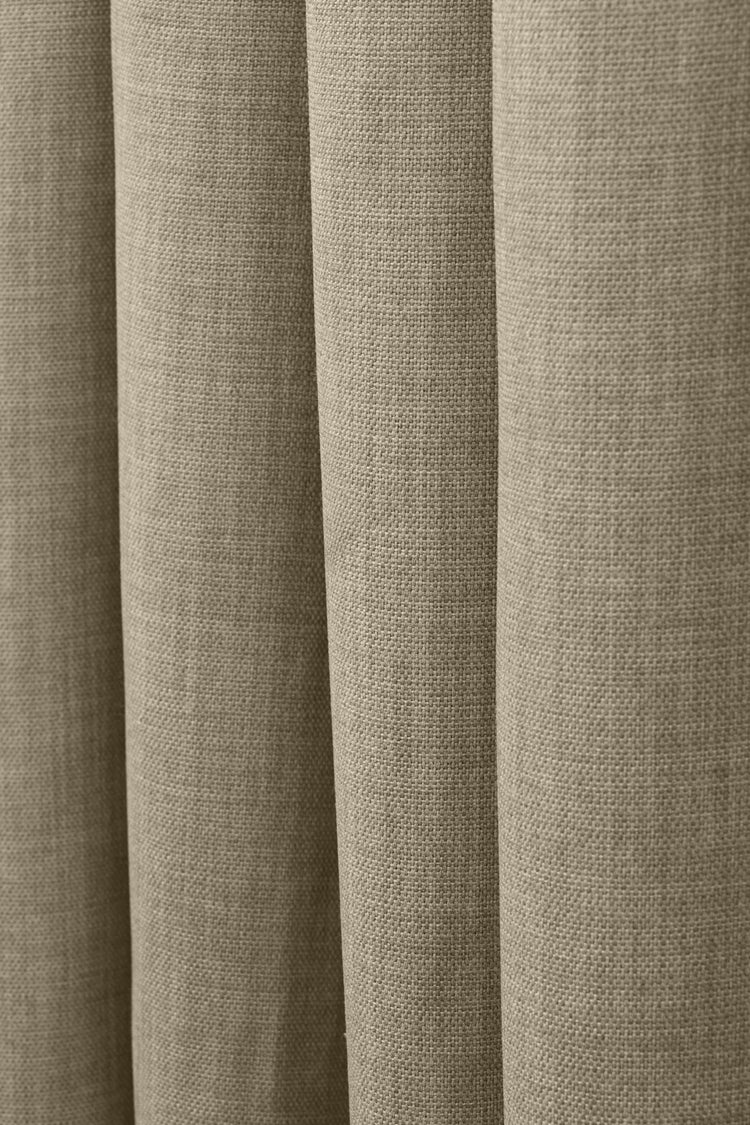
For this collection, the useful question is how each textile behaves in the room. Does it fall into clear folds? Does the surface soften glare or reflect it? Does the color remain readable in morning and evening light? Does the lining provide the privacy or room-darkening level the space needs? Those details give shoppers more reliable information than a broad material hierarchy.

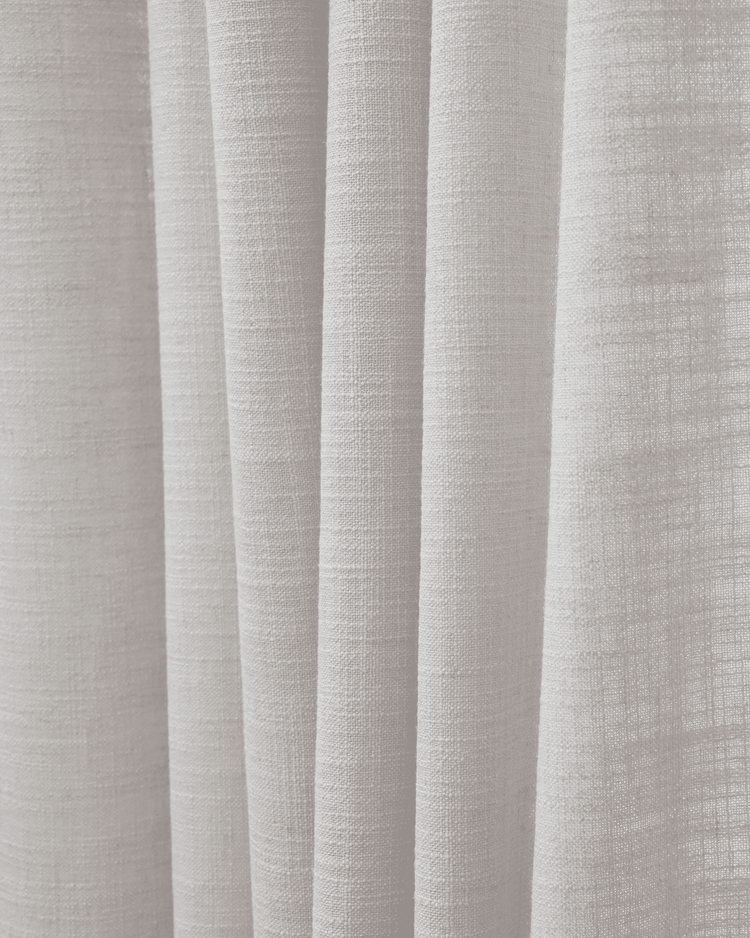
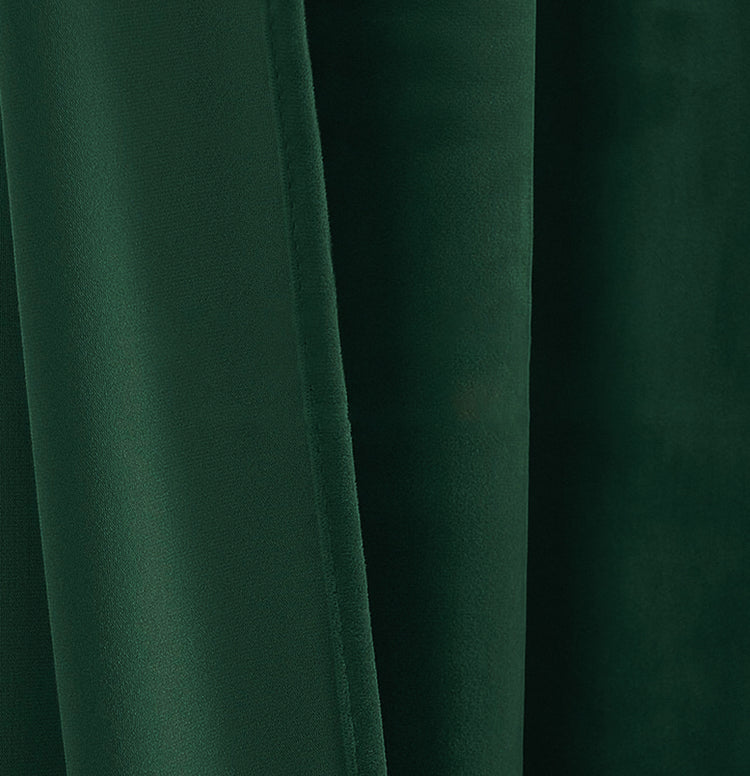
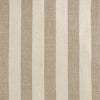
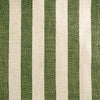
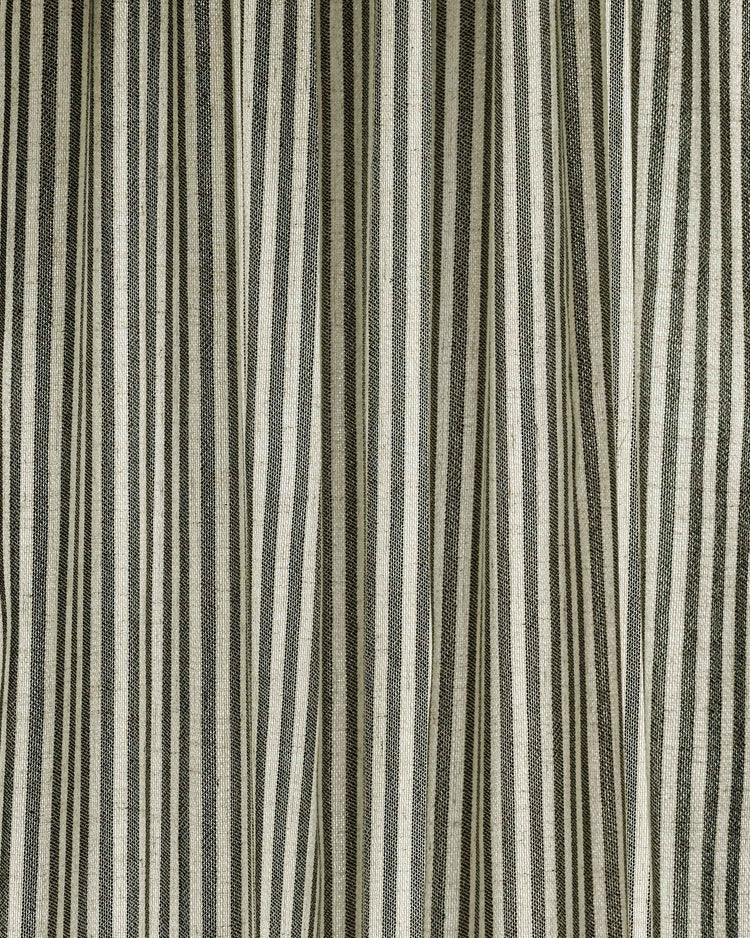
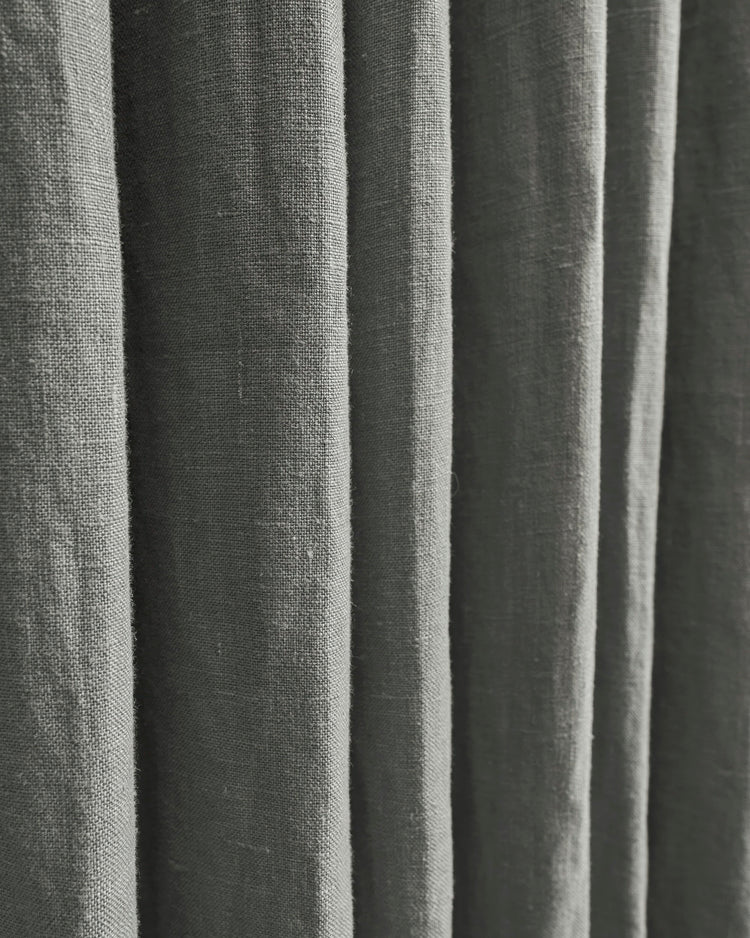
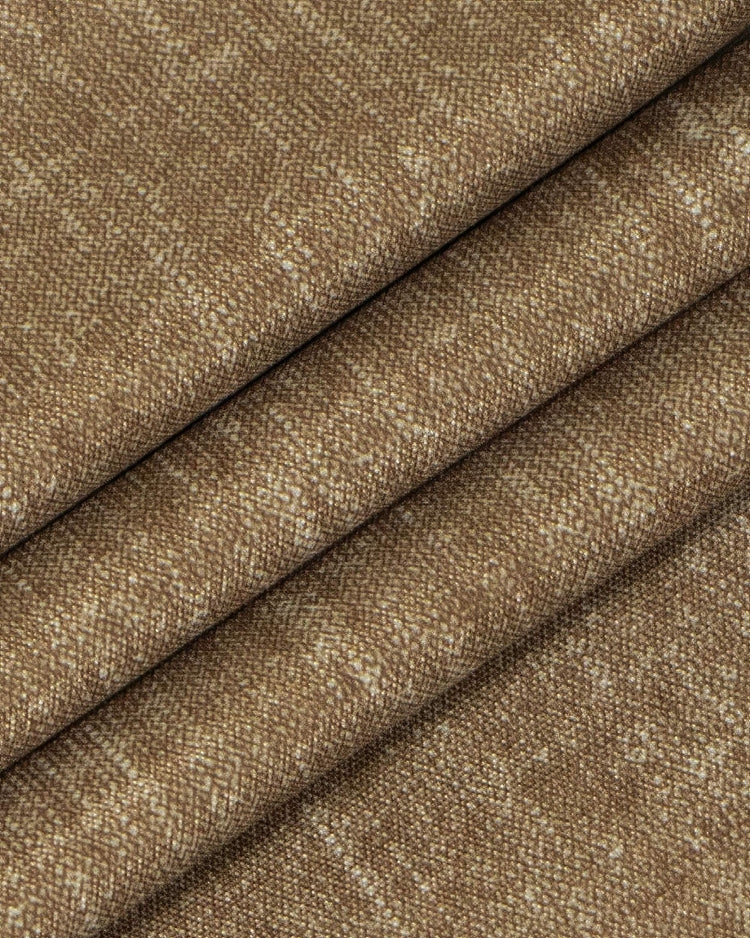
Three Nature-Inspired Colors, Three Different Moods
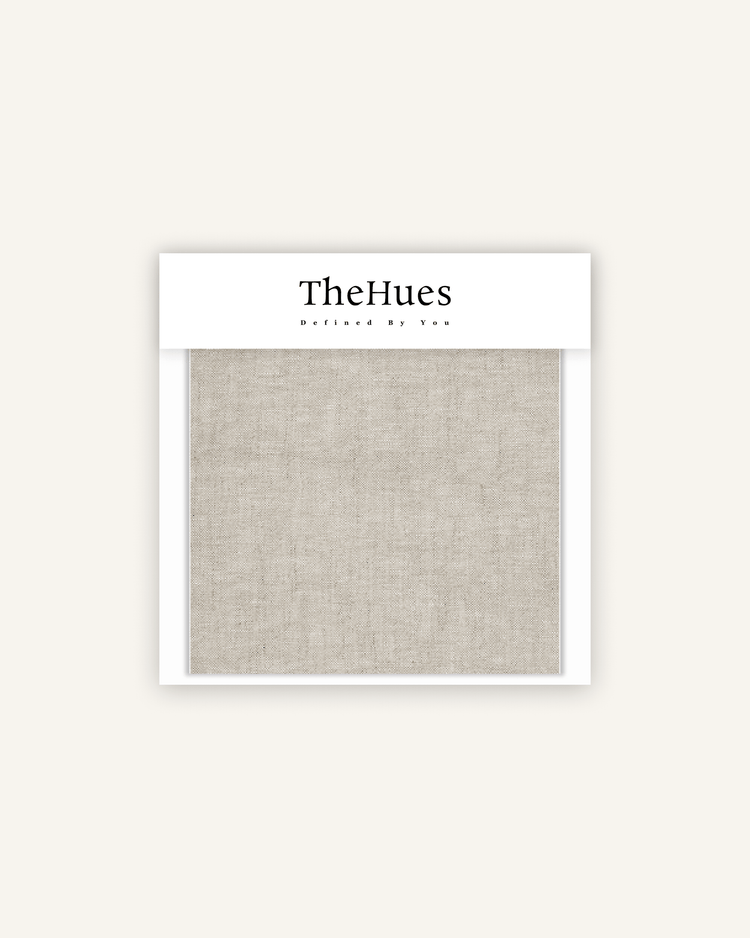
Color changes with natural light, wall paint, and nearby finishes. The collection's three directions are not rigid room prescriptions. They are starting points for thinking about atmosphere and contrast.
| Palette |
How it behaves |
Rooms to consider |
|
Soft Beige |
Keeps the palette light and lets texture do the work. |
Living rooms, bedrooms, and calm neutral schemes |
|
Moss Green |
Adds an earthy mid-tone without dominating the room. |
Studies, dining rooms, and spaces with wood or stone |
|
Forest Green |
Creates deeper contrast and a stronger visual anchor. |
Bedrooms, formal rooms, and moody layered interiors |

Are Custom Curtains Worth It for Your Home?
Custom curtains are most valuable when the standard compromise is visible or affects function. They may be worth considering when windows are unusually tall or wide, when the rod position requires a nonstandard length, or when a room needs a particular header, lining, opening direction, or pattern placement.
Ready-made curtains may remain the better choice when the window matches common dimensions, the budget is the main constraint, or the space needs a quick and temporary update. The strongest decision is not the most expensive one. It is the option that solves the actual fit, light, privacy, and maintenance needs of the room.
Explore the TheHues × TheNottingHome Collection
The collaboration brings these styling rules into reality through made-to-measure options, nature-led colorways, and textiles selected specifically for real, lived-in spaces. Rather than treating curtains as a final accessory, the collection focuses on how fabric changes proportion, light, and mood across your home.
Frequently Asked Questions
Are custom curtains always better than ready-made curtains?
No. Ready-made curtains can be practical for standard windows, limited budgets, and short timelines. Custom curtains become more useful when fit, proportion, fabric, lining, or header options need to respond to a specific room.
How much fullness should custom curtains have?
Many soft-top curtains use roughly 1.8 to 2.5 times the rod width, but there is no universal ratio. Fabric weight, transparency, header style, and the desired fold depth should determine the final amount. Pleated systems may already account for fullness in their construction.
How should I measure for designer custom curtains?
Choose the final rod or track position first. Measure the usable width and the drop from the correct point for the selected header. Check the height in more than one place, and follow the product-specific instructions before ordering.