How High Should I Hang My Curtains?


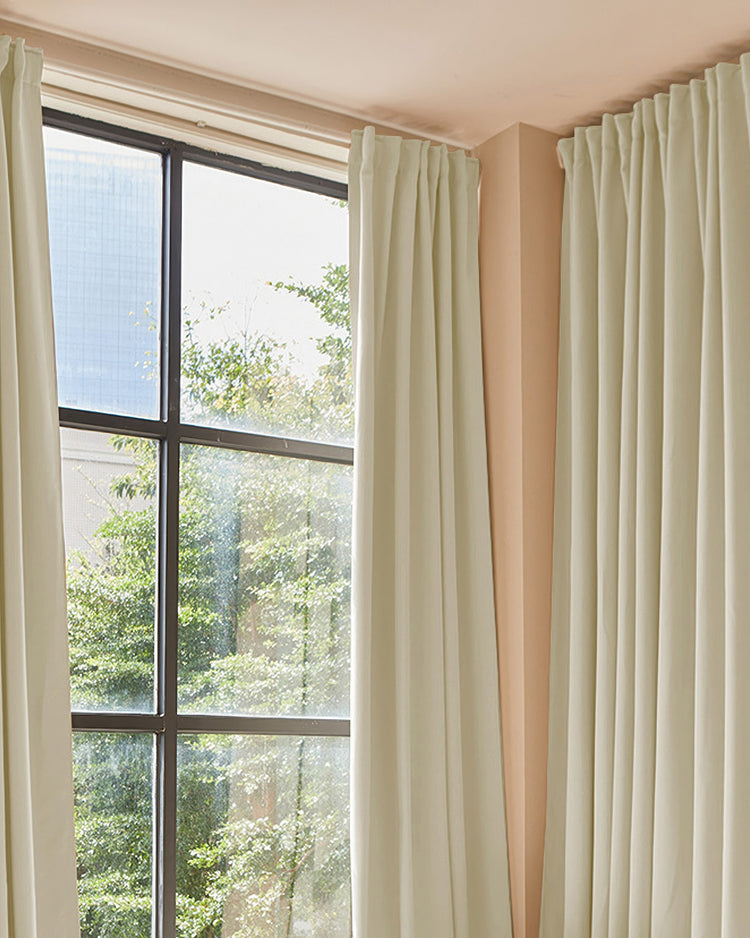
The golden rule: mount your curtain rod about 4 to 8 inches above the window frame, and extend it 4 to 12 inches beyond the frame on each side. That single move makes the window look taller and wider, pulls the eye upward, and cuts the light gaps that creep in around the edges. Then hang panels long enough to either hover about an inch off the floor or puddle a few inches onto it. Get the height and the width right and almost everything else falls into place.
Most people hang curtains too low and too narrow. They screw the brackets right onto the trim and run the rod only as wide as the glass. The result is a window that looks squat and boxed-in, with curtains that block the view and the light when you open them. Below is exactly how high, how wide, and how long to go for your ceiling height and window type.
How high above the window should I hang curtains?
Start at the window trim and go up. TheHues recommends mounting the rod 4 to 8 inches above the top of the window frame. Where you land inside that range depends on how much space you have between the frame and the ceiling.
- Standard 8-foot ceilings: Aim for 4 to 6 inches above the frame. That is enough lift to add height without leaving an awkward strip of bare wall.
- Less than 12 inches of wall above the frame: Go higher and split the difference. The closer your window sits to the ceiling, the closer the rod should go to the ceiling. Mounting roughly halfway between the frame and the ceiling usually looks balanced.
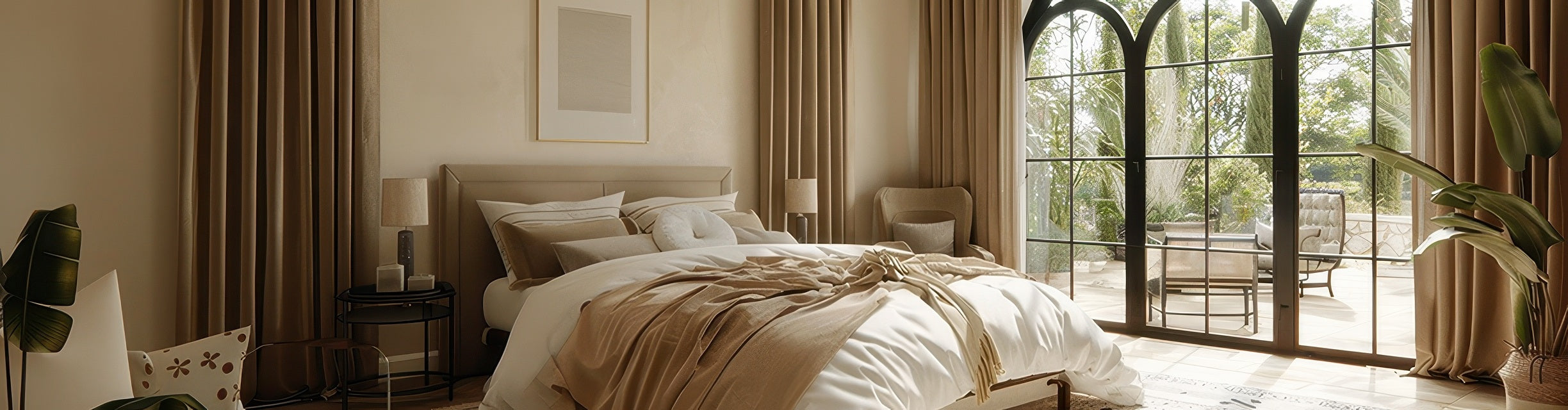
- Tall ceilings, 9 to 10+ feet, or a “drama” look: Push the rod 8 inches or more above the frame, or mount near the ceiling line or just under the crown molding. This is the classic floor-to-ceiling treatment that makes a room feel grand. See how to cover high ceiling windows for the full approach.
Why higher works: when the rod sits right on the trim, your eye stops at the window and the ceiling reads as low. Lifting the rod draws the eye up the wall, so the ceiling feels higher and the window feels larger. The trade-off is real, though. Wall space, ceiling height, trim depth, crown molding, and the load your wall can hold all limit how high you can actually go. Lifting the rod also means buying longer panels.

How wide should the curtain rod be?
Width matters as much as height, and it is the step most people skip. Extend the rod 4 to 12 inches beyond the window frame on each side. How far you go depends on wall space, how much “stack-back” room your panels need when open, and how much light you want to block.
This overlap does two jobs:
- It frees the glass. When the curtains are open, the panels stack onto the wall instead of covering part of the window, so you keep your full view and more daylight.
- It seals the edges. More side overlap means fewer perimeter light gaps. For blackout setups, lean toward the wider end of the range and use hardware that brings the panel back toward the wall. Fabric alone never seals the perimeter, so even a 100% blackout panel leaks light at the sides if the rod is too narrow.
A couple of installation notes that affect width. Measure your usable rod width excluding the finials, which are the decorative end caps; finials are not coverage. And position the brackets about 4 to 6 inches inward from each end of the rod so the panels can stack past the bracket. When you are ready to drill, our step-by-step on pro tips for hanging curtain rods at home walks through anchors, leveling, and bracket placement. To size the rod itself, see how to measure and select curtain rods.

How high to hang curtains by window and ceiling type
Different windows want different treatment. Use this as a quick reference, then adjust for your wall.
| Window / ceiling type | Rod height above frame | Rod width past each side | Notes |
|---|---|---|---|
| Standard window, 8 ft ceiling | 4–6 in | 4–8 in | The everyday default; balanced and easy |
| Window close to ceiling, less than 12 in gap | Mount near the ceiling line | 4–8 in | Use the gap; go higher rather than lower |
| Tall ceiling, 9–10+ ft, or floor-to-ceiling look | 8–12 in or near ceiling | 6–12 in | Pair with extra-long panels; biggest “lift” effect |
| Wide window or slider | 4–8 in | 8–12 in | Wider overlap so stacked panels clear the glass |
| Small or narrow window | 6–8 in, go higher to gain scale | 8–12 in | Extra width makes a small window read larger |
| Bedroom / blackout priority | 4–8 in | Toward 12 in | Favor more overlap to cut side light gaps |
| Arched, bay, or bowed window | Specialty or near-ceiling mount | Per the shape | Use a curved or specialty rod; see arched guide below |
For arched, bay, and bowed windows, a standard straight rod will not follow the shape. A specialty arched rod, or mounting a straight rod higher and using custom panels, usually looks best. We cover the options in how to hang curtains on arched windows.
How long should the curtains be once the rod is up?
Length follows height. The higher you mount the rod, the longer your panels need to be, so decide height first, then measure for length.
Measure from the bottom of the rod or track down to the floor, not from the ceiling and not from the top of the rings. The header and hardware decide where the fabric actually starts, so the bottom of the rod is your reference point. Note that floor-length panels with rings will hang from the rings, so account for them.
TheHues offers two clean floor finishes:
- Hover: the hem sits about 1 inch above the floor. Easiest to keep clean, best for active rooms, homes with pets, and uneven floors.
- Puddle: the fabric pools about 3 inches onto the floor for a soft, romantic, decorative look. It gathers more dust and is harder to vacuum around, so treat it as a style choice, not the default.
Avoid curtains that stop above the sill or “float” mid-wall. They make a room look unfinished and shorten it visually, which undoes the height you gained from the rod. If you want to go deeper on hem styles, see what is puddled curtains and what length should curtains be. For the full measuring walkthrough, see how to measure curtains for a window.
One honest caveat: finished custom panels can vary by roughly 1 to 2 inches because of fabric behavior and normal manufacturing tolerance. If you want a precise hover, it is safer to order slightly long and confirm at install than to come up short.

Step-by-step: getting the height and width right
- Measure the wall. Note ceiling height, the distance from the floor to the top of the window frame, and the window width including trim.
- Set the rod height. Mark 4 to 8 inches above the frame, higher for tall ceilings or small windows. If the window is within 12 inches of the ceiling, go near the ceiling.
- Set the rod width. Extend 4 to 12 inches past each side; mark bracket points about 4 to 6 inches inward from each rod end.
- Measure for length. From the marked rod position down to the floor, then pick your finish: hover, about 1 inch up, or puddle, about 3 inches down.
- Mount and level. Use wall-appropriate screws and anchors. A two-person install makes leveling far easier, especially on wide or heavy rods.
- Hang and adjust. Check that panels stack clear of the glass when open and that the hem sits where you want it. Tweak the rod height if the length is slightly off.
Heavier fabrics like velvet or four-layer panels need hardware rated for the real finished weight, and they should be mounted a bit more cautiously than light sheers. Match the rod to the load, not just the look.

 100% Blackout
 Better sleep
 Noise Reducing
 Energy Saving
Things that change the rule
- Heat registers or radiators under the window: Keep fabric off the heat source. You may need a shorter hover length or a custom panel that clears the vent.
- Crown molding or a low soffit: Mount just below it; do not crowd the rod against the molding.
- Finials need clearance: Leave room past the bracket so the finial does not hit an adjacent wall or window.
- Layering sheers and drapes: Allow enough projection so the front rod and panels clear the back layer.
Frequently asked questions
How high should I hang curtains on an 8-foot ceiling?
Mount the rod 4 to 6 inches above the window frame. If the top of the window is within 12 inches of the ceiling, go higher, closer to the ceiling line, for a taller look.
Should curtains touch the floor?
Either a hover, about 1 inch above the floor, or a puddle, about 3 inches onto the floor, looks intentional. Hover is the practical, easy-to-clean choice; puddle is a softer, more decorative finish. Curtains that stop above the floor tend to look unfinished.
How far past the window should the curtain rod extend?
Extend the rod 4 to 12 inches beyond the frame on each side. Wider overlap frees the glass when panels are open and reduces side light gaps, which matters most for bedrooms and blackout setups.
Does hanging curtains higher really make the room look taller?
Yes. A higher rod draws the eye up the wall so the ceiling reads as higher and the window looks larger. Just buy panels long enough to reach the floor, since a higher rod needs a longer curtain.
Where do I measure from for curtain length?
From the bottom of the rod or track down to the floor, accounting for rings if your panels hang from rings. Do not measure from the ceiling unless that is where the track actually sits.
Ready to install? Once you have your numbers, the bracket-and-anchor walkthrough in pro tips for hanging curtain rods at home covers the actual mounting.