How to Choose Curtains for a Home Theater: A Guide to Light, Sound & Privacy


In this article 7 sections
- 1. Start With Light Control: Blackout Curtains for a Better Viewing Experience
- 2. Consider Sound: Can Curtains Make a Home Theater Quieter?
- 3. Look Beyond Light and Sound: Privacy and Temperature Matter Too
- 4. Choose the Right Curtain Construction for Your Room
- 5. A Real-Home Example: Four-Layer Curtains for a More Comfortable Media Space
- 6. Don't Overlook Measurements and Installation
- Create a Home Theater That Works for You
A great home theater is about more than a big screen and surround sound speakers. The room itself plays an important role in how you experience every movie night.
Sunlight washing out your projector image, traffic noise interrupting a quiet scene, or sound bouncing off bare windows can all take away from the experience. And if your media room doubles as a family living space, you probably want window treatments that look just as good when the movie is over.
So, what should you look for when choosing home theater curtains?
The answer depends on your room, your viewing habits, and the problems you want to solve. Here's how to find the right balance of light control, sound, privacy, and everyday comfort.
1. Start With Light Control: Blackout Curtains for a Better Viewing Experience
If you use a projector, controlling ambient light should be one of your first priorities.
Even a bright room can make projected images look washed out, reducing contrast and making dark scenes harder to enjoy. Windows that receive direct sunlight can be especially challenging during afternoon movie sessions.
What to look for:
-
Blackout performance: Choose curtains specifically designed to block incoming light.
-
Adequate coverage: Panels should extend beyond the window frame to help minimize light leaking around the edges.
-
Full-length panels: Floor-length curtains provide a more complete look and can cover a larger portion of the window area.
Blackout curtains are also useful for TV rooms. Although televisions are generally more resistant to ambient light than projectors, reducing direct sunlight and window glare can still make viewing more comfortable.
A simple tip: Before choosing your curtains, think about when you watch movies most often. If weekend matinees are part of your routine, effective blackout coverage may be more important than it would be in a room used exclusively for evening viewing.

2. Consider Sound: Can Curtains Make a Home Theater Quieter?
Picture this: the movie is getting good, the soundtrack builds, and suddenly you hear traffic outside—or dialogue becomes difficult to follow because the room echoes.
Sound is an important part of an immersive viewing experience, but it helps to understand what curtains can and cannot do.
Heavy, layered curtains can absorb some sound reflections inside a room, particularly when windows and other hard surfaces contribute to echo. They may also help reduce some incoming outdoor noise.
However, sound absorption is not the same as soundproofing. Curtains alone cannot completely block traffic, loud neighbors, or bass traveling through walls and floors. If noise isolation is your main concern, you may also need to address window seals, doors, walls, or other structural elements.
What to look for:
-
Dense, substantial fabric rather than a lightweight decorative panel.
-
Multiple layers designed for sound absorption or noise reduction.
-
Sufficient width and coverage across the window.
-
A combination of acoustic curtains and other room treatments when echo is a persistent problem.
For a media room with large glass windows, heavy curtains can be a practical addition to your overall acoustic setup without requiring a major renovation.

3. Look Beyond Light and Sound: Privacy and Temperature Matter Too
A home theater doesn't always have to be a dedicated cinema room. It might be a converted bedroom, a basement media room, or a family living room where everyone gathers for movie night.
That means your curtains may need to do more than improve the picture and sound.
Privacy
If your windows face a street, neighboring homes, or a shared outdoor area, opaque curtains can help create a more private viewing environment. Blackout curtains provide greater visual privacy when closed than sheer fabrics.
Temperature Management
Windows can be a source of unwanted heat gain in summer and heat loss in winter. Thermal curtain layers can help reduce heat transfer through the window area, depending on the construction, fit, and installation.
This can be especially useful in rooms with large windows or in media spaces that are used throughout the year.
Everyday Flexibility
If your theater doubles as a living space, consider whether the curtains are easy to open and close. You may want a dark, immersive environment for movie night but plenty of natural light during the day.
The best solution is one that supports how you actually use the room—not just how it looks during a movie.
4. Choose the Right Curtain Construction for Your Room
Not all curtains offer the same combination of benefits. Understanding the difference between common curtain types can help you narrow down your options.
Blackout Curtains
Best for: Projector rooms, daytime movie watching, and spaces where minimizing incoming light is the priority.
Blackout curtains are designed to block light and help reduce glare. Look at the product's stated blackout performance and pay attention to installation coverage, since light can still enter around the edges.
Soundproof Curtains
Best for: Homeowners who want several functions in one window treatment.
Multi-layer curtains can combine light-blocking, thermal, and sound-related benefits in a single product. Rather than choosing based on the number of layers alone, check the actual specifications to make sure the curtain addresses your priorities.
If you want one versatile option for a home theater, a multi-layer blackout curtain is worth considering.
Thermal Curtains
Best for: Rooms where temperature comfort is important alongside light control.
Thermal curtains use insulating layers to help manage heat transfer through windows. Some designs combine thermal insulation with blackout and noise-reducing features.

5. A Real-Home Example: Four-Layer Curtains for a More Comfortable Media Space
When choosing curtains, product specifications are useful—but seeing how a product fits into a real home can make the decision easier.
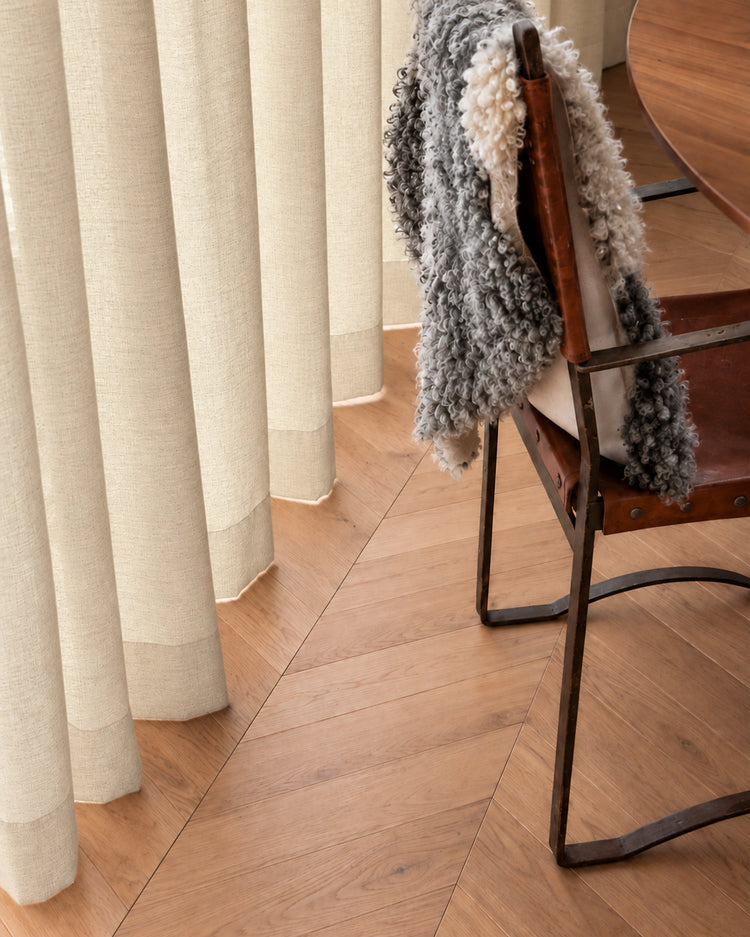
TheHues Creator collaboration offers an example of how functional window treatments can be incorporated into an everyday interior. For this project, Gökce (@Gokcenour) selected the Hussein 4-Layer Curtain to build her home theatre.
See how the product looks in a real home: @Gokcenour.
Explore the product: TheHues Hussein 4-Layer Custom Curtains
The four-layer construction is designed to bring together several practical features:
-
100% blackout: Helps block incoming light when you want a darker viewing environment.
-
Noise reduction: The substantial, layered construction is designed to help reduce noise distractions, although results depend on the room and installation.
-
Thermal insulation: Helps manage heat transfer through windows.
-
Custom sizing: Allows the curtains to be tailored to your window dimensions and interior.
Rather than treating blackout, thermal performance, and noise reduction as separate shopping decisions, a multi-functional curtain offers a way to consider these needs together.
For homeowners creating a media room from an existing living space, this can be a practical starting point. You can prioritize performance without giving up the tailored look of custom curtains.
6. Don't Overlook Measurements and Installation
Even a high-performance curtain may fall short if it is poorly fitted.
Before ordering, measure your windows carefully and consider how the curtains will be mounted.
Check these details:
-
Width: Allow enough fabric for the curtains to cover the entire window and provide adequate fullness.
-
Height: Consider mounting the curtain rod or track above the window frame and choosing an appropriate floor-length drop.
-
Side coverage: Extend the curtain beyond the window edges to help reduce light leakage.
-
Top coverage: Think about how light may enter between the curtain and the top of the window frame.
-
Ease of use: Make sure the curtains can be opened and closed comfortably, especially if the room serves multiple purposes.
For projector rooms, installation details can make a meaningful difference to light control. If you need near-total darkness, evaluate the entire window covering system rather than focusing on the fabric alone.
Custom curtains can be especially helpful when you have unusually wide windows, sliding glass doors, or a specific layout to accommodate.
Create a Home Theater That Works for You
A better home theater experience starts with the details you notice every day: sunlight on the screen, sounds that distract from dialogue, uncomfortable temperatures, or a lack of privacy.
The right curtains can help manage these issues while making your media room feel more complete. Start by identifying your biggest concern, compare the construction and performance of different curtain types, and make sure your measurements and installation support your goals.
Looking for a versatile option that combines blackout, thermal, and noise-reducing features?
Explore https://thehues.com/collections/soundproof-curtains and find a solution tailored to your windows and your home.