Are your blackout curtains melting your blinds? Summer heat mistakes to avoid


In this article 10 sections
- Why Blackout Curtains Can Trap Heat Near Windows
- Signs Your Window Area May Be Getting Too Hot
- Why This Happens More in Summer
- Why Reflective Backing Helps Reduce Heat Buildup
- How to Protect Vinyl Blinds Behind Blackout Curtains
- Best Options for Renters
- Best Options for Homeowners
- What to Do If Your Vinyl Blinds Are Already Warped
- Quick Checklist for Hot Windows With Blackout Curtains
- Final Takeaway
Blackout curtains are great for blocking light, improving privacy, and making bedrooms more comfortable. But in very sunny windows, especially west-facing windows, they can also trap heat between the curtain and the glass.
If you have vinyl blinds behind blackout curtains and notice warped slats, sagging, bending, or a plastic-like smell after hot summer afternoons, the issue may not be the curtain fabric alone. It may be heat buildup in the small space between the window and the curtain.
This does not usually mean your blinds are “melting” in the dramatic sense. More often, vinyl blinds soften, bend, or lose shape after repeated exposure to high heat. The good news is that a few setup changes can reduce heat buildup and help protect your blinds, curtains, and windows.
Why Blackout Curtains Can Trap Heat Near Windows
Blackout curtains work by blocking light. In winter, that insulating effect can help a room feel warmer. In summer, especially during strong afternoon sun, the same insulating effect can trap heat near the window.
Here is the basic problem: sunlight passes through the glass and hits the curtain. Darker fabrics and dark backings absorb more of that energy. When the curtain is close to the glass and airflow is limited, heat can build up in the space between the curtain and the window.

This heat pocket is usually most noticeable on:
- West-facing windows with strong afternoon sun
- South-facing windows in hot climates
- Windows with vinyl blinds behind heavy curtains
- Blackout curtains installed very close to the glass
- Dark curtain fabrics or dark foam-backed curtains
- Rooms with poor airflow around the window
Certain blackout curtains manage heat better than others. A blackout curtain with a white or reflective backing usually performs differently from one with a dark backing. That is why the window-facing side of the curtain matters, not just the decorative front fabric.
Signs Your Window Area May Be Getting Too Hot
You can often spot heat buildup before your blinds become badly damaged. Check your window area on a hot, sunny afternoon, especially when the curtains have been closed for several hours.
1. The Curtain Feels Hot to the Touch
A warm curtain is normal in direct sun. A curtain that feels noticeably hot may be absorbing and holding too much heat near the window.
2. A Hot Air Pocket Forms Behind the Curtain
Open the curtain in the late afternoon or early evening. If you feel a burst of hot air coming from behind the curtain, the window area has been holding more heat than the rest of the room.
3. Vinyl Blind Slats Start to Bend or Ripple
Vinyl blinds are more sensitive to heat than some other blind materials. If the slats begin to look wavy, bowed, twisted, or uneven, heat stress may be part of the problem.

4. Blinds Become Harder to Tilt
If the slats feel softer, stickier, or harder to tilt after hot afternoons, the material may be reacting to repeated heat exposure.
5. Condensation Appears Between Window Panes
Condensation between double-pane glass can indicate a seal issue. Heat is not always the only cause, but repeated temperature stress around the window can contribute to window-performance problems over time.
Why This Happens More in Summer
Blackout curtains can be helpful in both winter and summer, but they behave differently depending on the season.
In winter, heavy curtains help reduce drafts and make the room feel more insulated. In summer, especially during long sunny afternoons, that same insulation can trap heat near the glass.
This is why a curtain setup that feels perfect in January may feel too hot in July. The fabric, backing, window direction, and airflow all affect how the treatment performs across seasons.
West-facing windows are often the most challenging because they receive strong afternoon sun, when outdoor temperatures are usually already high. If you notice heat problems in only one room, check the window direction first.
Why Reflective Backing Helps Reduce Heat Buildup
The best way to reduce heat behind curtains is to reflect more sunlight before it turns into trapped heat.
White and reflective curtain backings are designed to bounce more light back toward the window instead of absorbing it into the fabric. The U.S. Department of Energy notes that medium-colored draperies with white-plastic backings can reduce heat gain during cooling season.
This is why two curtains labeled “blackout” can feel very different in summer. One may block light but hold more heat, while another may block light and reflect more sunlight away from the room.

When heat control matters, pay attention to the window-facing side of the fabric. A dark decorative curtain with a white backing may manage heat better than a light-colored curtain with a dark backing.
When shopping, look for terms such as:
- White blackout backing
- Thermal backing
- Reflective backing
- Blackout lining
- Thermal insulated curtains
The word “blackout” mainly refers to light blocking. It does not always tell you how well the curtain manages heat.
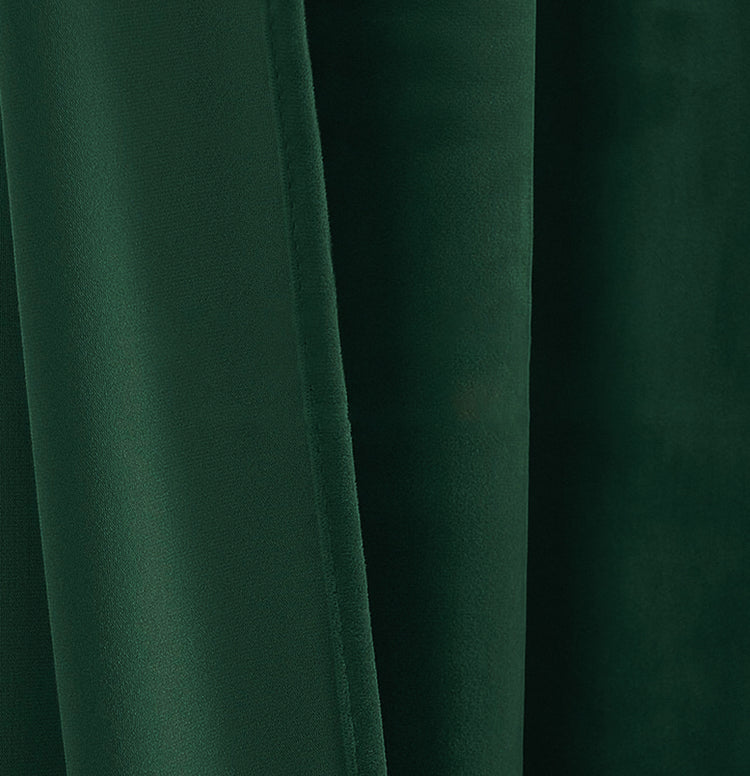
If heat control is part of your goal, compare TheHues blackout curtains and thermal curtains with the backing and lining in mind.

 100% Blackout
 Better sleep
 Noise Reducing
 Energy Saving
How to Protect Vinyl Blinds Behind Blackout Curtains
You may not need to replace your curtains right away. In many cases, small adjustments can improve airflow and reduce heat buildup behind the curtain.

1. Improve Airflow Behind the Curtains
Heat builds up faster when curtains are sealed tightly against the window and wall. Try to leave enough room for air to move behind the curtain.
You can improve airflow by:
- Using brackets that hold the rod slightly farther from the wall
- Avoiding a setup where the curtain presses directly against the blinds
- Keeping the bottom hem slightly open instead of tightly sealed
- Opening the curtains for part of the day when the sun is less intense
Better airflow can help the hot air escape instead of staying trapped against the blinds.
2. Use a White or Reflective Liner
If you like your current curtains but worry about heat, a reflective liner can help. A white blackout or thermal liner adds a lighter window-facing layer behind the decorative fabric.
This can reduce heat absorption while letting you keep the style of your existing curtains. It can also improve privacy and light control.

If you are choosing a new setup, look for curtains or liners that combine blackout performance with a lighter backing. You can also review TheHues curtain liner guide before deciding which liner is right for your room.
3. Avoid Dark Backings on High-Heat Windows
Dark backings can absorb more heat in strong sun. They may still be useful for certain rooms, but they are not always the best choice for hot west-facing windows or rooms with vinyl blinds behind the curtains.
For high-sun windows, choose a lighter or reflective backing whenever possible.
4. Open Curtains During Lower-Heat Hours
If the sun is strongest in the afternoon, consider opening the curtains earlier in the morning or later in the evening to release trapped heat. This is especially helpful in rooms that stay closed for long periods during the day.
If you need privacy during the day, consider layering curtains with blinds, shades, or sheers so you can manage light and heat more flexibly.
5. Be Careful With Window Film
Window film can reduce solar heat before it reaches the curtains, but it needs to be chosen carefully. Some films are not suitable for all double-pane or insulated glass windows.
If you are considering window film, check whether it is rated for your window type and whether it may affect your window warranty. For double-pane windows, professional guidance is often safer than using standard tint film.
Best Options for Renters
If you rent, you may not be able to install exterior shades, awnings, or permanent window film. Focus on temporary and reversible solutions.
Renter-friendly options include:
- Using a white or reflective curtain liner
- Mounting curtains on a tension rod when possible
- Choosing lighter window-facing fabrics
- Improving airflow behind the curtain
- Opening the curtain during cooler parts of the day
- Using temporary shade panels during peak summer sun
These changes can help reduce heat buildup without making permanent changes to the window or wall.
Best Options for Homeowners
Homeowners have more flexibility. If a window gets extreme afternoon sun every summer, it may be worth solving the heat problem before it reaches the glass.
Useful options include:
- Exterior solar screens
- Awnings
- Shade sails for outdoor sun control
- Reflective or thermal curtain liners
- Heat-resistant blind materials
- Professional window film rated for the window type
Exterior solutions can be especially effective because they block or reduce sun exposure before heat enters the window area.
What to Do If Your Vinyl Blinds Are Already Warped
If your vinyl blinds are already warped, they may not return to their original shape. Slight bending may be manageable for a while, but badly twisted or sagging slats usually need replacement.
For windows with repeated heat exposure, consider more heat-tolerant materials, such as:
- Faux wood blinds with a stronger composite core
- Aluminum blinds
- Solar shades
- Roller shades designed for high-sun windows
- Curtains with reflective or thermal backing
If you replace the blinds but keep the same high-heat curtain setup, the problem may return. It is better to solve the heat buildup first, then choose the right replacement treatment.
Quick Checklist for Hot Windows With Blackout Curtains
Use this checklist if you are worried about heat buildup behind your curtains:
- Check whether the window faces west or receives strong afternoon sun.
- Feel the curtain and the air behind it on a hot sunny day.
- Look for bent, wavy, or sagging vinyl blind slats.
- Check whether the curtain backing is dark, white, or reflective.
- Leave more space for airflow behind the curtain if possible.
- Consider adding a reflective liner.
- Avoid dark backings on the hottest windows.
- Use exterior shade or solar screens when sun exposure is severe.
Final Takeaway
Blackout curtains can make a room darker, quieter, and more comfortable, but they can also trap heat near sunny windows if the setup does not allow enough reflection or airflow.
If your vinyl blinds are warping behind blackout curtains, focus on the window-facing side of the fabric, the amount of airflow behind the curtain, and the direction of the sun exposure. A reflective liner, better spacing, or a more heat-conscious curtain choice may solve the problem before you need to replace blinds again.
For high-sun rooms, compare TheHues blackout curtains, thermal curtains, and the curtain liner guide before choosing your final setup.