Apartment balcony curtains: no-drill outdoor curtain solutions for renters


In this article 9 sections
- Can you hang apartment balcony curtains without drilling?
- Best no-drill ways to hang outdoor curtains on a balcony
- How to choose fabric for balcony privacy curtains
- Which curtain header works best outdoors?
- How to measure apartment balcony curtains
- How to keep balcony curtains from blowing around
- Best apartment balcony curtains by renter scenario
- FAQ: apartment balcony curtains
- Final takeaway
Apartment balcony curtains can make a rental feel more private, shaded, and finished, but only when the setup fits the balcony structure. The biggest mistake is choosing the curtain first and the hardware second.
If you rent, you usually need a no-drill solution that stays within lease rules, handles the panel weight, and does not turn into a problem on windy days. This guide covers how to choose renter-friendly balcony curtain hardware, which outdoor fabrics make sense, how to measure, and when a shade sail or privacy screen may be the better choice.
Can you hang apartment balcony curtains without drilling?
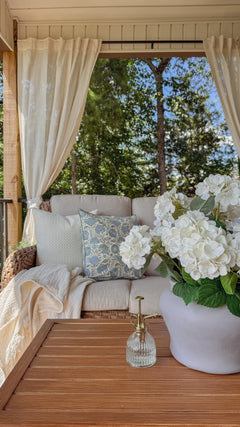
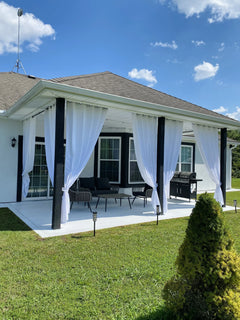
Yes, but the balcony needs a realistic place for the hardware to grip, tension against, or hang from. A no-drill setup can work well on a covered balcony with side walls or a solid frame. It is much harder on a fully open balcony with no ceiling, no side support, and regular wind.
Before buying outdoor curtains for a balcony, start with these questions:
- Do you have an overhead beam, ceiling, or balcony frame?
- Do you have two solid side points for a rod, cable, or tension system?
- Is the balcony covered, partly covered, or fully exposed?
- Does your lease, HOA, or building handbook allow temporary outdoor fabric treatments?
Do not assume “no-drill” automatically means “approved.” Some buildings restrict visible balcony items, colors, hardware, or anything that attaches to the exterior facade. Check the rules before you order custom panels.
| Balcony condition | Will curtains usually work? | Best starting method |
|---|---|---|
| Covered opening with side walls | Usually yes | Tension rod or cable system |
| Metal frame or pergola-style structure | Usually yes | Cable, grommet rod, or tie system |
| Sliding patio door area | Sometimes | Light-duty adhesive, magnetic, or inside-mounted solution |
| Fully open balcony with no overhead support | Usually no | Shade sail, privacy screen, or freestanding option |
If your layout is workable, start by comparing TheHues outdoor curtains so you can match fabric weight, width, and header style to the hardware you can safely use.
Best no-drill ways to hang outdoor curtains on a balcony
The best no-drill method depends on span, exposure, and curtain weight. Renters usually run into trouble when they choose a lightweight hardware solution for panels that are too wide, too heavy, or too exposed to wind.

Tension rods for narrow, covered balcony openings
Tension rods are the simplest option, but only in the right conditions. They work best when the opening is relatively narrow, both sides are solid and parallel, and the balcony is protected from direct wind.
Use a tension rod when you want a soft privacy layer for a small covered balcony. Avoid relying on one for long spans, heavy waterproof panels, or open-air areas where gusts can shift the rod out of place.
Adhesive or magnetic holders for very light setups
Adhesive and magnetic systems are best for temporary, lightweight privacy solutions. They can be helpful around patio doors or small protected areas, but they are not a universal answer for balcony curtains.
They usually work best when:
- the panel is lightweight
- the span is short
- the goal is privacy, not weather control
- the setup can be removed quickly when needed
For outdoor use, remember that curtain weight changes when fabric is damp or moving in wind. Always stay within the hardware maker’s stated limits and choose a lighter panel when in doubt.

 Kid-friendly
 OEKO-TEX® Certified
 Durable
 Low maintenance
Cable or wire systems for longer balcony spans
If your balcony has a covered structure and side support points, a cable system is often a better no-drill option than a long tension rod. It can handle wider openings more cleanly and works well with grommet-top outdoor curtains.
Cable systems are worth considering when:
- the opening is wider than a typical window
- you need the panels to slide open and closed
- the curtains are heavier than sheer panels
- you want a cleaner look than several short rods
Freestanding or weighted frames when nothing else works
Some balconies do not have a ceiling, side wall, or approved attachment point. In that case, a freestanding frame or weighted privacy screen may be safer and more realistic than trying to force curtains onto a structure that cannot support them.
This option is less seamless than mounted curtains, but it can be the better renter-friendly choice when the balcony is fully exposed.
How to choose fabric for balcony privacy curtains
After the hardware decision, fabric becomes the next performance choice. Good apartment balcony curtains should provide privacy and shade without creating too much wind resistance or maintenance.

Water-resistant vs. waterproof outdoor curtains
Many renters search for waterproof outdoor curtains, but a fully waterproof panel is not always the best fit for a balcony. Waterproof fabrics can be heavier and stiffer, which may make them harder to manage on a no-drill setup.
Use this simple guide:
- Water-resistant fabrics are usually better for covered balconies and everyday privacy.
- Heavier waterproof options make more sense when the curtains face frequent direct rain.
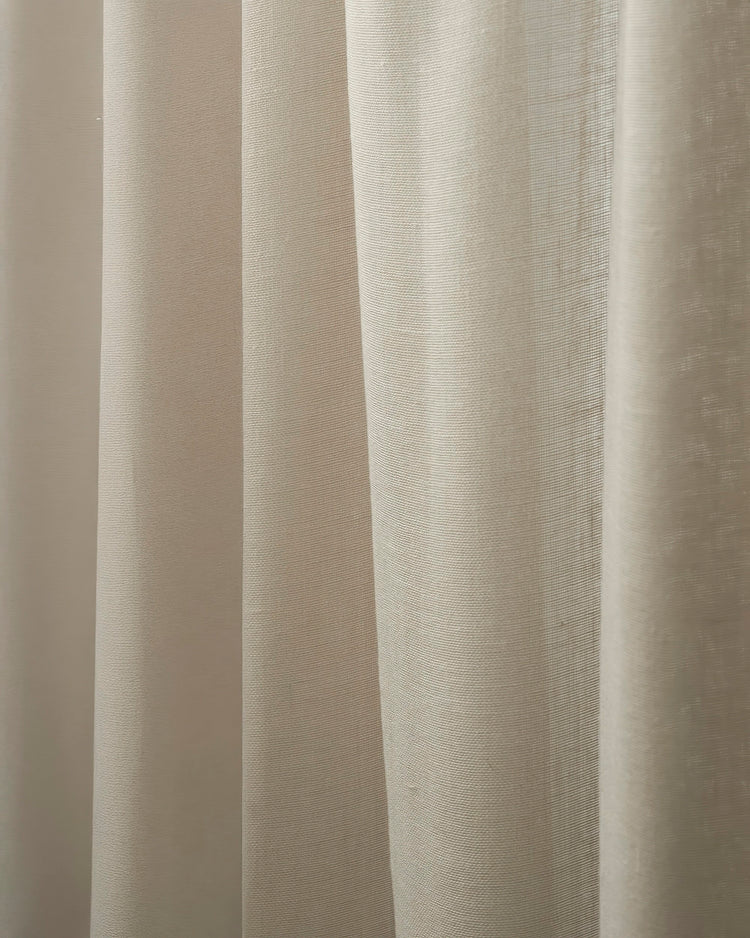
- Outdoor sheers can soften the view, but they need tiebacks or bottom control in breezy areas.
Outdoor curtains will not turn a balcony into a climate-controlled room. But the right fabric can help reduce glare, soften direct sun, and make the area around a sliding door feel more comfortable.
According to the U.S. Department of Energy, windows can be a major source of heat gain and heat loss in the home. That is one reason it helps to think about shade and light control before strong sun becomes a daily frustration.

Sheer, privacy, and blackout-style outdoor panels
Balcony curtains usually involve a tradeoff. More privacy often means more fabric weight, less airflow, and more movement in wind.
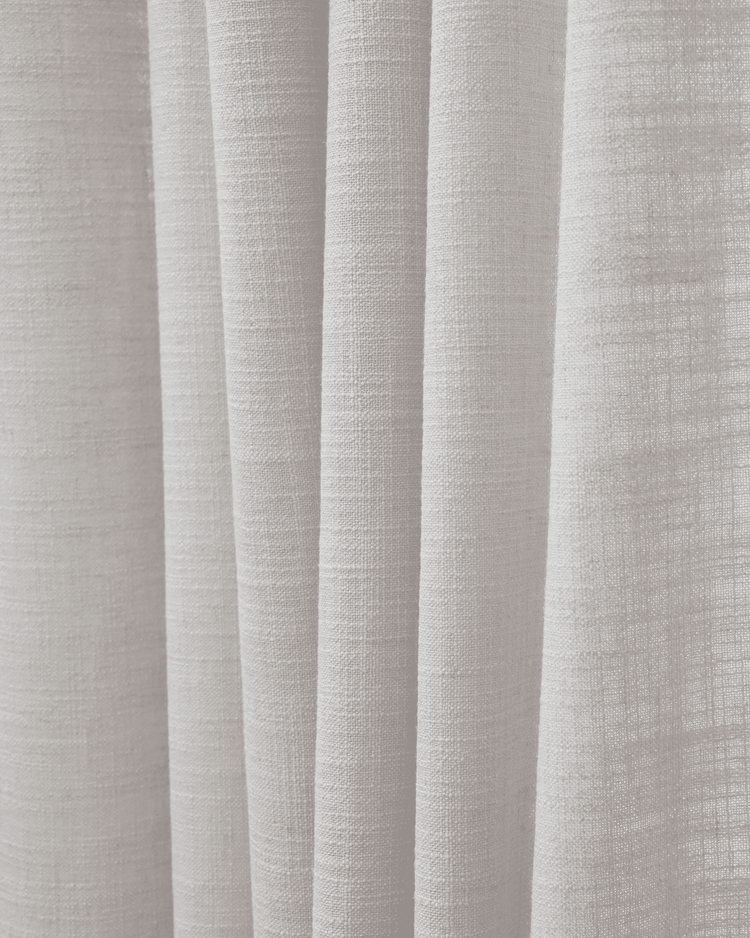
- Sheer outdoor curtains work best for filtered light and a soft look.
- Privacy-focused panels work better for close neighbors and street-facing balconies.
- Heavier blackout-style panels can help with strong west-facing sun, but they need stronger support and better wind control.
If your balcony gets strong afternoon sun, do not choose fabric based only on how it looks in a product photo. Think about sun angle, daily wind, and whether you will open and close the curtains often.
Why outdoor-rated fabric and weighted hems matter
Indoor fabric usually does not hold up well on a balcony. Outdoor curtains need to handle more sun exposure, moisture, dust, and movement.
For a more dependable setup, look for:
- outdoor-rated fabric
- fade-resistant or water-resistant construction
- enough weight to hang straight
- grommets, tabs, or attachment points that match your hardware
- tiebacks, bottom weights, or corner control if wind is common
Which curtain header works best outdoors?
Header style affects how easy the curtains are to use every day. A beautiful fabric can still feel annoying if it does not move smoothly on the hardware.
Use TheHues’ curtain header guide if you want to compare header styles before choosing your panels.
- Grommet top is often the easiest option for rods or cable systems because it slides more smoothly.
- Tab top or tie top can work well on certain outdoor frames where quick removal is useful.
- Rod pocket can look soft, but it may be less convenient outdoors because it does not slide as easily on longer spans.
If you open and close the panels daily, choose function first. A smoother header style will matter more than a small style difference after the first week.
How to measure apartment balcony curtains
The fastest way to make balcony curtains look temporary is to guess the size. Balcony openings can be awkward, especially around railings, sliding doors, beams, lights, and planters.

Measure the structure before the fabric
Before choosing panel width or length, measure:
- the full width of the opening
- the height from the mounting point to the desired bottom edge
- the stack-back space on each side when the curtains are open
- railing height and any obstructions
- the clearance needed to keep fabric off the deck or floor
Then compare your numbers with TheHues’ curtain measurement guide. Balcony setups can be less forgiving than indoor windows because the mounting point may sit higher, deeper, or farther from the visible opening.
Choose one panel or two
One panel can work for a small balcony if you mainly need privacy from one direction. For most renter balconies, two panels are easier to live with because they open more evenly and distribute weight better.
Two-panel setups are especially helpful when:
- the opening is wide
- you want a balanced look
- you need tiebacks on both sides
- you want to reduce stress on one mounting point
Add overlap on purpose
Do not measure exactly to the opening and stop there. Balcony curtains need enough overlap to reduce side gaps and center gaps.
As a starting point, plan for extra width for fullness, overlap where two panels meet, and enough bottom clearance so the fabric does not drag through dirt, rainwater, or deck debris.
If your balcony shape is unusual, use the free design service before ordering. A photo and a few measurements can help you avoid panels that are technically close but visually awkward.
How to keep balcony curtains from blowing around
Most renter frustration comes from movement. A curtain that looks good in a still product photo can twist, slap against the railing, or pull on the hardware once the wind picks up.

Use tiebacks, bottom weights, and side control
If your balcony gets regular wind, build stability into the plan from the beginning. Depending on the structure, you may need:
- tiebacks for open hours
- weighted hems or bottom weights
- side ties if the frame allows them
- weighted corners for heavier outdoor panels
- a routine for closing or securing panels during strong weather
This is especially important on higher floors, open corners, and west-facing balconies that get both sun and wind.
Match panel weight to the balcony exposure
The best outdoor curtain is not always the heaviest one. It is the heaviest one your balcony structure and no-drill setup can manage safely.
If the curtain is too light, it may blow around. If it is too heavy, it may strain the hardware. A medium-weight outdoor-rated panel is often the better balance for renters.
Know when curtains are the wrong answer
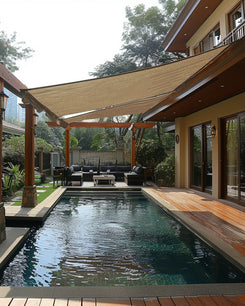
If your balcony is fully exposed, has no overhead support, and gets strong wind, curtains may create more maintenance than privacy. In that situation, a sun shade sail, privacy screen, or other structured shade option may work better.
The goal is not to force curtains into every balcony. The goal is to choose the treatment that makes the space more usable without creating a safety or maintenance problem.
Best apartment balcony curtains by renter scenario
| Renter scenario | Best setup | Why it works |
|---|---|---|
| Small covered balcony | Light to medium outdoor curtains with a tension rod or short cable | Simple privacy and softness without too much weight |
| Sliding patio door with light privacy needs | Lightweight panel with a temporary no-drill system | Easy access and low-risk installation |
| Hot west-facing balcony | Denser weather-resistant curtains with cable support and tiebacks | Better glare control and privacy when hardware support is strong enough |
| Fully exposed balcony with no ceiling or side walls | Shade sail, privacy screen, or freestanding option | More stable than free-hanging fabric panels |
FAQ: apartment balcony curtains
Can renters hang outdoor curtains on a balcony?
Often, yes, but it depends on the lease rules and the balcony structure. Covered balconies with side walls or frames are much easier to work with than fully open balconies. Always check building rules before attaching anything to the exterior.
What is the best no-drill way to hang balcony curtains?
For narrow covered openings, a tension rod may work. For wider covered spans, a cable system is usually more stable. For very light temporary privacy, adhesive or magnetic options may work, but they should not be used for heavy panels or windy conditions.
Should balcony curtains be waterproof?
Not always. Covered balconies often do better with water-resistant outdoor fabric that dries well and moves easily. Waterproof curtains may make sense for frequent direct rain, but they can be heavier and may need stronger hardware.
How do you stop balcony curtains from blowing in the wind?
Use tiebacks, weighted hems, side ties, or weighted corners where appropriate. Also choose a panel weight that matches the exposure. If the balcony gets strong wind and has no support points, curtains may not be the best solution.
Are custom outdoor curtains worth it for apartment balconies?
Custom sizing can be worth it when the balcony opening is wide, tall, uneven, or exposed at an awkward angle. Better width, length, and overlap can make the difference between a setup that looks temporary and one that feels planned.
Final takeaway
Apartment balcony curtains can work beautifully for renters, but the order of decisions matters. Start with the balcony structure, then choose the no-drill hardware, then select the fabric, header style, and measurements.
Covered balconies are the easiest to curtain. Fully exposed balconies need more caution. No-drill hardware still has weight and span limits, and outdoor-rated fabric matters as much as the mount.
If your layout is suitable, start with TheHues custom outdoor curtains, confirm dimensions with the measurement guide, and use the visualization tool or free design service if you are comparing fabric, header, or panel count before checkout.