Outdoor Curtains vs Privacy Screens vs Mesh Shades: Which Should You Choose?


In this article 11 sections
- Outdoor curtains vs privacy screens vs mesh shades: quick answer
- Comparison table: outdoor curtains, privacy screens, and mesh shades
- How to choose the right patio privacy solution
- Choose outdoor curtains for flexible privacy and a softer look
- Choose privacy screens for a stronger fixed barrier
- Choose mesh shades when sun, glare, and airflow matter most
- Best choice by outdoor space type
- Can you combine outdoor curtains, screens, and mesh shades?
- Common patio privacy mistakes to avoid
- FAQ
- Final takeaway
Outdoor curtains, privacy screens, and mesh shades can all make a patio feel more private and more comfortable. But they do not solve the same problem.
If you are comparing outdoor curtains vs privacy screens vs mesh shades, start with what is bothering you most. Are you trying to block a neighbor's view, reduce harsh afternoon sun, keep airflow, or make a covered patio feel softer and more finished?
The best choice depends on your structure, climate, privacy needs, and how you use the space every day. This guide breaks down where each option works best, what tradeoffs to expect, and how to avoid choosing a patio privacy solution that looks good online but feels wrong at home.
Outdoor curtains vs privacy screens vs mesh shades: quick answer
Outdoor curtains are usually the best choice when you want flexible side privacy, a softer look, and the ability to open or close the space as needed. Privacy screens are better when you need a fixed barrier at a deck edge, railing, balcony, or property-line sightline. Mesh shades work best when glare, heat, and airflow matter more than full visual privacy.

Here is the simplest way to compare them:
- Choose outdoor curtains for pergolas, porches, and covered patios where style and flexibility matter.
- Choose a privacy screen when you need a stronger visual block in one specific direction.
- Choose mesh shades when your main issue is sun, glare, heat, or airflow.
Many outdoor spaces need more than one layer. A covered patio may use curtains on one side for privacy and a shade solution overhead for sun. A balcony may use a fixed screen at the railing and one fabric panel near the seating area for softness.
Comparison table: outdoor curtains, privacy screens, and mesh shades
Before choosing a product, compare the basic strengths and limits of each option.
| Option | Best for | Privacy | Airflow | Sun control | Main tradeoff |
|---|---|---|---|---|---|
| Outdoor curtains | Pergolas, porches, covered patios, poolside seating | Good to strong, depending on fabric and fullness | Good when open; more limited when closed | Moderate, depending on fabric and direction of sun | Can move in wind and need proper hardware |
| Privacy screens | Deck edges, balconies, railings, property-line views | Strong when placed correctly | Low to moderate, depending on openness | Low to moderate | Can feel rigid, dark, or boxed in if overused |
| Mesh shades | Hot patios, west-facing openings, bright seating areas | Moderate by day; often weaker at night | Usually strong | Strong for glare and heat reduction | Usually less private than solid fabric or screens |
Two details matter more than most shoppers expect.
First, privacy changes from day to night. A mesh shade or sheer outdoor fabric may feel private in daylight, then become much less private once patio lights or indoor lights turn on behind it.
Second, airflow is part of comfort. A patio that feels sealed off may technically be private, but it may also feel hotter, darker, and less pleasant to use.

How to choose the right patio privacy solution
Start with the problem, not the product name. A patio that needs shade is different from a patio that needs privacy. A balcony that faces a neighbor's window is different from a pergola that gets low afternoon sun.
Ask these questions before you buy:
- What are you trying to block? Views, sun, wind, glare, or a mix?
- When do you need privacy? Daytime, nighttime, or only when guests are over?
- What structure do you have? Pergola, porch, balcony, open deck, railing, or no frame at all?
- How much airflow do you want? A solid screen may solve privacy but reduce breeze.
- Do you want the space to feel soft or architectural? Curtains feel more layered; screens feel more fixed.
That framework makes the decision easier. A covered pergola with close neighbors usually points toward outdoor curtains. A balcony with a direct railing-level view often points toward a privacy screen. A hot west-facing patio usually points toward mesh shades or another sun-control layer first.

Choose outdoor curtains for flexible privacy and a softer look
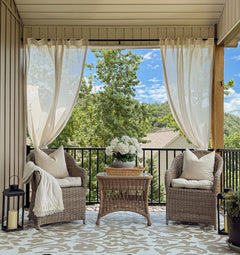
Outdoor curtains are often the most design-friendly option. They soften hard patio edges, make a pergola or porch feel more finished, and let you open or close the space depending on the time of day.
They are especially useful when you want privacy only part of the time. You can close the panels during dinner, while using a hot tub, or when neighbors are outside. When you want more light and airflow, you can tie them back.
Where outdoor curtains work best
Outdoor curtains work best when the space already has a clear place to mount hardware.
- Covered pergolas: Curtains can close one or two sides without making the whole structure feel boxed in.
- Porches: They add privacy while keeping the space welcoming from the street.
- Covered patios: They create a softer edge around dining or lounge furniture.
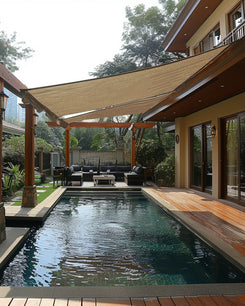
- Poolside seating: They help define a relaxation zone without building a permanent wall.
Outdoor curtains are also helpful when you want the patio to feel more like an outdoor room. The fabric adds movement and softness that screens and rigid barriers usually do not provide.
Where outdoor curtains may not be the best fit
Fabric is flexible, and that flexibility has limits. Outdoor curtains may not be the strongest first choice for fully exposed deck edges, high-wind areas, railing-height privacy, or homeowners who want a fixed barrier that needs little daily adjustment.
If the panels are too light, too narrow, or poorly secured, they may blow around, gap at the sides, or look temporary. If your space gets frequent wind, use appropriate outdoor hardware and plan how the panels will be tied back or secured when not in use.
For safety, keep outdoor curtains away from grills, fire pits, patio heaters, and open flames. Always follow the instructions for your hardware and heat sources, especially in covered spaces.
Why custom sizing matters outdoors
Outdoor curtain sizing affects both the look and the function. Panels that are too short can look unfinished. Panels that drag on wet decking can collect dirt and wear faster. Panels that are too narrow can leave privacy gaps when closed.
Before ordering, review the curtain measurement guide and measure the actual outdoor opening, not just the nearest standard window size. For patio privacy, width, finished length, fullness, and ground clearance all matter.

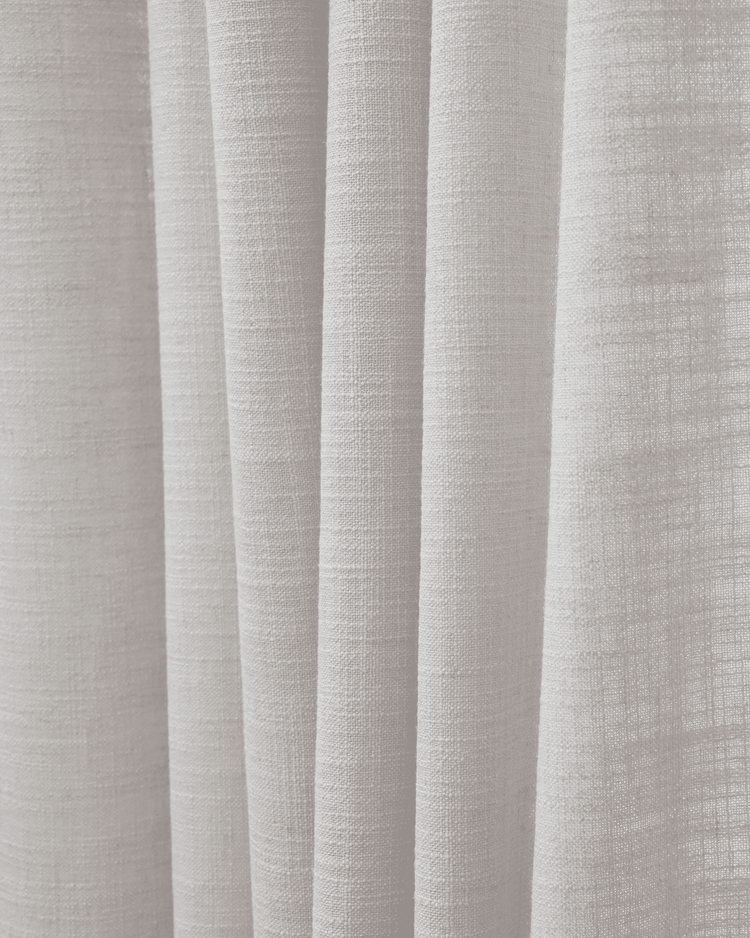
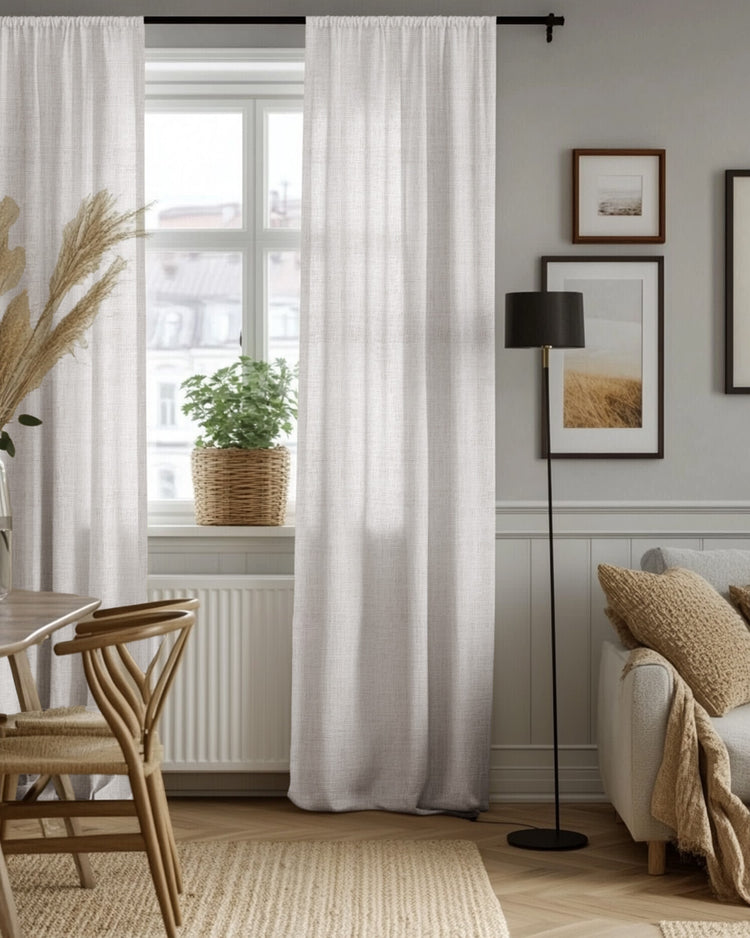
 Daytime Privacy
 Airy drape
 Gentle airflow
 Layered styling
Choose privacy screens for a stronger fixed barrier
Privacy screens are usually the better answer when the problem is a direct sightline. If someone can see into your patio from a neighboring deck, walkway, stair landing, balcony, or property line, a screen may solve that specific view more reliably than fabric.
Privacy screens often work well for:
- deck perimeters
- balcony railings
- side-yard seating areas
- hot tub corners
- shared-boundary outdoor spaces
What privacy screens do better than curtains
A privacy screen holds its shape. It does not need to be opened, tied back, or adjusted as often as fabric panels. That makes it useful when the privacy problem is constant and specific.
Screens can also feel more architectural. Wood slats, metal panels, woven panels, and framed screens can become part of the patio structure instead of an added fabric layer.

Where privacy screens fall short
A privacy screen can also overcorrect. The more solid the screen is, the more likely it is to reduce airflow, darken the space, or make a small patio feel closed in.
That does not mean screens are a bad option. It means they work best when the privacy issue is directional. Instead of blocking every side, identify the one or two views that actually need coverage.
If your patio already feels hot or still, think carefully before adding a solid barrier around the full perimeter. In that case, mesh shades or partial curtains may keep the space more comfortable.
Choose mesh shades when sun, glare, and airflow matter most
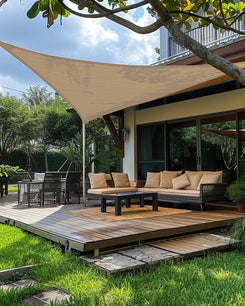
Mesh shades are often the most practical option when the patio is too bright or too hot. They are especially useful for west-facing patios, bright apartment balconies, and outdoor seating areas that need shade without cutting off all airflow.
This category can include outdoor roller shades, privacy mesh, shade cloth, and other breathable shade systems. The exact performance depends on the material, openness, color, and installation.
What mesh shades do well
Mesh shades can reduce glare and help make a bright patio more usable while still letting some air move through the space. This makes them a strong choice when comfort is the main problem.
They are especially useful when:
- the patio gets harsh afternoon sun
- the space feels too bright for dining or screen use
- you want shade without a fully closed-in feeling
- daytime privacy is more important than nighttime privacy
Where mesh shades fall short
Mesh shades usually do not create the same sense of enclosure as outdoor curtains or solid privacy screens. At night, when lights are on behind the shade, they may provide less privacy than expected.
If nighttime privacy is important, mesh shades may need support from another layer, such as outdoor curtains or a screen placed at the most exposed sightline.
Best choice by outdoor space type
The same home may need different solutions in different outdoor areas. Use the setup, not just the product category, to guide your decision.
Covered pergola
Outdoor curtains usually make the most sense. A pergola already gives you a frame for rods or tracks, and curtains let you close one side without permanently blocking the view.
If one side faces a direct neighbor view, you can combine curtains with a partial privacy screen on that side.
Open deck with close neighbors
A privacy screen usually works better as the first layer, especially at railing height. It solves the fixed sightline without asking fabric panels to do all the work in wind.
If the deck still feels too hard or exposed, add one curtain panel near the seating area for softness.
Balcony or apartment patio
Start with a privacy screen or breathable shade layer. Balconies usually have limited space and more direct sightlines, so a fixed or semi-fixed barrier may work better than full-length curtains.
Curtains can still work if you have safe mounting points and enough room for the panels to stack without feeling bulky.
West-facing patio
Mesh shades usually deserve the first look because low afternoon sun can make the space hot and glaring.

If you still want a softer finish or evening privacy, add outdoor curtains only where you need extra coverage.
Screened porch or bug-heavy yard
Outdoor curtains can add privacy and softness, but they are not a bug-control solution by themselves. If insects are the main issue, the screen material and enclosure details matter more than curtain fabric.
Use curtains for privacy, shade, or style, not as a substitute for proper screening.
Can you combine outdoor curtains, screens, and mesh shades?
Yes. In many outdoor spaces, a layered setup works better than forcing one product to handle every job.
Mesh shade plus outdoor curtains
This works well when the patio needs daytime shade and evening privacy. Use the mesh shade to reduce glare during the day, then close the curtains when you want a softer, more private feel.
Privacy screen plus outdoor curtains
This is a strong setup for decks and balconies. The screen blocks the direct sightline, while the curtain adds movement, softness, and optional extra coverage near the seating area.
Partial screen plus open curtains
This approach works when you want privacy without closing off the whole patio. Screen the exposed side, then use curtains only where they make the space feel more finished.
If you are planning a layered setup, use the visualization tool to test how the full combination will look before you order. For more specific layout help, the free design service can help you compare options for your actual space.
Common patio privacy mistakes to avoid
Most outdoor privacy mistakes come from choosing the strongest-looking product instead of the best fit for the space.
- Blocking every side when only one side matters. This can make the patio feel smaller and hotter.
- Using curtains where a fixed screen is needed. If the sightline is constant and narrow, a screen may be simpler.
- Using a solid screen where airflow matters. This can make the space feel stuffy in warm weather.
- Forgetting nighttime privacy. Mesh and sheer materials often become less private when lights are on behind them.
- Ignoring wind. Outdoor curtains need appropriate rods, tracks, tiebacks, or holdbacks.
- Letting fabric drag on the ground. Outdoor panels need enough clearance to reduce dirt and moisture contact.
FAQ
Are outdoor curtains or privacy screens better for wind?
Privacy screens are usually more stable in exposed windy areas because they are fixed in place. Outdoor curtains can still work, but they need the right hardware, secure tiebacks, and a layout that lets you manage movement when the wind picks up.
Do mesh shades give privacy at night?
Usually less than they do during the day. Once lights are on behind the shade, people outside may be able to see more clearly through some mesh materials. If nighttime privacy matters, pair mesh shades with outdoor curtains or a more solid screen.
What is the best patio privacy option for a pergola?
Outdoor curtains are often the best starting point for a pergola because they work with the existing frame and can be opened or closed as needed. If one side has a strong sightline, add a partial privacy screen on that side.
What is better for a small balcony?
A privacy screen or mesh shade often works better for a small balcony because it takes up less stacking space than full curtain panels. Curtains can still work if you have secure mounting points and enough room for the fabric to sit neatly when open.
Can outdoor curtains help with sun?
Yes, outdoor curtains can help reduce direct sun and glare, especially on side openings. For intense overhead sun or low afternoon sun, a dedicated shade layer may work better. The best setup depends on the direction of the sun and how much airflow you want to keep.
How do I know what size outdoor curtains to order?
Measure the full opening, decide where the rod or track will sit, and allow enough width for the panels to close without looking flat. Also check finished length and ground clearance so the fabric does not drag on wet or dirty surfaces. Start with the measurement guide before choosing fabric.
Final takeaway
The best choice is not simply outdoor curtains vs privacy screens vs mesh shades. The better question is what your patio needs most.
If you want flexible side privacy and a softer outdoor-room look, start with outdoor curtains. If you need a fixed visual block at a railing, property line, or balcony edge, use a privacy screen. If the space is too bright, hot, or glaring, mesh shades may solve the comfort problem first.
For many patios, the smartest answer is a layered setup: shade where the sun is strongest, screening where the sightline is clearest, and curtains where you want softness and flexibility.
Start by comparing outdoor curtains, review your measurements carefully, and use the free design service if you want help choosing the right setup for your space.