Which Curtain Header Should You Choose? How Different Headers Change the Look of a Room


In this article 7 sections
- 1. What Is a Curtain Header, and Why Does It Matter?
- 2. Ripple Fold: Clean Lines and Soft, Modern Waves
- 3. Pinch Pleat: Timeless Structure and Tailored Elegance
- 4. Grommet: Casual, Contemporary, and Easy to Style
- 5. Back Tab and Rod Pocket: A Softer, More Understated Look
- 6. Euro Pleat, Goblet, and Inverted Box Pleat: When the Details Matter
- 7. Why Custom Curtains Make the Difference
You've found the perfect curtain fabric. The color complements your walls, the texture works beautifully with your furniture, and the length is just right. But there's one more decision to make before placing your order: which curtain header should you choose?
It might seem like a small detail, but the header—the way the top of a curtain is constructed—can make a surprisingly big difference to the finished look.
The right choice can help your curtains feel like a natural extension of your interior design rather than simply something covering a window.
So, whether you're refreshing a living room, styling a bedroom, or finishing a new home, here's how to choose a curtain header that suits your space.
1. What Is a Curtain Header, and Why Does It Matter?
A curtain header is the finished top edge of a curtain panel. It determines how the fabric attaches to a curtain rod or track and how the material falls into folds when the curtains are hanging.
Think of it as the starting point of your curtain's overall silhouette.
Although fabric, color, and length all contribute to the final result, the header influences three important design elements:
-
The shape of the folds: Does the fabric fall into soft waves, defined pleats, or relatively loose gathers?
-
The overall style: Does the room feel contemporary, traditional, relaxed, or formal?
-
The visual presence of the hardware: Are the curtain rod and rings part of the design, or does the fabric take center stage?
The best header isn't necessarily the most elaborate one. It's the one that supports the atmosphere you want to create.
2. Ripple Fold: Clean Lines and Soft, Modern Waves
If you love interiors that feel calm, balanced, and contemporary, Ripple Fold curtains are worth considering.
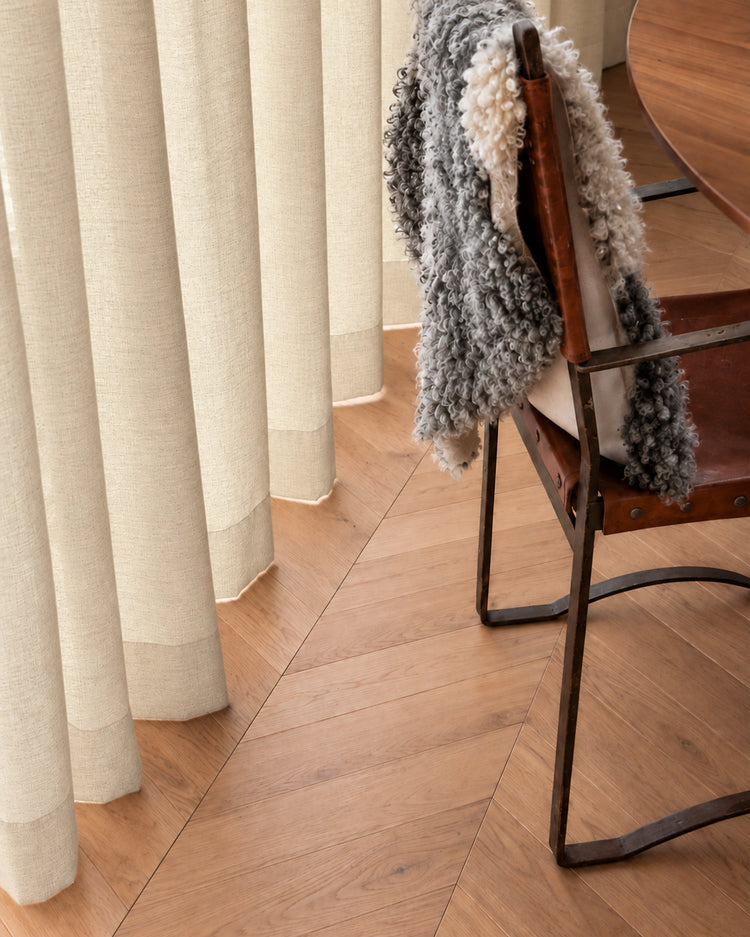
This header creates a continuous sequence of smooth, evenly spaced waves across the width of the curtain. Rather than emphasizing individual pleats, the fabric flows in a consistent rhythm, creating a clean and understated silhouette.
How does it change the look of a room?
Ripple Fold curtains can make a window feel wider and more visually cohesive. Their repeated curves introduce softness without making the space feel overly decorative.
Because the folds are relatively consistent, Ripple Fold curtains can also create a polished appearance when fully open or closed.
Design tip: Pair Ripple Fold curtains with a simple color palette and natural materials for a relaxed, modern look. Linen-look fabrics can soften the overall effect, while heavier fabrics can create a more substantial, dramatic appearance.
Keep in mind that Ripple Fold curtains generally require a compatible track system and appropriate carriers or tape. Check the header and hardware requirements before ordering.

3. Pinch Pleat: Timeless Structure and Tailored Elegance
For a more classic and tailored appearance, Pinch Pleat curtains offer a distinctly different look.
This header gathers the fabric into defined pleats at the top, creating a structured arrangement that continues into the curtain's folds.
Common options include Double Pinch Pleat and Triple Pinch Pleat. The exact appearance depends on the pleat construction, fabric, and fullness.
How does it change the look of a room?
Pinch Pleat curtains give a window a more deliberate, dressed appearance. Their defined folds add rhythm and structure, making them a natural fit for interiors that favor traditional details or refined, layered styling.
Double Pinch Pleats can offer a balanced, tailored appearance, while Triple Pinch Pleats often create a fuller and more decorative look.
Design tip: If you want curtains to feel like a considered architectural feature, try Pinch Pleats in a floor-length design. Pair them with a fabric that has enough body to hold the folds beautifully.
The result can feel sophisticated without relying on bold colors or elaborate patterns.

4. Grommet: Casual, Contemporary, and Easy to Style
Grommet curtains feature metal rings set into the top of the fabric. The curtain rod passes directly through these rings, creating broad, relatively regular folds.
How does it change the look of a room?
Grommet curtains often feel relaxed, straightforward, and contemporary. The visible rings introduce a subtle hardware detail, while the broader folds keep the overall appearance relatively uncomplicated.
Grommet curtains can also work well when you want the fabric to have a visible, repeating rhythm without the more formal appearance of pleating.
Design tip: Consider how the grommet finish will work with your existing hardware. Coordinating the rings and rod can make the entire window treatment feel more intentional.
Before ordering, check the grommet diameter against your curtain rod to ensure a suitable fit.
5. Back Tab and Rod Pocket: A Softer, More Understated Look
If you prefer a simpler curtain style without prominent rings or structured pleats, Back Tab and Rod Pocket headers are two options to explore.
Back Tab & Rod Pocket: A Clean, Neat Finish
Back Tab & Rod Pocket curtains use fabric loops or tabs at the back of the header to support the curtain on a rod.
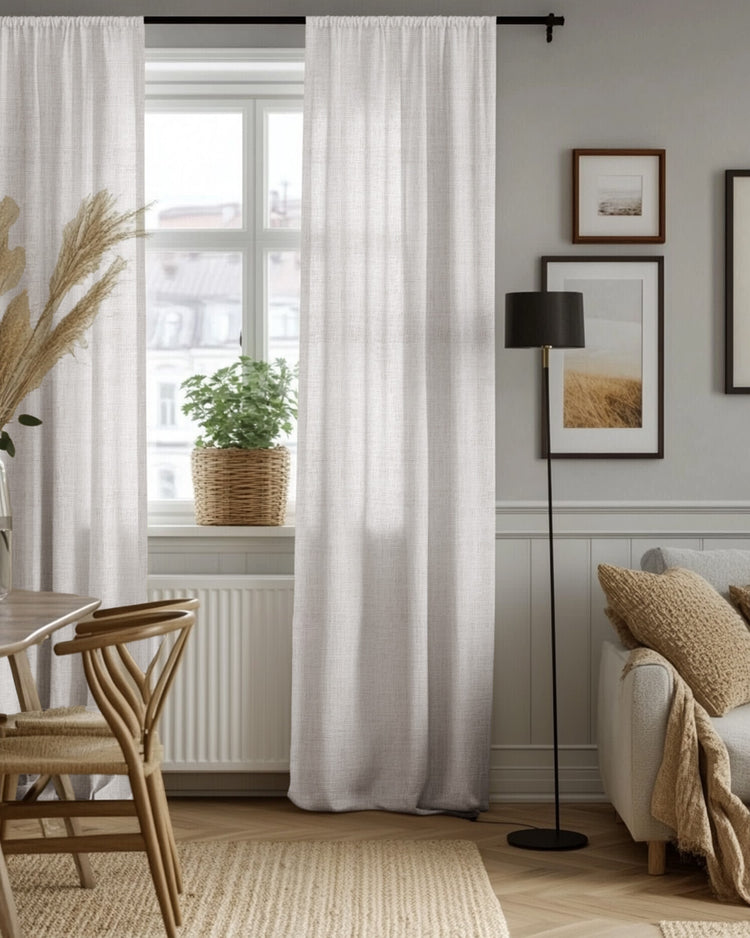
Because the tabs are concealed behind the fabric, the rod is less prominent from the front. The curtain typically forms soft, casual folds with a relatively clean top edge.
Best for: Relaxed living rooms, cozy bedrooms, and interiors where you want the curtain fabric to take center stage.
Design tip: This style can work beautifully in relaxed interiors, but think about how often you'll use the curtains. The curtains movement depends on the rod, fabric, and construction, so they may not glide as easily as some track-compatible styles.

6. Euro Pleat, Goblet, and Inverted Box Pleat: When the Details Matter
Sometimes, the overall style of a room calls for something more distinctive than a simple wave or classic pleat.
Specialty pleated headers offer additional ways to shape the fabric and introduce character.
Euro Pleat: Structured but Contemporary
Euro Pleats are pinched near the top of the fabric, creating a tailored appearance with a relatively clean, modern finish.
They work well in sophisticated living rooms and bedrooms where you want defined folds without an overly traditional look.

Goblet Pleat: Decorative and Dramatic
Goblet Pleats feature rounded, cup-like shapes at the top of the curtain. Their decorative construction creates a more formal and luxurious appearance.
They're particularly suited to traditional interiors, elegant dining rooms, and spaces where the curtains are intended to make a statement.

Inverted Box Pleat: Clean, Architectural Folds
Inverted Box Pleats conceal the main folds toward the back of the fabric, creating a more controlled and structured appearance from the front.
They can complement tailored, symmetrical interiors and spaces where clean lines are a priority.
These styles demonstrate how a relatively small construction detail can change the personality of an entire window treatment.

Design tip: Before choosing a specialty pleat, consider the room's proportions, the weight of your fabric, and the amount of visual detail already present. An elaborate header may become a beautiful focal point, but a simpler option may work better in a room with patterned upholstery or decorative furniture.
7. Why Custom Curtains Make the Difference
Choosing the right header is only one part of creating a window treatment that feels right for your home.
The width, length, fabric, lining, and installation also affect how your curtains hang and how the finished room looks.
This is where custom curtains offer more flexibility than choosing a standard panel off the shelf.
With made-to-measure curtains, you can consider the proportions of your actual window, the height of your ceiling, the furniture around it, and the overall style of your room.
For example, a floor-length Ripple Fold curtain can emphasize vertical lines in a contemporary living room, while a carefully measured Triple Pinch Pleat curtain can create a fuller, more traditional finish.
You can also consider whether you prefer the curtain to hover just above the floor or extend slightly onto it for a more dramatic effect.
Before placing your order, keep these details in mind:
-
Measure carefully: The width and length influence how the curtains sit and how much fabric is visible.
-
Check your hardware: Make sure your selected header works with your existing rod or track.
-
Consider fabric and fullness: Different fabrics produce different folds, even when the same header style is used.
-
Think about functionality: If you open and close your curtains every day, choose a header and hardware combination that suits frequent use.
-
Match the lining to your needs: If you need additional light control or thermal performance, check the product's available lining and construction options.
At TheHues, you can explore made-to-measure curtain styles and choose options that complement your space, from fabric and color to header style and dimensions.
Use the TheHues Free Design Service to find a style that works for your windows and your interior.